

Russian tortoise · Gentle handling

How do I handle a Russian tortoise safely?

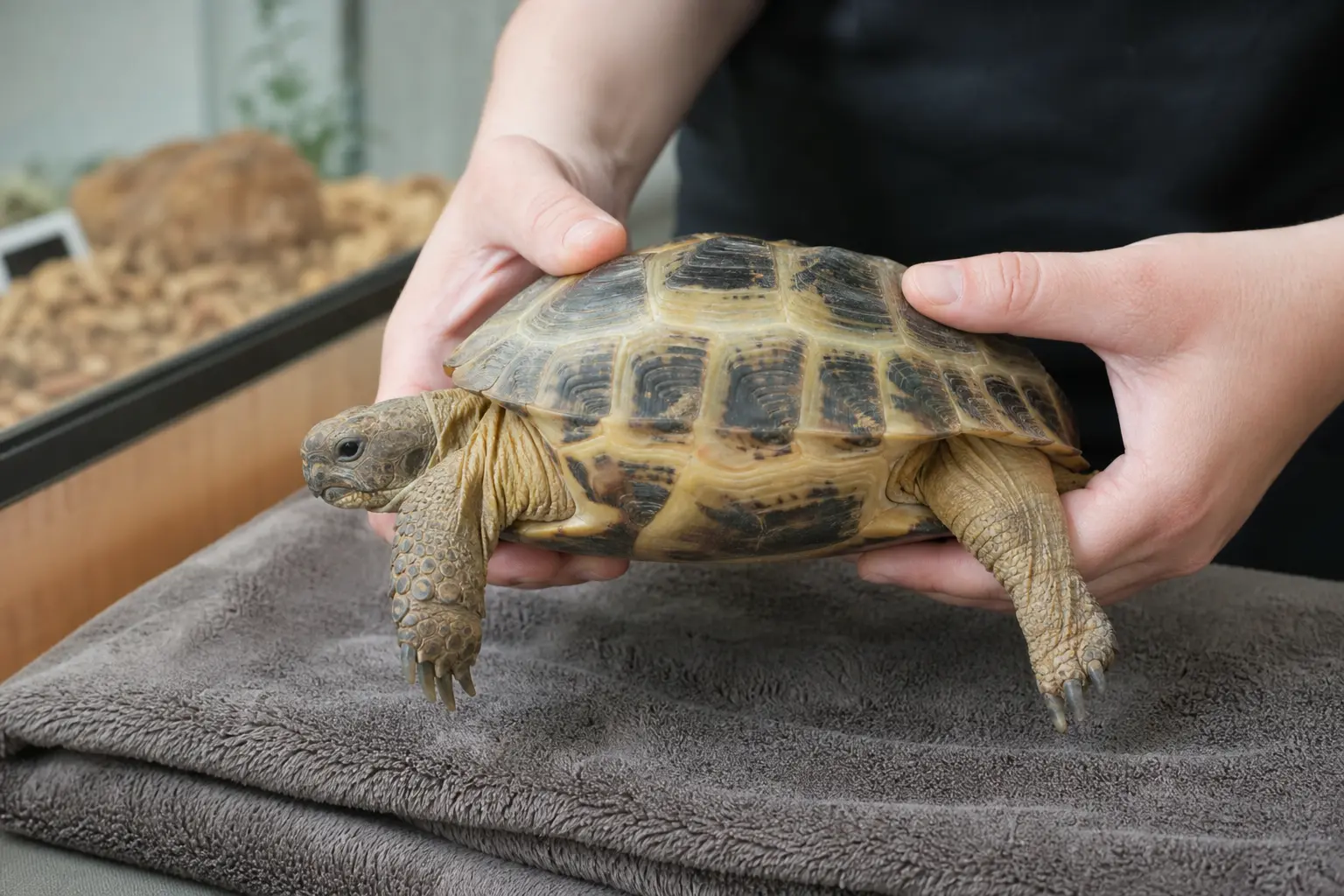
Handle a russian tortoise only when useful, holding both shell sides with fingers spread beneath the plastron. Keep the full body low and supported, then return it promptly.

Observation and a well-designed habitat are better daily interaction than repeated lifting for a ground-dwelling tortoise.

Use the practical checks
Adult Russian tortoise held low over a towel with two hands supporting both sides of the shell and the whole plastron.

The short answer

Support the shell and plastron close to the floor for russian tortoises

Handle a russian tortoise only when useful, holding both shell sides with fingers spread beneath the plastron. Keep the full body low and supported, then return it promptly.

Adult home
At least 180 × 120 cm (71 × 47 in) indoors for one adult, plus a secure seasonal outdoor area where climate permits
Warm zone
Broad basking zone about 35°C (95°F)
Cool and night
Daytime ambient gradient about 20–25°C (68–77°F); Visible lights off; RSPCA guidance allows a nighttime drop toward 15°C (59°F) for a healthy, appropriately managed animal
Humidity
Dry, well-ventilated main habitat with deep burrowable substrate, a sheltered retreat, shallow clean water, and no waterlogged ground
UVB
Broad species-appropriate linear UVB over the basking area, installed to the fixture maker's measured distance guidance with complete shade
Food
A varied high-fibre, low-protein menu of safe pesticide-free weeds, leaves, and flowers with a reviewed calcium plan

The honest fit

Would the adult routine work in your home?

Do this

  • Work over a low soft surface after the tortoise has settled.
  • Support both shell sides and the entire plastron close to the floor.
  • Keep fresh water and monitor russian tortoise behavior every day.
  • Record changes so a reptile veterinarian receives useful evidence.

Avoid this

  • Do not flip, dangle, squeeze, or lift by a leg or tail.
  • Do not continue after backing away or frantic escape attempts.
  • Do not copy another reptile species' setup.
  • Do not treat a persistent health change as a shopping problem.
01

Prepare before lifting

Let a new russian tortoise establish normal basking, hiding, feeding, and walking first. Use handling mainly for health checks, cleaning, transport, and necessary relocation.

Wash and dry your hands, remove other pets, close escape routes, and place a towel below. Never lift a tortoise high over a hard floor or leave it unattended outside the habitat.

Adult Russian tortoise walking across dry steppe soil with its rounded patterned shell, sturdy forelegs, and bright face in clear view.
02

Use both hands

For this species, hold both sides of the shell with fingers spread beneath the plastron, support the full weight, stay low, and return the tortoise promptly. Keep the animal level and upright instead of tipping it onto its side or back.

Do not squeeze the shell, pull a limb, or restrain the head. Return the tortoise if it urinates, flails, withdraws tightly, or repeatedly tries to walk away.

Alert adult Russian tortoise walking through a spacious dry planted habitat with its rounded tan-and-dark shell, sturdy digging legs, and clear eyes in view.
03

Keep roaming controlled

Free roaming indoors exposes a tortoise to cold floors, falls, doors, other pets, swallowed debris, and contamination. Use a secure species-appropriate area instead.

Pain, shell damage, weakness, limping, inability to support the plastron, breathing changes, or sudden persistent withdrawal is a reason to stop and seek reptile-veterinary advice.

Keep deciding

See the complete care picture

Sources and further reading