

Garter snake · Veterinary care

When should a garter snake see a reptile veterinarian?

A garter snake should have a reptile veterinarian before trouble starts and an annual health check. Use the guide below when the snake's normal pattern changes.

Compare each change in appearance or routine with the snake's normal baseline. Early differences can reveal illness.

Use the practical checks
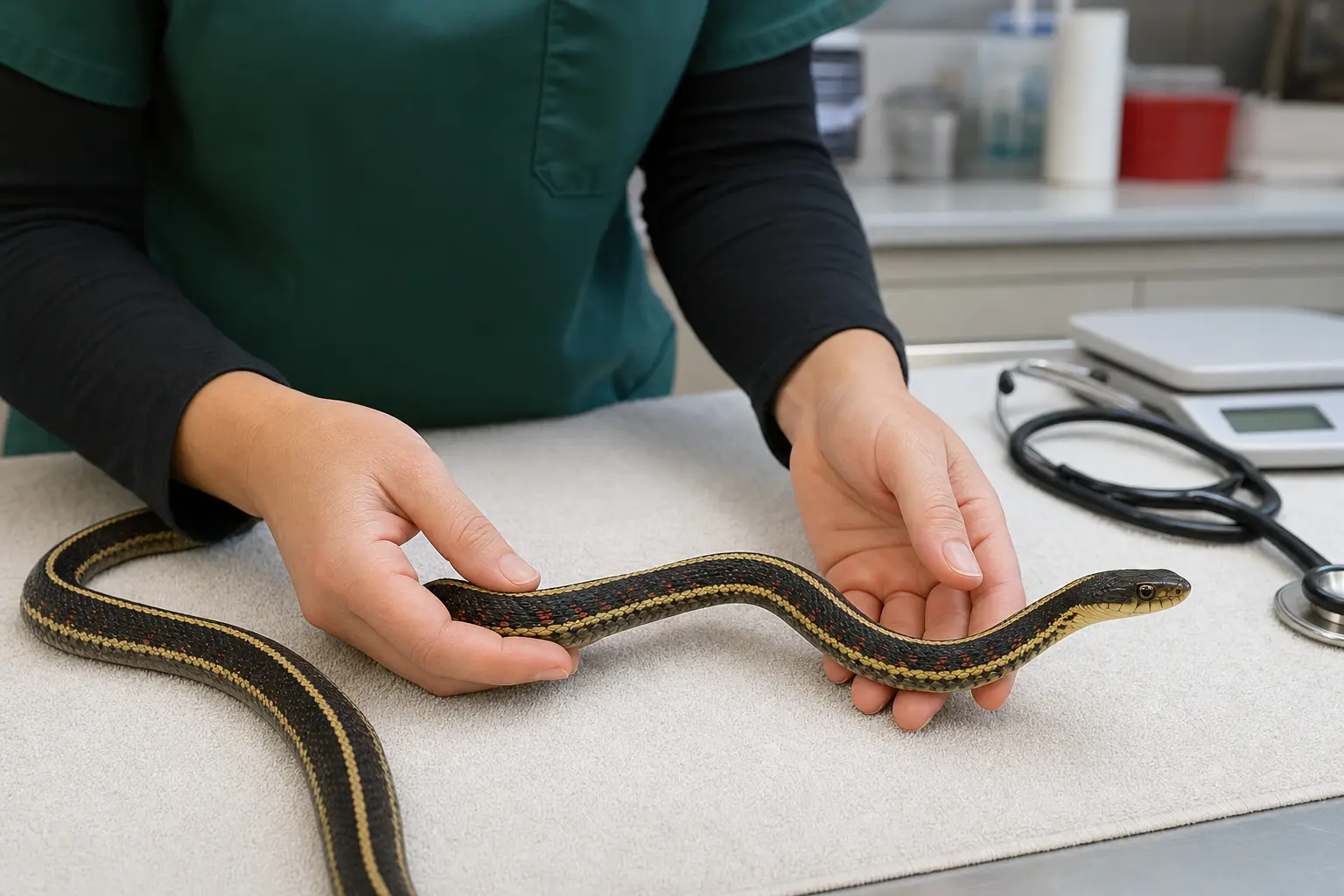
Adult common garter snake with yellow stripes, red side marks, and a clear eye receiving a calm non-invasive wellness examination from a reptile veterinarian on a clean towel.

The short answer

Establish routine care and act early on abnormal signs for garter snakes

A garter snake should have a reptile veterinarian before trouble starts and an annual health check. Use the guide below when the snake's normal pattern changes.

Adult home
At least the snake's full length, with at least one-third that length in width and height; larger for a group
Warm zone
Measured basking zone 28–32°C (82–90°F)
Cool and night
Covered cool end 22–24°C (72–75°F); Heat may switch off when the room stays safely around 16°C (61°F) or warmer; all visible lights off
Humidity
About 50–60%, with a clean humid hide, a submersion-sized water dish, dry land, and ventilation
UVB
Low-output linear UVB measured around UVI 1.0 at basking level, grading to zero in shade; lower for sensitive morphs
Food
A varied whole-prey plan built around thawed rodents, safe low-thiaminase fish, and supplier-raised earthworms

The honest fit

Would the adult routine work in your home?

Do this

  • Establish a reptile veterinarian before an urgent day.
  • Bring weights, photos, diet details, and measured habitat readings.
  • Keep fresh water and monitor garter snake behavior every day.
  • Record changes so a reptile veterinarian receives useful evidence.

Avoid this

  • Do not wait on breathing distress, burns, collapse, or prolapse.
  • Do not give human medicine or attempt invasive home treatment.
  • Do not copy another reptile species' setup.
  • Do not treat a persistent health change as a shopping problem.
01

Create a baseline

The Royal Veterinary College recommends annual health checks for pet reptiles. Bring the setup details, diet and supplement plan, recent weights, and clear photos of the enclosure so preventive advice can be specific.

At home, record weight on the same scale and notice eyes, mouth, scales, muscle tone, posture, droppings, appetite, breathing, and activity. Small consistent observations are more useful than waiting for a dramatic symptom.

Adult common garter snake exploring meadow grass beside water with its complete slender body, yellow stripes, red side marks, and alert head in clear view.
02

Know the signs that should not wait

Call promptly for an abrupt change in breathing, posture, movement, appetite, droppings, weight, or shedding. Burns, severe weakness, bleeding, seizures, and prolapsed tissue are urgent.

Do not improvise treatment before the examination. Ask the reptile veterinarian what supportive care is appropriate while you prepare for the appointment.

Alert adult common garter snake exploring meadow-like cover beside clean water with its slender dark body, yellow stripes, red side marks, and clear eye in view.
03

Make transport useful

Use a secure ventilated carrier lined with clean absorbent paper or a towel, keep transit short, and prevent temperature extremes. Heat packs must stay outside the carrier with a buffer and room to move away from warmth.

Call ahead, then bring the snake's timeline, weights, food and supplement names, photos of droppings or lesions, and actual warm, cool, and humidity readings. Keep the enclosure stable while you travel unless the clinic tells you otherwise.

Keep deciding

See the complete care picture

Sources and further reading