

Do this
- Measure exposure where the snake can actually sit.
- Provide an immediate route from light into complete shade.
- Keep fresh water and monitor corn snake behavior every day.
- Record changes so a reptile veterinarian receives useful evidence.
Corn snake · UVB and shade
A measured light-to-shade gradient from UVI 1.0 at basking level to zero in shade. Lower for light-sensitive morphs.
The amount reaching the snake changes with its distance from the lamp and anything positioned between them.
Use the practical checks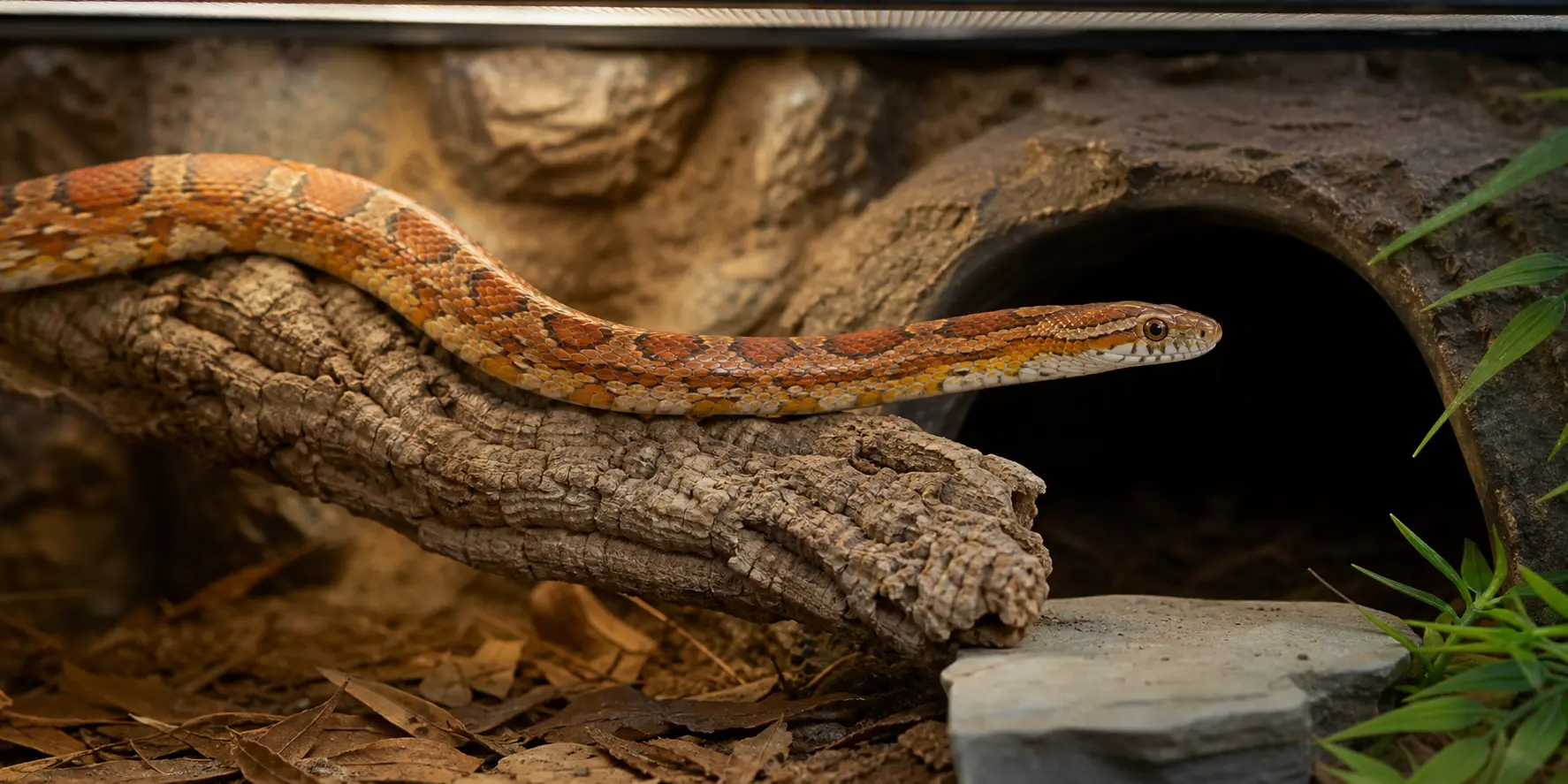
Put it into practice
For a corn snake, use a measured light-to-shade gradient from UVI 1.0 at basking level to zero in shade; lower for light-sensitive morphs. Group the brighter zone with daytime warmth while preserving dark retreats and foliage or hide cover nearby.
A lamp percentage cannot predict the dose on its own. Follow the fixture maker's distance chart, account for mesh, and measure at the highest place the snake can actually reach when possible.
Run the daytime lighting on a timer for roughly 12 hours, then make the enclosure dark overnight. Replace the lamp on schedule or verify output with an appropriate meter.
Secure or guard fixtures so the snake cannot contact hot glass or a breakable lamp. After rearranging climbing routes or hides, re-check distance and shade instead of assuming the old setup still applies.
UVB, heat, calcium, and the rest of the diet work as one husbandry system. More supplement is not a safe substitute for unmeasured lighting, and more UVB is not automatically better.
Discuss supplement choice with a reptile veterinarian, especially for a albino or unusually light-sensitive morph, a growing juvenile, an egg-producing female, or a snake showing weakness or skeletal change.
Optional equipment matched to this topic. Confirm the species' target temperatures, UV Index, fixture distances, and thermostat requirements before buying.
Affiliate links: Furball Cove may earn from qualifying purchases at no extra cost to you.
Controls a compatible heat source from a probe reading, with dimming or pulse modes selected for the equipment.
Match the controller's operating mode and load rating to the heater manufacturer's instructions. Check temperatures with a separate thermometer.Amazon search: compare specifications and sellers; results are not individually vetted.Compare options on AmazonTracks the warm and cool ends at the same time so the enclosure gradient is easier to verify.
Use fixed probes at the animal's warm and cool zones. A thermometer measures temperature; it does not control a heater.Amazon search: compare specifications and sellers; results are not individually vetted.Compare options on AmazonKeep deciding