

Do this
- Read a hygrometer before adding water.
- Keep ventilation open and the wet area clean.
- Keep fresh water and monitor leopard gecko behavior every day.
- Record changes so a reptile veterinarian receives useful evidence.
Leopard gecko · Humidity control
Dry ambient air around 30–40%, plus one clean contained humid hide.
A hygrometer shows whether a leopard gecko can choose useful moisture without living in stale, wet air.
Use the practical checks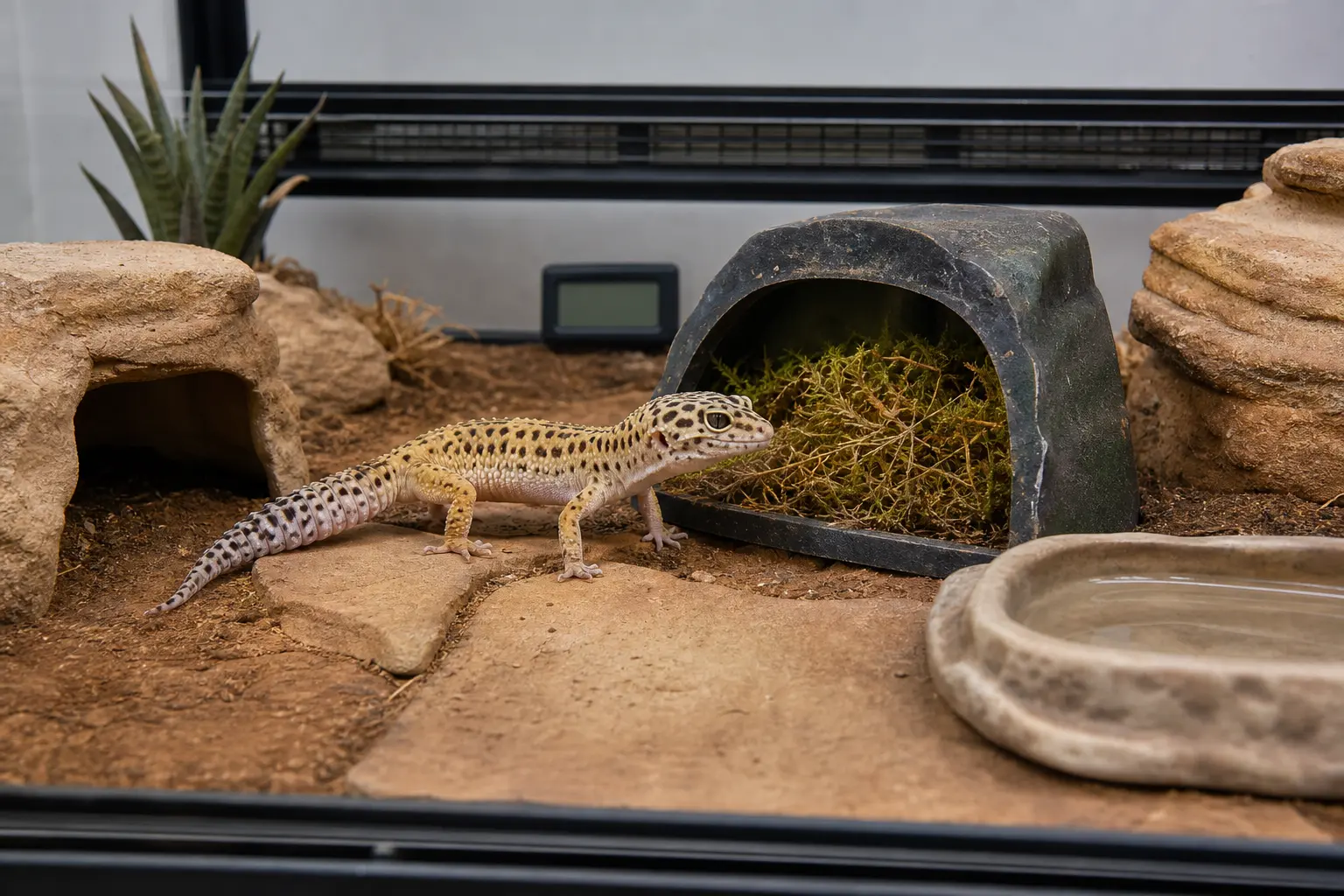
Put it into practice
For a leopard gecko, target dry ambient air around 30–40%, plus one clean contained humid hide. Place the hygrometer where it represents the animal's usable space rather than directly beside water or a spray nozzle.
Use a hygrometer in the main enclosure and a lightly damp, waterproof humid hide rather than misting the whole habitat. Check the habitat before adding more water; the previous mist or humid-hide refill should not silently become permanent saturation.
Dampness without air exchange encourages dirty surfaces and respiratory or skin problems. Keep vents clear, remove spoiled food and waste promptly, and replace wet material that smells sour or looks moldy.
Water dishes still need fresh water even when droplets or a humid retreat are available. Clean the dish daily and keep the surrounding substrate from becoming a stagnant wet patch.
Shed quality, skin, breathing, appetite, toe-pad grip, and use of the humid zone help show whether the pattern is working. Record changes rather than reacting to one isolated number.
Repeated poor sheds, wheezing, open-mouth breathing, blisters, loss of grip, or persistent avoidance of an entire zone call for a husbandry review and qualified reptile-veterinary guidance.
Optional equipment for measuring and managing the enclosure. The target range, ventilation, drainage, and drying cycle remain species-specific.
Affiliate links: Furball Cove may earn from qualifying purchases at no extra cost to you.
Keep deciding