

Do this
- Read a hygrometer before adding water.
- Keep ventilation open and the wet area clean.
- Keep fresh water and monitor painted turtle behavior every day.
- Record changes so a reptile veterinarian receives useful evidence.
Painted turtle · Humidity control
Clean tested water plus open ventilation above the tank so the shell dries completely while basking.
The choices are clean swimming water and a reliable way out. Stale water or a damp platform can harm skin, eyes, and shell.
Use the practical checks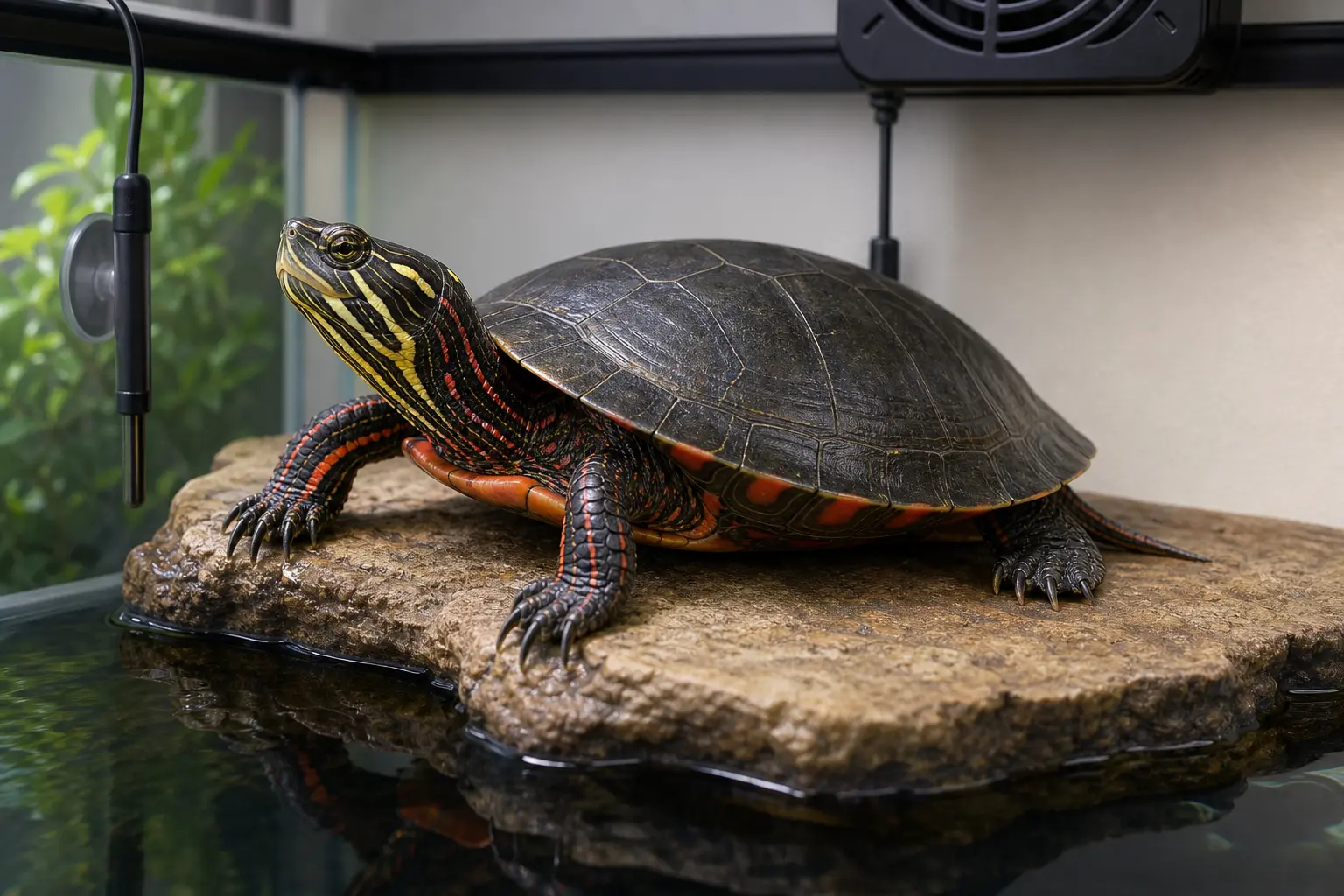
Put it into practice
For a painted turtle, use water testing, strong filtration, regular partial changes, a clean dry dock, protected electrical equipment, and open ventilation above the water. A water-test kit reveals waste that clear water can hide.
RSPCA guidance calls for regular maintenance and weekly partial water changes with dechlorinator. If ammonia or nitrite rises, increase corrective changes and investigate filter capacity and overfeeding.
Maintain the filter on a schedule and rinse reusable media in removed tank water when appropriate so useful bacteria are not destroyed by untreated tap water.
Remove uneaten food promptly and siphon trapped waste. Keep the replacement water near the aquarium temperature so maintenance does not create a sudden thermal change.
The whole shell must be able to leave the water and dry beneath measured heat and UVB. Keep the cover ventilated rather than sealing humidity into the aquarium.
Swollen eyes, odor, sores, soft or pitted shell, constant shedding, unusual floating, nasal bubbles, or appetite loss deserves prompt water testing and reptile-veterinary advice.
Optional equipment for measuring and managing the enclosure. The target range, ventilation, drainage, and drying cycle remain species-specific.
Affiliate links: Furball Cove may earn from qualifying purchases at no extra cost to you.
Keep deciding