

Painted turtle · Stuck shed

Why is my painted turtle having stuck shed?

A healthy painted turtle sheds thin individual shell scutes and small pieces of skin without help. Never peel them, and seek veterinary advice if the shell turns soft or sore or keeps shedding.

Retained scutes are a husbandry or health clue, not permission to pry at the shell.

Use the practical checks
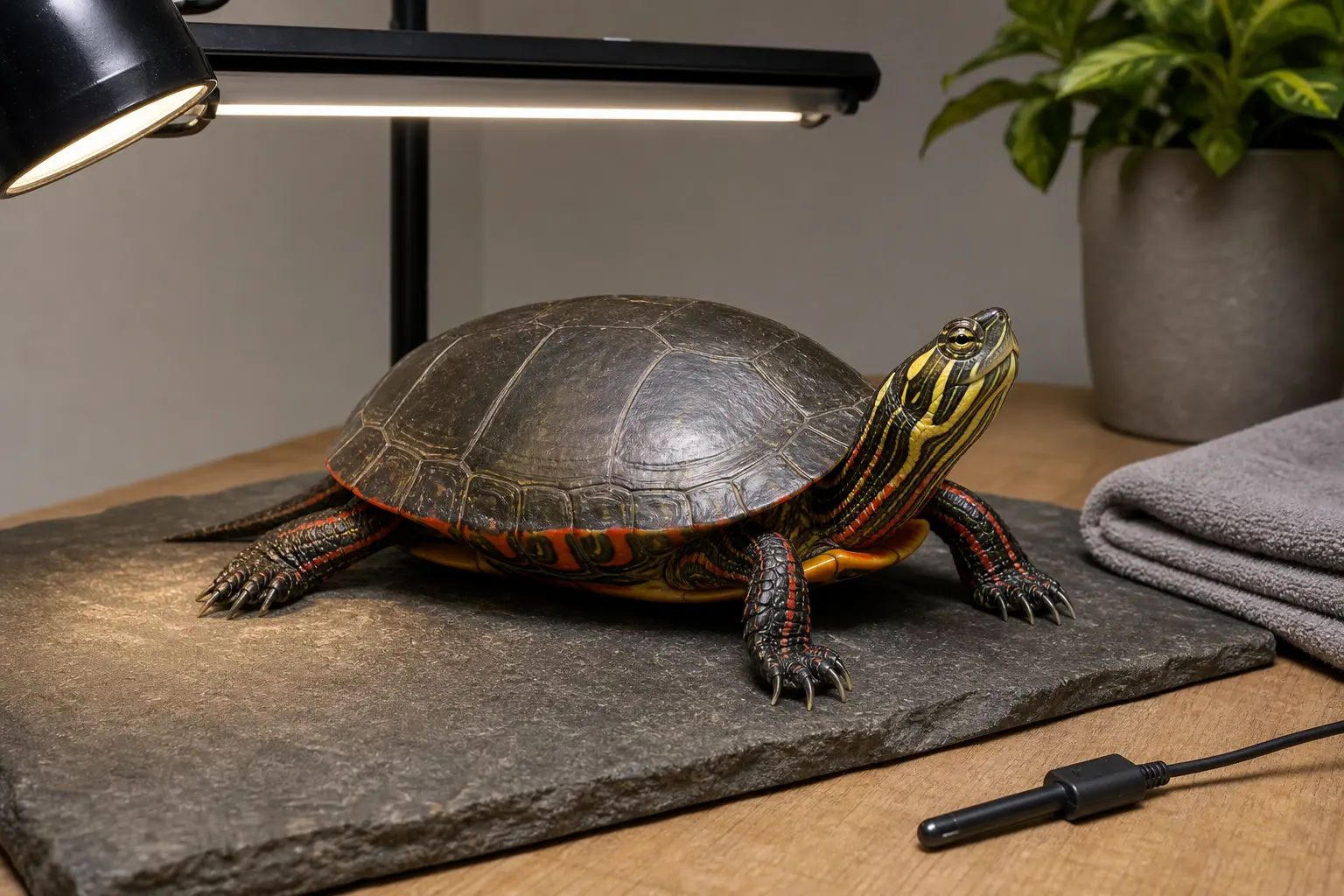
Adult painted turtle with a smooth dark shell, red-orange edges, and striped head during a calm post-shed visual check without pulling skin or shell material.

The short answer

Let scutes release naturally and investigate abnormal shell changes for painted turtles

A healthy painted turtle sheds thin individual shell scutes and small pieces of skin without help. Never peel them, and seek veterinary advice if the shell turns soft or sore or keeps shedding.

Adult home
At least 300–450 L (80–120 US gal) for one adult, sized to the individual, with deep open water and a fully dry dock
Warm zone
Completely dry shell-sized basking platform around 32–35°C (90–95°F)
Cool and night
Clean filtered water around 23–26°C (73–79°F), adjusted for age and season; All visible lights off; maintain safe water temperature with guarded controlled equipment
Humidity
Clean tested water plus open ventilation above the tank so the shell dries completely while basking
UVB
Measured moderate UVB across the whole dry dock, with aquatic shade and product-specific distance guidance
Food
Quality aquatic-turtle pellets, safe aquatic and leafy plants, and varied appropriate invertebrate or whole animal foods

The honest fit

Would the adult routine work in your home?

Do this

  • Inspect the skin, limbs, tail, and shell margins after a shed.
  • Correct temperature, hydration, and the species moisture pattern.
  • Keep fresh water and monitor painted turtle behavior every day.
  • Record changes so a reptile veterinarian receives useful evidence.

Avoid this

  • Do not pull firmly attached skin.
  • Do not use oils, tape, hot baths, or tools near the eyes.
  • Do not copy another reptile species' setup.
  • Do not treat a persistent health change as a shopping problem.
01

Know the normal pattern

Thin translucent scutes can lift one at a time as a painted turtle grows, while skin around the legs and neck releases in small pieces. Both should happen without pulling.

A fully dry basking platform is essential. The shell beneath should be hard and smooth rather than soft, foul-smelling, bleeding, pitted, or covered by open sores.

Adult painted turtle basking above a pond with its complete smooth dark shell, vivid red-orange shell margins and legs, striped head, and long claws in view.
02

Correct water and basking together

Review water tests and maintenance records. Recheck the basking and water temperatures, UVB distance, and whether the turtle can dry its entire shell.

Do not peel scutes, scrub aggressively, apply household oils, or use tools. Those actions can damage living shell and delay diagnosis of infection, injury, nutrition problems, or poor water quality.

Alert adult painted turtle basking fully dry above clean deep water with its smooth dark shell, red-orange margins and legs, and striped head in view.
03

Know when not to wait

Call a reptile veterinarian for constant shedding, sores, odor, discharge, soft or pitted shell, redness, swelling, bleeding, abnormal swimming, or refusal to bask.

Bring water-test results, recent weights, food and supplement details, basking and water temperatures, UVB setup, filter maintenance notes, and clear photos.

Keep deciding

See the complete care picture

Sources and further reading