Crested gecko · Stuck shed

Why is my crested gecko having stuck shed?

Crested gecko shed problems need a gentle response. Correct hydration and humidity, never pull skin, and call a reptile veterinarian about tight toe bands or repeated trouble.

Loose skin on a crested gecko differs from a tight retained band. Protect its new skin while improving the enclosure.

Use the practical checks
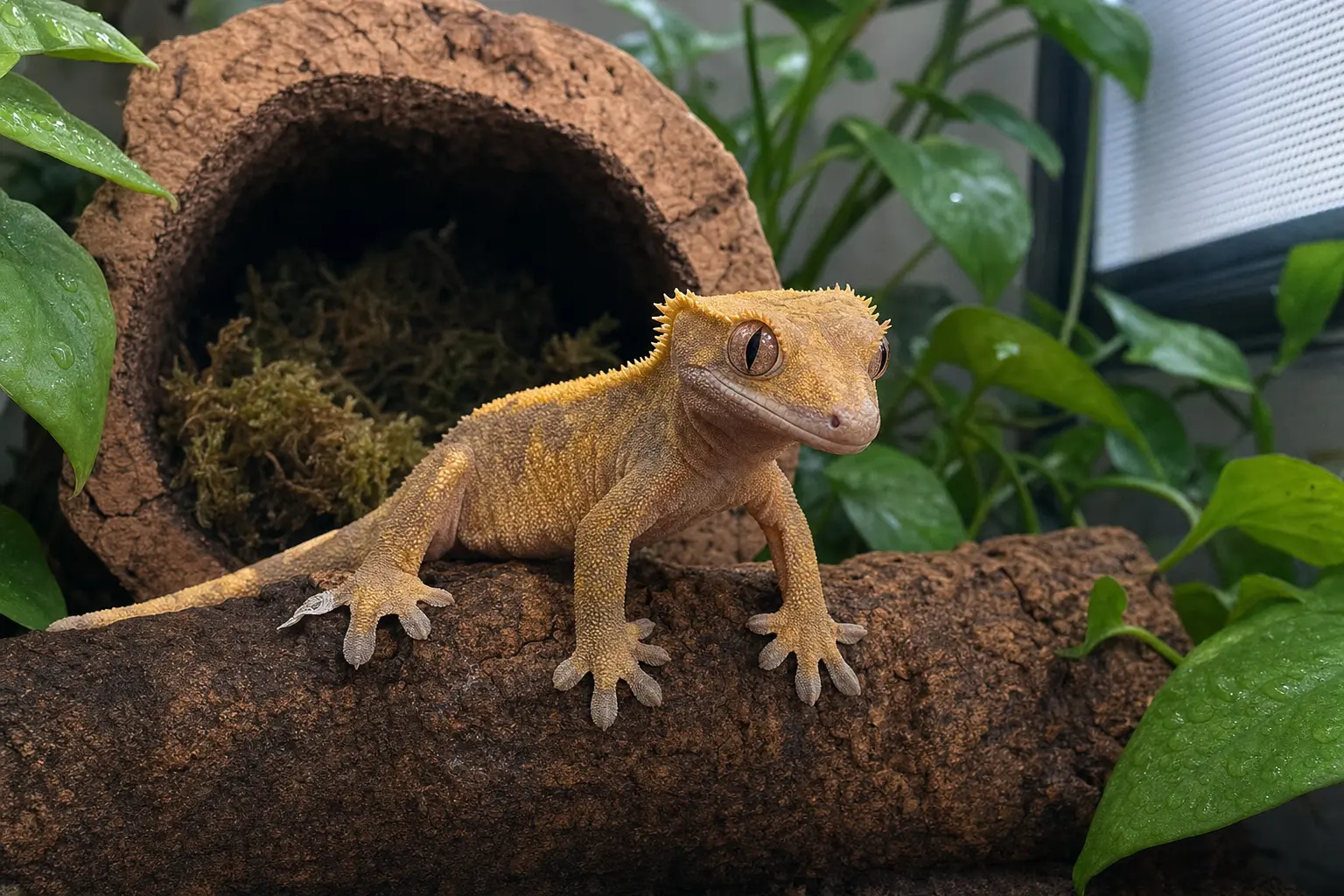
Adult crested gecko with clear eyes and intact toe pads beside a clean, lightly damp moss retreat.

The short answer

Fix the conditions and protect delicate toes for crested geckos

Crested gecko shed problems need a gentle response. Correct hydration and humidity, never pull skin, and call a reptile veterinarian about tight toe bands or repeated trouble.

Adult home
At least 45 × 45 × 60 cm (18 × 18 × 24 in) for one adult; larger furnished height is welcome
Warm zone
Basking area 26–28°C (79–82°F)
Cool and night
Cool area 20–24°C (68–75°F); A controlled drop to 18–20°C (64–68°F)
Humidity
RSPCA baseline 40–50% with brief rises toward 80%; RVC guidance 50–70%
UVB
Low-output UVB with a measured gradient near UVI 0.7 to zero shade
Food
A complete formulated crested-gecko diet is typical; use a reviewed plan for suitable insects and supplements

The honest fit

Would the adult routine work in your home?

Do this

  • Inspect toes, eyes, and tail tip after a shed.
  • Correct temperature, hydration, and the species moisture pattern.
  • Keep fresh water and monitor crested gecko behavior every day.
  • Record changes so a reptile veterinarian receives useful evidence.

Avoid this

  • Do not pull firmly attached skin.
  • Do not use oils, tape, hot baths, or tools near the eyes.
  • Do not copy another reptile species' setup.
  • Do not treat a persistent health change as a shopping problem.
01

Inspect without peeling

After a shed, look closely at toe pads, toes, tail tip, eyes, and skin folds after a shed. Use bright neutral light and let the gecko stand naturally so tight rings, swollen tissue, or reduced grip are easier to notice.

Do not tear or tug at skin that does not release with almost no resistance. Pulling can damage fresh skin, eyes, toe pads, or circulation, especially on a small animal.

Adult crested gecko climbing a sturdy diagonal branch through leafy cover at dusk.
02

Correct the shed environment

Review rSPCA baseline 40–50% with brief rises toward 80%; RVC guidance 50–70%, fresh water, diet, temperatures, and clean textured surfaces. For this species, use light misting, a hygrometer, ventilation, and a real dry-out period instead of permanently wet substrate.

A clean humid retreat can help loosen a small remnant. Avoid hot baths, oils, adhesive tape, forceps near eyes, and prolonged restraint; repeated trouble may have a medical cause rather than a misting-only solution.


Adult crested gecko in a tall planted habitat with sturdy climbing routes, cork cover, a feeding ledge, and fresh water.
03

Know when not to wait

Call a reptile veterinarian when retained skin on a crested gecko circles a toe or tail tip, involves the eye, causes swelling or color change, or returns across several sheds.

Bring recent weight, feeding, humidity, and temperature records. A qualified reptile veterinarian can use them to investigate parasites, infection, nutrition problems, dehydration, or another underlying condition.

Keep deciding

See the complete care picture

Sources and further reading