

Painted turtle · Setup checklist

What supplies do I need for a painted turtle?

Start with an adult-volume aquarium, powerful filtration, and a fully dry basking platform. Add the tools to measure water quality, heat, and UVB before the turtle arrives.

The filter, water volume, safe electrics, and maintenance tools are life-support equipment—not optional aquarium accessories.

Use the practical checks
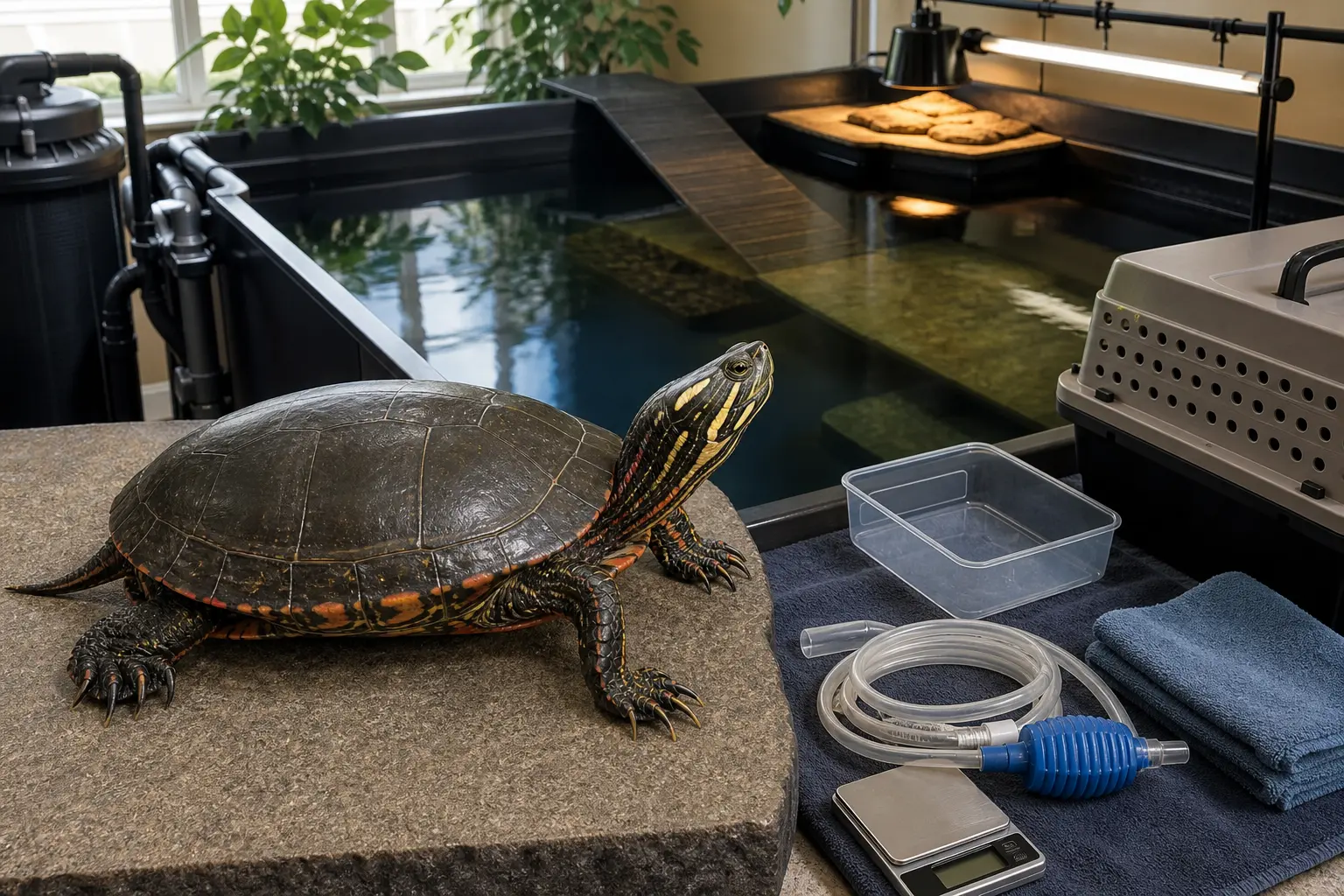
Adult painted turtle with a smooth dark shell, red-orange edges, and striped head in a finished habitat beside organized climate controls, lighting, care tools, a scale, and a carrier.

The short answer

Fund the water system and dry basking zone first for painted turtles

Start with an adult-volume aquarium, powerful filtration, and a fully dry basking platform. Add the tools to measure water quality, heat, and UVB before the turtle arrives.

Adult home
At least 300–450 L (80–120 US gal) for one adult, sized to the individual, with deep open water and a fully dry dock
Warm zone
Completely dry shell-sized basking platform around 32–35°C (90–95°F)
Cool and night
Clean filtered water around 23–26°C (73–79°F), adjusted for age and season; All visible lights off; maintain safe water temperature with guarded controlled equipment
Humidity
Clean tested water plus open ventilation above the tank so the shell dries completely while basking
UVB
Measured moderate UVB across the whole dry dock, with aquatic shade and product-specific distance guidance
Food
Quality aquatic-turtle pellets, safe aquatic and leafy plants, and varied appropriate invertebrate or whole animal foods

The honest fit

Would the adult routine work in your home?

Do this

  • Buy and test the adult enclosure before adoption.
  • Keep backup batteries, replacement dates, a carrier, and vet details.
  • Keep fresh water and monitor painted turtle behavior every day.
  • Record changes so a reptile veterinarian receives useful evidence.

Avoid this

  • Do not rely on an undersized all-in-one starter kit.
  • Do not spend the safety budget on decorative extras first.
  • Do not copy another reptile species' setup.
  • Do not treat a persistent health change as a shopping problem.
01

Start with the permanent aquarium

Start with at least 300–450 L (80–120 US gal) for one adult, sized to the individual, with deep open water and a fully dry dock. Add a secure ventilated cover, protected equipment, open swimming room, cover, a stable ramp, and a platform that dries the whole turtle.

Assemble the system at least two weeks before arrival so the filter begins cycling and water temperature, basking heat, UVB distance, access, and escape security can be corrected.

Adult painted turtle basking above a pond with its complete smooth dark shell, vivid red-orange shell margins and legs, striped head, and long claws in view.
02

Measure water, heat, and light

Use an appropriately oversized filter, dechlorinator, liquid ammonia and nitrite tests, a siphon, a waterproof thermometer, a guarded aquarium heater, basking thermometers, thermostat controls, timers, and measured UVB.

Use drip loops and aquarium-safe electrical planning, keep fixtures away from splashes, and follow every manufacturer's installation and replacement guidance.

Alert adult painted turtle basking fully dry above clean deep water with its smooth dark shell, red-orange margins and legs, and striped head in view.
03

Prepare feeding, cleaning, and transport

Set aside a feeding net, species-appropriate food storage, calcium plan, dedicated buckets and cleaning tools, a gram scale, paper towel, and a secure top-ventilated carrier.

Keep every aquarium tool separate from human kitchen equipment. Save the reptile veterinarian's details, water-test baseline, recent weights, and a backup plan for filter, heater, power, or transport failure.

Keep deciding

See the complete care picture

Sources and further reading