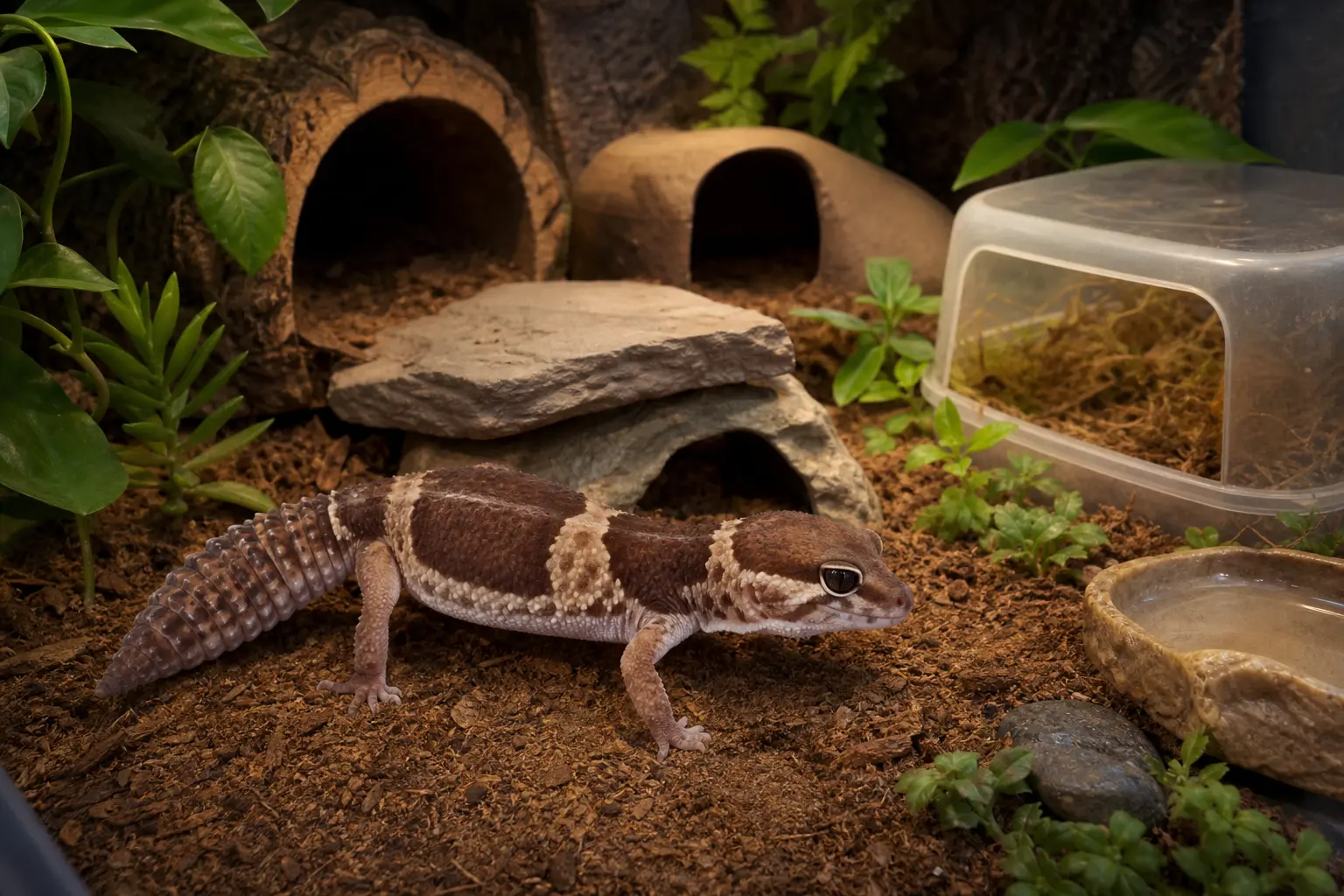
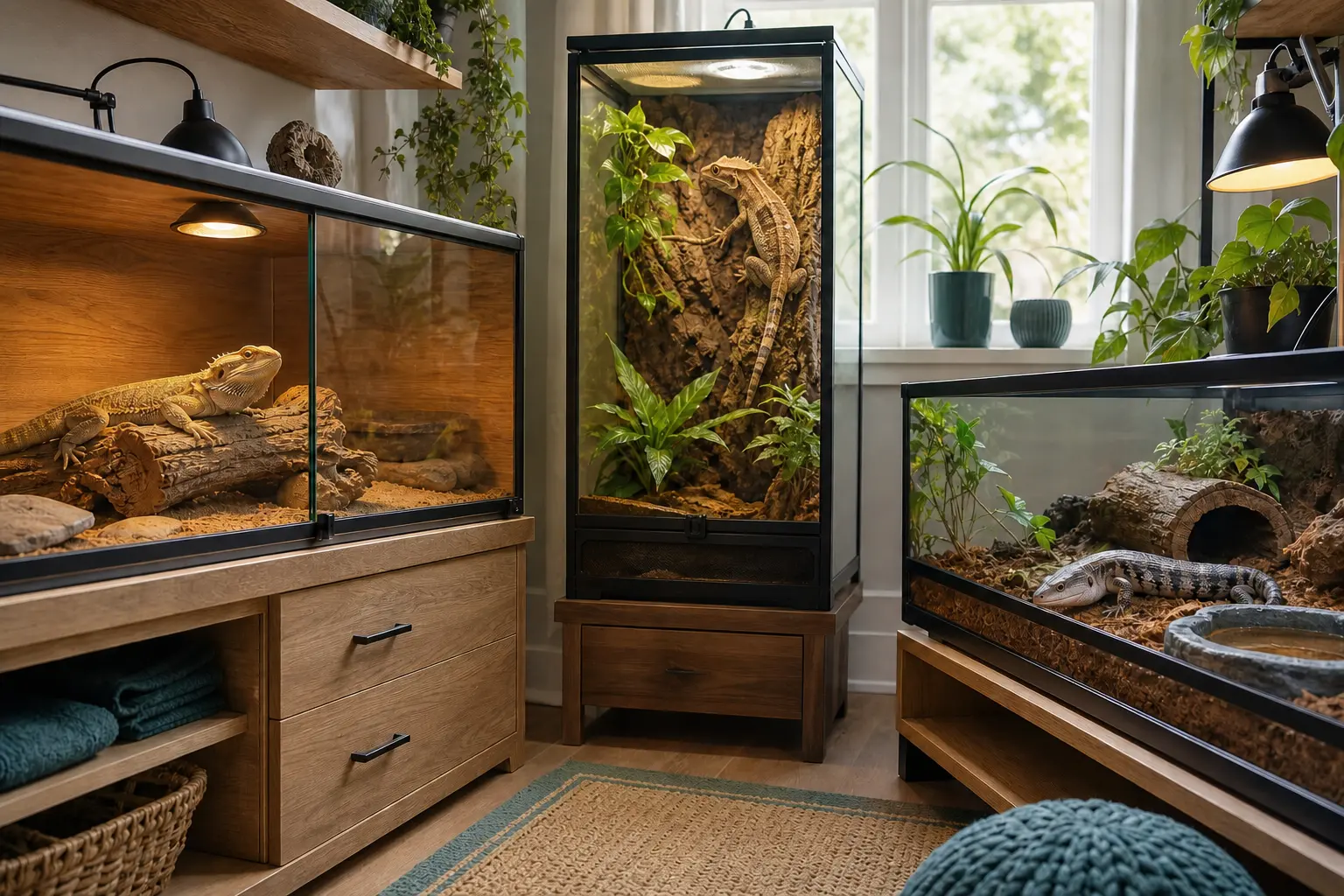
They are terrestrial, but low stable structure still gives them more of a world to explore
African fat-tailed gecko · Hemitheconyx caudicinctus
After dark with an African fat-tailed gecko.
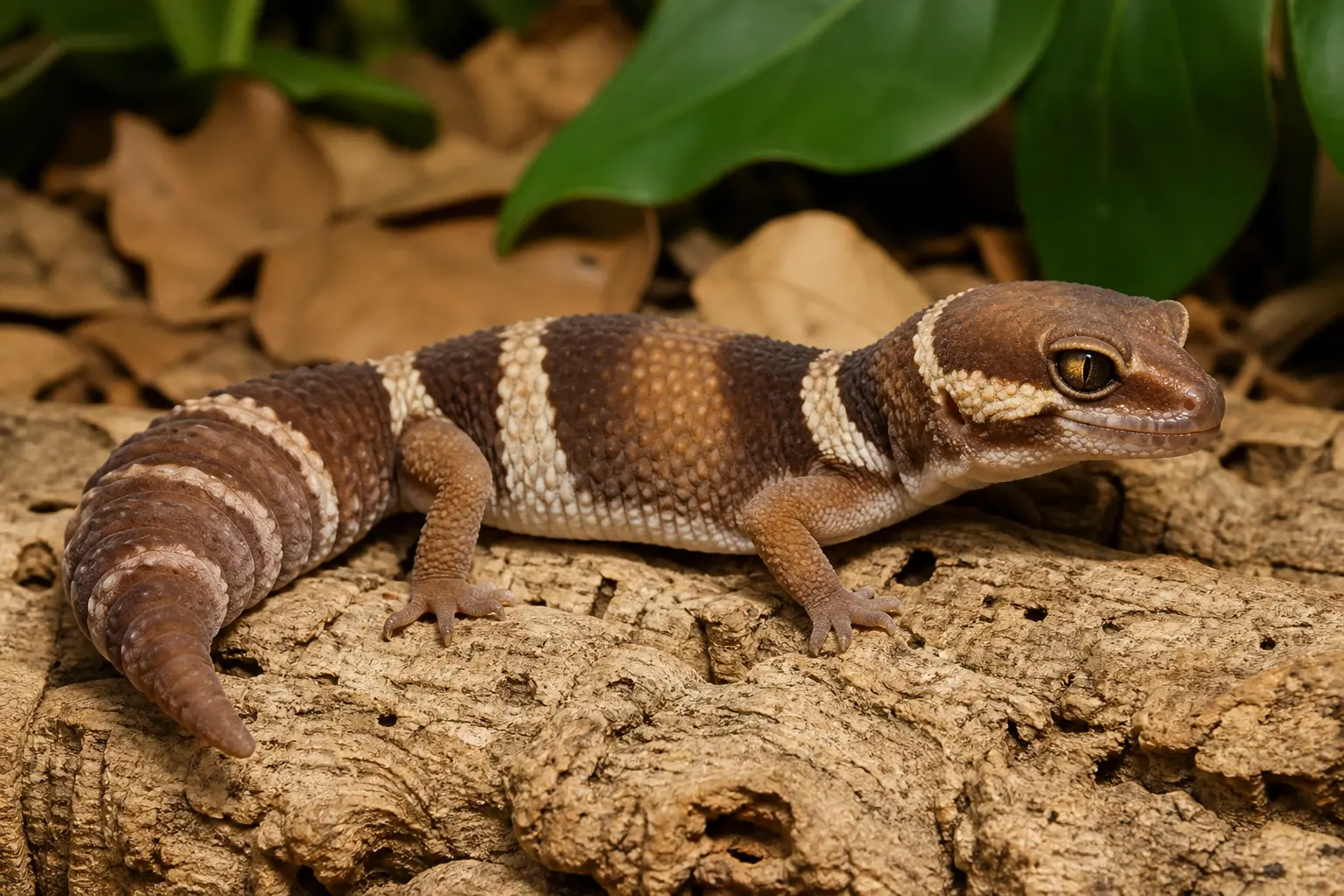
A quiet, ground-dwelling evening gecko with eyelids, little claws, and a remarkable tail.
Many of its best moments happen after dusk.
Get to know them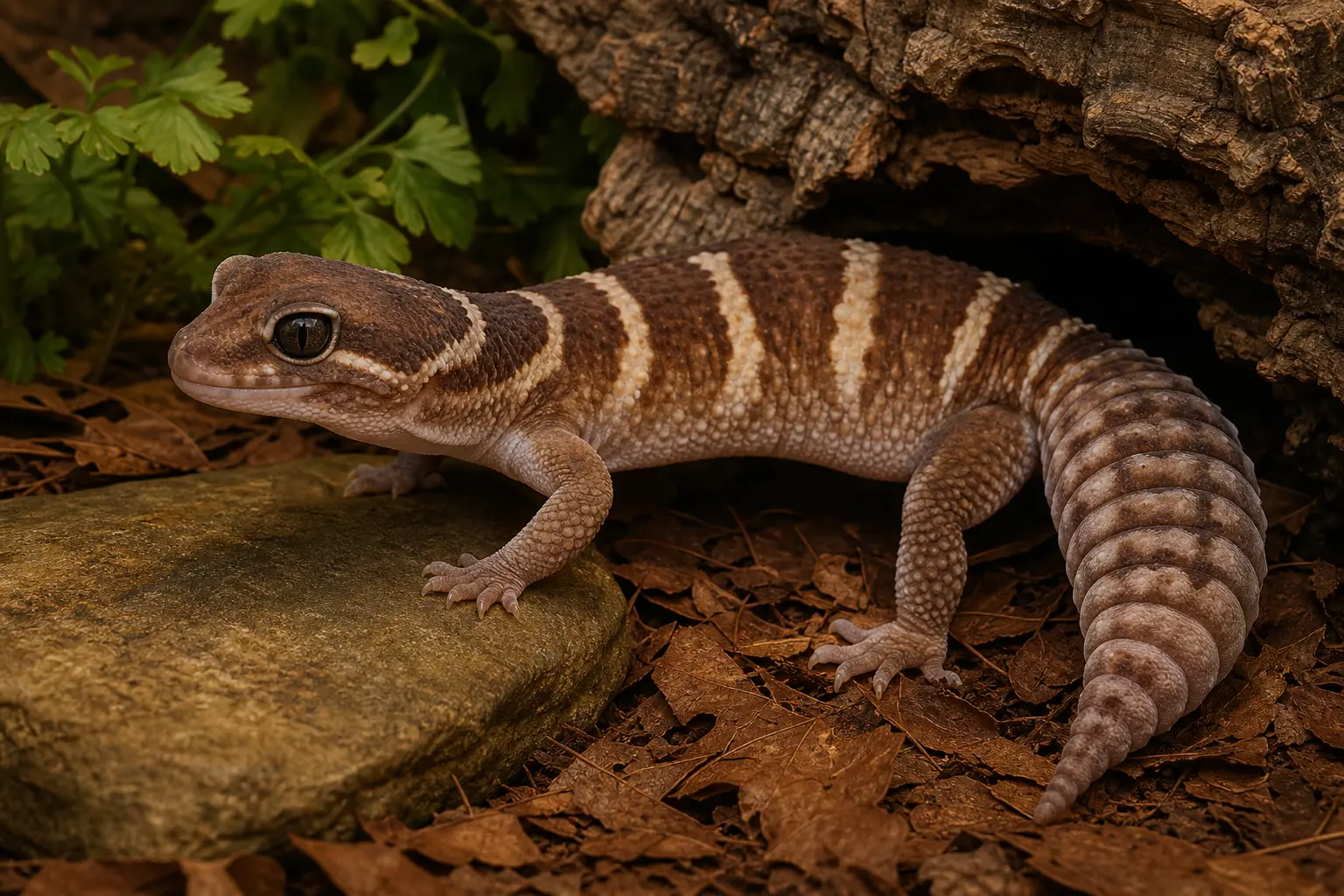
Life with an African fat-tail
An evening gecko with its feet on the ground.
A fat-tail gecko is not built to cling to glass or perform for a room. Its small world is at floor level: a cork tunnel, a leaf-shadowed path, a warm hide, a cool hide, then a careful look out after dusk.
Daytime is for feeling safe in cover; the interesting moments often begin once the house settles
It stores energy and can be dropped under stress; a regrown tail is usually shorter and differently shaped
The relationship is built through calm routine, not by asking a small animal to be held
Before you decide
Could a fat-tail gecko fit your evenings?
Small does not mean a spare corner. The decision includes a broad adult home, measured warmth and humidity, live feeder insects, a long horizon, and a gentle response when the gecko chooses cover over company.
The honest fit
Would you enjoy life together?
The right match gives the gecko a secure little ground world and leaves you ready for the quiet, repeatable care that keeps it working.
You may be a lovely match if…
- A permanent, wide, furnished adult enclosure fits comfortably in your home
- You enjoy an animal whose natural life is most visible in calm evening hours
- You are comfortable buying, preparing, and cleaning up live feeder insects
- You can measure the habitat and have realistic access to a reptile veterinarian
Think twice if…
- You are hoping for a daytime lap pet or frequent handling
- The enclosure would need to stay small, bare, temporary, or move often
- Live insects, a humid refuge, or dependable measurement would be difficult to provide
- A reptile veterinarian is not realistically within reach
A comfortable home
A broad, sheltered home—not a dry box.
The best home gives one gecko choices across the floor: places to disappear, a measured warm zone and cooler retreat, water, and a humidity plan that still breathes.
Use the 36 × 18 × 18 in planning target to make room for cover, water, and a real climate choice
CHUV uses a 28–30°C warm zone and about 25°C cool zone; probes tell you what the gecko actually has
Use a hygrometer, fresh air, clean substrate, and a separate shedding refuge—not permanently wet glass
There is no one-bulb answer; give the gecko real shade and match the setup to the exact product and plan
Feeding them well
The living part of the grocery list.
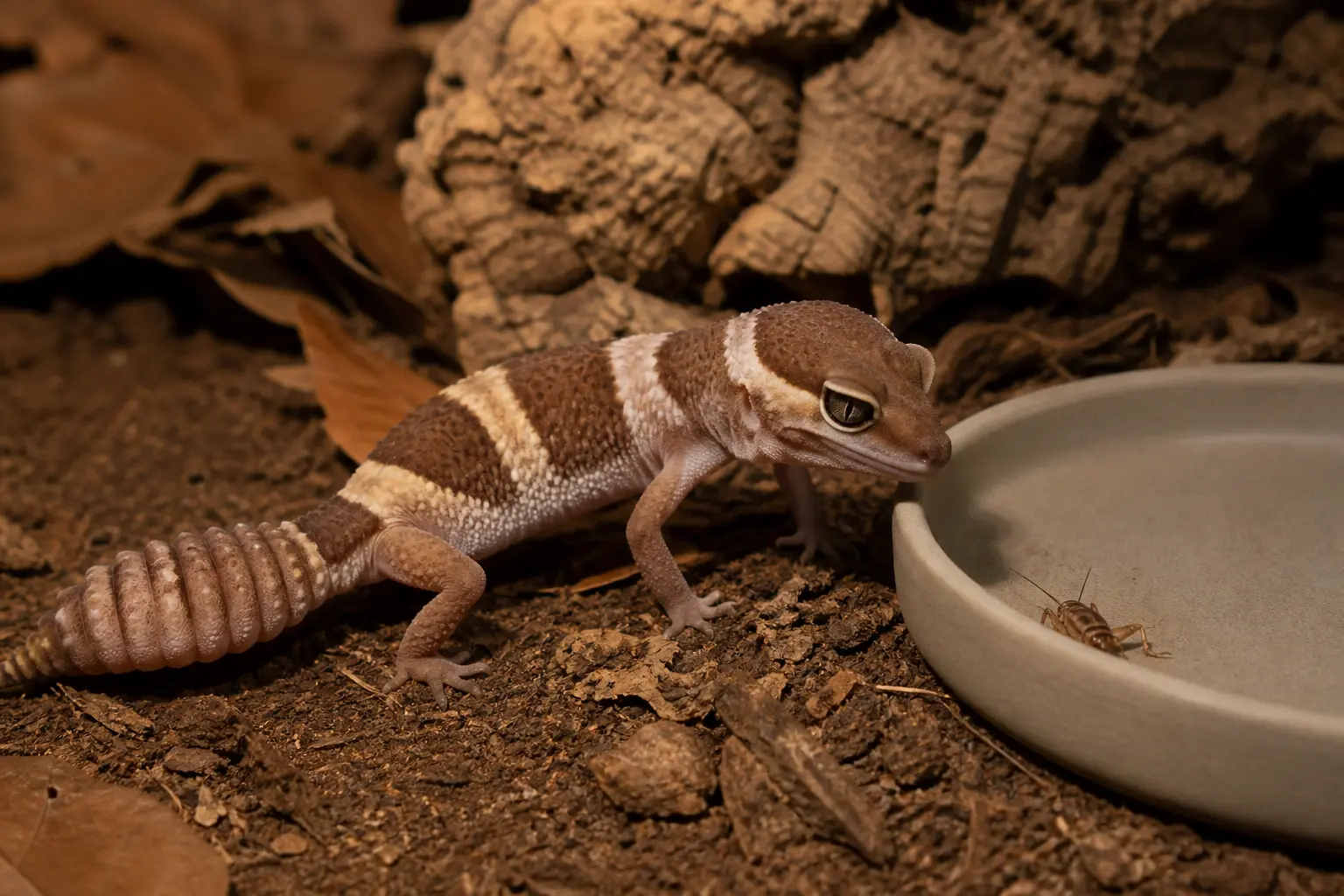
Live insects are not an accessory to the enclosure. They are shopping, keeping feeders well, preparing them thoughtfully, offering the right amount, and knowing what needs to come back out.
A changing mix is kinder and more useful than relying on one easy feeder
Calcium and vitamins need to fit the actual diet, UVB plan, age, and veterinary guidance
Refresh the dish whenever it is soiled and make it part of the same dependable routine
The rhythm
Check the home. Then let the evening happen.
Make the home ready
Check the warm and cool readings, humidity, water, humid hide, cover, locks, and whether anything needs spot-cleaning.
See what they choose
When food is due, offer the planned insects and notice how your gecko leaves cover, moves, eats, and uses the floor of its home.
Leave the hideouts quiet
Remove what is left, make a note of anything unusual, and preserve a calm, dark night.
Care with tenderness
Let them keep their own pace.
Keep handling low and unhurried
Support the body over a safe surface and stop before the gecko needs to flee. Watching is a complete way to be together.
Protect the tail
Never grab it. A dropped tail can regrow, but usually shorter and differently shaped; it is a stress event, not a party trick.
Give each gecko its own home
One gecko in one well-furnished home is the calm default. Keep breeding introductions outside an adoption setup.
Wash up after care
Wash your hands after the gecko, feeders, waste, water, or enclosure equipment. Keep all supplies out of the kitchen.
Good to know
Common questions, answered.
Open any question for a short, practical answer.
Life together
Are African fat-tailed geckos good first reptiles?
They can suit a prepared first-time keeper. Before one arrives, have the adult home running: a warm hide, a cool hide, a humid hide, clean water, live feeders, and a reptile veterinarian.
How big do African fat-tailed geckos get?
Adults are about 15–20 cm (6–8 in) from nose to tail. Set up the adult floor space for a gecko that needs a warm hide, a cool hide, and room to cross between them.
How long do African fat-tailed geckos live?
Plan for 15–20 years. Think through moves, routine, veterinary care, and the adult home before bringing one home.
When are African fat-tailed geckos most active?
They are terrestrial geckos most visible around dusk and at night. Daytime is often for quiet, secure cover.
How are fat-tail geckos different from leopard geckos?
They are a different species with their own West African history and care boundaries. A fat-tail has eyelids, claws rather than sticky toe pads, a broad segmented tail, and a different humidity conversation—so do not copy another gecko's setup.
Can African fat-tailed geckos drop their tails?
Yes. Never grab the tail: it stores reserves and can be dropped under stress or trauma. It can regrow, but the new tail is often shorter and differently shaped.
Can two African fat-tailed geckos live together?
Plan one home per gecko. CHUV warns that males can fight, sometimes fatally; pairing and breeding belong to a separate, expert-level decision, not to companionship planning.
What should I have ready before bringing one home?
Run the adult enclosure first. Test warm and cool retreats, humidity, water, hides, low stable structure, locks, the feeding plan, and your reptile-veterinary contact before adoption.
Home, food, and health
What enclosure does an adult African fat-tailed gecko need?
Plan an adult home about 91 × 46 × 46 cm (36 × 18 × 18 in) or larger. It needs a warm hide, a cool hide, a humid hide, water, and safe cork cover. You will find smaller numbers online; this page treats the larger floor plan as a planning target, not a legal minimum.
How do I heat an African fat-tailed gecko enclosure safely?
Use guarded thermostat-controlled heat and probes where your gecko actually rests. CHUV uses a 28–30°C warm zone, about 25°C cool, and 20–25°C at night. A current specialist guide uses seasonal alternatives, so do not blindly split the difference—test the home you built.
How should humidity work?
CHUV uses about 60% humidity with fresh water and a separate humid shedding refuge. Specialist guidance uses wider seasonal cycles. Use a hygrometer and ventilation; this is not an always-wet enclosure or a dry desert box.
Does an African fat-tailed gecko need UVB?
The honest answer is that the sources differ. CHUV says UVB probably helps vitamin-D and calcium use but notes debate; specialist guides give low-level targets; MSD gives broader reptile-lighting context. Give real shade and use a product-specific plan rather than copying one universal UVI or bulb.
What substrate should I start with?
For a new arrival or an uncertain setup, choose a simple, easy-to-monitor surface such as paper. Naturalistic substrate may suit an established gecko, but it depends on feeding, humidity, sanitation, and the individual—not on a social-media recipe.
What do African fat-tailed geckos eat?
They are insectivores. Build a varied, appropriately sized live-insect routine and let body condition, age, appetite, and your reptile veterinarian guide the details instead of relying on a single feeder or fixed calendar.
Do I need to keep live feeder insects?
Yes—plan for them as part of normal ownership. Keep feeders clean and well prepared, gut-load where appropriate, use the right size, and remove anything uneaten from the gecko's home.
How often should I feed one?
Do not copy one universal schedule. Life stage, body condition, appetite, the feeder mix, and the full husbandry plan all matter; a dated feeding and weight log gives your reptile veterinarian something useful to work with.
Does a fat-tail gecko need water and a humid hide?
Yes. Keep a small dish of fresh water available at all times and provide a separate humid refuge for shedding. The rest of the home still needs ventilation and clean, monitored conditions.
What should I do when my gecko sheds?
Check the humid refuge and notice how the shed goes. Repeated retained skin, eye concerns, or injury are reasons to call a reptile veterinarian, not to keep escalating home fixes.
When should I call a reptile veterinarian?
Call for persistent changes in appetite, droppings, shed, tail or body condition, activity, eyes, breathing, or any injury. These are reasons to call, not a diagnosis.
Can a healthy African fat-tailed gecko carry Salmonella?
Yes. Wash your hands after the gecko, feeders, waste, water, or enclosure equipment, and keep all supplies out of kitchens and food-preparation areas.
Build the ground world before they arrive.
Test the enclosure's floor room, secure cover, measured warm and cool retreats, humidity, water, and locks before your African fat-tailed gecko comes home.
Plan their heat and lightingSources and care boundaries
Exact targets depend on the measured location, equipment, animal, and veterinary context. This profile keeps source disagreements visible instead of blending them into one number.
- The Reptile Database: Hemitheconyx caudicinctus
- Centre hospitalier universitaire vétérinaire, Université de Montréal: Le gecko à queue grasse (Hemitheconyx caudicinctus)
- British Herpetological Society, The Herpetological Bulletin: Notes on the Natural History of the Eublepharid Gecko Hemitheconyx caudicinctus in Northwestern Ghana
- MSD Veterinary Manual: Management and Husbandry of Reptiles
- ReptiFiles: African Fat-Tailed Gecko Care Sheet
- Cadillac Veterinary Hospital: African Fat-Tailed Geckos
- U.S. Centers for Disease Control and Prevention: Reptiles and Amphibians
- Association of Reptile and Amphibian Veterinarians: For Reptile and Amphibian Owners
- American Veterinary Medical Association: Selecting a Reptile