Reptile guides

Reptile Heating and Lighting

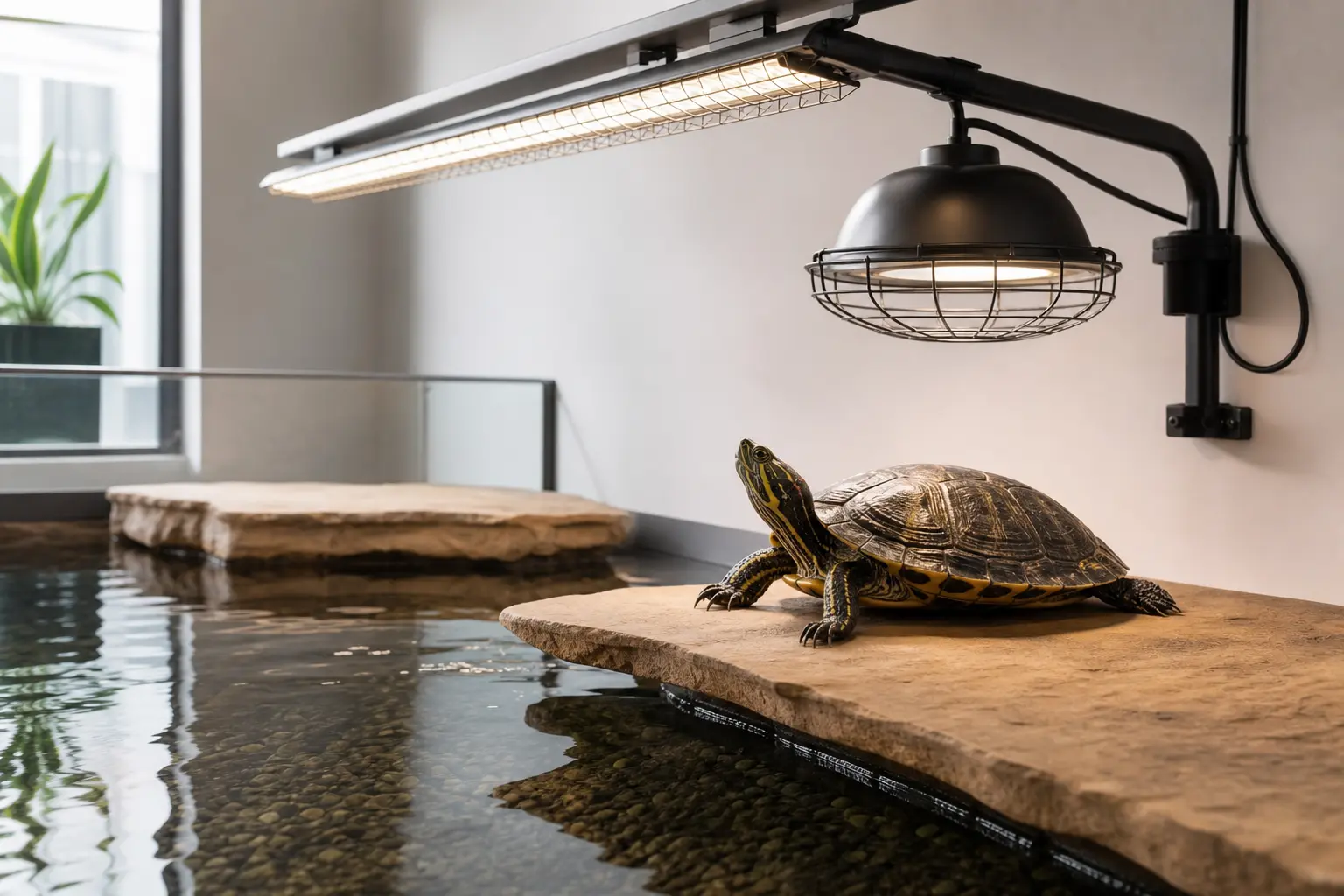
Create a species-specific warm-to-cool gradient. Control each heater with a compatible thermostat, keep lamps out of reach, and place UVB over the basking or resting zone.

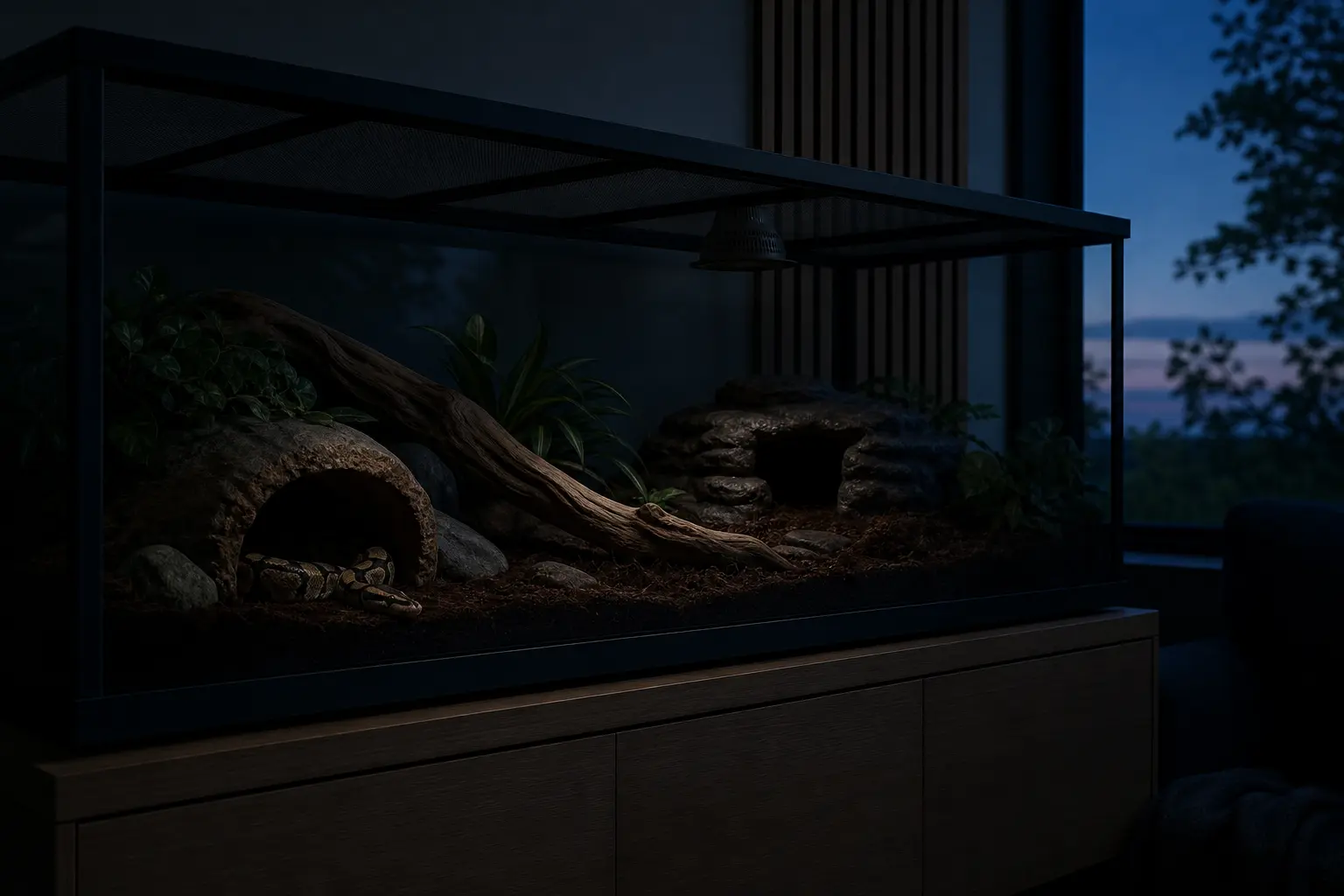
Warmth, daylight-bright illumination, and UVB shape different parts of the day. Build each usable zone where the animal can reach it, with shade nearby and real darkness at night.

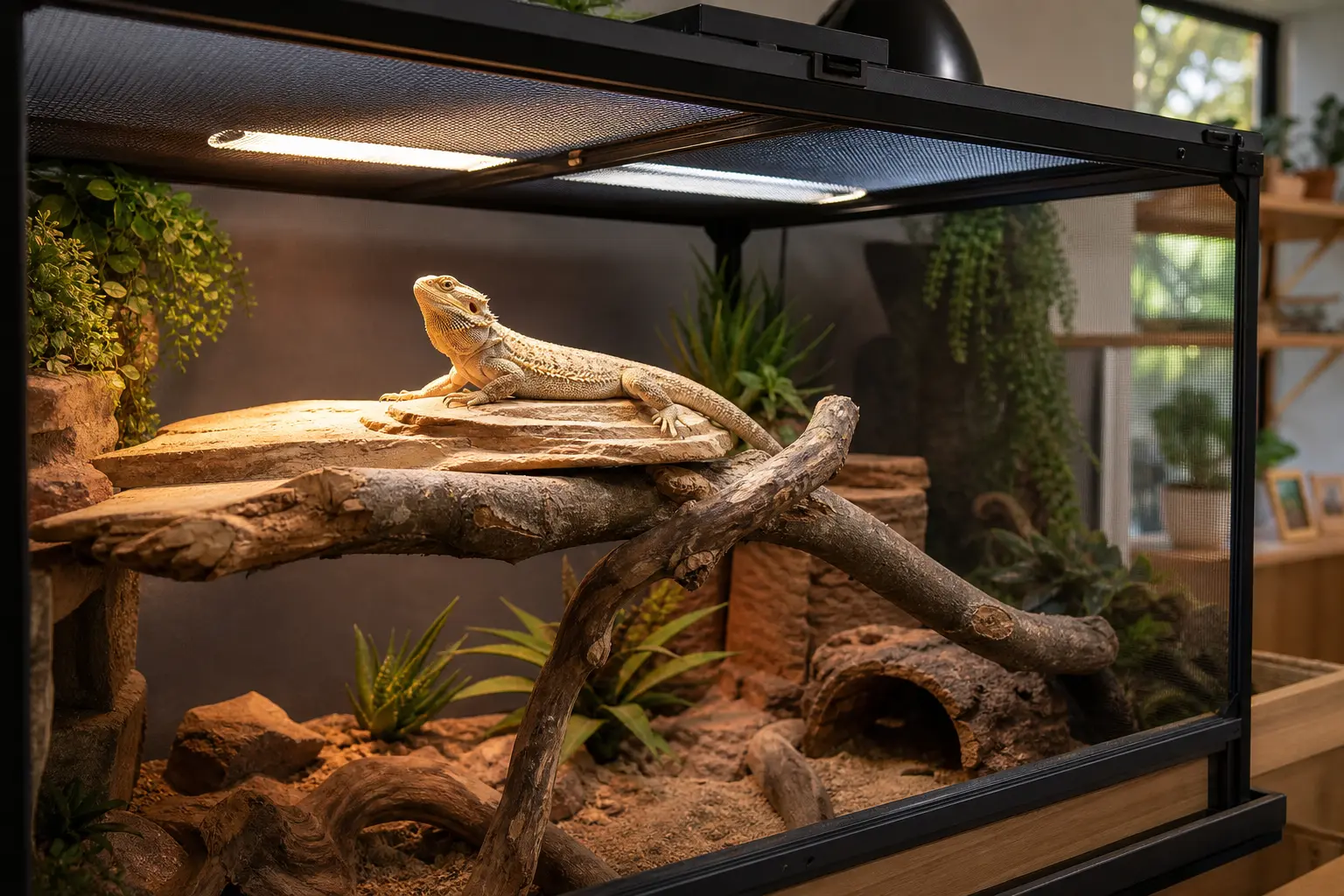
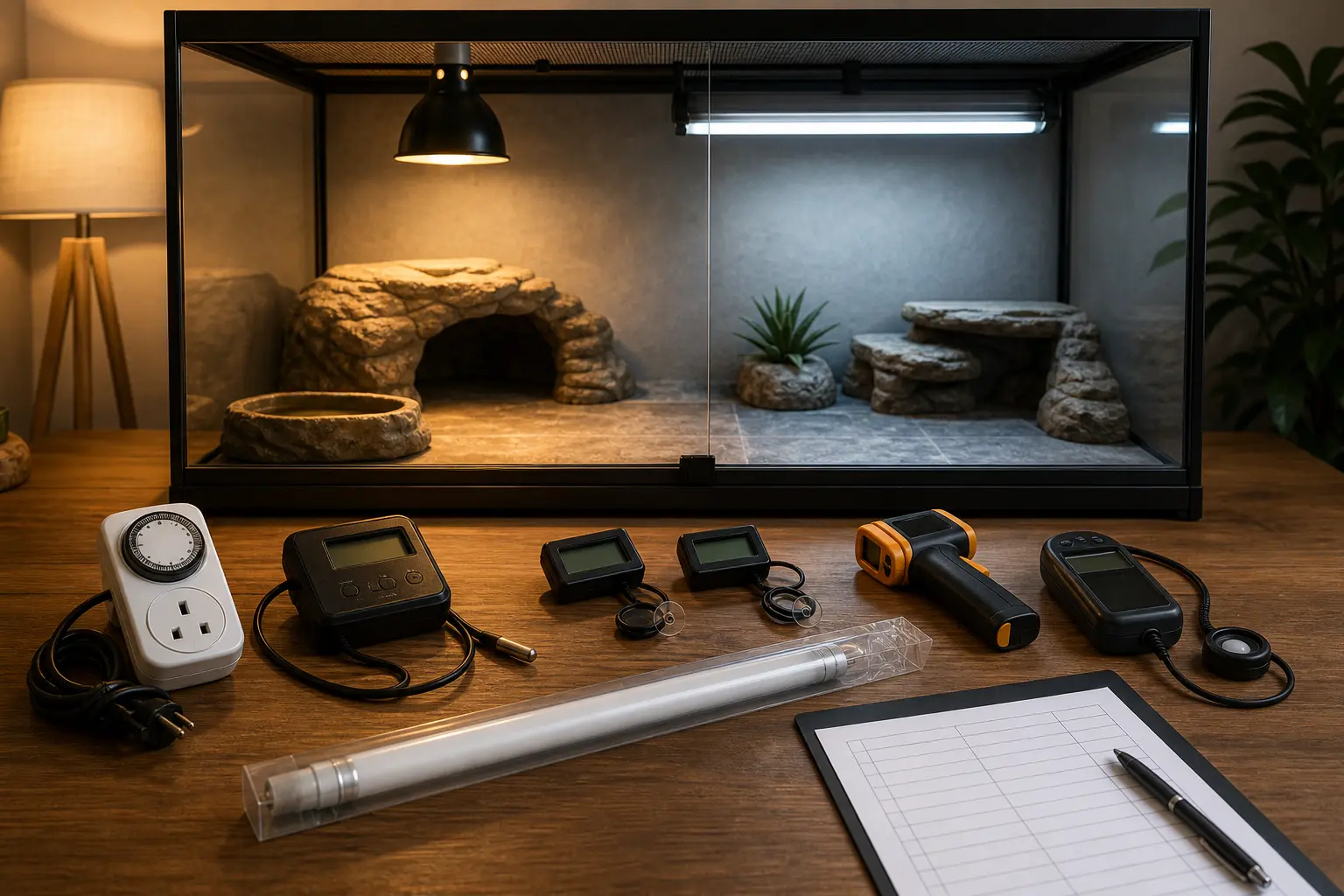
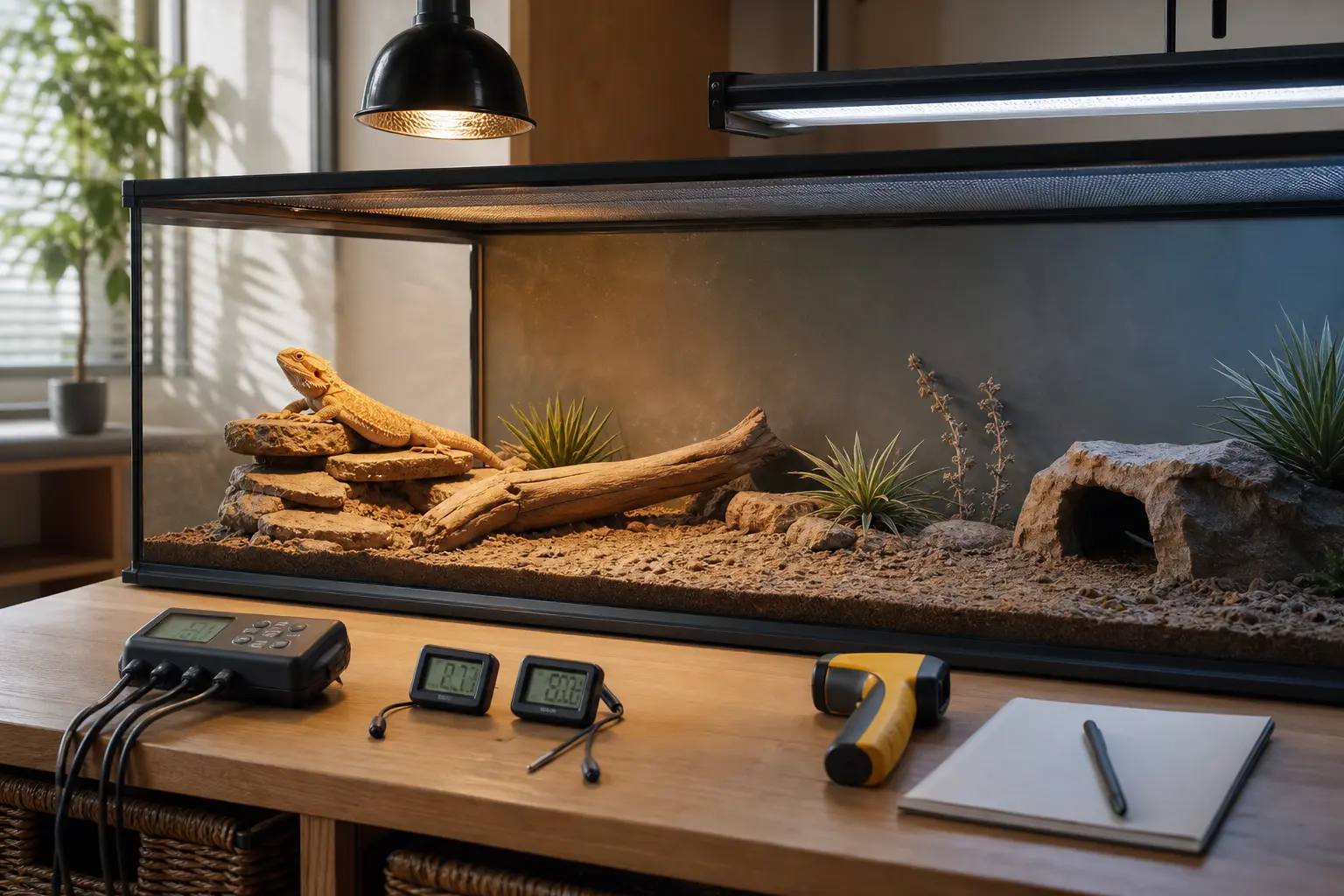
Bearded dragon enclosure with a basking lamp, linear UVB fixture, shaded retreat, thermostat, probe thermometers, infrared thermometer, and care log.
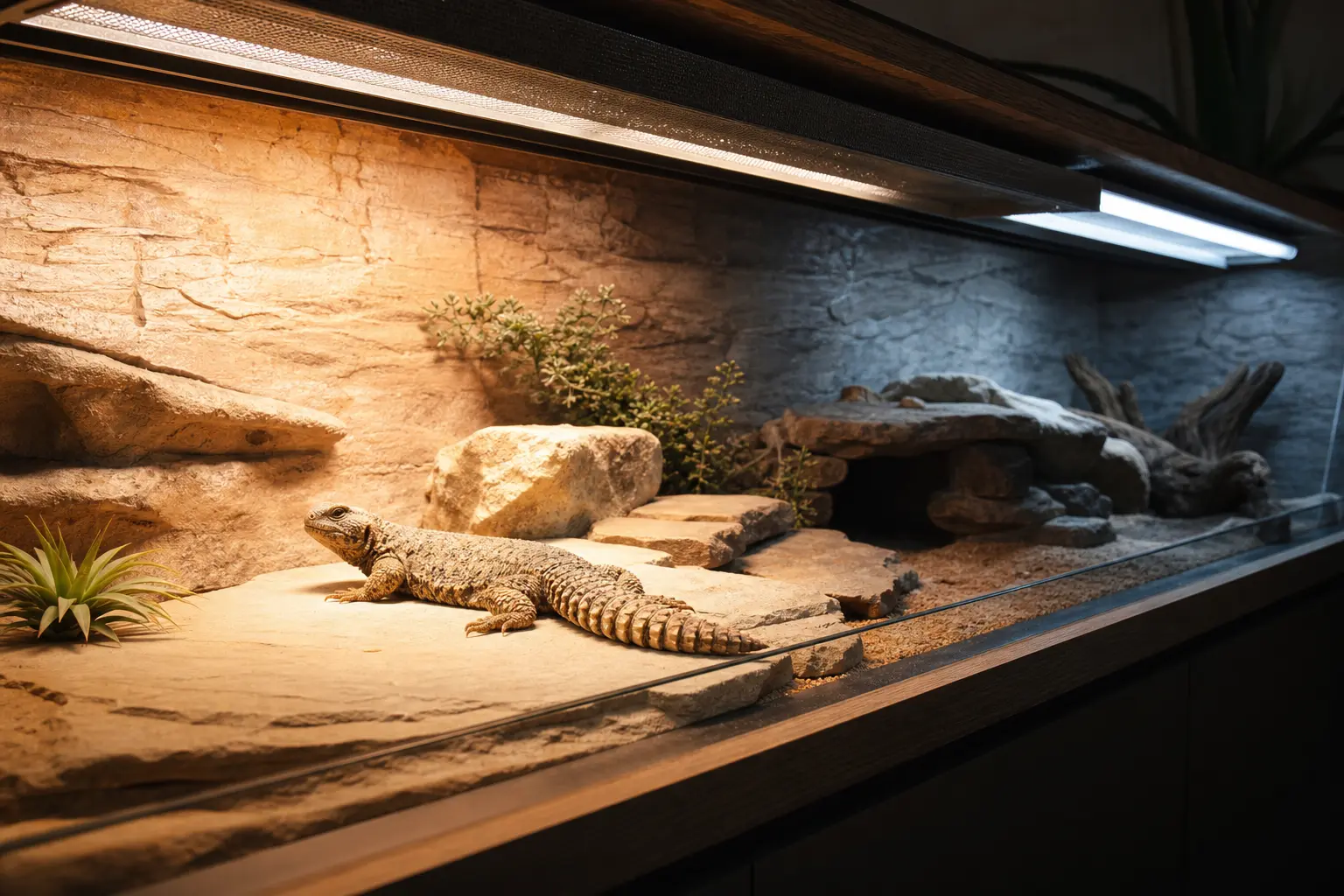
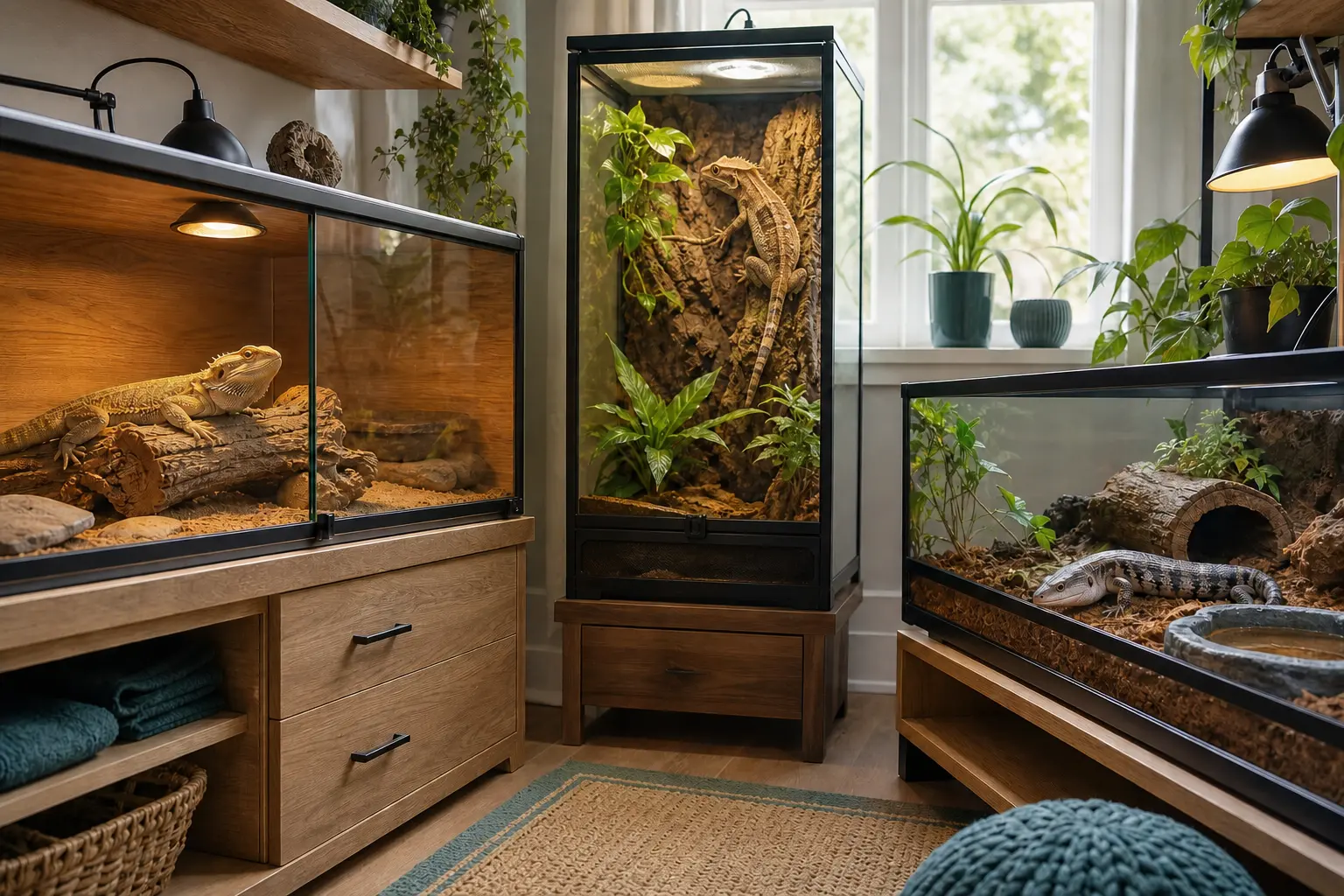
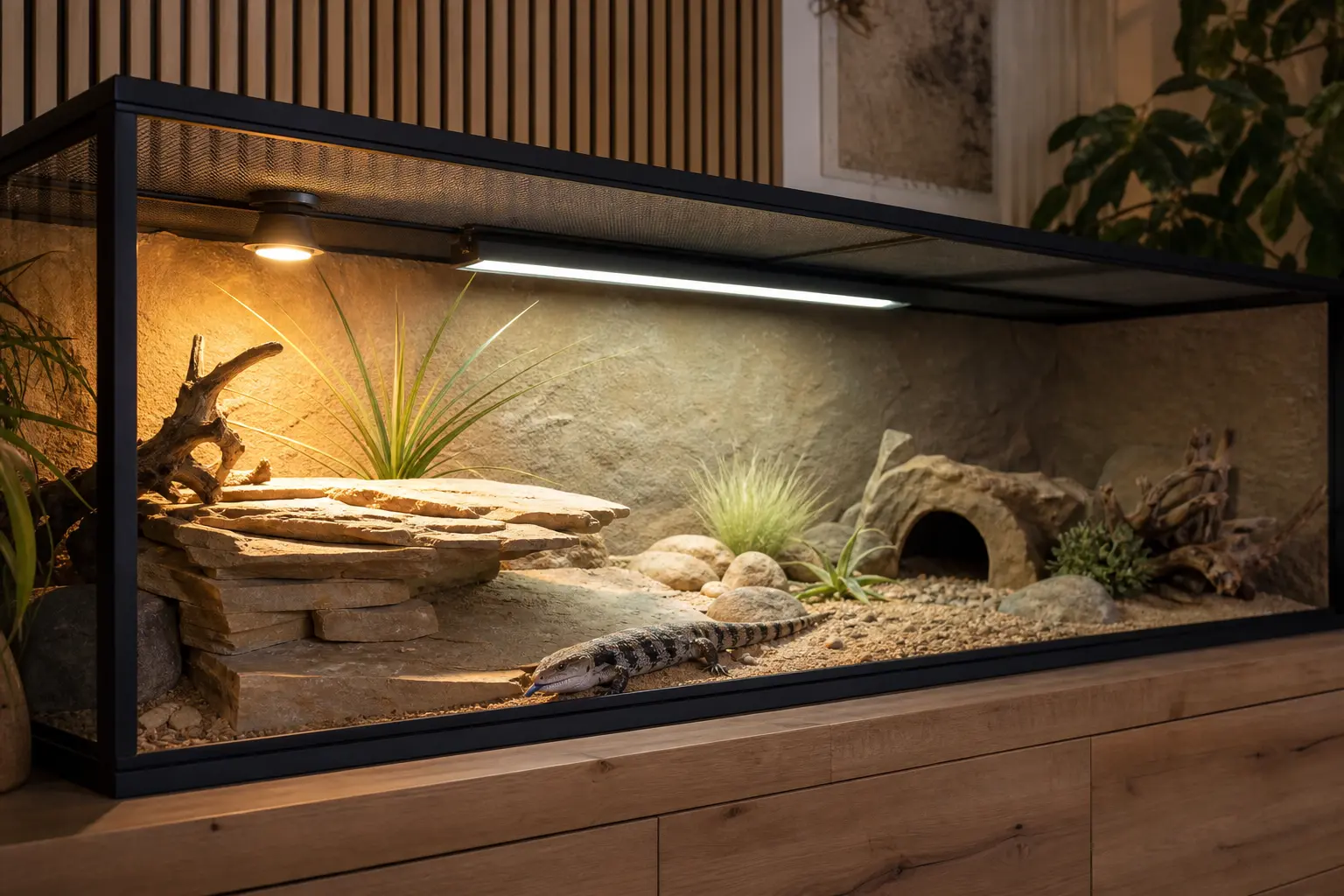
Blue-tongued skink habitat showing an overhead heat source, separate linear light fixture, warm basking end, and shaded cool retreat.

Give heat, visible light, and UVB separate jobs

Choose lamps from the exact species plan, not from tank size or bulb wattage alone. Heat sets the warm zone, while bright visible light defines daytime.

For a basking species, place heat and UVB over the same broad platform. Keep a shaded route and a secure retreat beyond the beams.

A full-spectrum label does not prove that a lamp produces useful UVB. Ordinary glass and plastic block most UVB, so window light does not replace a planned fixture.
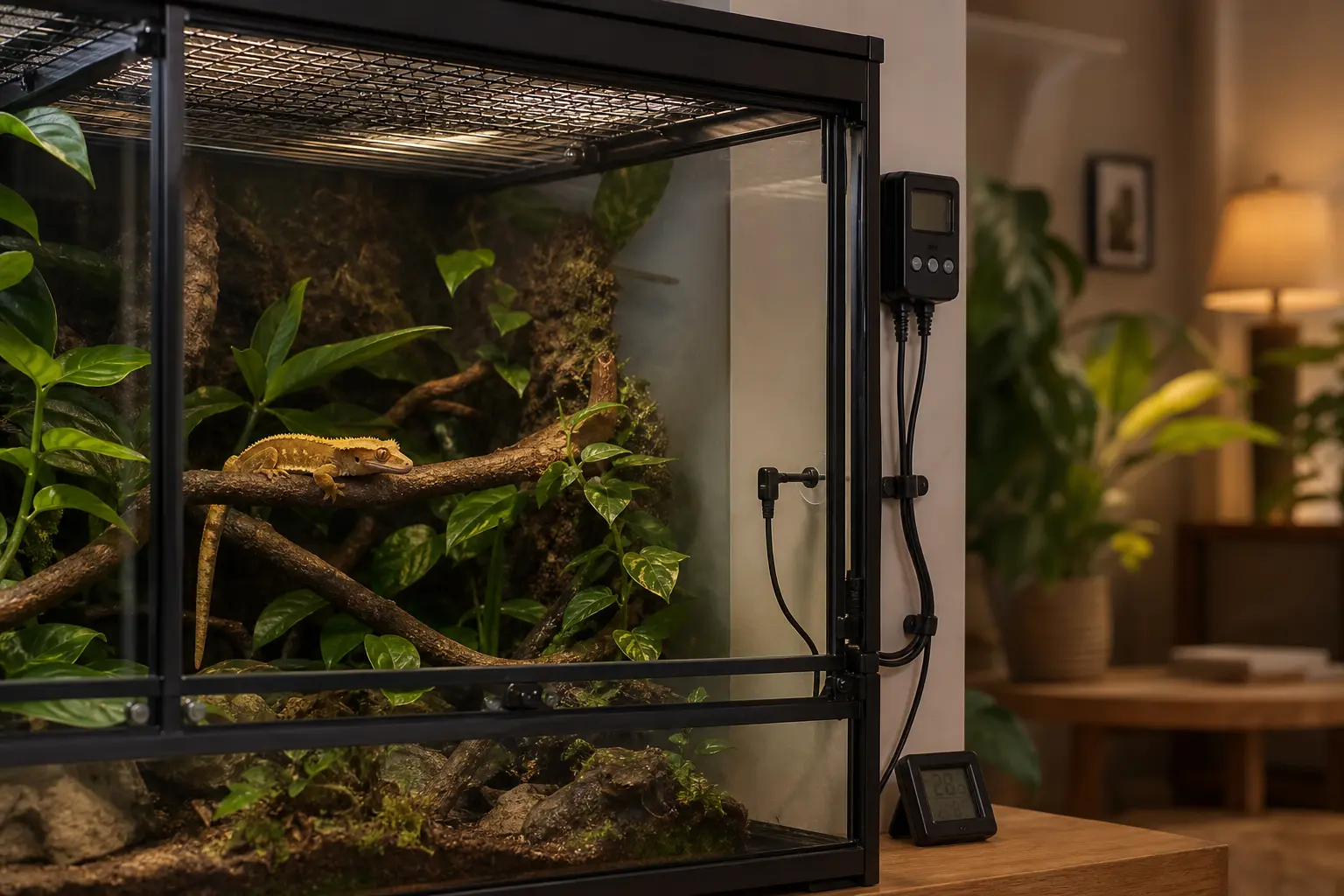
Crested gecko enclosure with guarded overhead heat, an external thermostat, fixed probe, separate thermometer, and secured cables.

Control every heater and guard every hot surface

Use a thermostat made to control the chosen heater. Fix its probe where the reptile cannot move, cover, bite, or lie directly against it.

The controller sets a limit, while its probe reports only one point. Confirm the heated and cooler areas with independent thermometers, and put a metal guard between the reptile and each hot fixture.

Skip heat rocks because uneven contact heat can burn. If overnight heat is required, use a controlled non-light-emitting source and keep the normal dark period dark.

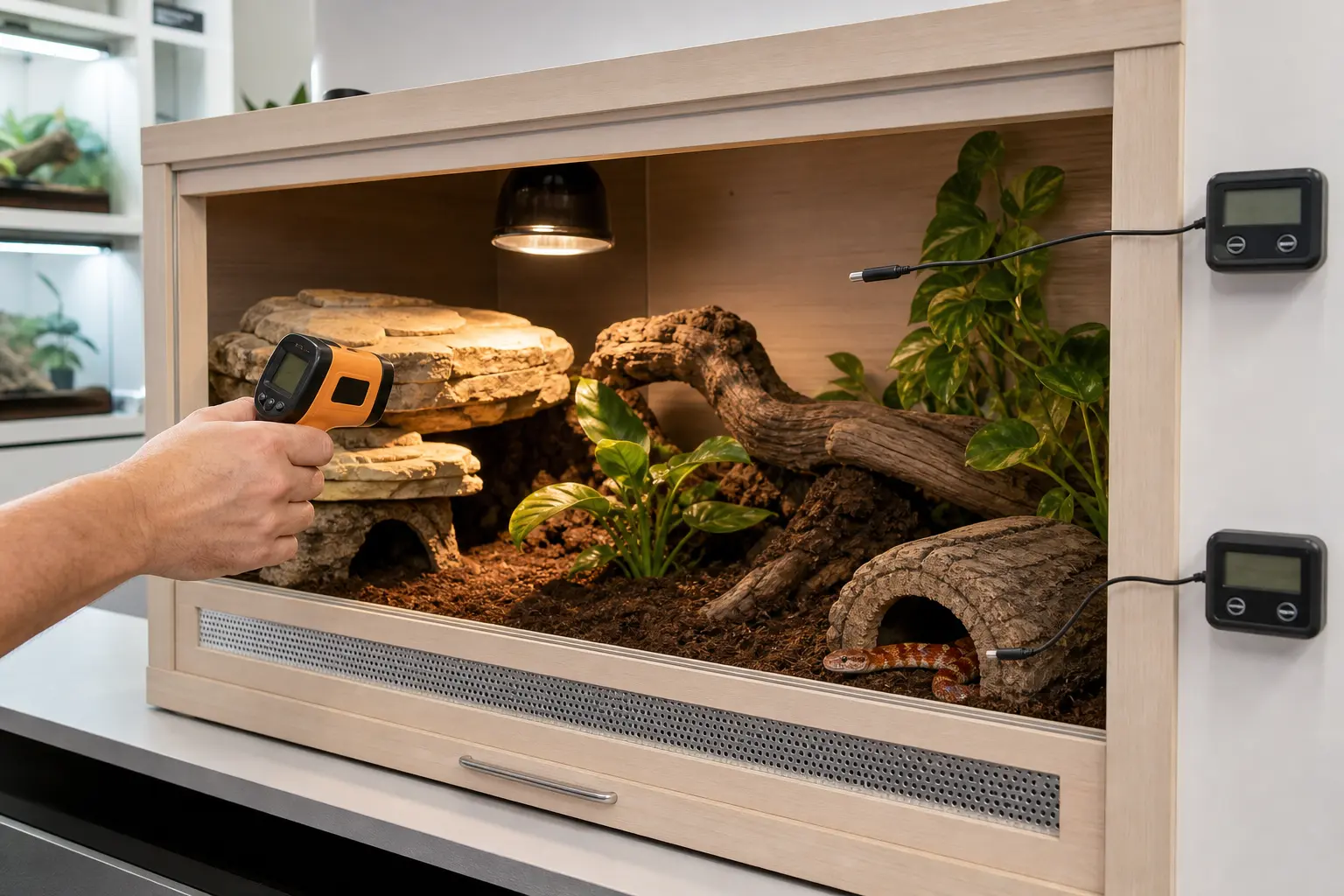
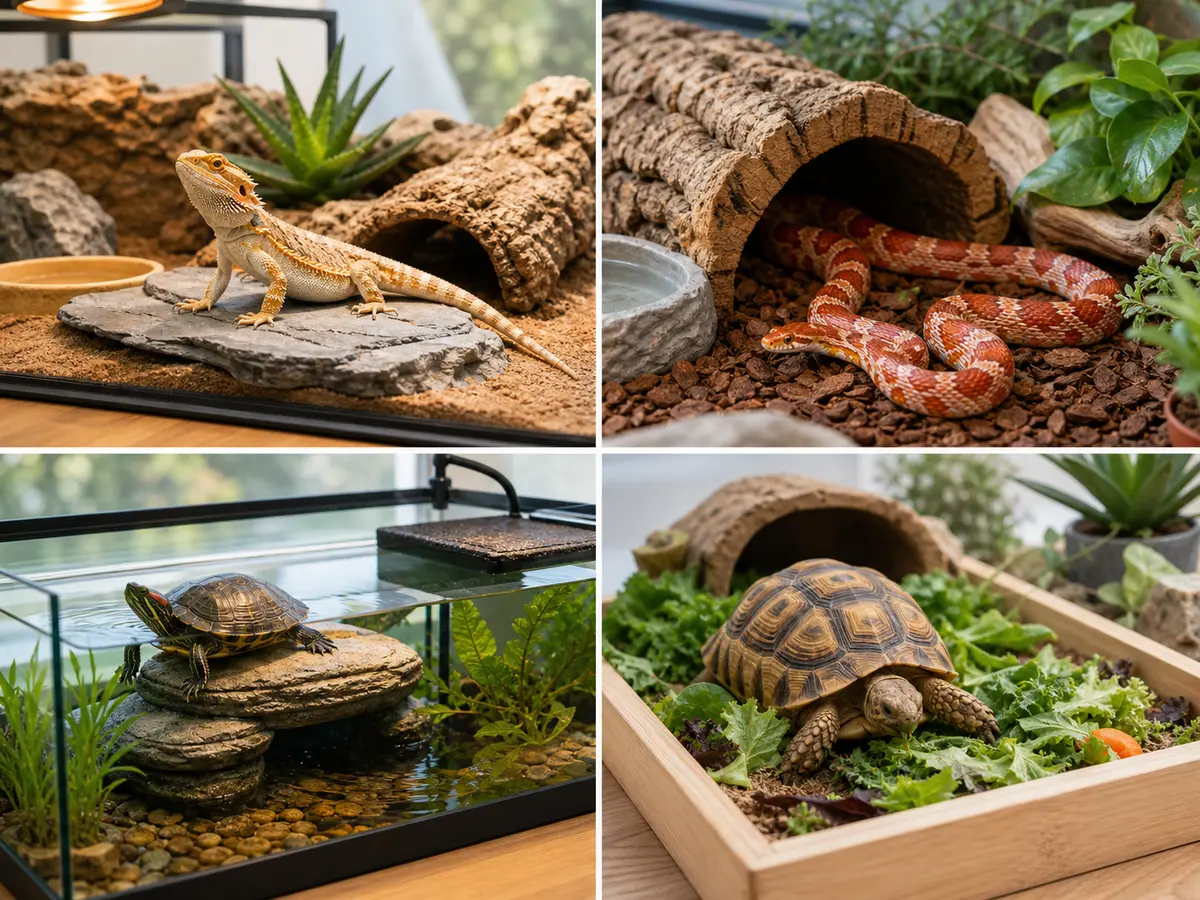
Keeper measuring a corn snake basking surface with an infrared thermometer beside fixed warm-hide and cool-hide probes.

Measure the places the reptile actually uses

Choose checkpoints before routing cables: the heated refuge, the coolest refuge, and the main basking or resting surface.

Secure a probe at each air-reading point. Compare the daily high and night low with the exact species plan.

Use an infrared thermometer for surface checks on a platform, branch, dock, or substrate. It cannot report air temperature or the conditions inside a hide.

Run the empty habitat through several days and nights. Recheck after changing a bulb, fixture height, room temperature, substrate depth, ventilation, branch, dock, or thermostat setting.

Build the system in layers

The tools answer different questions: a thermostat limits heat output, probes follow air temperature, an infrared thermometer reads surfaces, and lamp records track changing UVB performance.

Know what each tool can tell you

No single display proves the whole enclosure is safe. Read the controls and measurements together.

Thermostat Controls power to a compatible heater from one fixed probe. Verify its result with separate instruments.
Probe thermometer Tracks the air or contacted point where the probe is secured. Use more than one zone.
Infrared thermometer Takes a quick surface reading. It does not report air temperature or the temperature inside a hide.
UV meter or lamp record A suitable meter can verify exposure at animal level; otherwise follow fixture distance and replacement guidance conservatively and keep dates.

References