They are nocturnal climbers, not a daytime display animal
Chahoua gecko · Mniarogekko chahoua
Among the branches with a Chahoua gecko.
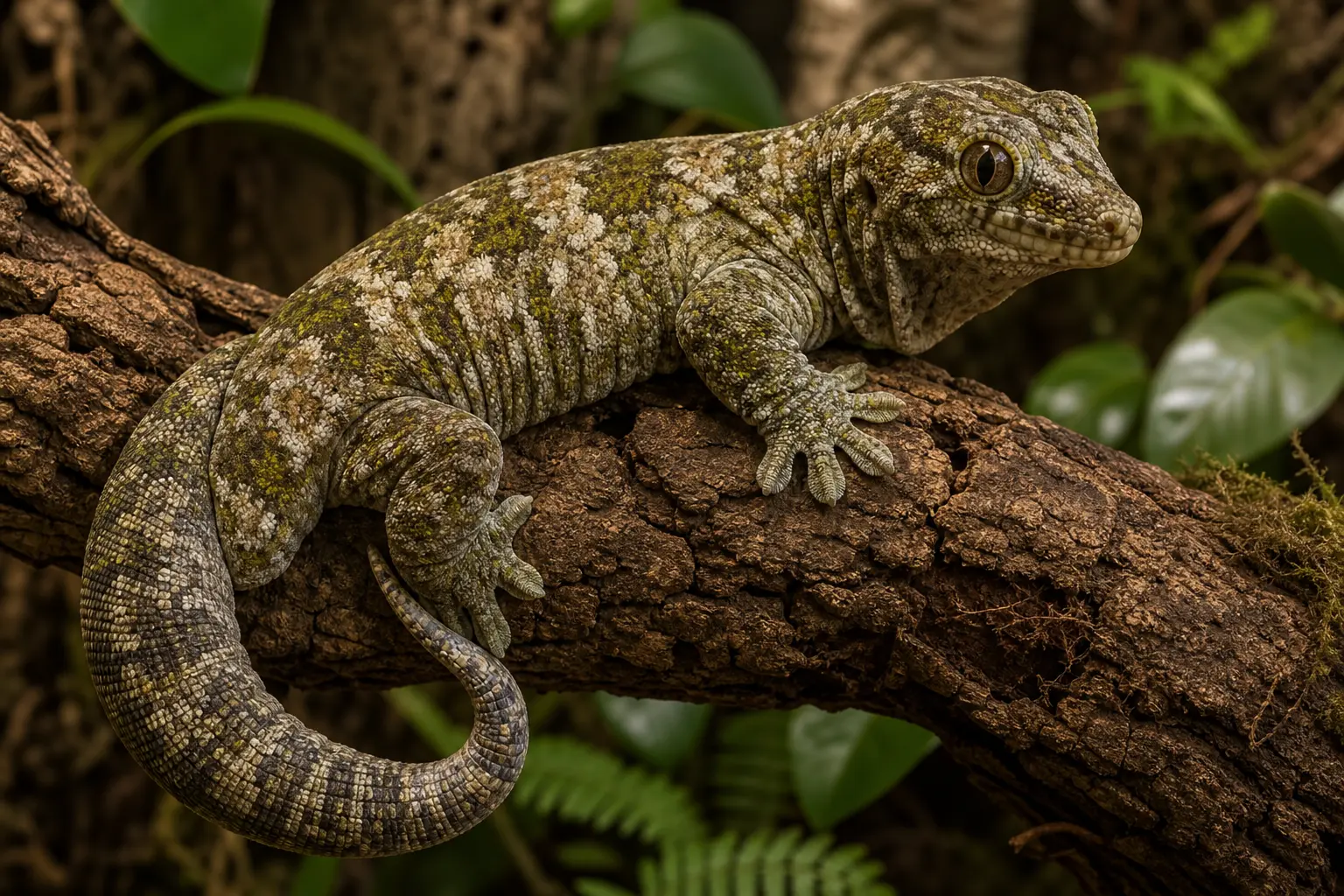
A moss-patterned New Caledonian forest gecko with a strong grasping tail—quiet in cover by day and purposeful among branches after dark.
Give a Chahoua a tall, leafy little world, then wait.
Get to know them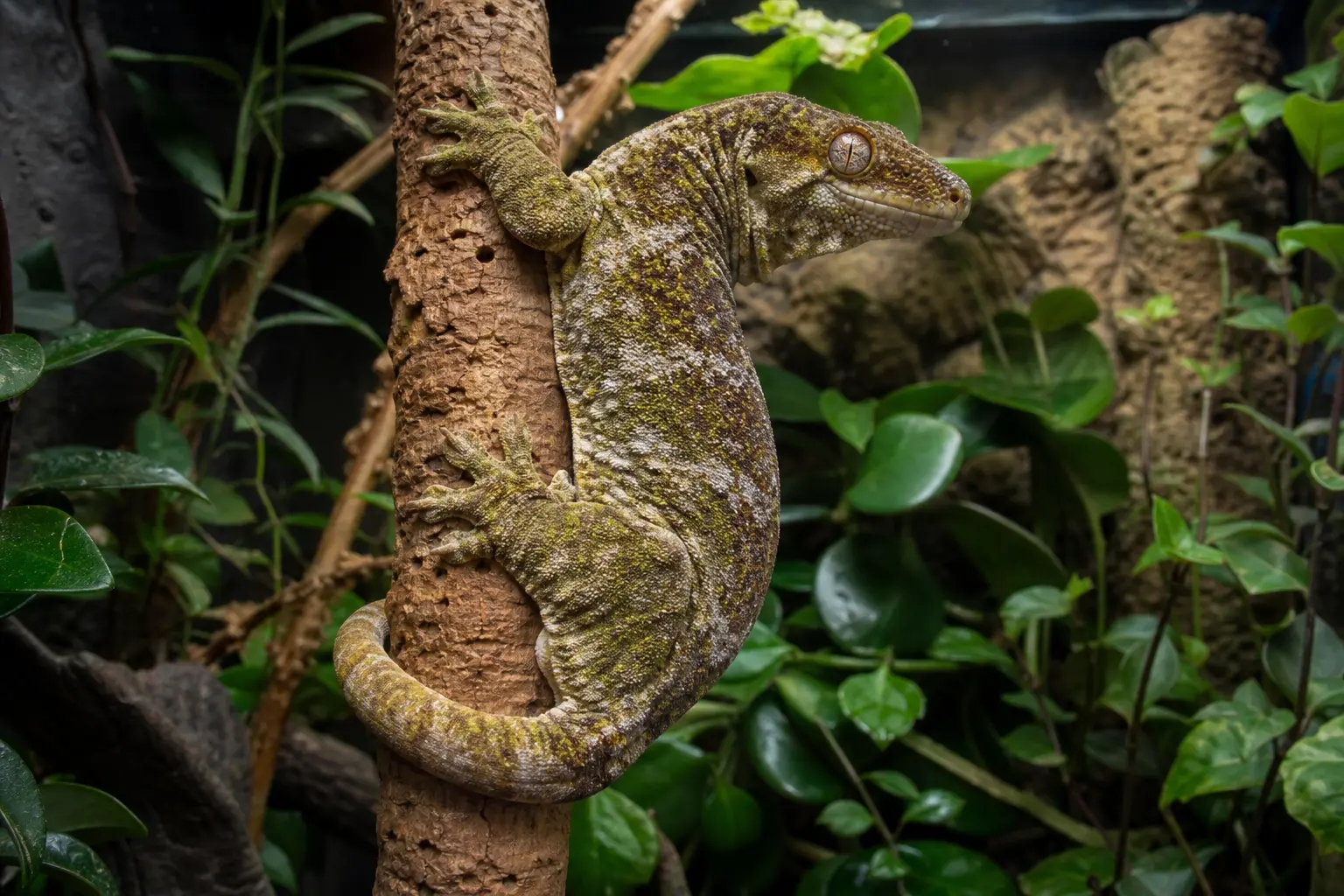
Personality and daily life
Quietly extraordinary. Built to hold on.
A Chahoua gecko is made for private places: a cork hollow, a shaded branch, a pocket behind leaves. Its granular moss-and-lichen markings, broad feet, and grasping tail make sense when you watch it choose a route through the enclosure after dark.
A blunt head, wide toe pads, and a grasping tail help them use vertical space
A compact-looking adult still needs a permanently furnished, tall home
Cork, leaves, crevice-like retreats, and more than one climbing route let the gecko feel secure
What to expect
A quiet companion with a long horizon.
The everyday work is gentle but real: a tall home that stays safe and interesting, measured warmth and humidity, fresh food and water, calm evening observation, and a veterinary plan long before there is a problem.
The honest fit
Would you enjoy life together?
The best Chahoua home is calm, vertical, secure, and cared for after dusk—not simply decorative.
You may be a lovely match if…
- You have room for a permanent tall enclosure with secure doors, cork, cover, climbing routes, water, and a food ledge
- You enjoy watching an animal on its own evening schedule rather than expecting a daytime pet
- You can keep up with measured heat, humidity, ventilation, clean food and water, and a dark night
- You are comfortable planning for complete gecko food, live feeders where appropriate, and reptile-veterinary care
Think twice if…
- A small, bare, temporary enclosure is the only realistic option
- You want a pet that is awake for daytime interaction or needs regular handling
- Humidity checks, evening food care, cleaning, and possible feeder insects would be hard to sustain
- A reptile or exotics veterinarian is not realistically accessible
A comfortable home
A tall, calm world of their own.
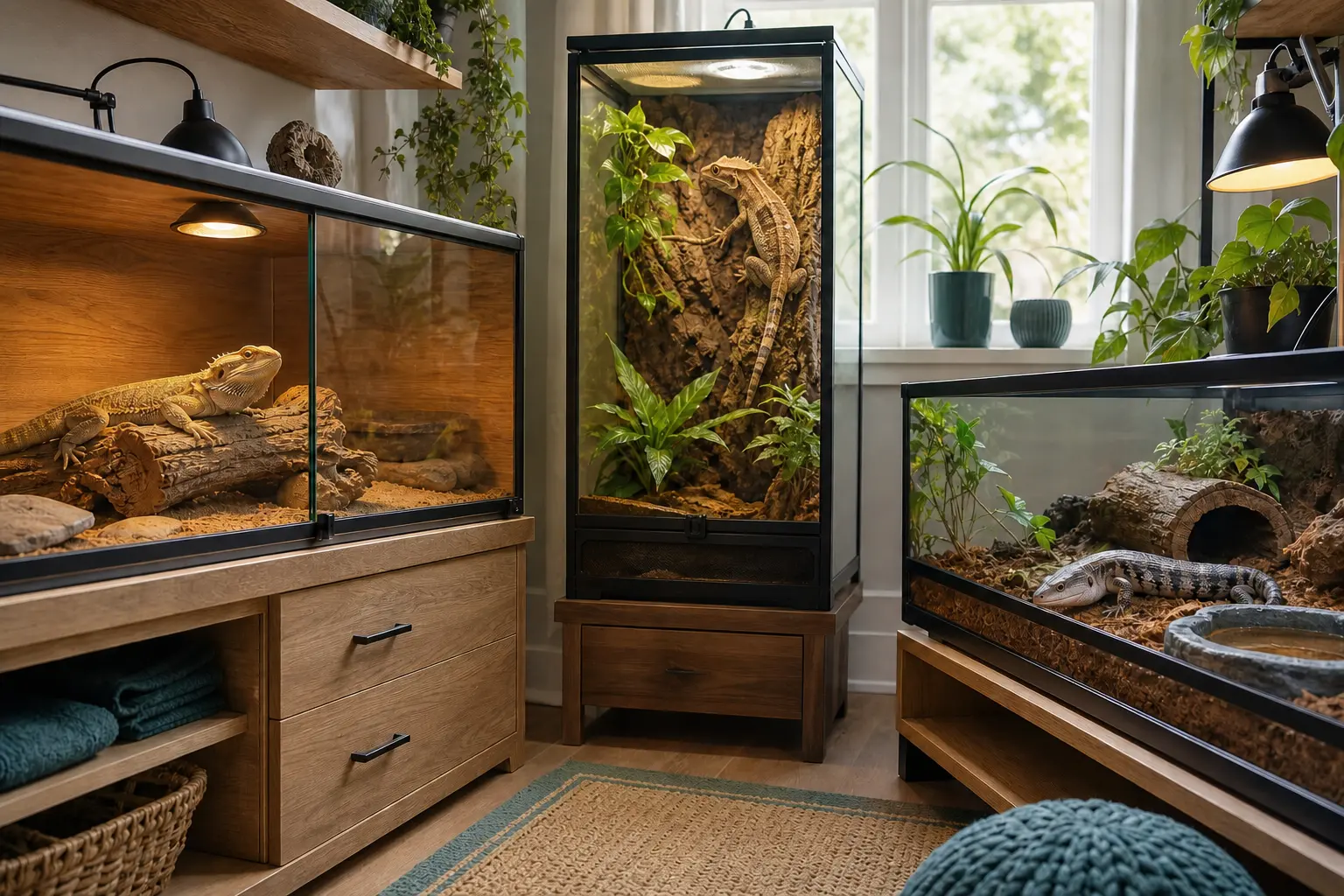
Build upward with anchored cork, branches, leafy cover, elevated retreats, water, and a food ledge. The goal is not a hot, wet glass box; it is a home with places to climb, rest, cool down, dry out, and disappear for a while.
Treat this as a planning floor for one adult, not a finished design. Give the gecko real vertical routes and covered retreats
A secondary species guide uses a 26–28°C warm opportunity, 21–25°C cooler area, and 18–22°C night range. Measure the actual places the gecko uses
A current guide describes roughly 60–80% through a cycle. Fresh air and daytime dry-down matter; do not keep the entire enclosure wet
Our sources do not support treating UVB as universally required or universally unnecessary. If used, keep it low-level, measured, and limited to an area the gecko can leave
Feeding them well
A complete diet. Live feeders with care.
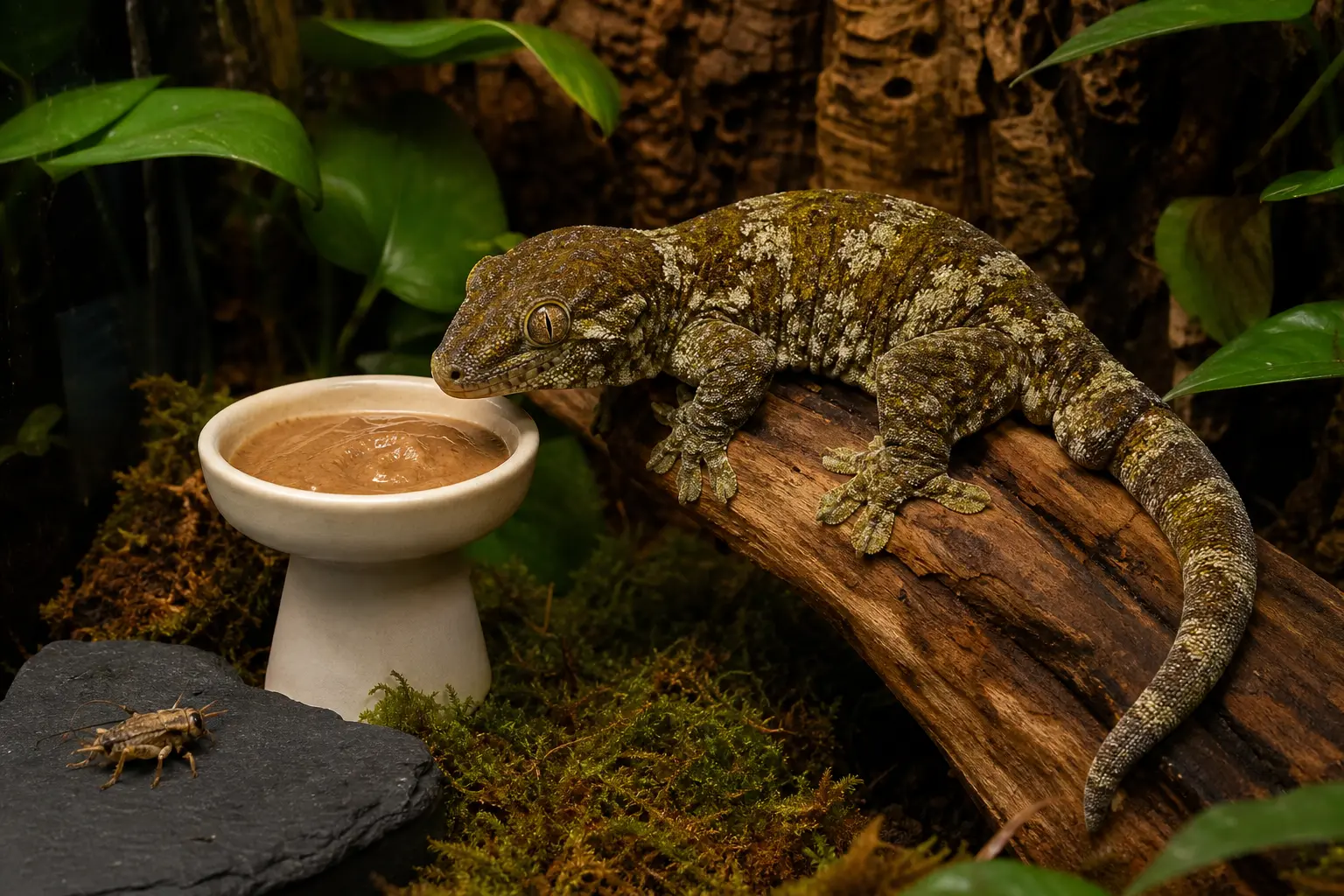
The feeding cup is part of the routine, not an afterthought. Use a complete formulated gecko diet as the foundation, then make any live-invertebrate choice with the same care: safe size, sound sourcing, clean preparation, and attention to what the individual gecko is actually doing.
Prepare it as directed, offer it cleanly, and remove it before it spoils
They can add variety, but no copied percentage or calendar fits every Chahoua
Age, body condition, diet product, lighting, and veterinary guidance all change the right plan
The rhythm
Set up the evening. Then let the gecko choose.
Check the quiet details
Refresh water, clear spoiled food, check locks and climbing routes, and look at the humidity trend as the enclosure dries. Confirm that the warm and cooler retreats still offer real choices.
Refresh their little world
Offer clean food, follow the home's misting plan, and notice where the gecko climbs, pauses, drinks, and settles. Observation is the relationship.
Keep the dark intact
Remove leftovers when appropriate, note anything unusual, and leave visible lights off. A nocturnal gecko still needs a dependable day-and-night rhythm.
Care with tenderness
Let the gecko set the pace.
Respect the tail
A Chahoua's grasping tail is part of its climbing life, never a handle. Do not grab, pinch, or pull it—and do not describe tail loss as harmless or promise a particular regrowth outcome.
Give each adult its own home
One adult in one secure, richly furnished enclosure is the calm default. Territorial conflict can cause serious harm; companionship is not a reason to share a home.
Keep handling optional
Support the whole body low over a safe surface and let the gecko choose whether to step on. If it flees, repeatedly jumps, or retreats, end the interaction quietly.
Keep care clean
Wash hands after the gecko, food, insects, water, waste, or enclosure equipment. Keep all reptile supplies out of kitchens and food-preparation spaces.
Source with care
Choose a documented captive-bred gecko or reputable rescue. Do not reward wild collection or illegal trade, and never release an unwanted animal.
Good to know
Common questions, answered.
Open any question for a short, practical answer.
Life together
What is a Chahoua gecko?
A Chahoua gecko is Mniarogekko chahoua: a nocturnal, arboreal gecko from New Caledonian forests. Its mossy camouflage, broad toe pads, and grasping tail make sense in a tall, covered climbing home—not a bare display tank.
Are Chahoua geckos good first reptiles?
They can suit a well-prepared keeper, but they are not a shortcut to a small, easy enclosure. Before one arrives, have the adult home running: safe climbing routes, cover, humidity dry-down, fresh air, food and water, secure doors, temperature choices, a night-dark routine, and a reptile veterinarian.
How big do Chahoua geckos get?
About 30 cm (12 in) total length is a helpful adult picture. Published care guides commonly cite roughly 25–31 cm, while primary descriptions note a body up to about 147 mm with a substantial tail. Plan the adult enclosure, not the baby gecko you first see.
How long do Chahoua geckos live?
Think in decades. Published care guides commonly cite 15–20 years, with husbandry and veterinary care mattering throughout. The adult enclosure, moves, routine, and a backup plan are part of the choice—not just the first few months.
When are Chahoua geckos most active?
Most of the interesting life happens after dusk and through the night: climbing cork, moving between cover, looking for food, and choosing a perch. During the day, a Chahoua usually wants a quiet retreat rather than an audience.
Are Pine Island and Grande Terre Chahouas separate subspecies?
Do not treat hobby locality labels as recognized subspecies or personality types. Mniarogekko chahoua has no described subspecies, and Mniarogekko jalu is a separate species—not a Chahoua locale. Choose an individual for its documented origin and care needs, not a story attached to a label.
What enclosure does one adult Chahoua gecko need?
Use at least 60 × 60 × 90 cm (24 × 24 × 36 in) of usable internal space as a one-adult consumer planning floor. Then make it useful with anchored vertical routes, cover, food and water access, ventilation, shade, and escape-proof doors. Dimensions alone do not make a good home.
Can two Chahoua geckos live together?
Plan one adult per home. Territorial conflict can seriously harm geckos, so do not market sharing an enclosure as companionship. A richly furnished, separate home is the calm default.
Can I handle a Chahoua gecko?
Handling should be brief, low, calm, and optional. Support the whole body and let the gecko choose whether to step on; if it flees, repeatedly jumps, or retreats, end the interaction. Never grab, pinch, lift, or restrain it by the tail.
Home, food, and health
Do Chahoua geckos need heat?
Do not heat the whole enclosure by assumption. If the room needs supplemental heat, the current species guide uses a gentle 26–28°C (79–82°F) upper opportunity, a 21–25°C (70–77°F) cooler area, and 18–22°C (64–72°F) nights. These are bounded secondary targets: measure the places the gecko uses and keep every heat source guarded and thermostatically controlled.
How should humidity work?
Use a mist-and-dry rhythm with open ventilation, not a constantly wet enclosure. A current species guide describes roughly 60–80% through a cycle, but fresh air, dry-down, the substrate, and the places the gecko rests matter as much as a number. Do not chase all-day condensation.
Does a Chahoua gecko need UVB?
The honest answer is that sources do not support a universal rule. A current guide uses low-level UVI 1–2 in exposed space, while general veterinary guidance makes lighting setup-specific. If you use UVB, keep it low-level, measured, limited to part of the home, and paired with genuine shade; do not rely on bulb percentage or a generic distance chart.
What substrate should I start with?
Choose a surface that lets you monitor a new gecko's food, waste, hydration, and shed changes clearly. A healthy established gecko may use a well-managed naturalistic substrate, but it is a whole-home decision—not a decoration purchase. Keep it managed, never waterlogged.
What do Chahoua geckos eat?
A complete formulated New Caledonian gecko diet is the practical everyday foundation. Appropriately sized live invertebrates can add variety, but feeding details follow the individual gecko, product instructions, body condition, lighting plan, and reptile-veterinary guidance.
Do Chahoua geckos need live insects?
Not as a universal rule. Live invertebrates are a real care decision, not a rigid percentage or a throwaway extra. If you offer them, plan to source them safely, choose a safe size, care for them appropriately, remove any left behind, and keep feeder work out of food-preparation areas.
How often should I feed one?
There is no single calendar that fits every Chahoua gecko. Follow the complete-diet product directions, then adjust food quantity, live invertebrates, and supplements with a reptile veterinarian to the gecko's age, body condition, appetite, lighting plan, and setup.
Does a Chahoua gecko need water and misting?
Yes. Keep clean fresh water available at all times, and use misting as part of the measured humidity rhythm. Droplets can be useful, but they do not replace a stable dish, open ventilation, or a day that can dry down.
What should I do when my Chahoua gecko sheds?
Do not pull stuck skin. Check the humidity rhythm, water, cover, textured surfaces, toes, eyes, and skin. Recurring shed trouble or toe and eye concerns are reasons to call a reptile veterinarian, not to keep escalating home fixes.
When should I call a reptile veterinarian?
Call for persistent changes in appetite, weight, droppings, activity, eyes, skin, shedding, tail, movement, breathing, swelling, weakness, or injury. These are reasons to call, not a diagnosis.
Can a healthy Chahoua gecko carry Salmonella?
Yes. Wash your hands after the gecko, food, live invertebrates, waste, water, or enclosure equipment, and keep all supplies out of kitchens and food-preparation areas. Take particular care in homes with young children, older adults, or immunocompromised people.
What should I have ready before bringing one home?
Set up and run the adult enclosure before adoption. Confirm its climbing routes, secure doors, warm and cooler retreats, humidity dry-down, ventilation, shade, water, food ledge, cleaning routine, transport plan, and reptile-veterinary contact. Then choose a documented captive-bred gecko or reputable rescue.
Build the quiet night before they arrive.
Test the adult home's climbing routes, secure doors, warm and cooler retreats, humidity dry-down, ventilation, shade, water, and food ledge before a Chahoua gecko comes home.
Plan heat, humidity, and lightSources and care boundaries
Exact targets depend on the measured location, equipment, animal, and veterinary context. This profile keeps source disagreements visible instead of blending them into one number.
- The Reptile Database: Mniarogekko chahoua
- Endemia.nc, New Caledonia biodiversity database: Mniarogekko chahoua
- Bonner Zoologische Beiträge: Notes on the Natural History of the New Caledonian Giant Gecko Rhacodactylus leachianus and the Description of a New Subspecies
- Zootaxa / A. M. Bauer and colleagues: A Review of the Giant Geckos of New Caledonia
- ReptiFiles: Chahoua Gecko Care Sheet
- Exotic Pet Vet: Geckos of New Caledonia
- MSD Veterinary Manual: Management and Husbandry of Reptiles
- MSD Veterinary Manual: Routine Health Care of Reptiles
- U.S. Centers for Disease Control and Prevention: Reptiles and Amphibians
- Association of Reptile and Amphibian Veterinarians: For Reptile and Amphibian Owners