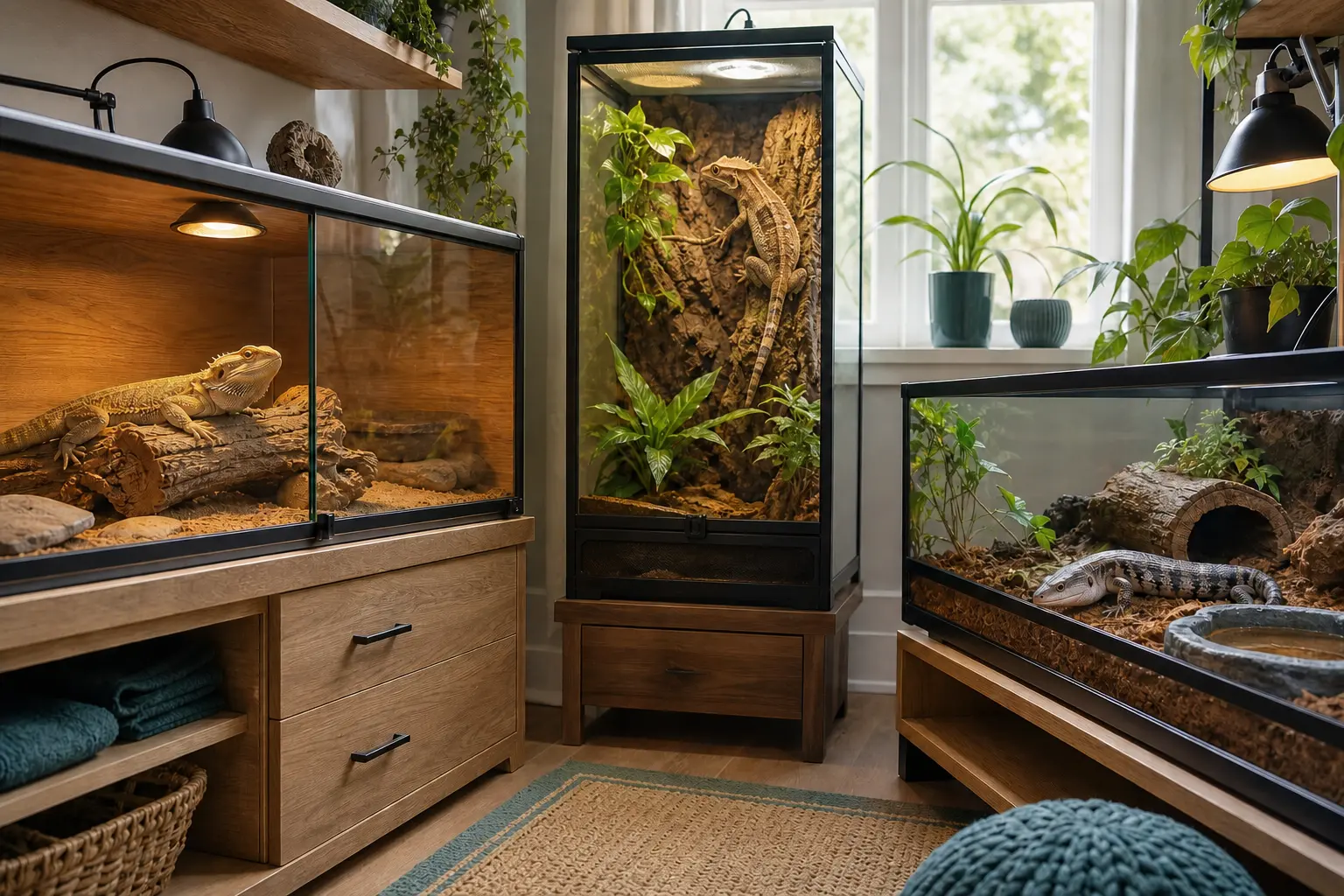
Most climbing, searching, and food interest appears in quiet evening and night hours
Gargoyle gecko · Rhacodactylus auriculatus
A closer look at the Gargoyle gecko.
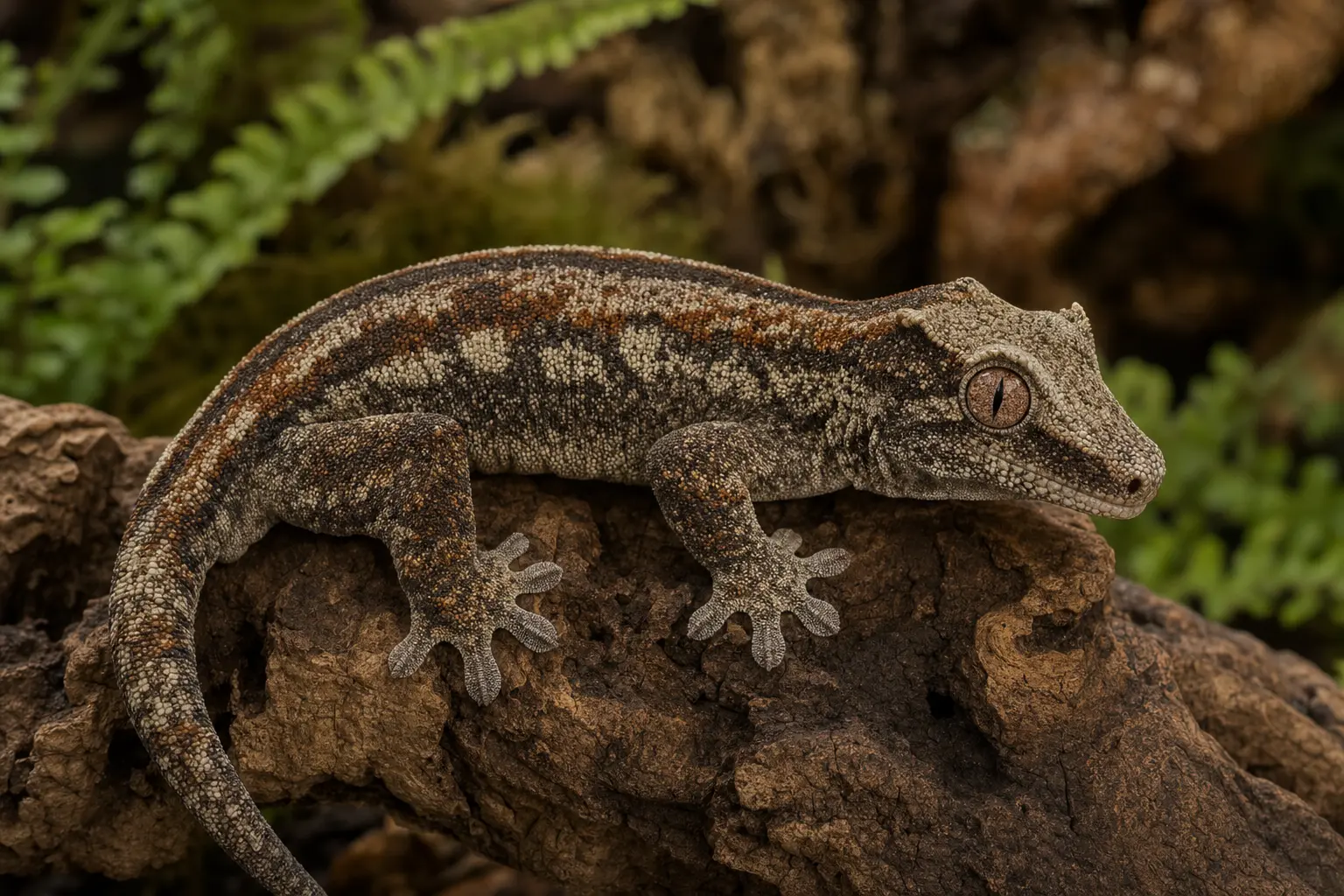
A compact, bumpy New Caledonian gecko whose best hours begin after dusk—moving through cover, climbing textured branches, and looking for a meal.
Watch after dusk for a quiet visitor on a cork branch, then a retreat behind the leaves.
Get to know them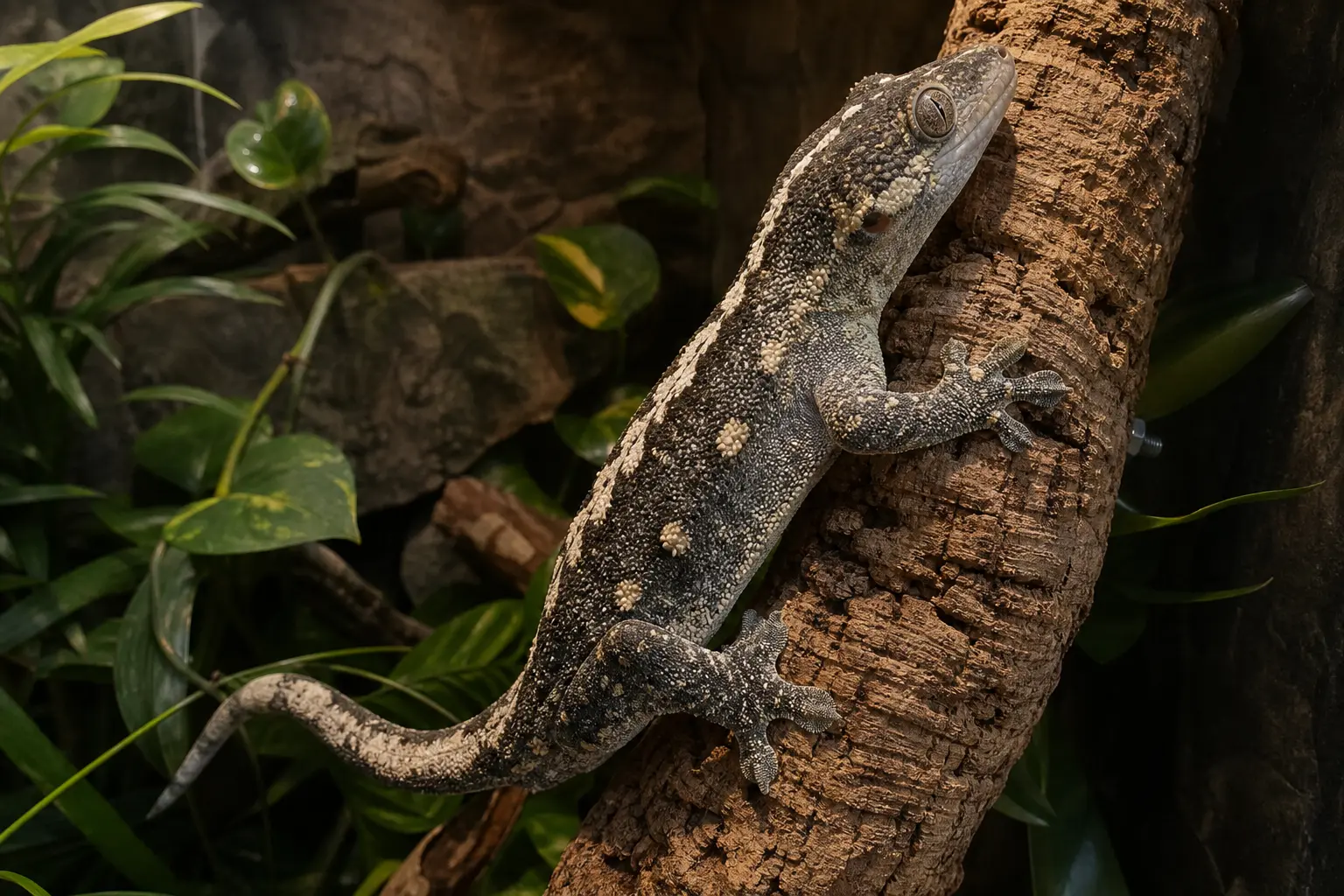
Personality and daily life
Bumpy, watchful, and up after dusk.
A Gargoyle gecko is not a crested gecko in another colour. It is its own little New Caledonian climber: a rough-textured head, a strong tail, wide toe pads, and a habit of choosing cover before it chooses an audience.
A compact adult still needs a permanent layered home, not a hatchling box
It helps the gecko climb. Stress can trigger tail loss, so never grab it
A good home gives the gecko shade, perches, low cover, and more than one way across the space
What to expect
Could a Gargoyle gecko fit your evenings?
This is a small gecko with a long horizon. Its adult life needs a layered home, a mist-and-dry rhythm, clean food and water, low-stress handling, and care that still happens when your day is winding down.
The honest fit
Would you enjoy life together?
A good match means you can give the gecko a tall, shaded little world and keep up with the quiet details that make it safe and interesting.
You may be a lovely match if…
- A permanent, furnished adult enclosure with real cover, a humidity cycle, and secure doors fits comfortably in your home
- You enjoy observing an animal whose best hours happen after dusk
- You are happy to mix complete gecko food and make a thoughtful decision about feeder insects
- You can measure the actual perch, lower retreat, humidity rhythm, and low-UVB setup, then keep a reptile veterinarian within reach
Think twice if…
- A small bare tank or one climate from top to bottom is all you can accommodate
- Evening food, misting, cleaning, humidity checks, or possible feeder insects would be difficult to keep up
- You are hoping for a daytime lap pet, a gecko that needs frequent handling, or a built-in companion animal
- A reptile or exotics veterinarian is not realistically within reach
A comfortable home
A tall little world, with room to choose.
A good Gargoyle-gecko home is tall and layered, but never a bare display box. It gives one gecko cover, climbing routes, a little warmth it can leave, fresh water, and a humidity rhythm that breathes.
50 × 50 × 65 cm is the minimum starting point; the larger home makes climbing layers, shade, and climate choices much easier to arrange
Measure the actual branch or perch; this is not a whole-enclosure air temperature
Raise humidity with misting, let it fall through the day, keep substrate damp rather than waterlogged, and leave vents open
The current guide uses UVI 0.4–1 in exposed space. Give full shade and measure the result at the gecko's back height
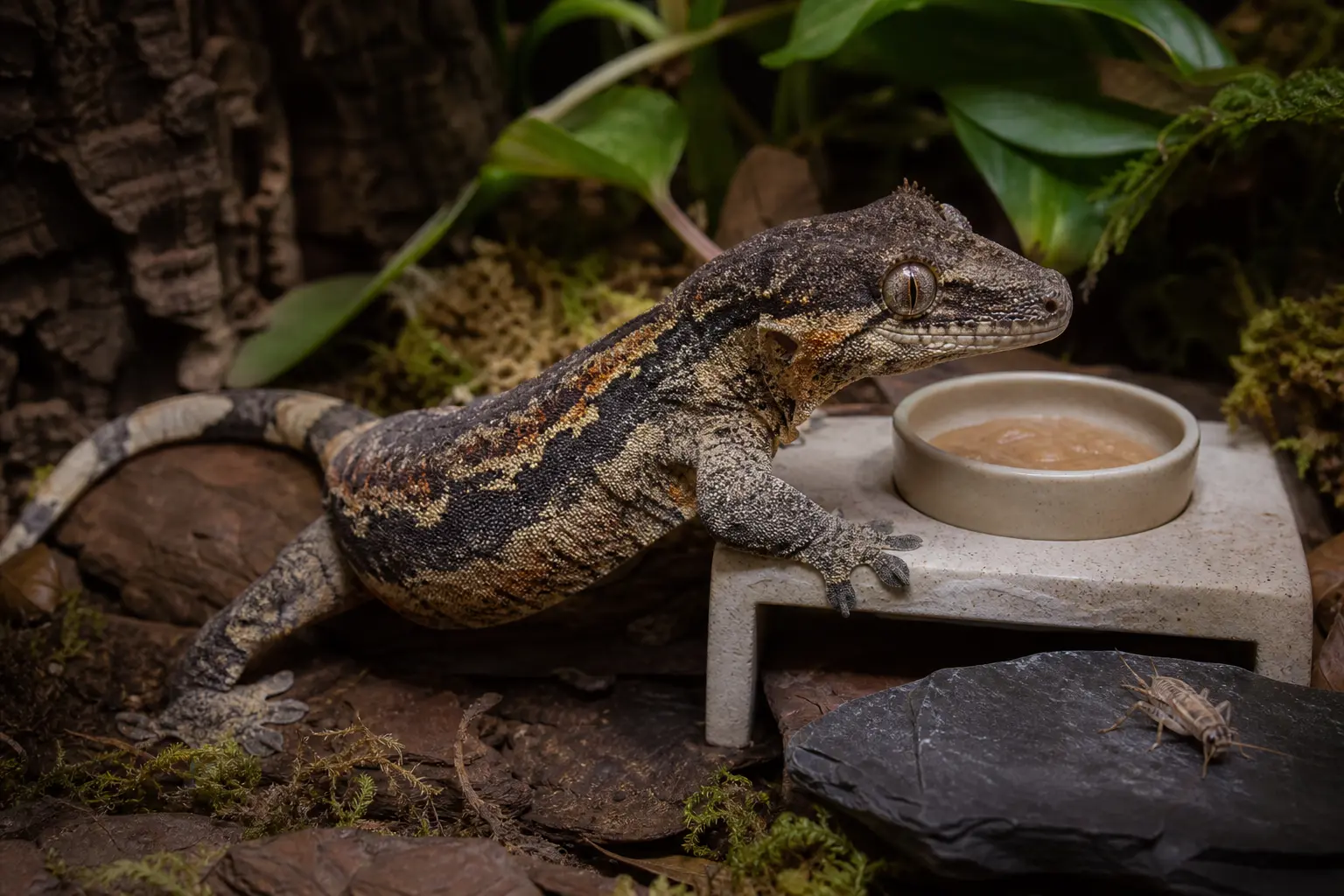
Feeding them well
A complete diet first. Insects with purpose.
Mixing complete gecko food is the everyday foundation. Insects can add variety and a chance to hunt, but their care—buying them, keeping them well, preparing them, offering them, and removing any left behind—belongs in the plan too.
Prepare it as the product directs, offer it cleanly, and remove it before it spoils
They can add variety and hunting, but the schedule follows the individual gecko, product plan, body condition, and veterinary guidance
Formula, insects, UVB, age, and product instructions all change what the gecko actually needs
The rhythm
Set the evening up. Then notice what they choose.
Let the home breathe
Check water, food ledge, ventilation, enclosure locks, and the humidity trend as misted surfaces dry. Confirm the upper perch and lower retreat are still giving the gecko choices.
Refresh the little world
Offer clean food, refresh water, follow the home’s misting plan, and watch where the gecko climbs, pauses, hunts, drinks, and settles.
Leave the dark intact
Remove spoiled food and uneaten insects, note anything unusual, then leave every visible light off for the night.
Care with tenderness
Let the gecko choose the pace.
Give the tail some respect
That tail helps the gecko climb. Never grab it, even when a quick jump catches you off guard. A dropped tail can regrow, but it is not a spare part.
Keep one gecko per home
One gecko in one richly furnished enclosure is the calm default. Conditional groups belong to advanced work with dense space, close observation, and spare homes ready.
Treat handling as an invitation
Support the gecko low over a safe surface and let it step away when it wants. If it repeatedly jumps, flees, or retreats, end the session calmly. Watching its evening route is already a relationship.
Wash up after care
Wash your hands after the gecko, food, insects, waste, water, or enclosure equipment. Keep every supply out of the kitchen.
Good to know
Common questions, answered.
Open any question for a short, practical answer.
Life together
Are Gargoyle geckos good first reptiles?
They can suit a prepared first-time keeper, but they are not a shortcut to a small bare tank. Before one arrives, have the adult home running: climbing layers, cover, a humidity cycle, clean food and water, secure doors, temperature choices, low-UVB plan if used, and a reptile veterinarian.
How big do Gargoyle geckos get?
Adults are usually about 18–23 cm (7–9 in) long and often around 40–60 g. That compact adult body will use cork, branches, and a food ledge, so plan the adult enclosure from the start.
How long do Gargoyle geckos live?
Plan for about 20 years, with some living longer. That makes the adult enclosure, moves, routine, veterinary care, and a backup plan part of the decision—not just the first few months.
When are Gargoyle geckos most active?
Most of the interesting life happens after dusk and through the night: climbing cork, moving between cover, looking for food, and choosing a perch. Some daytime movement happens, but this is not a daytime display pet.
How are Gargoyle geckos different from crested geckos?
They are a distinct species, Rhacodactylus auriculatus, with a rougher bumpy head profile, their own New Caledonian habitat history, and a tail that can regrow after loss. Do not use a crested-gecko page as a substitute for an exact Gargoyle-gecko setup.
Can a Gargoyle gecko drop its tail?
Yes. Stress, especially rough handling, can trigger tail loss. The tail can regrow, but it helps the gecko climb, so never grab it or treat regrowth as a reason to take chances.
Can two Gargoyle geckos live together?
Plan one gecko per home. Conditional groups need a very large, dense, separable setup and close observation; adult males must never share. That is not a companionship plan.
What should I have ready before bringing one home?
Set up and run the adult enclosure before adoption. Confirm the upper perch, lower retreat, humidity rise and fall, ventilation, shade, water, food ledge, climbing routes, secure doors, complete-diet plan, and reptile-veterinary contact.
Home, food, and health
What enclosure does an adult Gargoyle gecko need?
For one adult, use at least about 50 × 50 × 65 cm (20 × 20 × 26 in) of usable internal space. Plan on 90 × 45 × 90 cm or larger if you can; it gives you much more room for climbing layers, cover, food and water ledges, shade, and a stable gradient.
Do Gargoyle geckos need heat?
Do not assume room temperature is always enough or that the whole enclosure should be warm. If the home needs supplemental heat, the current guide uses a guarded upper perch around 28°C (82°F), mid-height air around 24°C (75°F) or below, and cooler lower cover. Measure the places the gecko uses.
Does a Gargoyle gecko need UVB?
The honest answer is that sources differ. A current species guide uses low UVI 0.4–1 in exposed space, while older veterinary advice calls UVB beneficial rather than strictly required. If you use it, measure the result at the gecko’s back height and leave full shade outside the light.
How should humidity work?
Use a daily rhythm, not a permanently wet tank. Mist toward 70% or more, let humidity fall toward roughly 50% through the day, keep the substrate damp rather than waterlogged, and leave ventilation open. Watch the gecko and the enclosure, not just one number.
What substrate should I start with?
Choose a surface that lets you monitor a new gecko’s food, waste, hydration, and shed changes clearly. A healthy established gecko may use a moisture-retentive naturalistic setup, but it is a whole-home decision—not a decoration purchase.
What do Gargoyle geckos eat?
A complete formulated gargoyle- or crested-gecko diet is the practical everyday foundation. Insects can add variety and a chance to hunt, but the detail follows the individual gecko, product instructions, body condition, UVB, and veterinary guidance.
Do I need live insects?
Not as an automatic rule. A complete formulated diet is the practical foundation, while insects can be a meaningful variety and enrichment choice. If you offer them, plan to source them safely, keep them well, choose a safe size, and remove any that remain.
How often should I feed one?
There is no single calendar that fits every Gargoyle gecko. Follow the complete-diet product directions, then tailor food amount, insects, and supplements with a reptile veterinarian to the gecko’s age, body condition, appetite, UVB plan, and setup.
Does a Gargoyle gecko need water and misting?
Yes. Keep clean fresh water available at all times, and use misting as part of the measured humidity cycle. Water droplets can be useful, but they do not replace a stable dish or fresh air.
What should I do when my Gargoyle gecko sheds?
Do not pull stuck skin. Check the humidity cycle, water, cover, rough surfaces, toes, eyes, and skin. Recurring shed trouble or toe and eye concerns are reasons to call a reptile veterinarian, not to keep escalating home fixes.
When should I call a reptile veterinarian?
Call for persistent changes in appetite, weight, droppings, activity, eyes, skin, shedding, tail, movement, breathing, swelling, weakness, or injury. These are reasons to call, not a diagnosis.
Can a healthy Gargoyle gecko carry Salmonella?
Yes. Wash your hands after the gecko, food, insects, waste, water, or enclosure equipment, and keep all supplies out of kitchens and food-preparation areas.
Build the quiet evening before they arrive.
Test the adult home’s climbing routes, secure doors, upper perch, lower retreat, humidity cycle, ventilation, shade, water, and food ledge before your Gargoyle gecko comes home.
Plan their humidity and lightingSources and care boundaries
Exact targets depend on the measured location, equipment, animal, and veterinary context. This profile keeps source disagreements visible instead of blending them into one number.
- The Reptile Database: Rhacodactylus auriculatus
- Endemia.nc, New Caledonia biodiversity database: Rhacodactylus auriculatus
- Salamandra: Ecological Observations on the Gargoyle Gecko, Rhacodactylus auriculatus, in southern New Caledonia
- CyberZoo; veterinarian-authored guide by Jesper Agner Arnö: Gargoyle Gecko (Rhacodactylus auriculatus): Care and facts
- Federation of British Herpetologists: FBH Code of Practice for Recommended Minimum Enclosure Sizes for Reptiles
- MSD Veterinary Manual: Management and Husbandry of Reptiles
- MSD Veterinary Manual: Routine Health Care of Reptiles
- Aurora Animal Hospital: Gargoyle Gecko Care Sheet
- U.S. Centers for Disease Control and Prevention: Reptiles and Amphibians
- Association of Reptile and Amphibian Veterinarians: For Reptile and Amphibian Owners