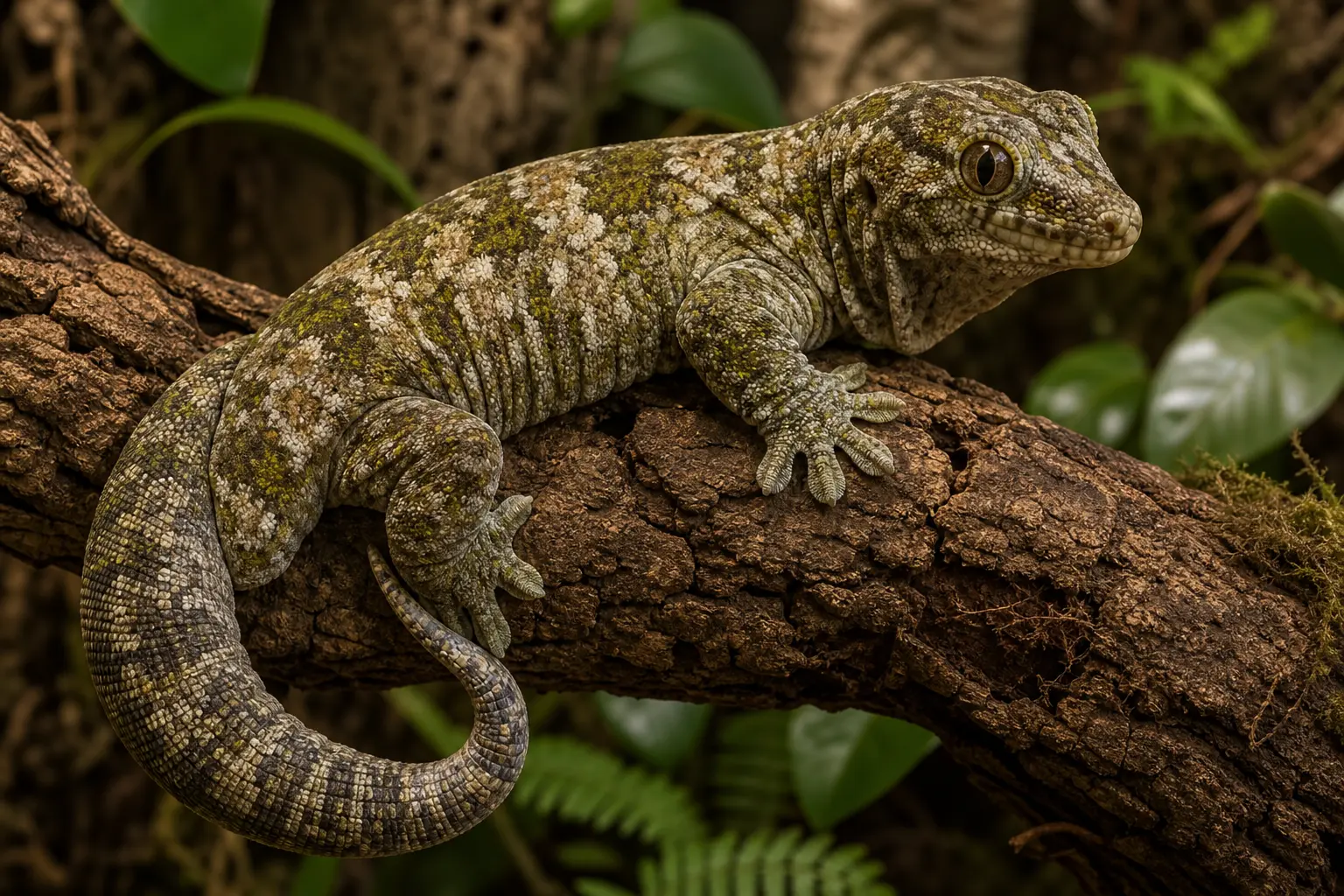
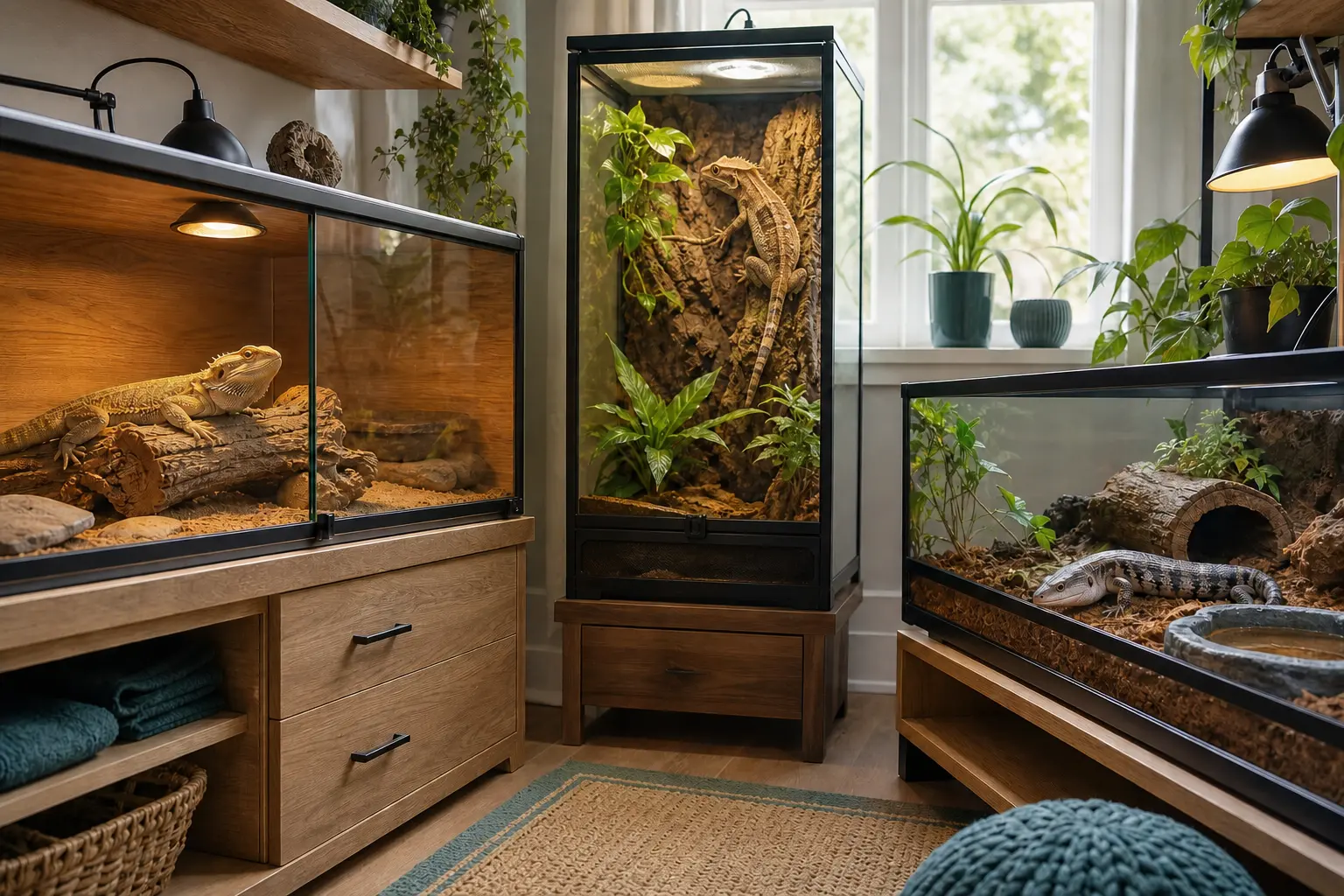
Daytime is for deep cover; the interesting movement begins as the room settles
Leachianus gecko · Rhacodactylus leachianus
The Leachianus gecko lives large.
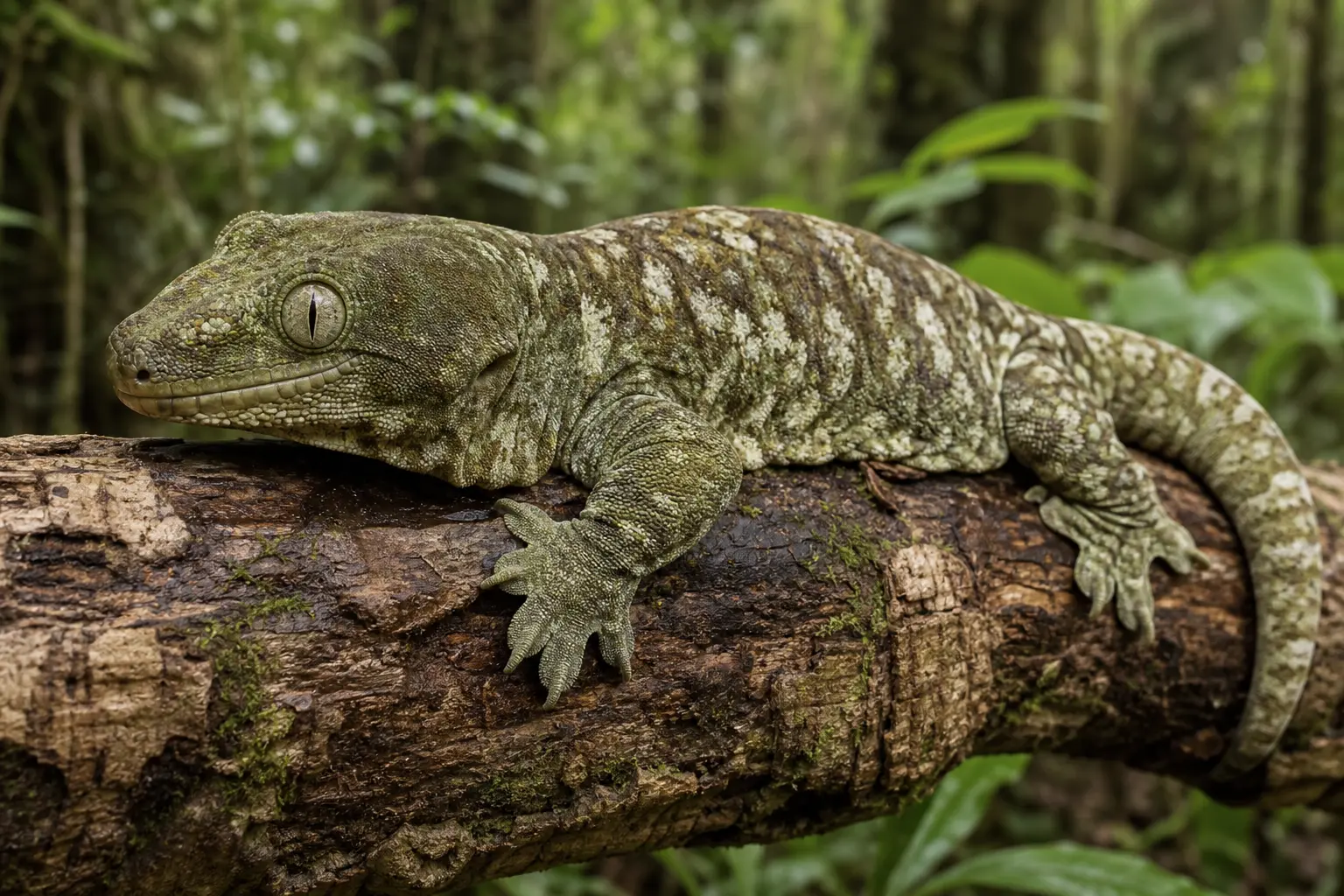
One of the world's largest living geckos: heavy-bodied, forest-coloured, and awake after dark—an extraordinary animal for a very prepared home.
A Leachianus can fill a branch with quiet presence.
Get to know them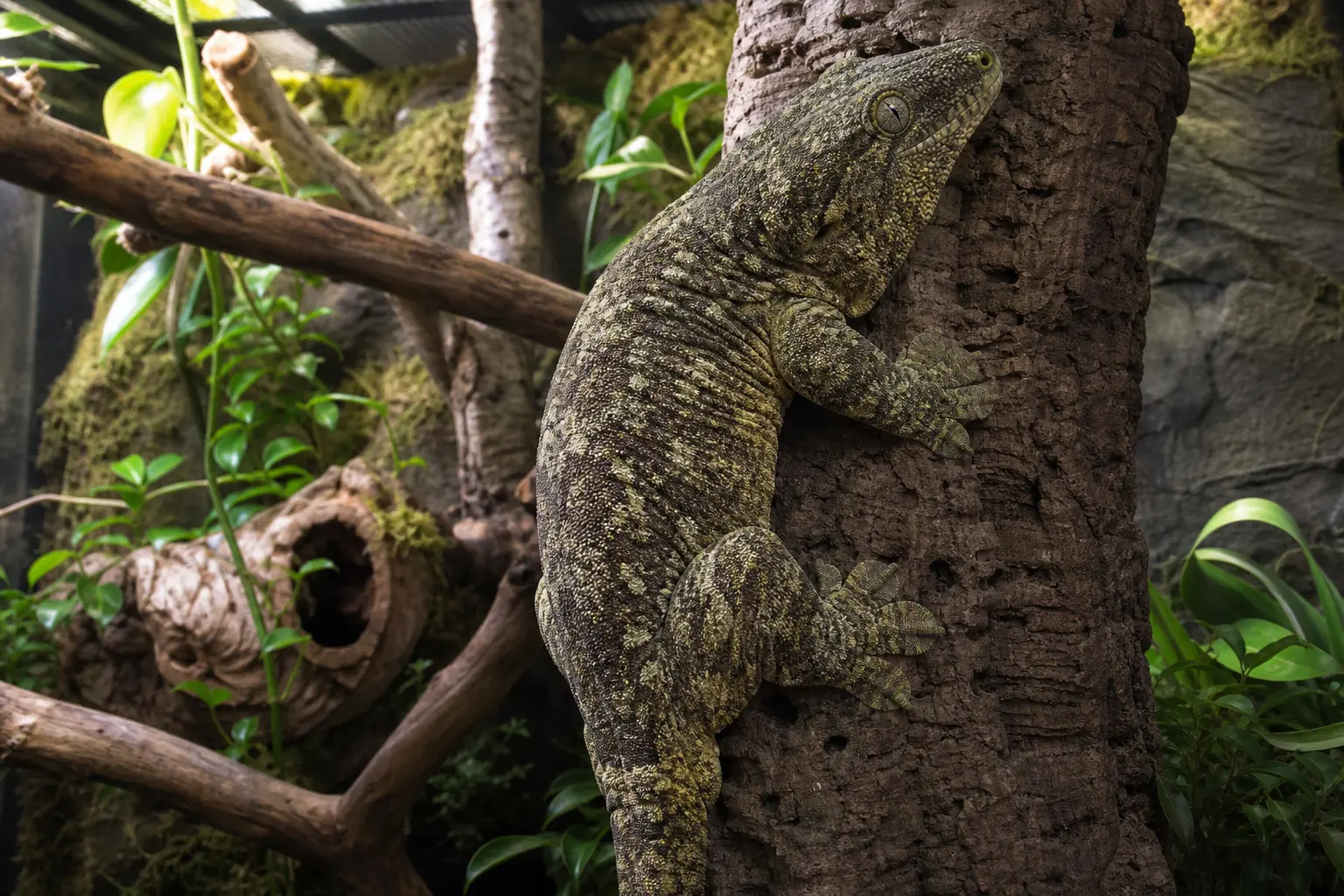
Personality and daily life
Big, watchful, and wonderfully strange.
At rest, a Leachianus looks like lichen laid over a tree trunk: broad head, loose velvet folds, huge gripping feet. Then evening arrives, and the stillness becomes a slow, deliberate route through the branches.
That is before the tail. This is a giant gecko, not a larger crested gecko
Wild males have been recorded marking territory vocally; every individual still sets its own boundaries
Everything in the enclosure must carry a powerful adult safely
What to expect
Could you make room for a true giant?
The wonder comes with weight: a large permanent home, a long life, a real appetite, possible defensiveness, and daily care that respects an animal built to own its patch of forest.
The honest fit
Would you enjoy life together?
A good match wants the giant gecko as it is: private, powerful, nocturnal, and fascinating without needing to be held.
You may be a lovely match if…
- A permanent 120 × 60 × 120 cm adult home fits comfortably, with room to go larger
- You enjoy evening observation and can let a hiding animal stay hidden
- Complete gecko diet, live invertebrates, climate checks, and large-enclosure cleaning fit your routine
- You can care safely around a powerful animal and keep a reptile veterinarian within reach
Think twice if…
- You are hoping for a small tank, daytime display, or a gecko you can always handle
- A defensive posture, vocal warning, or possible bite would make care frightening
- A broad, tall enclosure and sturdy furnishing would be difficult to move or maintain
- Reptile-veterinary care and a long-term backup plan are not realistic
A comfortable home
A whole piece of forest, built to last.
Build for the adult from the start: broad enough to turn, tall enough to climb, and strong enough to trust. Thick cork, trunk-width branches, elevated hollows, deep cover, clean water, and more than one climate route matter more than decorative glass.
Use this as the one-adult planning floor, then add depth, heavy routes, and cover the gecko can truly use
Sources differ: one guide uses a 30–31°C upper perch; field data from one island found mean core temperatures near 23°C. Keep cooler cover easy to reach
A guide describes 60–80% average with lower daytime readings. Fresh air and dry-down are part of the target
Guides disagree. If UVB is used, measure it, cover only part of the home, and leave full shade
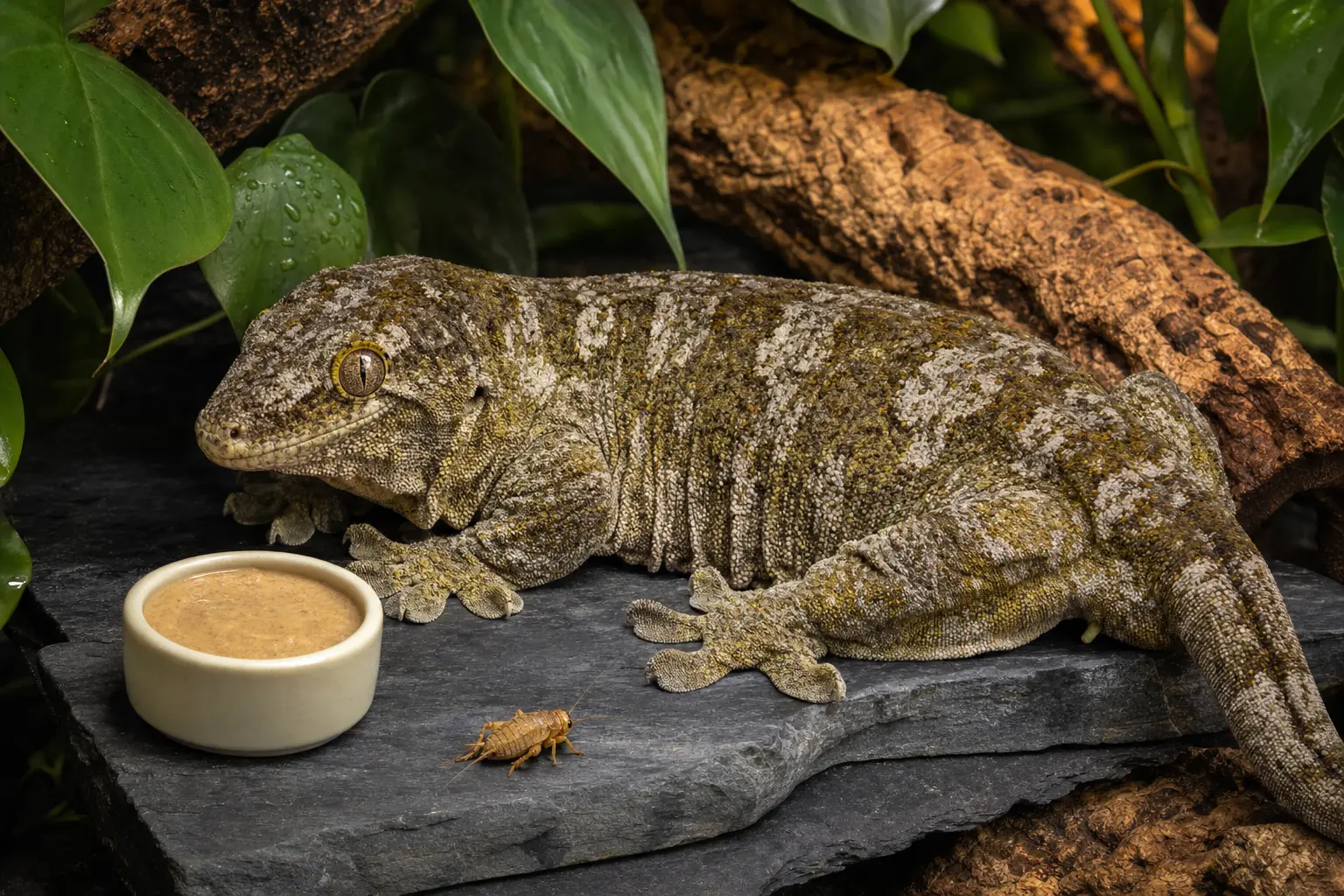
Feeding them well
A serious appetite, fed thoughtfully.
Complete gecko diet is the everyday foundation. Live invertebrates add another part of the routine: safe sourcing, good care, sensible size, clean offering, and removal of anything left behind. No baby food, vertebrate prey, or improvised fruit mix is needed.
Prepare it as directed and remove it before it spoils
Choose safe size and adjust from the individual—not a copied percentage
Complete food, feeders, UVB, age, body condition, and veterinary advice all change the answer
The rhythm
Care for the forest. Then watch it wake.
Let privacy be part of care
Refresh water, clear spoiled food, check locks, branches, probes, and humidity dry-down. If the gecko is tucked away, leave the retreat intact.
Set the night in motion
Offer clean food, follow the misting plan, and notice which routes, temperatures, and cover the gecko chooses as it wakes.
Keep the dark complete
Remove leftovers when appropriate, note anything unusual, and leave every visible light off. Quiet observation is enough.
Care with tenderness
Respect the animal in front of you.
Never assume tame
A Leachianus may retreat, vocalize, open its mouth, or bite when threatened. Plan calm access to food, water, and cleaning without forcing contact.
Protect the skin and tail
Support the whole body. Never pinch loose skin or lift, pull, or restrain by the tail. Regrowth does not make an injury harmless.
One giant, one home
One adult in one strong, richly furnished enclosure is the calm default. Pairing is a breeding project, not companionship.
Keep care clean
Wash hands after the gecko, food, insects, waste, water, or equipment. Keep every reptile item out of kitchens.
Know where they came from
Choose documented captive-bred animals or a reputable rescue. Illegal collection threatens wild island populations.
Good to know
Common questions, answered.
Open any question for a short, practical answer.
Life together
What is a Leachianus gecko?
Rhacodactylus leachianus is one of the world's largest living geckos: a nocturnal, tree-dwelling New Caledonian species with a broad head, loose velvet-like skin, powerful gripping feet, and a body built for substantial forest branches.
How big do Leachianus geckos get?
The body alone can reach roughly 25–30 cm (10–12 in) before the tail. Total length varies with population and tail history, which is why a juvenile or a locality label should never be used to justify a small adult home.
How long do Leachianus geckos live?
Plan for at least 20 years; some care guides cite 20–30. The enclosure, moves, veterinary costs, daily routine, and a backup keeper all belong in the decision before adoption.
When are Leachianus geckos active?
Mostly from dusk to dawn. In the wild they shelter in tree holes and crevices by day, then forage through the canopy at night. A hidden daytime gecko is not failing to be a pet.
Are henkeli and leachianus separate subspecies?
Current taxonomy treats Rhacodactylus leachianus as one monotypic species. The 2012 revision regards henkeli as a southern-islet morph rather than a valid subspecies, and aubrianus as a synonym. Trade locality labels should not promise size, temperament, care, or value.
Are Leachianus geckos good first reptiles?
They are a specialist-sized commitment, even when the daily routine looks simple. A prepared keeper needs the full adult enclosure, safe access around a powerful animal, complete food and live-invertebrate plans, measured climate choices, and a reptile veterinarian before the gecko arrives.
Can Leachianus geckos be handled?
Some calmly accept brief supported handling; others prefer not to. Never assume tame. Let the gecko choose, stay low over a safe surface, and stop for retreat, vocal or open-mouth warnings, lunging, or repeated escape attempts. A threatened adult may bite.
Can two Leachianus geckos live together?
Plan one adult per home. Older guides discuss pairs and one field study found overlapping wild home ranges, but neither establishes safe routine companionship in captivity. Pairing is an advanced breeding project with injury risk and separate housing ready.
What enclosure does one adult need?
Plan from 120 × 60 × 120 cm (48 × 24 × 48 in) of usable internal space for one adult. Add trunk-width cork and branches, elevated hollows, deep cover, water and food ledges, shade, cooler routes, ventilation, and strong secure doors. More depth is genuinely useful.
Home, food, and health
What temperatures does a Leachianus gecko need?
Sources do not give one easy number. ReptiFiles uses a 30–31°C (86–88°F) sturdy upper perch, 22–26°C (72–78°F) ambient space, and 19–22°C (66–72°F) nights; one island field study found mean core temperatures near 23°C. Use guarded thermostatic heat only with easy cooler escape, measure several heights, and have the exact setup reviewed.
How should humidity work?
Use a rise-and-fall rhythm, not a wet box. A current guide describes 60–80% average with lower daytime readings. Mist, leave ventilation open, let surfaces dry, and watch the enclosure, skin, and sheds instead of chasing one permanent number.
Does a Leachianus gecko need UVB?
Sources disagree. One current guide proposes measured UVI 2–3; older institutional and general veterinary guidance is less prescriptive. If you use UVB, measure it at the gecko's back height, cover only part of the home, and leave full shade. Do not choose from bulb percentage alone.
What do Leachianus geckos eat?
A complete formulated New Caledonian gecko diet is the practical foundation, with appropriately sized live invertebrates added thoughtfully. Baby food, homemade fruit-meat mixes, and vertebrate prey are not needed for a modern public care plan.
How often should I feed one?
There is no calendar that fits every age, body condition, product, appetite, and setup. Follow the complete-diet directions, track weight and food acceptance, and adjust live invertebrates and supplements with a reptile veterinarian.
Does a Leachianus need fresh water if I mist?
Yes. Keep clean fresh water available at all times in a stable dish. Misting can leave useful droplets, but it does not replace a reliable water source or fresh air.
What substrate should I use?
Start with a surface that keeps a new gecko's food, waste, hydration, and sheds easy to monitor. A healthy established adult may suit a well-managed naturalistic substrate with leaf litter, but it must handle moisture without becoming waterlogged and support safe heavy furnishing.
What should I do about stuck shed?
Do not pull it. Check water, the humidity rhythm, ventilation, cover, textured surfaces, toes, eyes, and skin folds. Recurring trouble or eye and toe concerns belong with a reptile veterinarian.
When should I call a reptile veterinarian?
Call for persistent changes in appetite, weight, droppings, activity, eyes, skin, shedding, tail, movement, breathing, swelling, weakness, or injury. These are reasons to call, not a diagnosis.
Can a healthy Leachianus gecko carry Salmonella?
Yes. Wash with soap and running water after the gecko, food, insects, waste, water, or equipment, and keep every supply out of kitchens and food-preparation areas. Higher-risk households need particular care.
What should be ready before one comes home?
Run the adult enclosure first. Confirm strong climbing routes, secure doors, upper and cooler choices, humidity dry-down, ventilation, shade, water, food ledge, cleaning access, transport carrier, and reptile-veterinary contact. Then verify documented captive-bred origin or a reputable rescue history.
Build for the adult before they arrive.
Test the full-size home's heavy climbing routes, secure doors, upper and cooler retreats, humidity dry-down, ventilation, shade, water, and food ledge before a Leachianus gecko comes home.
Plan heat, humidity, and lightSources and care boundaries
Exact targets depend on the measured location, equipment, animal, and veterinary context. This profile keeps source disagreements visible instead of blending them into one number.
- The Reptile Database: Rhacodactylus leachianus
- Endemia.nc, New Caledonia biodiversity database: Rhacodactylus leachianus
- Zootaxa / A. M. Bauer and colleagues: Revision of the giant geckos of New Caledonia
- Salamandra: Thermal ecology and habitat utilization of Rhacodactylus leachianus from New Caledonia
- ReptiFiles: Leachie Gecko Care Sheet
- Bowling Green State University Herpetarium: New Caledonian Giant Gecko Care Sheet
- MSD Veterinary Manual: Management and Husbandry of Reptiles
- MSD Veterinary Manual: Routine Health Care of Reptiles
- U.S. Centers for Disease Control and Prevention: Reptiles and Amphibians
- Association of Reptile and Amphibian Veterinarians: For Reptile and Amphibian Owners