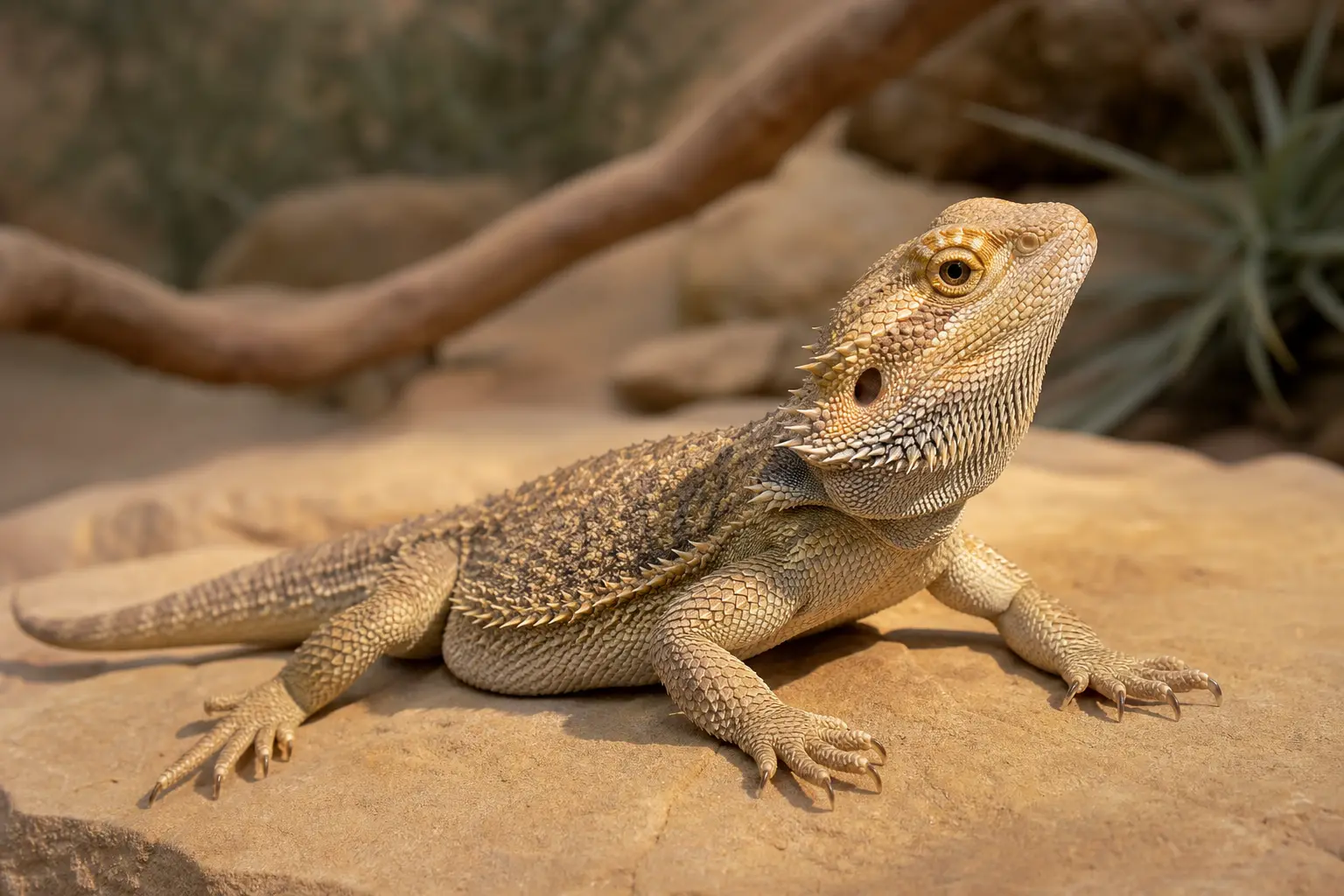
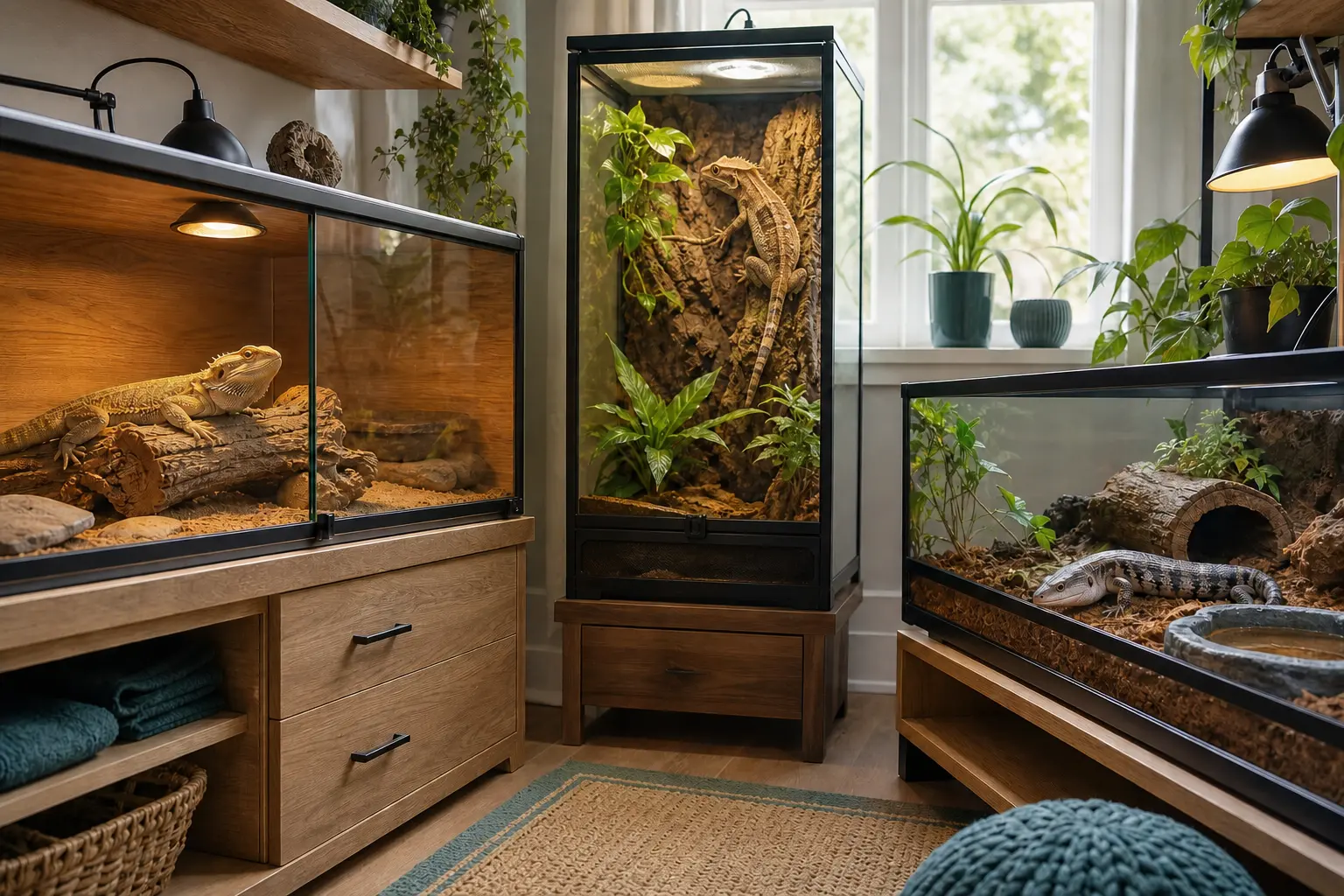
Basking, climbing, foraging, and watching happen while the home is bright
Rankin's dragon · Pogona henrylawsoni
A full day with Rankin's dragon.
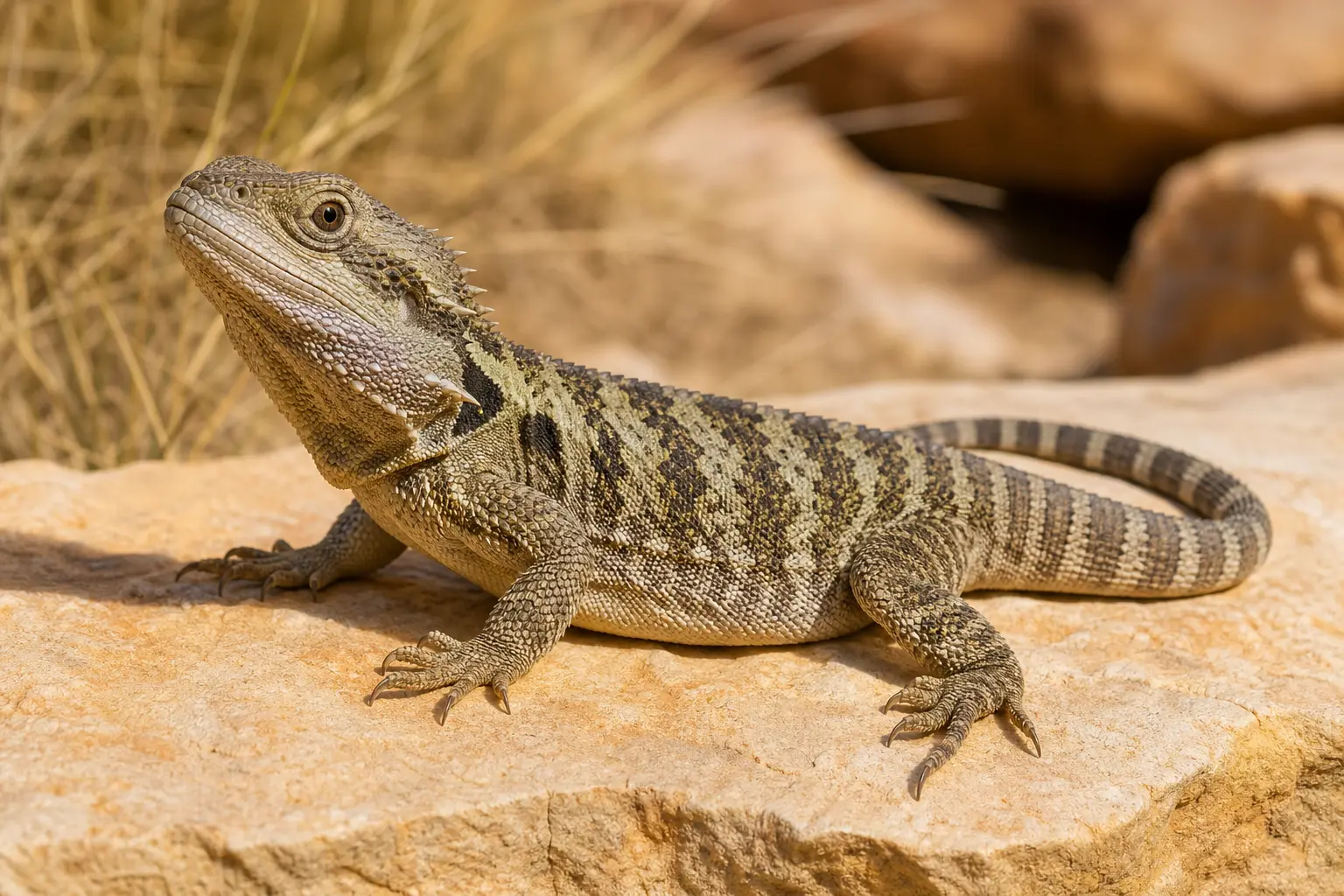
A compact Australian dragon whose daylight hours are spent basking, climbing, foraging, and choosing cover.
Its day often begins under the lights.
Get to know them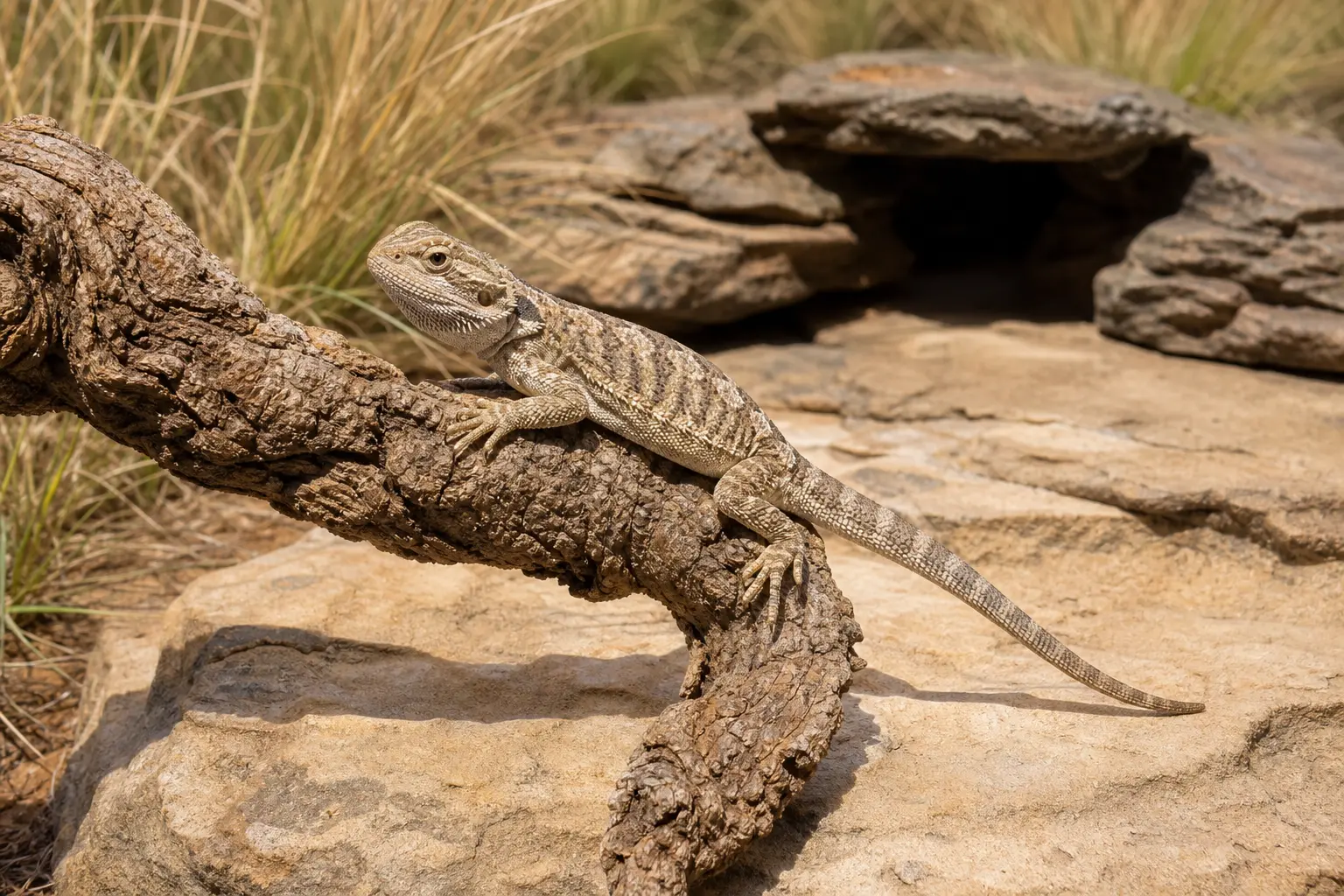
Personality and daily life
A small dragon with a full day.
A Rankin's dragon is a compact, day-active lizard that moves between warmth, low perches, cover, and food. It needs its own plan—not a scaled-down central bearded dragon setup.
A compact adult still needs an adult home, not a temporary grow-out tank
Unlike many lizards, this species does not drop and regrow its tail. Never grab or support it by the tail.
A good home gives the dragon more to do than sit beneath one hot lamp
What to expect
Could a Rankin's dragon fit your days?
It is a compact 25–30 cm dragon. Its day still needs measured UVB and basking heat, a roomy adult home, fresh greens, and live insects. The routine begins when the lights come on.
The honest fit
Would you enjoy life together?
A good match means you can give the dragon a bright, usable home and keep up with the small things that keep it well.
You may be a lovely match if…
- A permanent, furnished adult enclosure with a real heat and UVB gradient fits comfortably in your home
- You enjoy a reptile whose best hours happen during the day
- You are happy to prepare leafy greens and care for live feeder insects
- You can measure surface heat and UVB, then keep a reptile or exotics veterinarian within reach
Think twice if…
- A small tank with one lamp is all you can accommodate.
- Fresh greens, live insects, replacement UVB, or measuring tools would be difficult to keep up
- You are hoping for a handling pet or an automatically safe group animal
- A reptile or exotics veterinarian is not realistically within reach
A comfortable home
Bright days, cool corners, real choices.
A good home is not one hot lamp in a box. It gives the dragon a warm surface, a cooler retreat, measured UVB, full shade, cover, water, and room to move.
90 × 45 × 45 cm is the minimum starting point for one adult; the larger home makes warmth, shade, digging, and low climbing easier to arrange.
This is a surface reading directly under the lamp, checked at the dragon's height—not a room-temperature guess
Measure it at the dragon's back height and leave full shade outside the light.
Fresh water and one damp retreat help without making the whole enclosure damp.
Feeding them well
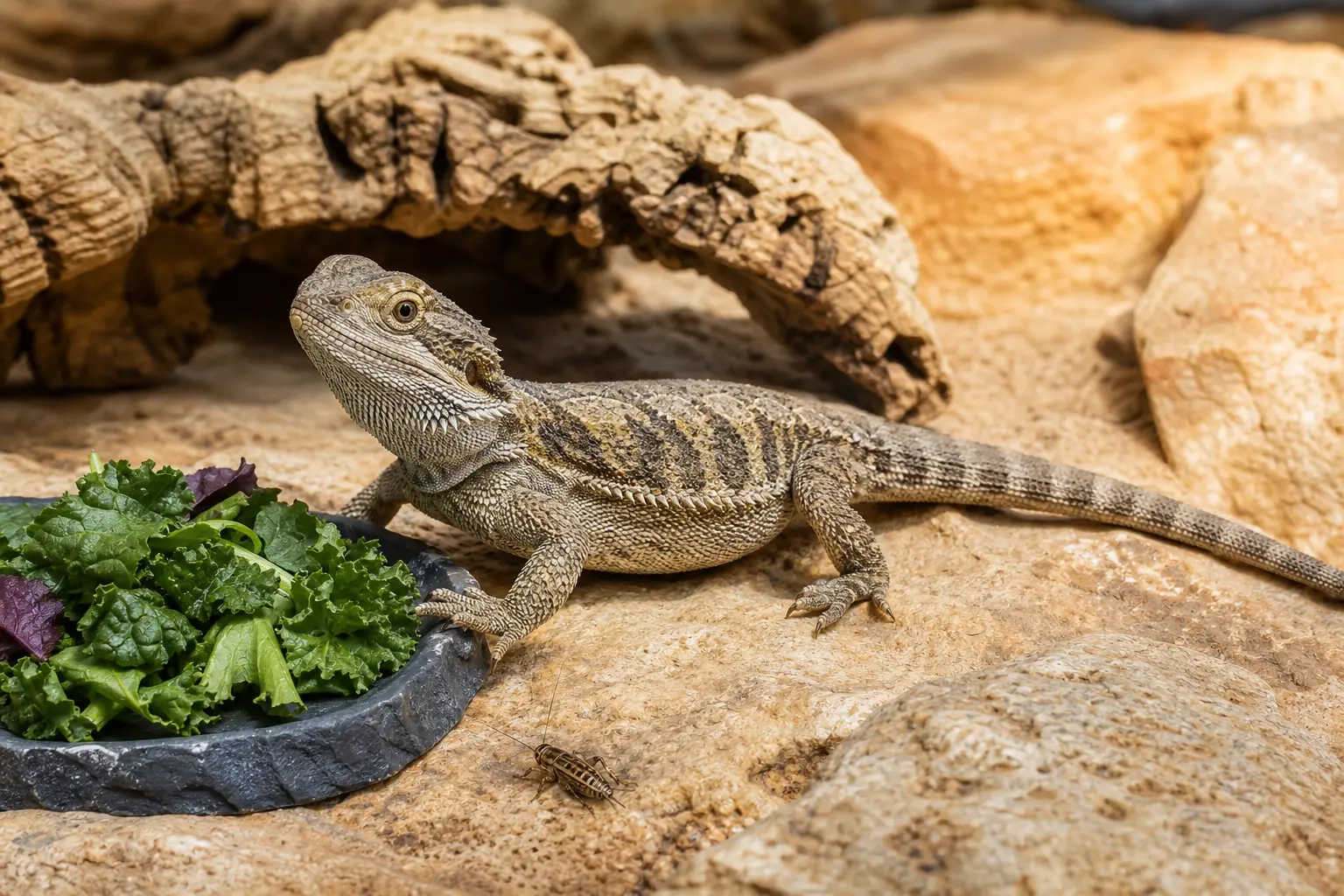
Greens on the table. Insects in the plan.
Fresh leafy greens are part of care every day. Live insects stay in the routine, too: buying them, keeping them well, preparing them, offering them, and removing any that remain.
A plant-forward adult routine is still a real daily task, not a garnish
Keep feeders clean and well fed, choose a size the dragon can take safely, and let its weight and appetite—not a copied calendar—shape the details.
Calcium and vitamin/mineral choices belong beside measured UVB, diet, age, and veterinary guidance
The rhythm
Make the day. Then watch what they do with it.
Build a usable day
Check water, greens, enclosure locks, and the warm and cool readings. Recheck UVI whenever the fixture, mesh, height, or bulb changes—and on a regular schedule.
Watch the small choices
Notice where your dragon basks, climbs, eats, digs, uses shade, and settles. Those choices tell you more than a product label.
Leave the home dark
Remove uneaten insects and spoiled greens, note anything unusual, then turn every visible light off for the night.
Care with tenderness
Let the dragon set the pace.
Make warmth a choice
Give the dragon a measured basking surface, a cooler retreat, and full shade. A bright-day animal still needs a way out of the glare.
Keep one dragon per home
One dragon in one richly furnished enclosure is the calm default. Group housing belongs to an advanced setup with extra space, several basking sites, and spare homes ready.
Treat handling as an invitation
Support the body low over a safe surface. If the dragon retreats, opens its mouth, or tries to flee, end the session calmly. Watching its day unfold is already a relationship.
Wash up after care
Wash your hands after the dragon, greens, insects, waste, water, or enclosure equipment. Keep all supplies out of the kitchen.
Good to know
Common questions, answered.
Open any question for a short, practical answer.
Life together
Are Rankin's dragons good first reptiles?
They can suit a prepared first-time keeper, but they are not a small-tank shortcut. Before one arrives, have the adult home running: a measured basking surface, UVB, a cool retreat, cover, greens, live feeders, and a reptile veterinarian.
How big do Rankin's dragons get?
Adults are about 25–30 cm (10–12 in) from nose to tail, with a 12–15 cm snout-to-vent length. It is still an adult body, so plan the adult enclosure from the start.
How long do Rankin's dragons live?
The current veterinarian-authored guide gives 6–10 years as usual, with some animals reaching about 15. Plan around the longer possibility without treating it as a promise for every dragon.
When are Rankin's dragons most active?
They are diurnal. The interesting moments happen in daylight: basking, climbing low structure, exploring, digging, foraging, and choosing cover.
How are Rankin's dragons different from central bearded dragons?
Rankin's dragons are Pogona henrylawsoni: a compact dragon of Queensland black-soil grasslands, with a smaller beard than a central bearded dragon. They need a Rankin's-specific plan; a central-bearded-dragon guide will not give you an exact setup.
Can a Rankin's dragon drop its tail?
No. Rankin's dragons do not drop and regrow their tails as many geckos do. Protect the whole animal from falls and rough handling; never use the tail as a handle.
Can two Rankin's dragons live together?
Plan one dragon per home. Multiple dragons compete for the same hot spot, shade, and cover, and stress can be easy to miss. A current guide permits only advanced, very large, richly furnished groups; adult males must not share.
What should I have ready before bringing one home?
Set up and run the adult enclosure before adoption. Confirm the warm and cool zones, UVI and shade, water, cover, low climbing routes, secure doors, greens, live-feeder plan, and vet contact.
Home, food, and health
What enclosure does an adult Rankin's dragon need?
For one adult, 90 × 45 × 45 cm (36 × 18 × 18 in) is the minimum starting point. Plan on 120 × 60 × 60 cm or larger if you can; it gives you much more room for a real temperature gradient, UVB, shade, digging, low climbing, and cover.
How do I heat a Rankin's dragon enclosure safely?
Build a measured gradient, not a hot box. A current species guide uses a 40–45°C basking surface directly under the lamp, about 24°C at the cool substrate, and 21–23°C at night. Use an infrared thermometer at the basking surface and probes at the retreats.
Does a Rankin's dragon need UVB?
Yes, UVB belongs in the plan. The current guide uses UVI 3–5 at the basking site, grading down to shade. Measure at the dragon's back height: bulb percentage, mesh, distance, fixture, and replacement date all change the result.
How should humidity work?
Keep the main home dry and well ventilated, with fresh water and one locally damp retreat. There is not a well-supported Rankin's-specific whole-enclosure humidity number to copy, so watch the habitat and the dragon instead of chasing a borrowed percentage.
What substrate should I start with?
Choose a surface that lets you monitor a new dragon's food, waste, temperature, and hydration clearly. A healthy established dragon may use a measured naturalistic soil-and-sand setup for digging, but it is a whole-home decision—not a decoration purchase.
What do Rankin's dragons eat?
They are omnivores: fresh leafy greens every day plus varied live insects. Adults usually become more plant-forward than young dragons, but the right amount follows age, body condition, appetite, UVB, and reptile-veterinary advice.
Do I still need live insects for an adult?
Yes. A plant-forward adult menu still includes live insects. Source them safely, keep them clean and well fed, choose the right size, and remove any that remain.
How often should I feed one?
There is no single calendar that fits every Rankin's dragon. Keep greens available daily, then tailor live insects and supplements with a reptile veterinarian to the dragon's age, body condition, appetite, and setup.
Does a Rankin's dragon need water and a damp hide?
Yes. Keep shallow fresh water available at all times, and offer one locally damp retreat while keeping the main habitat dry and ventilated. That gives the dragon a choice without making the whole home stale.
What should I do when my Rankin's dragon sheds?
Check the toes and skin through each shed and make sure the locally damp retreat stays useful. Recurring retained skin or toe concerns are reasons to call a reptile veterinarian, not to keep escalating home fixes.
When should I call a reptile veterinarian?
Call for persistent changes in appetite, weight, droppings, activity, movement, basking, eyes, skin, toes, shedding, swelling, trembling, weakness, or coordination. These are reasons to call, not a diagnosis.
Can a healthy Rankin's dragon carry Salmonella?
Yes. Wash your hands after the dragon, greens, insects, waste, water, or enclosure equipment, and keep all supplies out of kitchens and food-preparation areas.
Build the bright day before they arrive.
Test the enclosure's floor room, measured basking surface, cool retreat, UVI, shade, water, cover, and locks before your Rankin's dragon comes home.
Plan their heat and lightingSources and care boundaries
Exact targets depend on the measured location, equipment, animal, and veterinary context. This profile keeps source disagreements visible instead of blending them into one number.
- The Reptile Database: Pogona henrylawsoni
- CyberZoo; veterinarian-authored by Jesper Agner Arnö: Dvärgskäggagam – Skötsel och fakta
- Western Sydney University / Animal Technology and Welfare: The care of Central and Pygmy Bearded Dragons
- Australian Capital Territory Government: Risk Assessment for Importation of Native Reptiles into the ACT: Pogona henrylawsoni
- Federation of British Herpetologists: FBH Code of Practice for Recommended Minimum Enclosure Sizes for Reptiles
- Swiss Veterinary Society / Schweizer Archiv für Tierheilkunde: Aspekte des Tierwohls in der Exotenpraxis
- MSD Veterinary Manual: Management and Husbandry of Reptiles
- Bowling Green State University Herpetarium: Rankin's (Lawson's) Dragon, Black Earth Bearded Dragon
- U.S. Centers for Disease Control and Prevention: Reptiles and Amphibians
- Association of Reptile and Amphibian Veterinarians: For Reptile and Amphibian Owners
- American Veterinary Medical Association: Selecting a Reptile