Updated
Small mammal food safety
Can Small Mammals Eat Grapefruit?
Tiny treat only
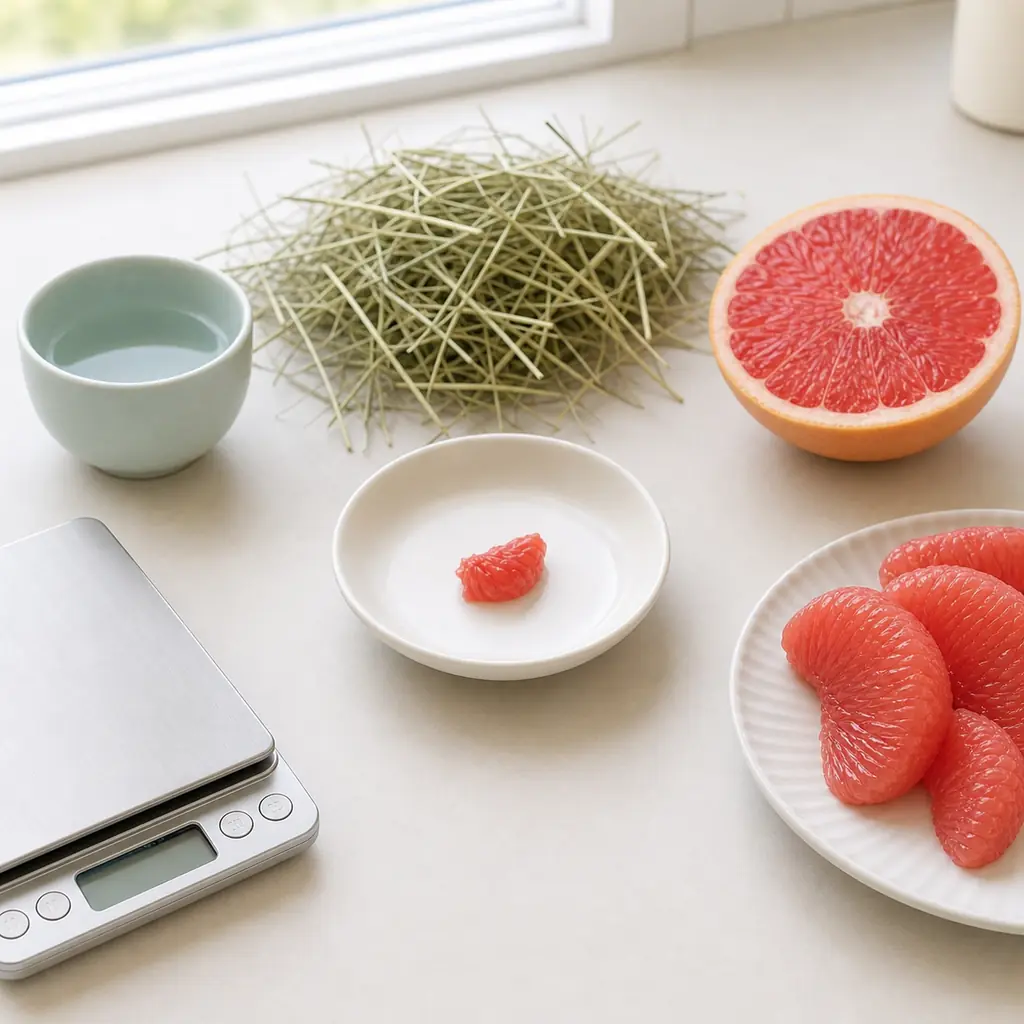
Usually skip grapefruit, or use only a tiny peeled piece for select healthy animals. It is tart, wet, acidic, and not useful for chinchillas or ferrets.
 Grapefruit
Guinea pigs
Tiny rare piece
A guinea pig may have a tiny peeled grapefruit piece rarely, but vitamin C should come from better routine foods.
Syrian and dwarf hamsters
Usually skip
Hamsters are better skipping tart citrus. If used at all, keep it to a pinhead peeled piece for a healthy Syrian hamster.
Rats
Tiny piece
A rat may have a tiny peeled grapefruit piece occasionally if the staple diet and stool stay normal.
Mice
Skip or pinhead
A mouse is better skipping grapefruit. If used, keep it to a pinhead piece and remove leftovers.
Gerbils
Usually skip
Gerbils do best with a drier routine, so grapefruit is usually worth skipping.
Chinchillas
Skip citrus
Do not feed grapefruit to chinchillas. Tart wet fruit is a poor fit for hay-centered digestion.
Ferrets
Do not feed
Do not feed grapefruit to ferrets. Ferrets need meat-based food, not citrus fruit.
Tart fruit is easy to skip
Grapefruit does not solve a nutrition problem. For most small mammals, a milder tiny fruit or no fruit is cleaner.
Medication changes the answer
If the animal is on medication or has a medical plan, skip grapefruit unless an exotic-pet veterinarian specifically clears it.
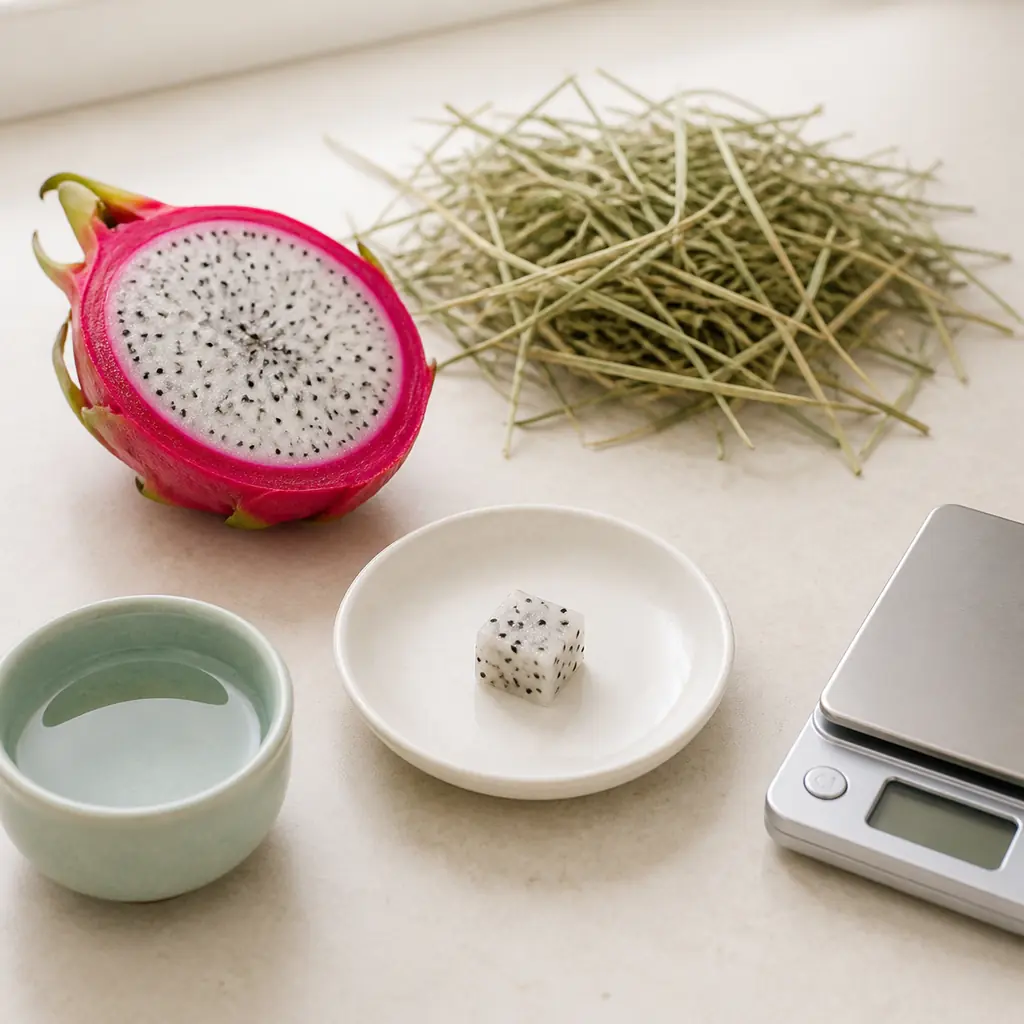
Peel and cut tiny
- Remove peel, pith, seeds, membrane-heavy pieces, and any bitter or dry edges.
- Cut one tiny peeled flesh piece and offer it only to a healthy animal eating normally.
- Remove sticky acidic leftovers and rinse the dish after the treat.
Avoid
- Grapefruit peel, seeds, juice, soda, marmalade, candied peel, sugared citrus, dried citrus, moldy fruit, and large wet segments.
- Grapefruit for chinchillas, ferrets, animals on medication, or animals with mouth soreness, digestive trouble, low appetite, weight concerns, or abnormal droppings.
- Using tart fruit to tempt poor appetite or replace the normal diet.
Watch
- Mouth irritation, drooling, soft stool, bloating, reduced appetite, fewer droppings, sticky residue, quietness, or hidden fruit pieces.
- Call an exotic-pet veterinarian promptly if a guinea pig, chinchilla, weak animal, medicated animal, or animal with abnormal signs eats less or produces fewer droppings.
Portion
Guinea pigs or rats: a pea-size piece or smaller rarely. Hamsters, mice, or gerbils: a pinhead piece or skip. Chinchillas and ferrets: none.
Helpful food-safety supplies
Optional tools for measuring, storing, serving, and cleaning up small portions safely.
Affiliate links: Furball Cove may earn from qualifying purchases at no extra cost to you.