Updated
Small mammal food safety
Can Small Mammals Eat Plain Cooked Chicken?
Species-specific
Plain cooked chicken is species-specific protein, not a routine treat. A healthy hamster, rat, mouse, gerbil, or ferret may have a tiny unseasoned shred occasionally. Guinea pigs and chinchillas should skip it.
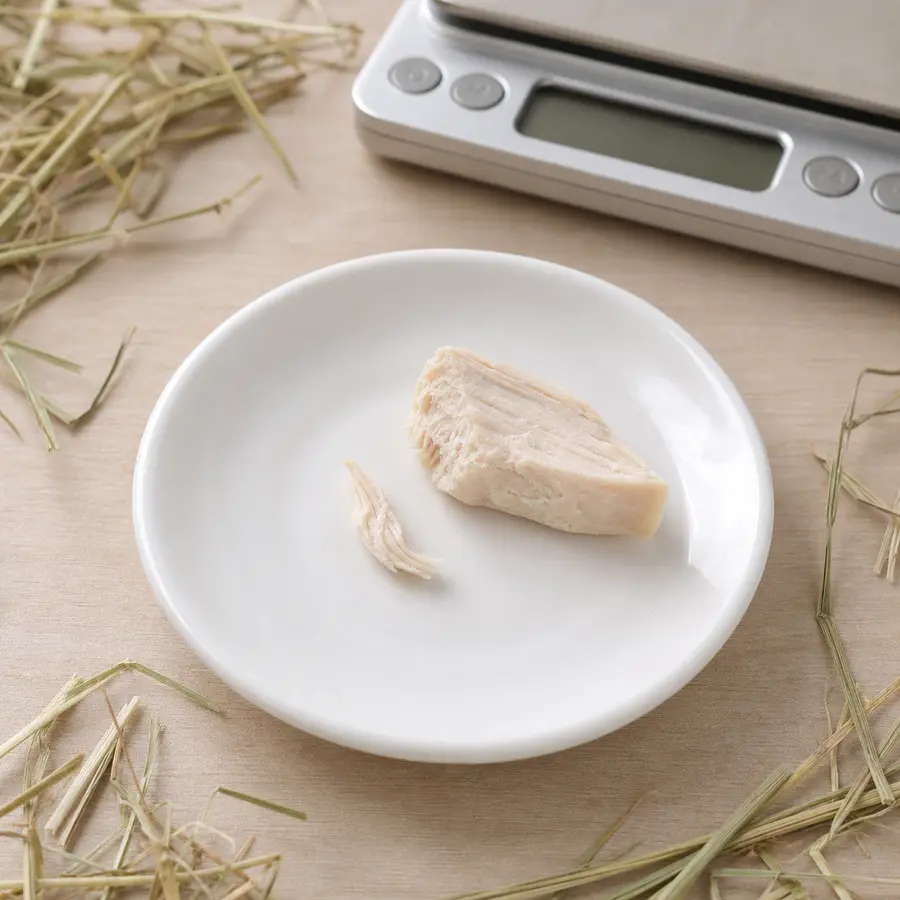 Plain cooked chicken
Guinea pigs
Do not feed
Do not feed chicken to guinea pigs. Guinea pigs need hay, vitamin C foods, pellets, and water, not animal protein.
Syrian and dwarf hamsters
Tiny plain shred
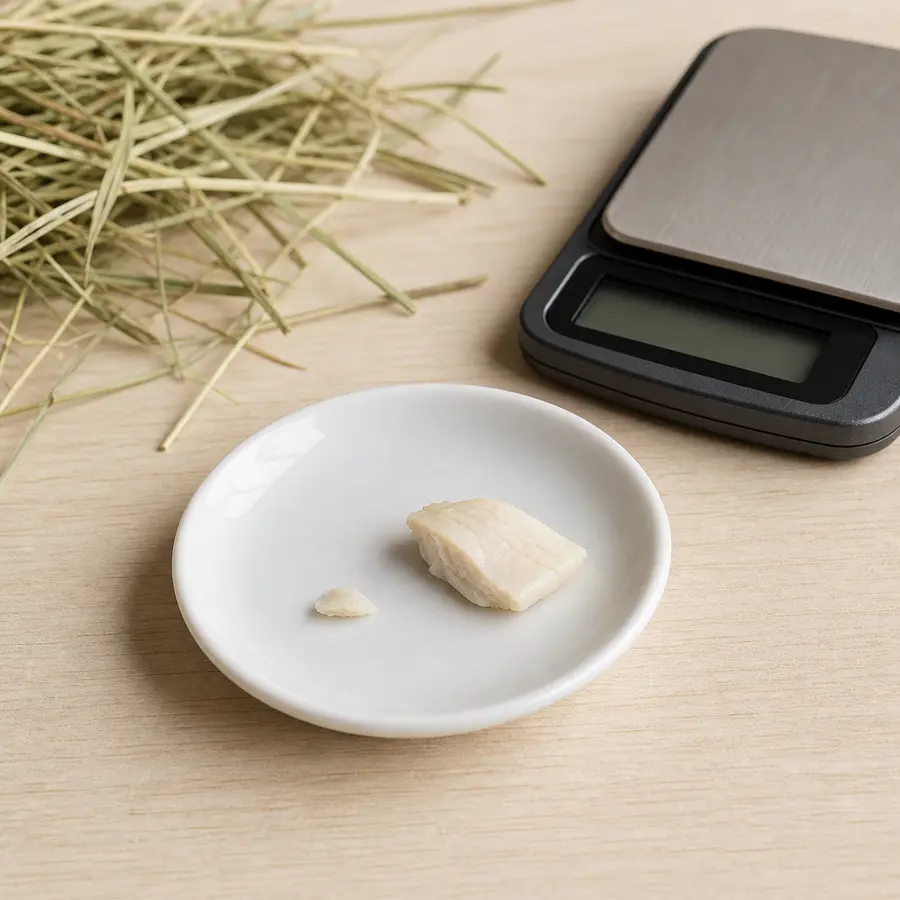
A healthy hamster may have a tiny plain cooked chicken shred occasionally. Check the hoard afterward.
Rats
Tiny plain shred
A rat may have a tiny plain cooked chicken shred occasionally if the normal staple and stool stay steady.
Mice
Pinhead shred
A mouse needs only a pinhead-size cooked chicken shred. Remove leftovers before they spoil.
Gerbils
Pinhead shred
A gerbil may have a tiny plain cooked chicken shred occasionally, but dry balanced food stays central.
Chinchillas
Do not feed
Do not feed chicken to chinchillas. Hay-centered digestion is not built around meat.
Ferrets
Plain meat only
A ferret may have plain cooked chicken if it fits the diet, but bones, seasoning, and leftovers are not appropriate.
Plain is the safety check
This page is about bare cooked chicken. Rotisserie meat, broth, skin, bones, breading, sauce, garlic, and onion change the answer.
Do not leave meat in bedding
Cooked chicken spoils quickly. Offer a tiny shred, then remove leftovers and check hiding spots.
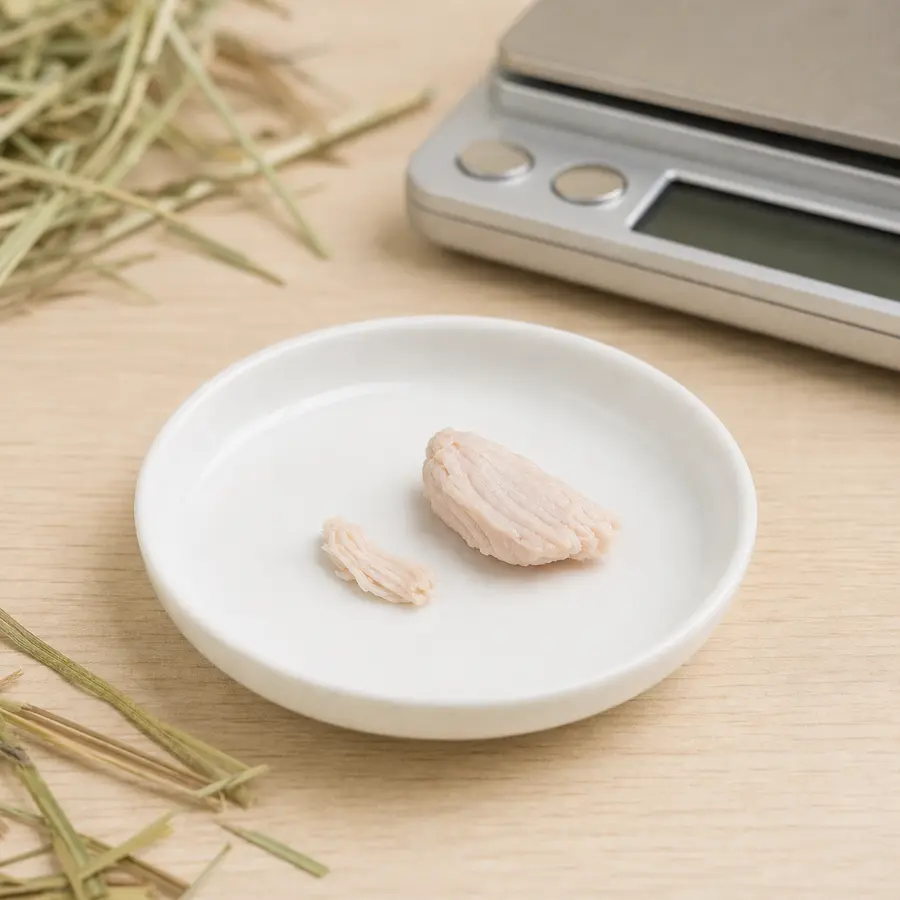
Use one plain shred
- Use fully cooked unseasoned chicken with bone, skin, fat, and gristle removed.
- Tear off one tiny shred instead of offering a chunk, strip, or plate scrap.
- Remove leftovers quickly and check hoards because cooked meat spoils in bedding.
Avoid
- Raw chicken, rotisserie chicken, fried chicken, breaded chicken, chicken skin, bones, gravy, broth, deli meat, garlic, onion, salt, butter, oil, sauce, and old leftovers.
- Chicken for guinea pigs, chinchillas, or animals with appetite, stool, weight, dental, urinary, or digestive concerns.
- Using chicken to fix poor appetite or replace the normal species diet.
Watch
- Reduced appetite, fewer droppings, soft stool, diarrhea, vomiting in ferrets, choking signs, quietness, or hidden spoiled chicken.
- Call an exotic-pet veterinarian promptly for a large amount, bones, raw chicken, abnormal signs, or a guinea pig or chinchilla eating less.
Portion
Hamsters, rats, or ferrets: a tiny shred. Mice or gerbils: a pinhead shred. Guinea pigs and chinchillas: none.
Helpful food-safety supplies
Optional tools for measuring, storing, serving, and cleaning up small portions safely.
Affiliate links: Furball Cove may earn from qualifying purchases at no extra cost to you.