Updated
Small mammal food safety
Can Small Mammals Eat Salt?
Avoid
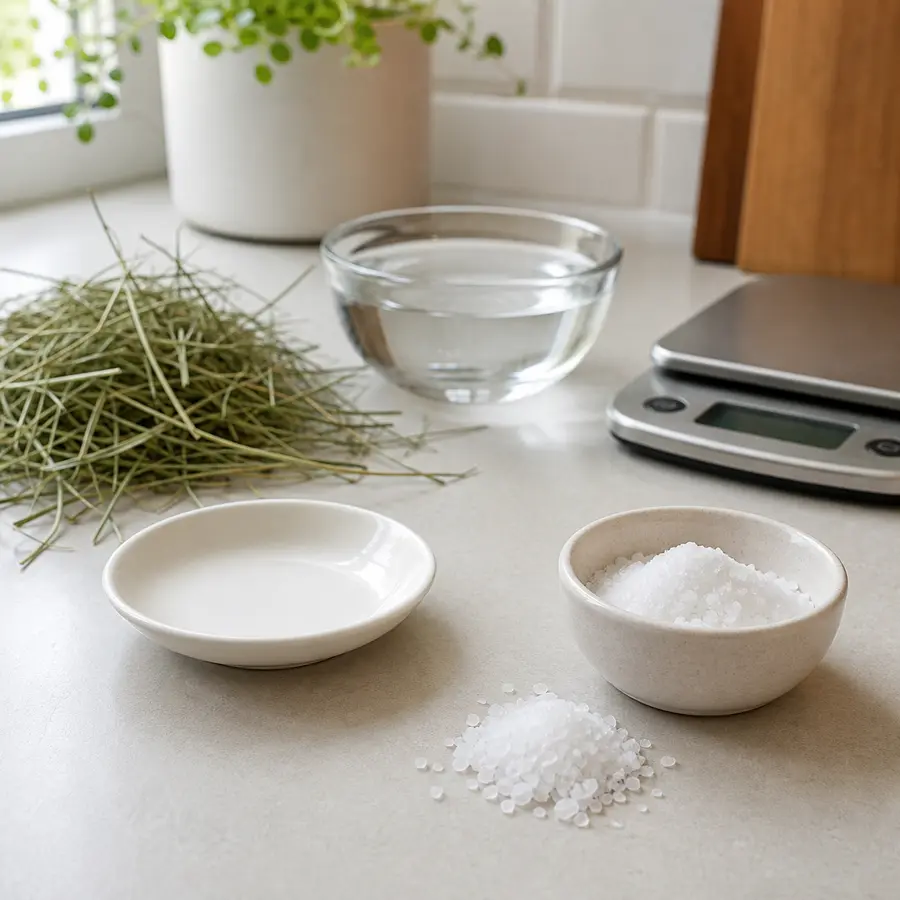
No. Salt is not a treat or supplement for small mammals. Salt crystals, salty snacks, and mineral licks should stay out unless a veterinarian prescribed something specific.
 Salt
SaltGuinea pigs
Do not feed
Do not give salt to guinea pigs. Hay, vitamin C foods, pellets, and water should stay plain and steady.
Syrian and dwarf hamsters
Do not feed
Do not give salt to hamsters. Salted snacks and casual mineral licks are not treat options.
Rats
Do not feed
Do not use salt as a rat treat or supplement. Use balanced rat food instead.
Mice
Do not feed
Do not give salt to mice. A few crystals can be meaningful at mouse size.
Gerbils
Do not feed
Do not give salt to gerbils. Keep the dry staple balanced and unsalted.
Chinchillas
Do not feed
Do not give salt to chinchillas. Hay and chinchilla pellets should not be salted.
Ferrets
Do not feed
Do not add salt to ferret food or treats. Use a species-appropriate ferret diet.
Do not add it
A balanced species diet already handles minerals. Salt crystals, blocks, and salty snacks are not a useful upgrade.
Check the source
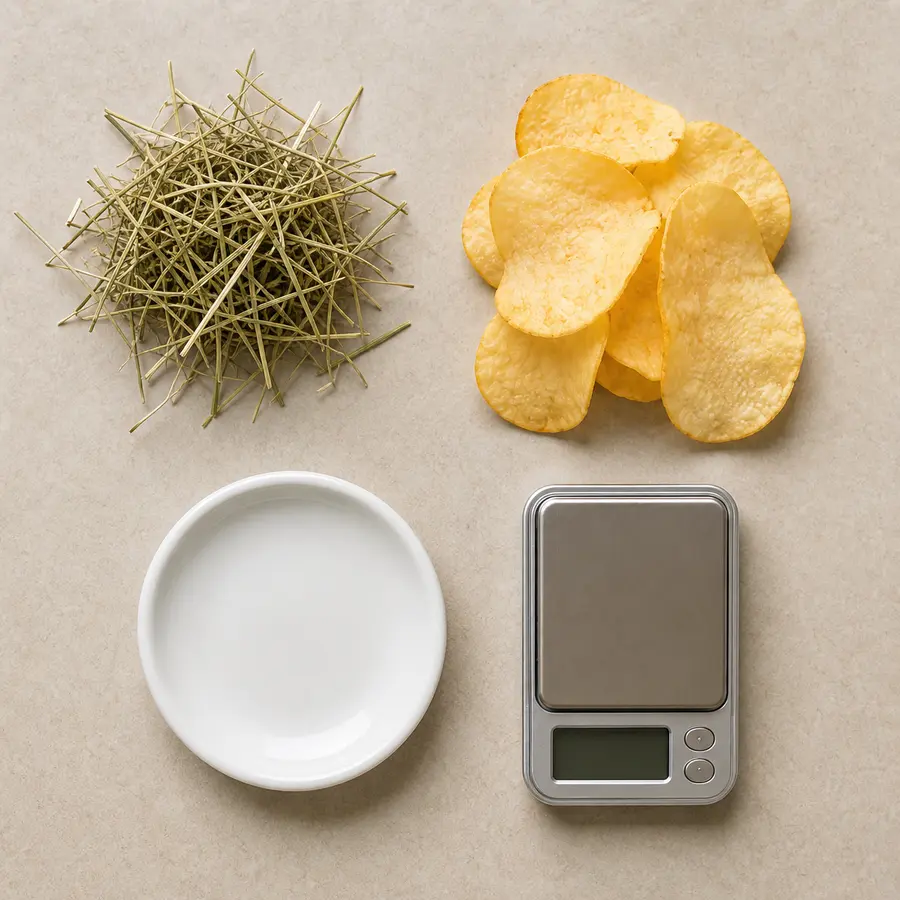
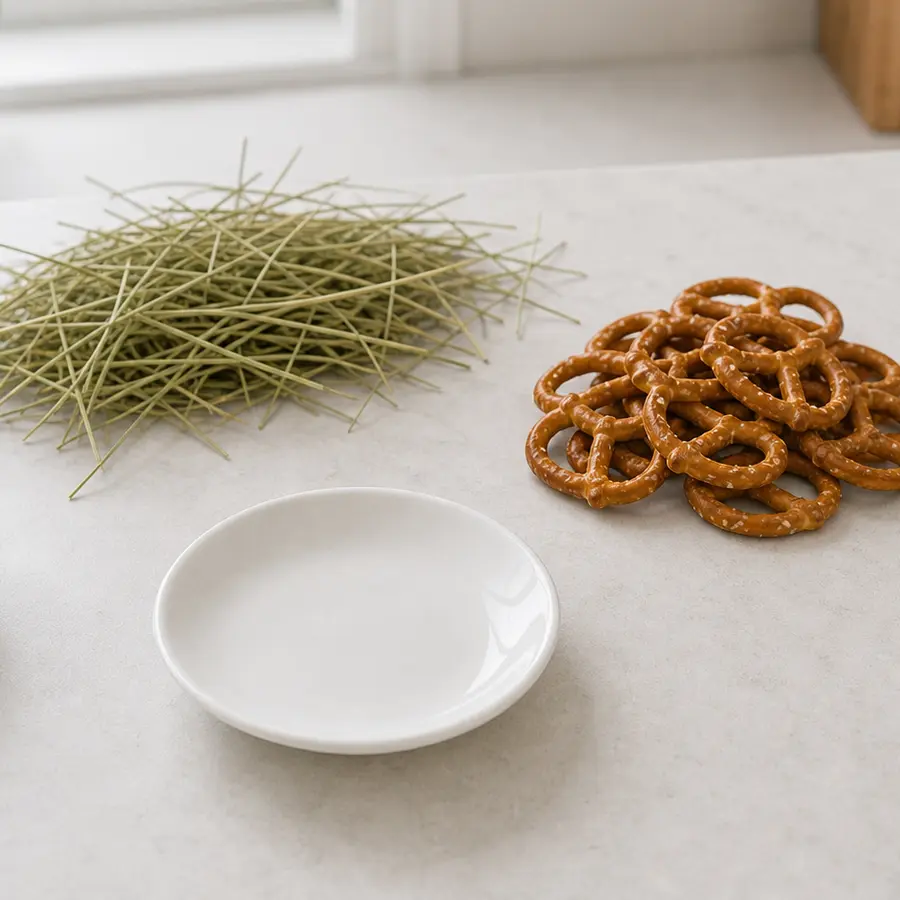
Salt often arrives through chips, pretzels, crackers, brine, cheese, deli meat, broth, or seasoned leftovers. The full food matters.
Remove the salt
- Remove salt crystals, shakers, brine, salty snacks, mineral licks, and bedding or hay touched by salt.
- Check whether the exposure involved chips, pretzels, crackers, popcorn, pickles, deli meat, cheese, or broth.
- Return to the normal diet and keep plain water available.
Avoid
- Table salt, sea salt, salty snacks, brine, salted vegetables, salted nuts, broths, seasoning blends, and salt or mineral licks used casually.
- Salt for guinea pigs, chinchillas, ferrets, tiny rodents, or animals with urinary, kidney, heart, appetite, stool, or weight concerns.
- Adding salt because a food seems bland or because a block is marketed as enrichment.
Watch
- Heavy drinking, reduced appetite, fewer droppings, soft stool, diarrhea, weakness, tremors, quietness, or unusual posture.
- Contact an exotic-pet veterinarian promptly for a meaningful amount, concentrated salt, brine, a tiny or weak animal, or any abnormal signs.
Helpful food-safety supplies
Optional tools for measuring, storing, serving, and cleaning up small portions safely.
Affiliate links: Furball Cove may earn from qualifying purchases at no extra cost to you.