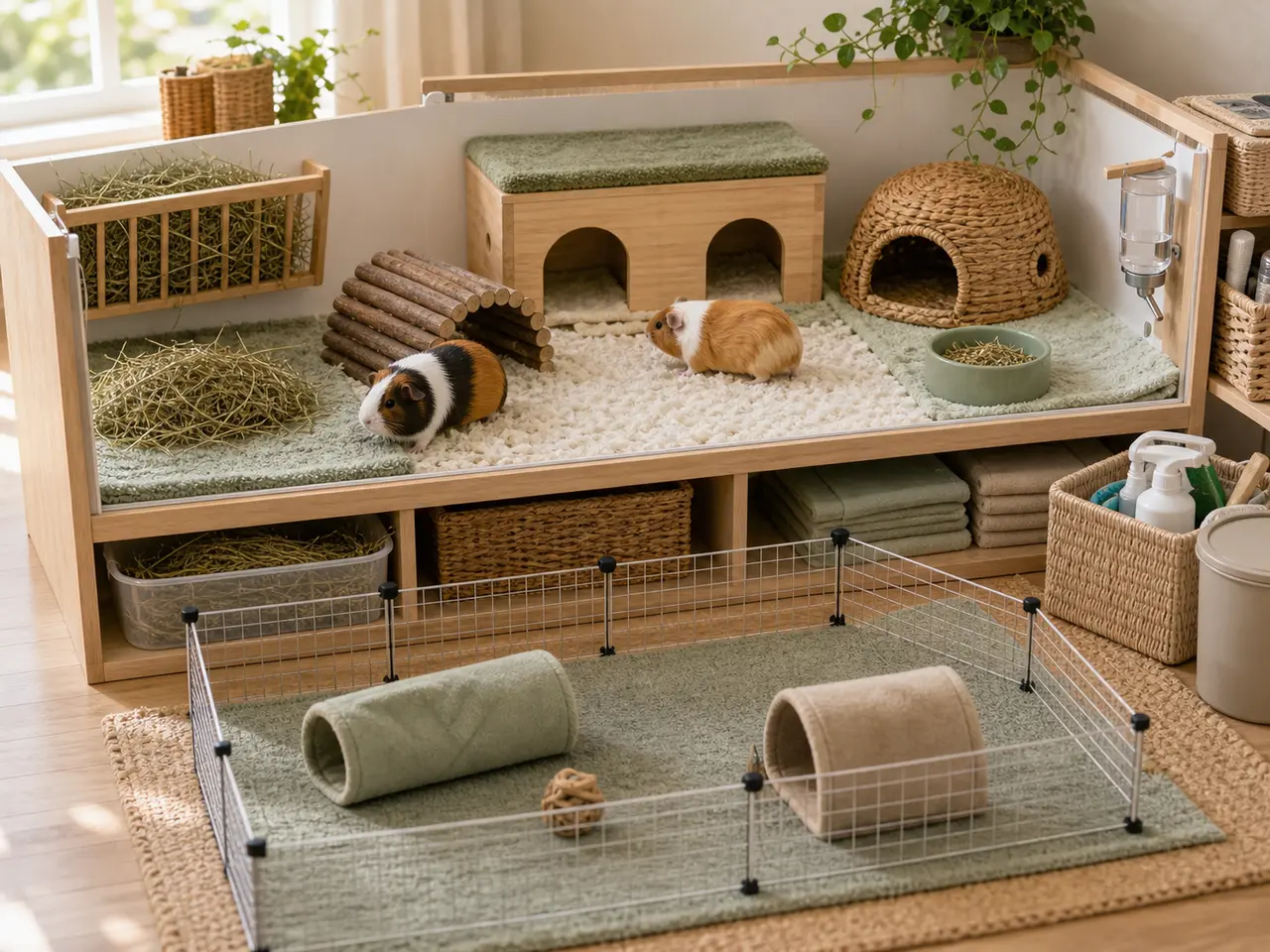
Make hay the main meal
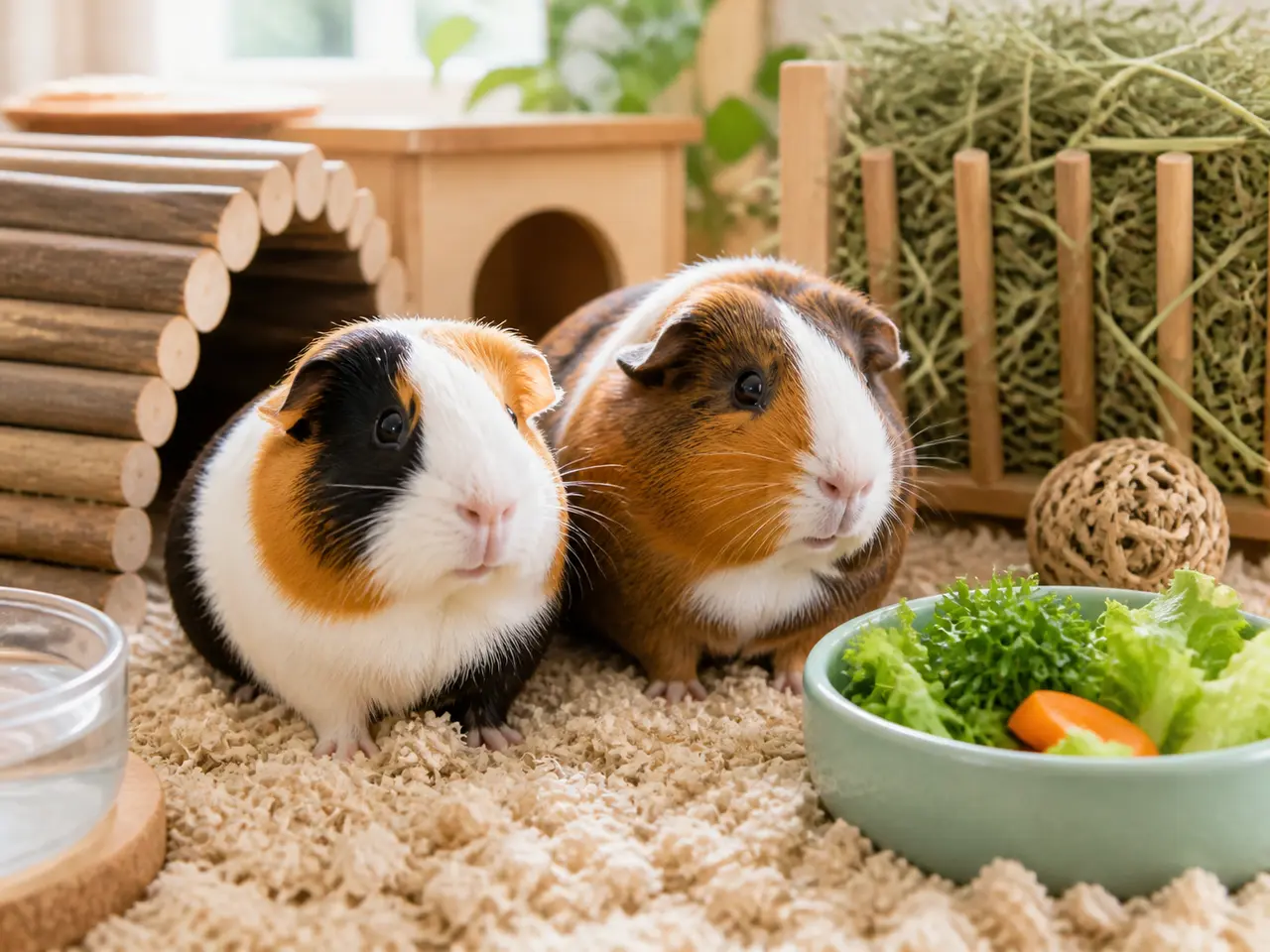
Fresh grass hay should be available all day. It keeps chewing normal, supports digestion, and gives guinea pigs something calm to do between meals. Pellets and vegetables should support the hay habit, not replace it.
Updated
Guinea pig food
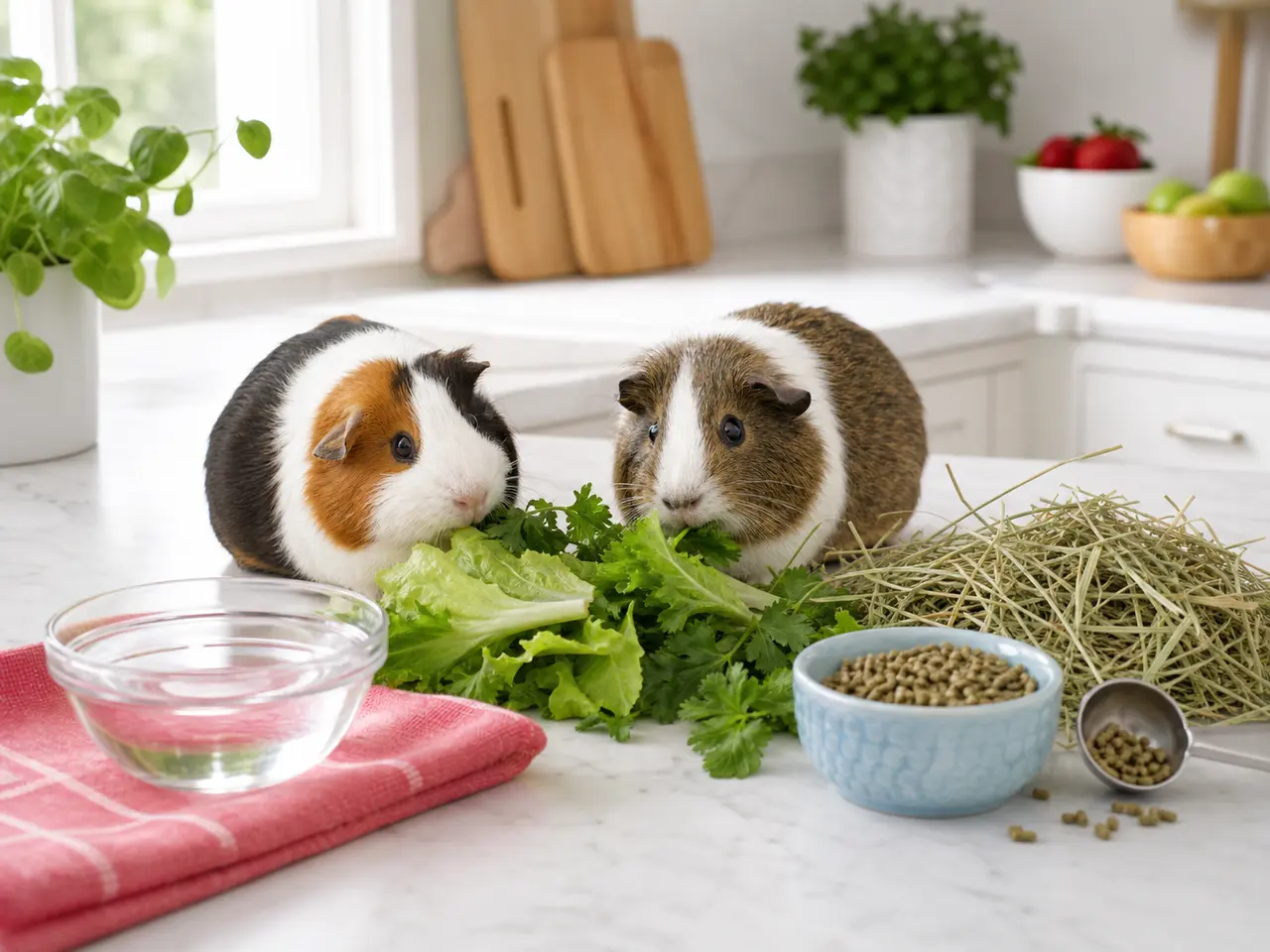
Guinea pigs should eat unlimited grass hay, a measured plain guinea-pig pellet, daily vitamin C, safe greens in a steady routine, and clean water.
Keep the food corner simple enough to repeat every day, then watch appetite, poop, water, and weight closely.
Fresh grass hay should be available all day. It keeps chewing normal, supports digestion, and gives guinea pigs something calm to do between meals. Pellets and vegetables should support the hay habit, not replace it.
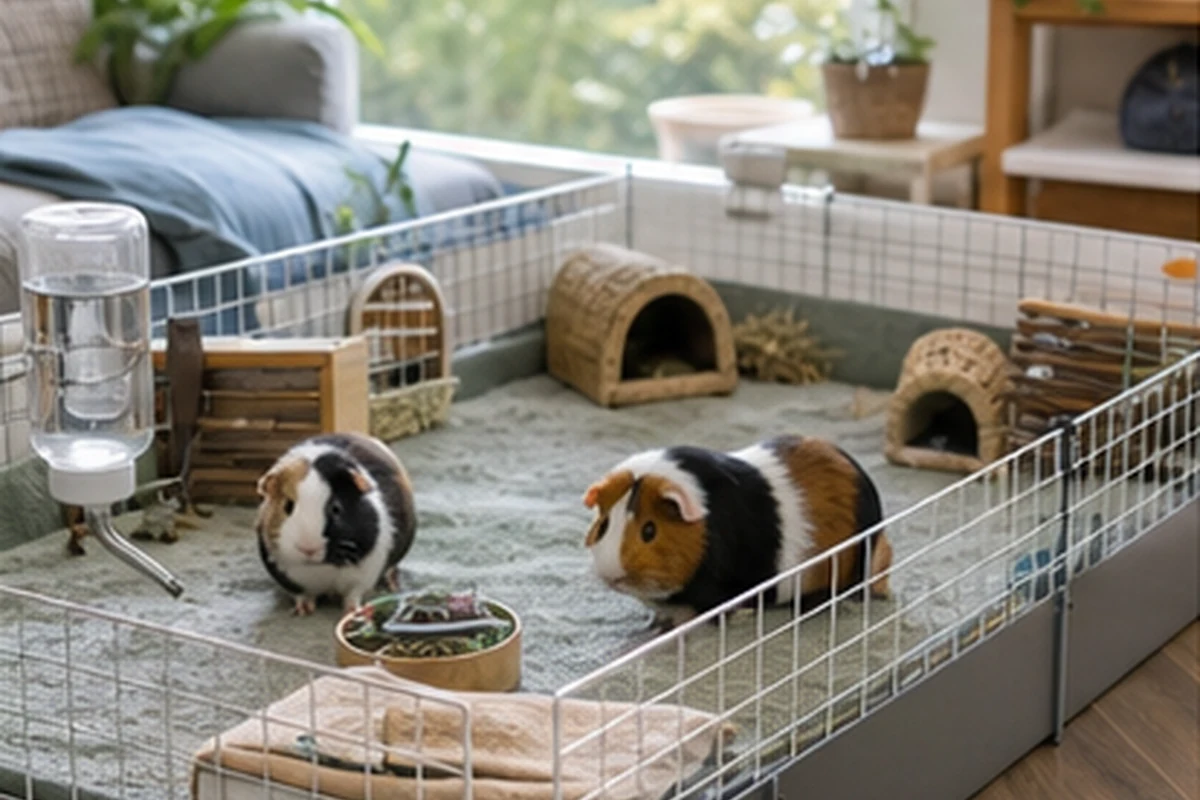
Guinea pigs need a reliable vitamin C source because they cannot make enough on their own. Use a guinea-pig-specific pellet, safe vitamin-C-rich foods such as bell pepper, and a steady routine instead of guessing with random treats.
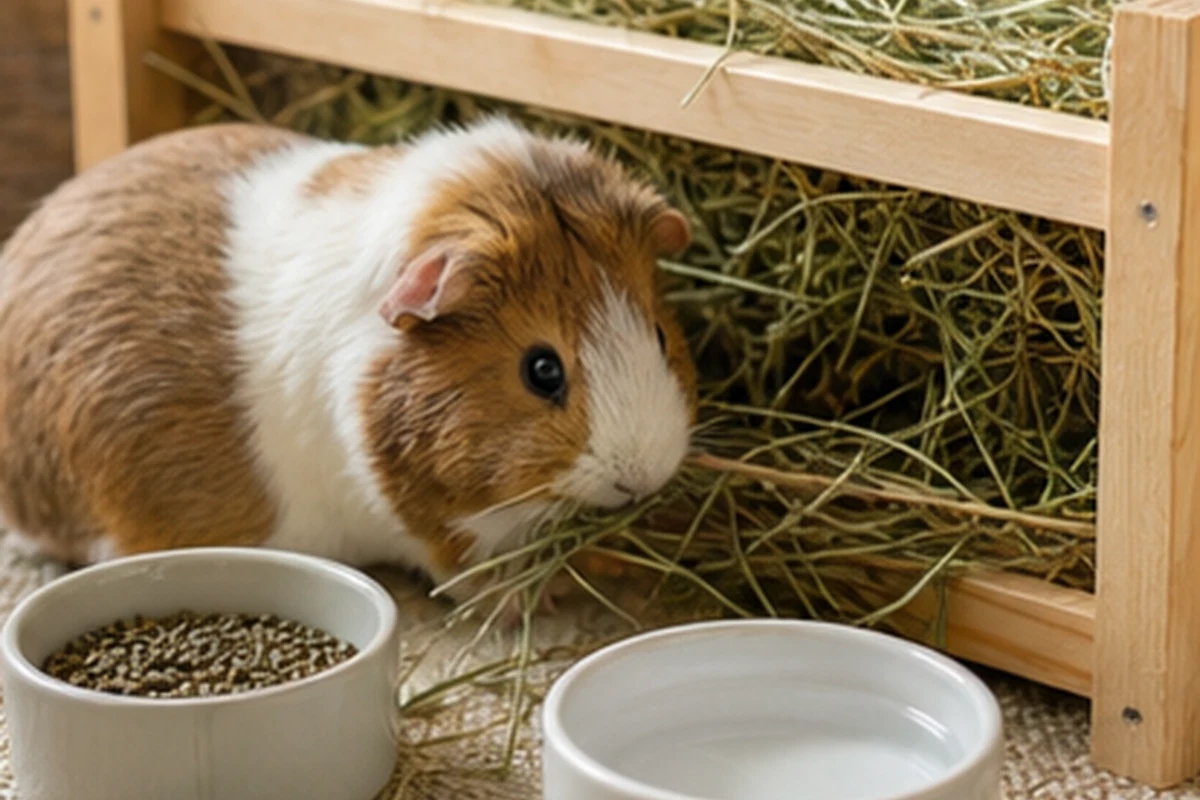
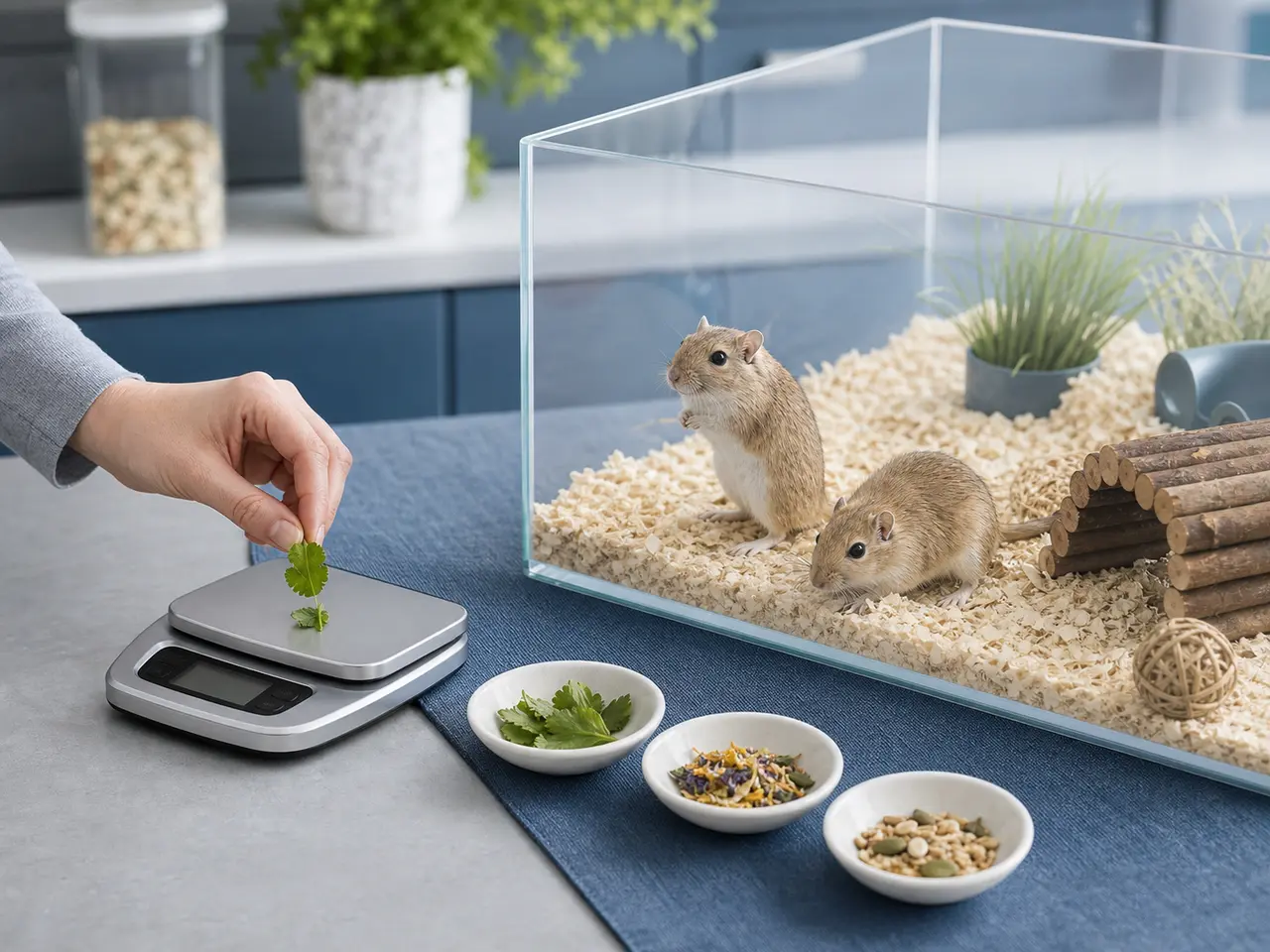
Choose a plain guinea-pig pellet rather than a colorful mix with seeds, dried fruit, or crunchy extras. Measure the serving so hay stays interesting and body condition is easier to read.
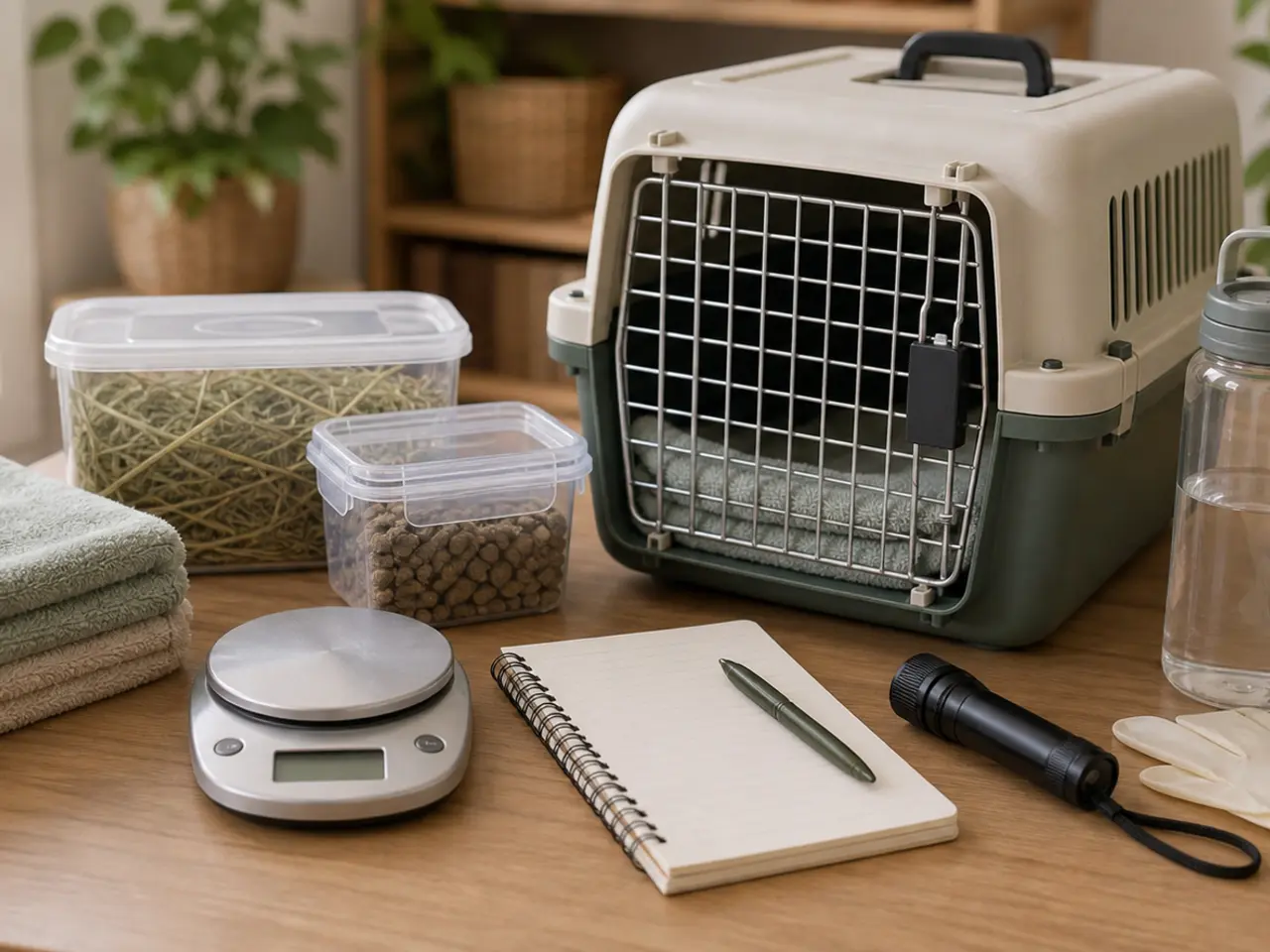
Washed greens can be useful, but sudden changes can upset the gut. Add one food at a time, keep portions sensible, and use the food safety checker before offering herbs, fruit, or unfamiliar vegetables.
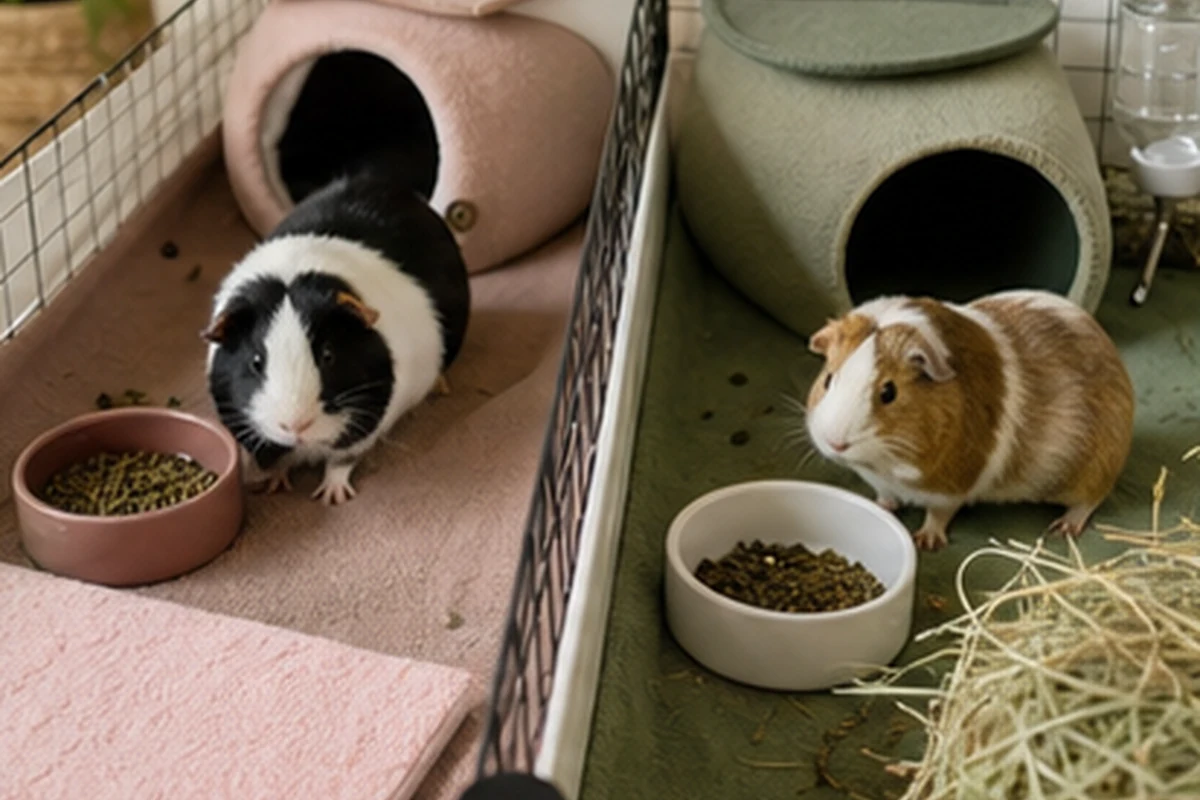
A guinea pig that stops eating hay, leaves food, makes fewer droppings, loses weight, drools, or sits hunched needs fast help from an exotic-pet veterinarian. Do not wait days with a small herbivore that is not eating.
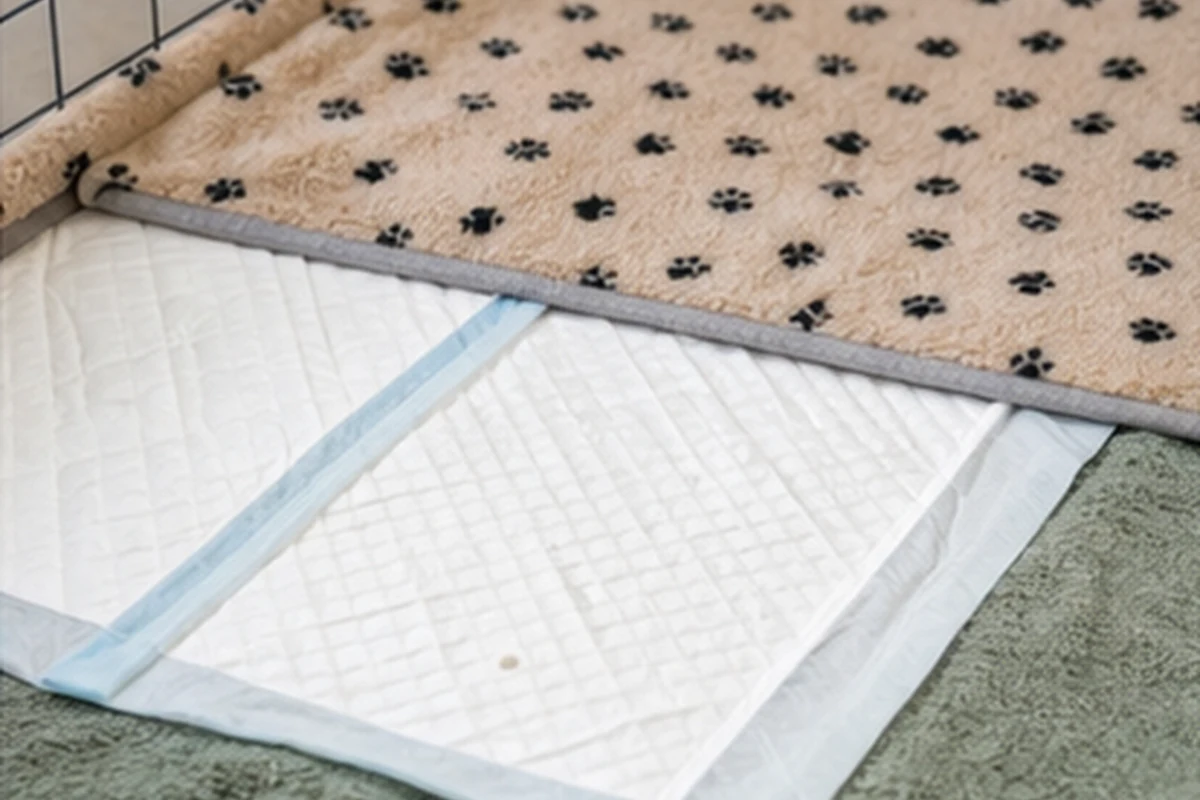
Use the food safety checker before a new vegetable, fruit, herb, or leftover salad piece interrupts hay eating or vitamin C planning. Keep the normal staple steady and test one change at a time.
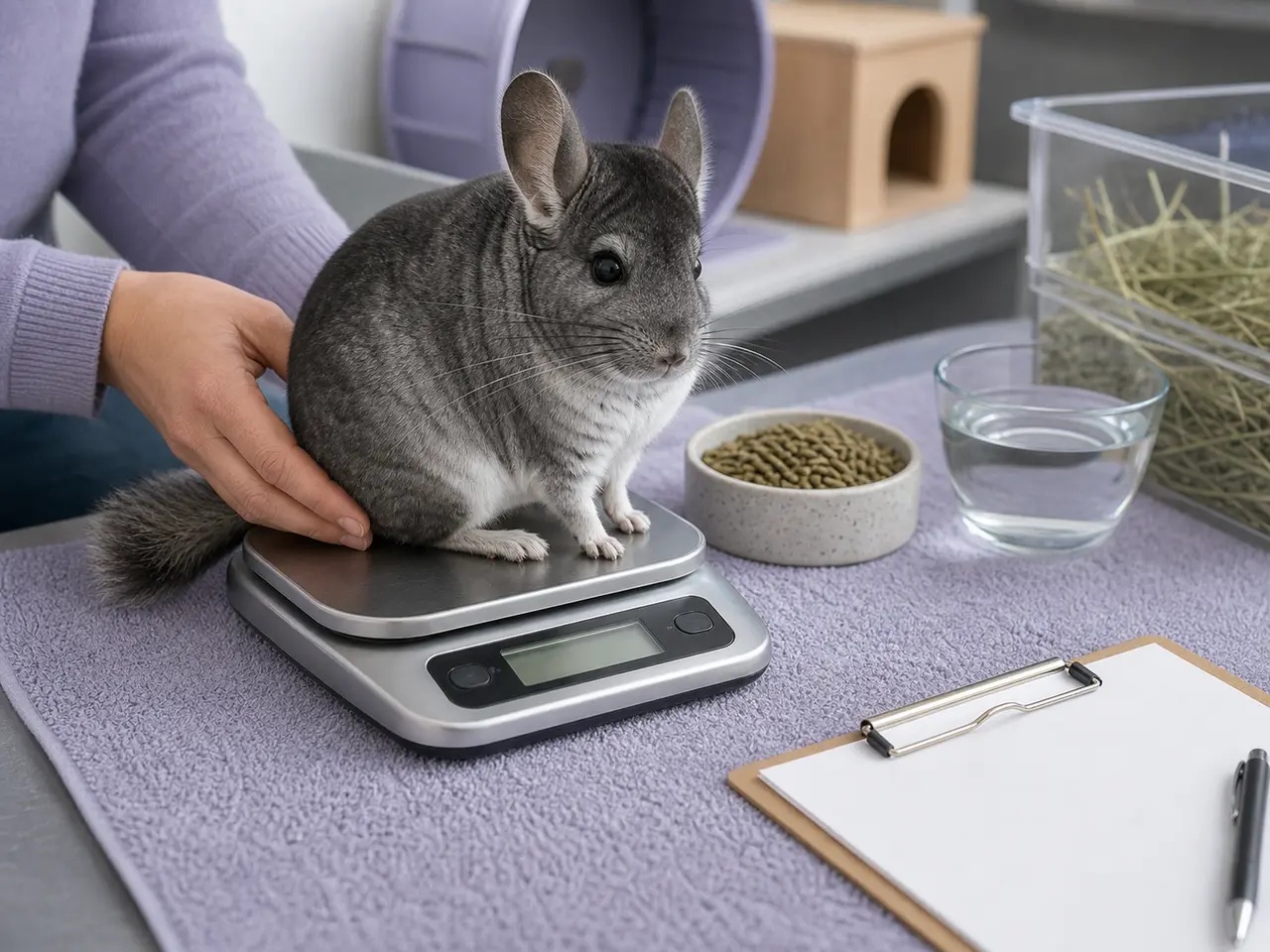
Write notes beside the habitat: portion, water, stool or droppings, weight, cleaning changes, and behavior after the food. If appetite drops, diarrhea appears, breathing changes, or the animal seems painful, call an exotic-pet veterinarian instead of trying another treat.
Optional supplies that support the care routine after the species needs are clear.
Affiliate links: Furball Cove may earn from qualifying purchases at no extra cost to you.
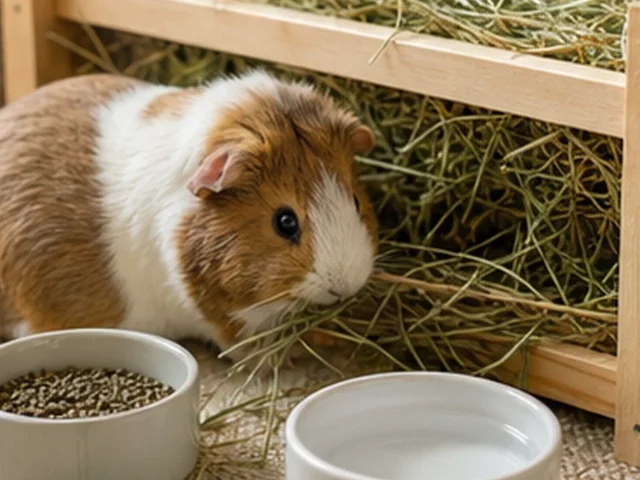
Keeps loose grass hay open, reachable, and away from wet bedding where guinea pigs spend the day.
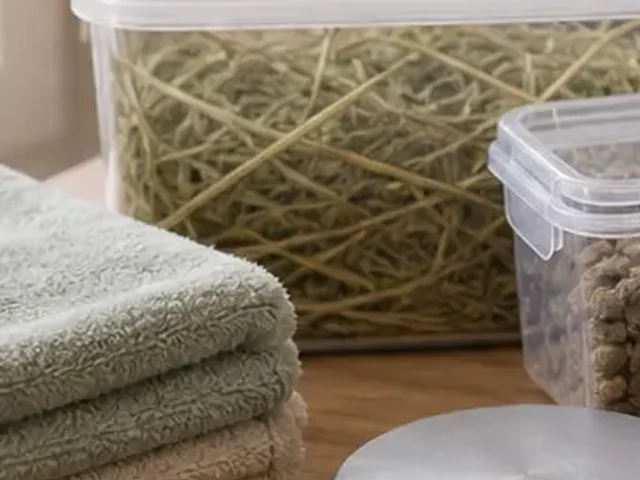
Keeps daily hay dry and easy to refill without turning the habitat into a dusty storage area.
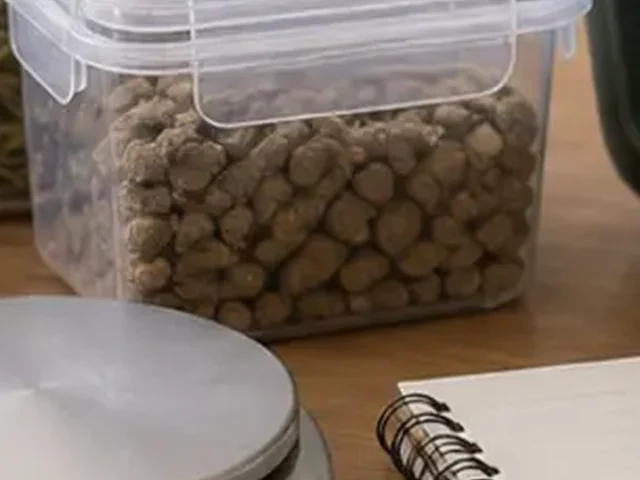
Keeps guinea pig pellets sealed, labeled, and separate from treats.