A guinea pig that is not pooping, not eating, or producing much smaller droppings needs prompt exotic-pet veterinary advice because gut slowdown can become serious quickly.
Treat small changes as information worth acting on.
Treat no poop as urgent
A guinea pig that is not pooping, eating less, bloated, hunched, or quiet needs prompt exotic-pet veterinary advice.
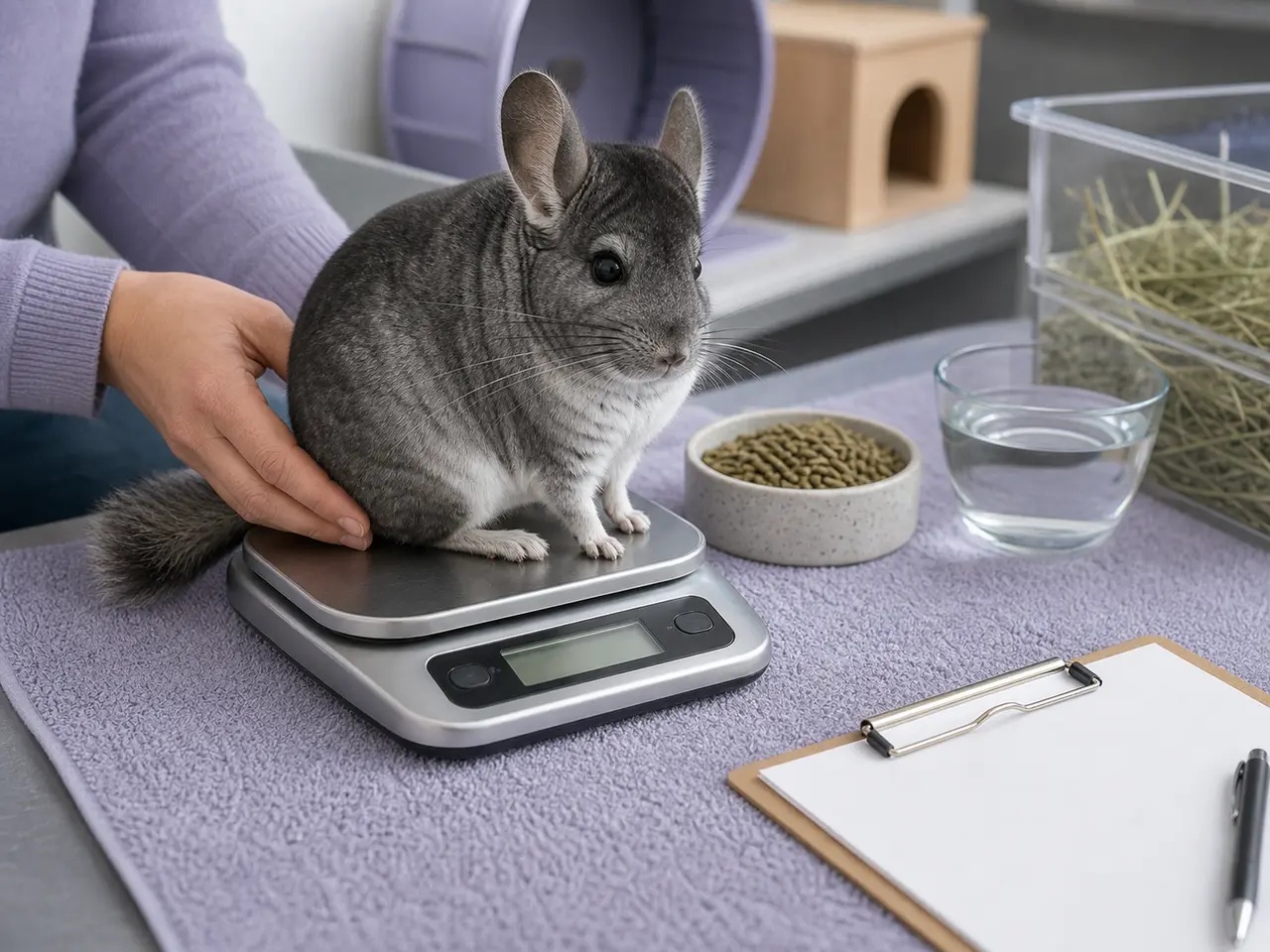
Check hay intake, pellets, greens, water, belly shape, posture, breathing, and current weight before you call.
Gut movement matters
Guinea pigs depend on steady gut movement and constant hay intake. Not pooping is not a normal wait-and-see problem.
A bonded companion may still be eating normally, so check the sick pig directly instead of judging from the shared bowl.
Write down the timeline
Keep hay easy to reach, water working, and a gram scale ready.
Write down last normal droppings, last normal meal, weight, any new food, and whether the guinea pig is passing gas or sitting painfully.
Call on gut slowdown
No poop, fewer droppings, no appetite, bloating, tooth pain signs, drooling, weakness, or labored breathing needs an exotic-pet vet call.
Do not wait for the next cleaning if the litter or bedding suddenly looks empty.
Call with your notes
Call the clinic with your notes and keep the guinea pig calm in a carrier or familiar habitat.
Bring normal food details and weight records if you have them.
Before you decide
Is appetite, poop or stool, breathing, movement, or weight different today?
Do you have the carrier, scale, and clinic number ready?
Can you describe the timing, food, water, symptoms, and possible hazards to a vet?
Would waiting make the animal weaker or harder to transport?
Next best moves
Keep the carrier, gram scale, normal food, and clinic number ready now.
Write down timing, food, water, droppings, breathing, weight, and possible hazards.
Call promptly when appetite, breathing, movement, stool, heat, or energy changes suddenly.
Common health questions
Does this answer apply to every small mammal?
No. The page gives the practical rule, then the species profile should decide the final housing, food, handling, and vet plan.
When should I ask a veterinarian?
Ask an exotic-pet veterinarian promptly for appetite loss, fewer droppings, labored breathing, collapse, severe lethargy, wounds, heat stress, or sudden weight change.