Call an exotic-pet vet for not eating, fewer droppings, labored breathing, collapse, severe lethargy, diarrhea, wounds, heat stress, bloating, head tilt, repeated falls, or sudden weight loss.
Treat small changes as information worth acting on.
Do not wait on sudden changes
Call an exotic-pet vet promptly for appetite loss, fewer droppings, labored breathing, collapse, wounds, heat stress, diarrhea, bloating, head tilt, or sudden weight loss.
Small mammals hide illness well. A quiet animal that looks wrong, feels weak, or stops acting normal deserves help sooner than a dog or cat might.
Warning signs differ by species
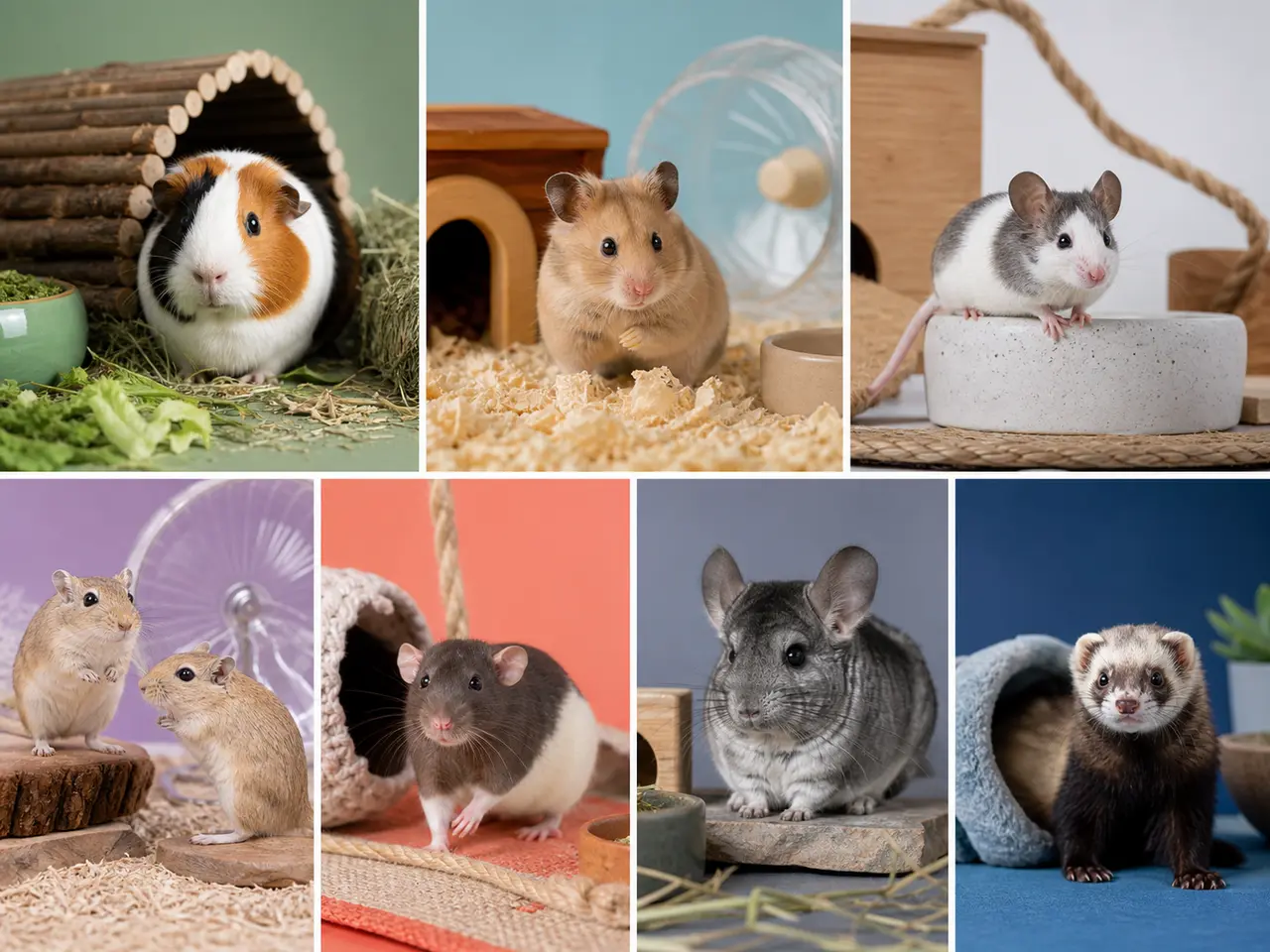
Guinea pigs and chinchillas make eating and droppings especially important. Rats and mice need close breathing checks, while ferrets need fast exotic-pet vet help for vomiting, weakness, or swallowed-object signs.
Use the species guide to learn what normal food, water, stool, posture, and movement look like before a problem starts.
Keep the carrier ready
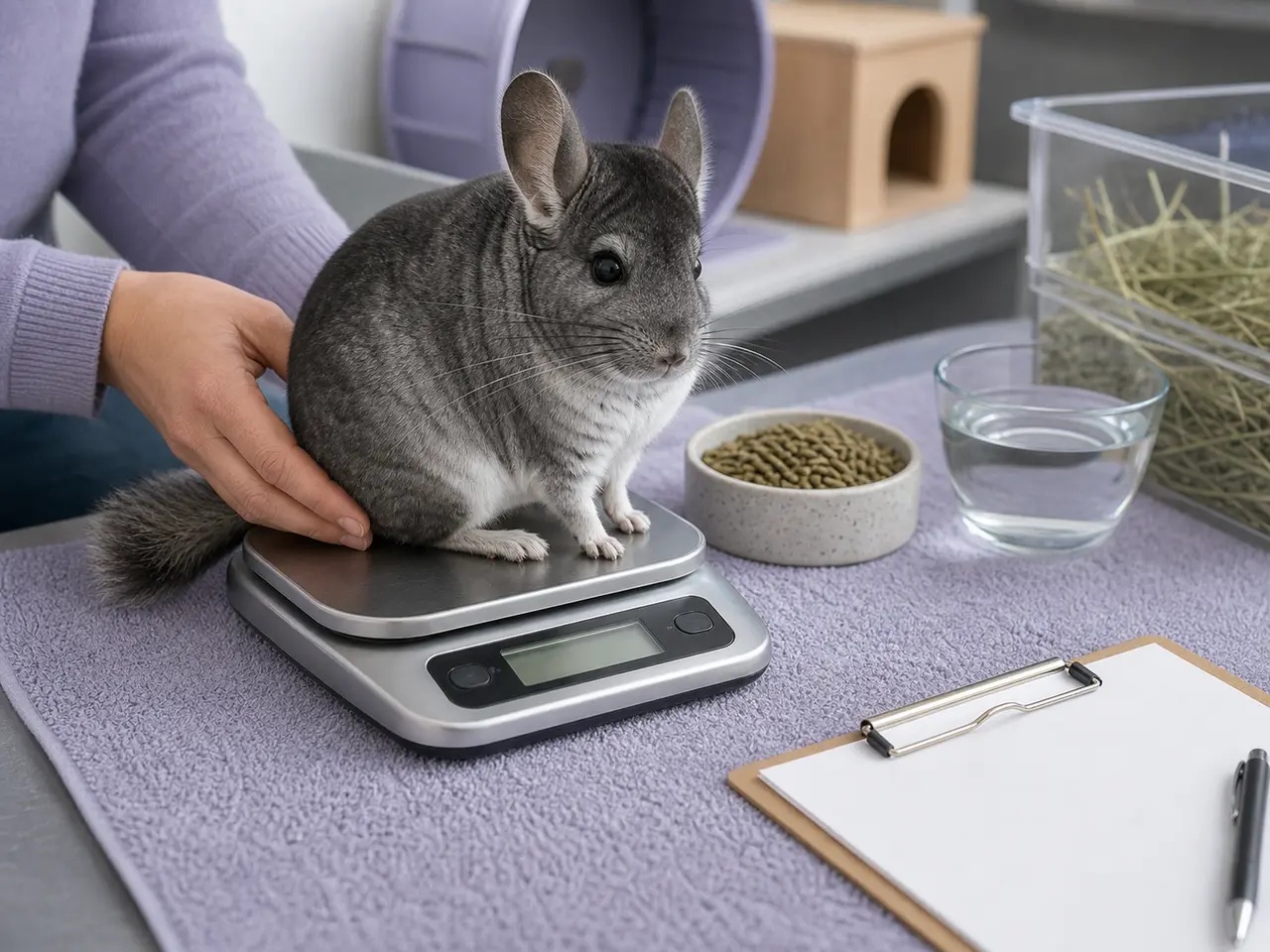
Keep a carrier, gram scale, towels, normal food, water plan, and clinic number ready before you need them.
Write down appetite, droppings, weight, breathing, temperature exposure, and any possible injury or unsafe food.
Call on these signs
Do not wait on not eating, fewer droppings, noisy breathing, severe lethargy, collapse, heat stress, wounds, diarrhea, bloating, or sudden weight loss.
If the animal is tiny, old, pregnant, already sick, or getting worse quickly, treat the same sign as more urgent.
Save the clinic now
Save the exotic-pet clinic and emergency option in your phone and on the habitat.
If you are unsure whether it is urgent, call and describe the species, weight, symptoms, timing, food, water, and droppings.
Before you decide
Is appetite, poop or stool, breathing, movement, or weight different today?
Do you have the carrier, scale, and clinic number ready?
Can you describe the timing, food, water, symptoms, and possible hazards to a vet?
Would waiting make the animal weaker or harder to transport?
Next best moves
Keep the carrier, gram scale, normal food, and clinic number ready now.
Write down timing, food, water, droppings, breathing, weight, and possible hazards.
Call promptly when appetite, breathing, movement, stool, heat, or energy changes suddenly.
Common health questions
Does this answer apply to every small mammal?
No. The page gives the practical rule, then the species profile should decide the final housing, food, handling, and vet plan.
When should I ask a veterinarian?
Ask an exotic-pet veterinarian promptly for appetite loss, fewer droppings, labored breathing, collapse, severe lethargy, wounds, heat stress, or sudden weight change.