

Movement
Space comes before quantity.
Updated
Bird guides
A bird cage should have enough toys for chewing, foraging, and interest, but not so many that the bird cannot move. For many small and medium birds, a few well-placed toys at a time are better than a crowded cage.
Toy number matters less than safety, placement, rotation, and whether the bird actually uses them.

Cages and Setup
A bird cage should have enough toys for chewing, foraging, and interest, but not so many that the bird cannot move. For many small and medium birds, a few well-placed toys at a time are better than a crowded cage.
Choose materials and sizes that fit the bird.
Use the hub for nearby questions after this answer.
Use supplies after the care plan is clear, not before.
Pick gear that makes the daily routine easier to repeat.
Space comes before quantity.
Give the beak a safe job.
Make food a little interesting.
Swap toys instead of crowding.
Do not block essentials.
Damaged toys come out.
Start with two or three useful toys for a small bird and a few more for larger cages, then adjust by species, cage size, and the bird's interest. Open movement space still matters.
Include something to chew, something to forage with, and maybe something to climb or manipulate. Decorative toys the bird ignores do not help much.
Keep extra toys outside the cage and rotate them weekly or when interest drops. Nervous birds may need slower changes.
Do not block flight paths, sleep perches, food and water access, or doors. Keep droppings and fresh food away from toys when possible.
Remove frayed rope, sharp parts, stuck bells, broken plastic, loose clips, and anything that traps toes or beaks.
Yes. Too many toys can block movement, create stress, collect mess, or make the cage harder to clean.
Many birds do well with weekly rotation, but shy birds may need slower changes and one familiar favorite left in place.
Most need safe chewing and foraging options. Exact materials and sizes depend on the species.
Safe toys can stay, but remove anything that causes fear, blocks sleep, or becomes damaged.
Use these after the care plan is clear. Match size and materials to the bird you actually keep.
Affiliate links: Furball Cove may earn from qualifying purchases at no extra cost to you.

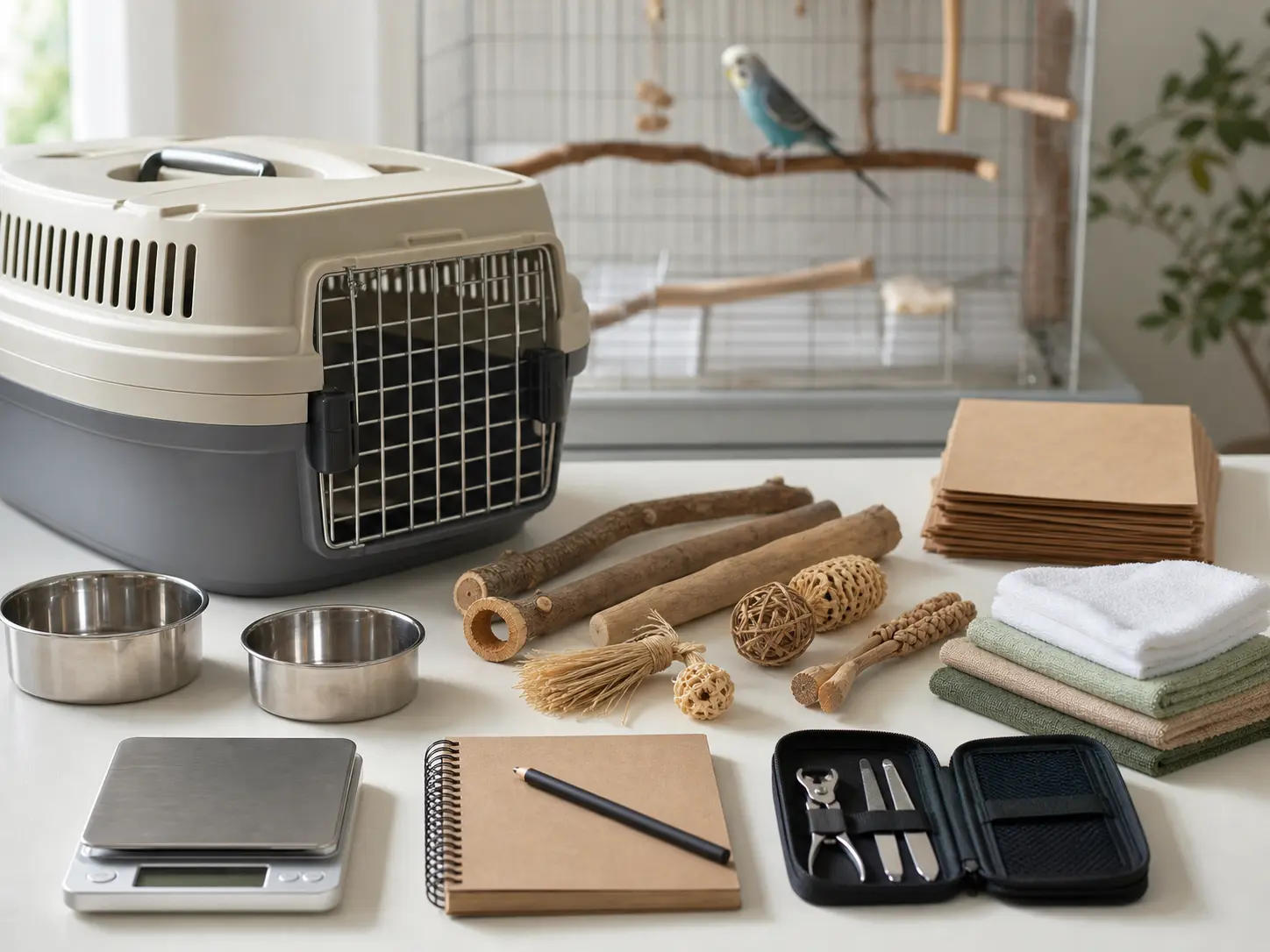
Plain bird-safe chewing work gives busy beaks something useful to do.

Turns part of the meal into a simple job instead of a full bowl of boredom.

Start with safe space, ventilation, bar spacing, and room for natural perches.

Tracks food, weight, sleep, droppings, behavior, and vet questions in one place.