

Updated

Bird guides

What bird toys are unsafe?

Unsafe bird toys include items with loose fibers, fraying rope, small swallowable parts, sharp edges, weak clips, unsafe metals, mirrors that cause fixation, happy huts, treated wood, toxic dyes, or gaps that can trap toes, heads, or beaks.

The dangerous toy is often the one that looks cute until the bird starts using it.

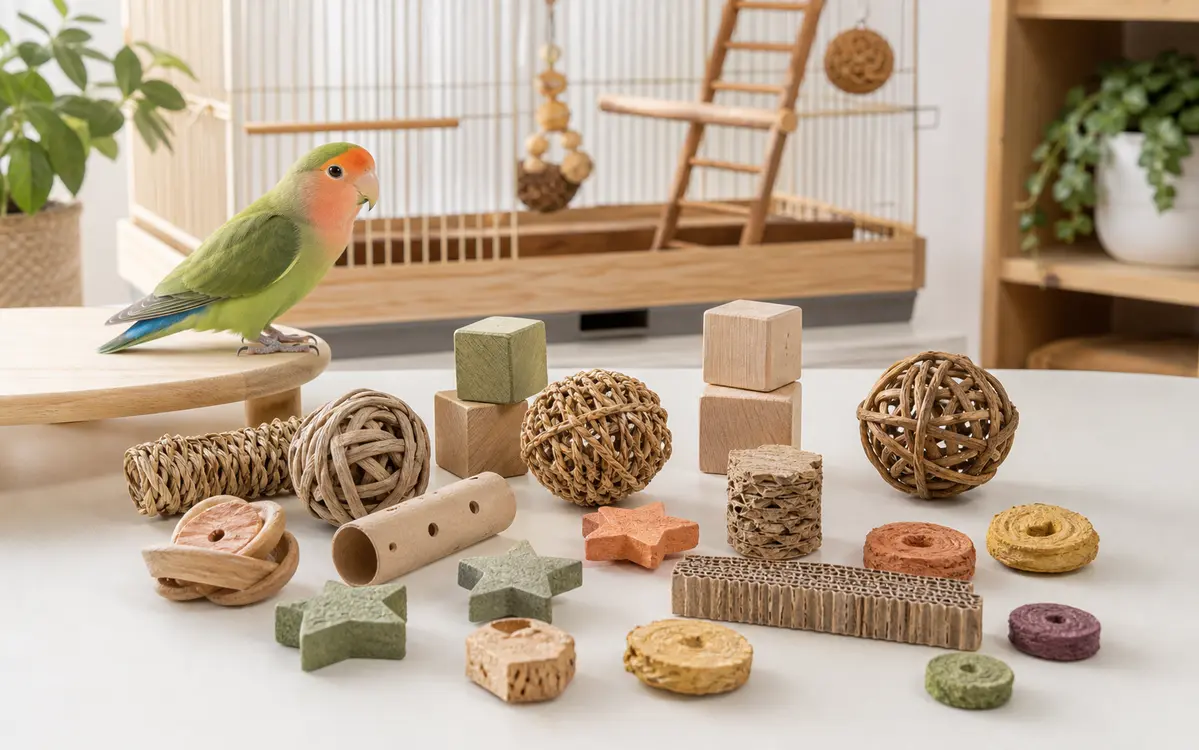
Bird-safe chew toys made from natural wood, paper, vine, and vegetable-dyed pieces with a lovebird nearby.

Supplies

Answer first

Unsafe bird toys include items with loose fibers, fraying rope, small swallowable parts, sharp edges, weak clips, unsafe metals, mirrors that cause fixation, happy huts, treated wood, toxic dyes, or gaps that can trap toes, heads, or beaks.

What to check before you act

Fibers

Frays can be swallowed.

Gaps

Traps injure feet and beaks.

Metals

Unknown hardware is risky.

Damage

Remove early.

Nesty

Huts and cavities can trigger trouble.

Fixation

Mirrors can change behavior.

01

How to act on this

Remove toys that fray, trap, chip, rust, splinter badly, expose wire, or make the bird obsessive or territorial.

02

Watch fibers and rope

Frayed cotton, loose threads, and rope loops can catch toes or be swallowed. Rope toys need strict inspection or avoidance.

03

Check metals and hardware

Avoid unknown metals, cheap clips, sharp chains, split rings that catch toes, and parts that rust or bend.

04

Avoid nesty and fixating items

Happy huts, cloth tents, mirrors, and dark cavities can trigger hormones, guarding, or chewing hazards in many birds.

05

Best rule

If you cannot inspect it, clean it, or explain why each material is safe, do not put it in the cage.

Before you decide

  • Can the bird swallow fibers or small parts?
  • Can toes, head, or beak get trapped?
  • Is any metal unknown, rusty, or weak?
  • Does the toy create guarding or hormonal behavior?
  • Is damage easy to see and remove?

Next best moves

  • Remove damaged toys early.
  • Avoid cloth huts, fuzzy tents, and mystery-metal hardware.
  • Use simple inspectable toys over complicated risky designs.

Common questions

Are rope toys always unsafe?

Not always, but they need close inspection and are risky for birds that chew fibers.

Are mirrors bad?

They are a poor default because some birds court, guard, or obsess over them.

Are plastic toys safe?

Some hard plastics may be okay for some birds, but cracking, swallowing, and sharp edges are concerns.

What about bells?

Cheap bells can trap beaks or expose unsafe metal. Use only sturdy bird-safe designs.

Useful setup pieces

Use these after the care plan is clear. Match size and materials to the bird you actually keep.

Affiliate links: Furball Cove may earn from qualifying purchases at no extra cost to you.

Bird-safe chew toys made from natural wood, paper, vine, and vegetable-dyed pieces with a lovebird nearby.

Safe chew toys

Plain bird-safe chewing work gives busy beaks something useful to do.

Bird foraging tray with covered cups, pellets, greens, and a curious budgie beside the puzzle.

Foraging toy

Turns part of the meal into a simple job instead of a full bowl of boredom.

Open blank bird care notebook with pencil, small supplies, and a cockatiel on a tabletop stand.

Care notebook

Tracks food, weight, sleep, droppings, behavior, and vet questions in one place.

Hard-sided bird carrier with towel liner, stainless bowl, and a cockatiel calmly beside the open carrier.

Hard-sided bird carrier

Keeps transport secure for adoption day, avian-vet visits, and emergencies.

References