

Updated

Bird guides

What perches are best for bird feet?

The best bird perches are clean natural wood perches in varied safe diameters, placed so the bird can grip comfortably and droppings do not fall into food or water. Avoid relying on one smooth dowel or rough sandpaper perch.

Perches are daily foot care. Variety and placement matter more than filling the cage with accessories.

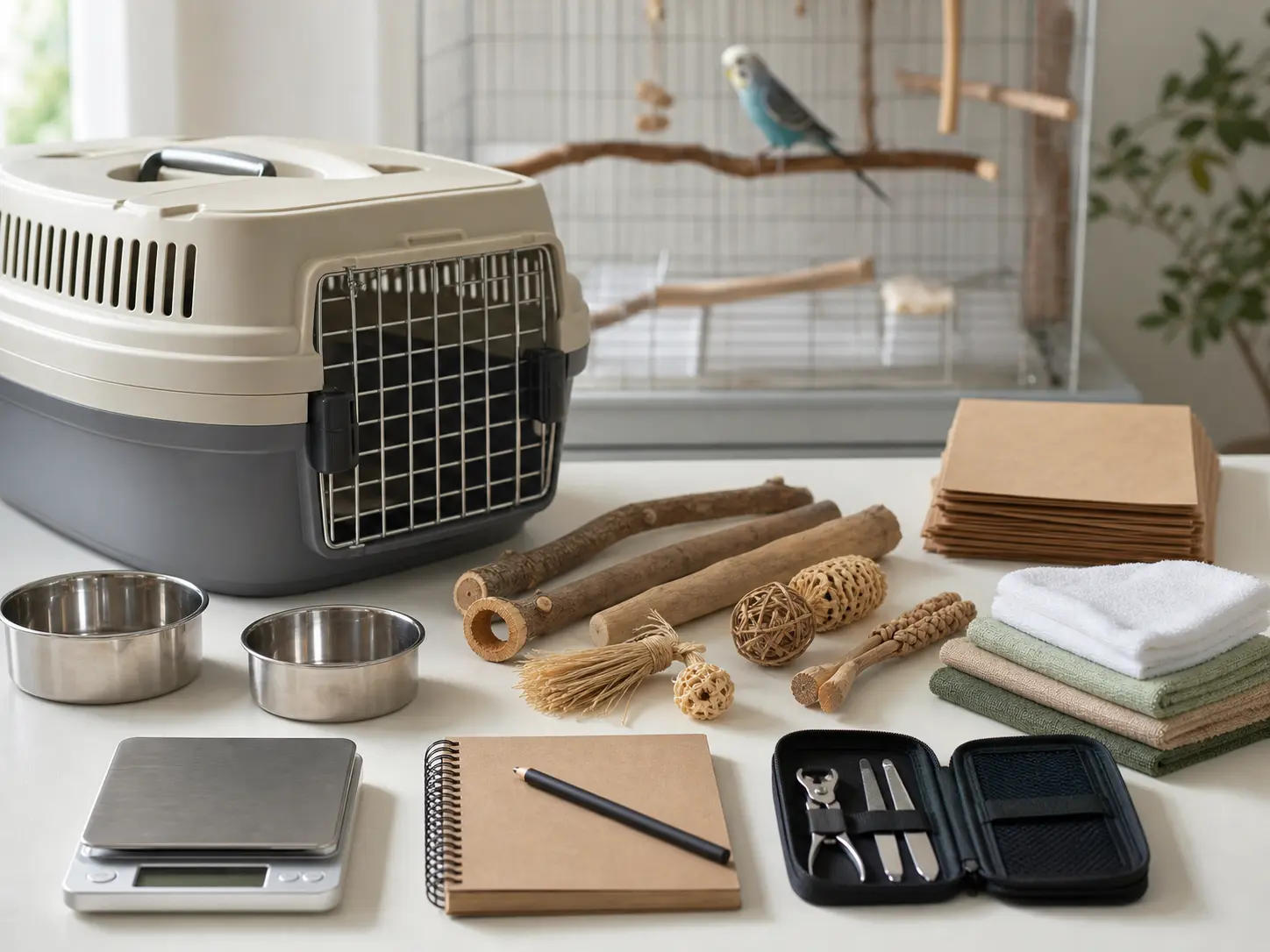
Bird starter supplies with carrier, bowls, natural perches, chew toys, paper liners, scale, towel, and care notebook.

Cages and Setup

Answer first

The best bird perches are clean natural wood perches in varied safe diameters, placed so the bird can grip comfortably and droppings do not fall into food or water. Avoid relying on one smooth dowel or rough sandpaper perch.

What to check before you act

Variety

Different diameters protect feet.

Material

Bird-safe wood is the default.

Texture

Comfort beats roughness.

Placement

Keep bowls clean.

Sleep

One secure perch matters.

Inspection

Feet tell you when setup is wrong.

01

How to act on this

Use several bird-safe natural wood perches with different diameters and textures. The bird's feet should wrap comfortably without being forced flat or clenched tight.

02

Avoid one-size dowel setups

A single smooth dowel puts the same pressure on the same foot spots all day. That can contribute to soreness and poor foot condition over time.

03

Skip sandpaper as a main perch

Rough sandpaper covers can irritate feet and do not replace nail care. They are not a fix for poor perch variety.

04

Place perches with purpose

Keep perches away from food and water contamination, leave open movement paths, and give the bird a comfortable sleep perch.

05

Inspect feet and perches

Check for redness, sores, pressure marks, loose bark, mold, splinters, and droppings buildup.

Before you decide

  • Does the cage have more than one perch diameter?
  • Can the bird grip without feet lying flat or clenching hard?
  • Are perches placed away from food and water droppings?
  • Are rough sandpaper perches avoided as the main setup?
  • Do feet and perches get inspected regularly?

Next best moves

  • Start with varied natural wood before decorative perches.
  • Replace damaged, dirty, moldy, or splintered perches early.
  • Ask an avian vet about sores, swelling, limping, or overgrown nails.

Common questions

Are wooden perches good for birds?

Yes, bird-safe natural wood is a strong default when it is clean, properly sized, and not treated with unsafe chemicals.

Are dowel perches bad?

One dowel is not automatically an emergency, but relying on smooth same-size dowels as the whole setup is poor foot care.

Are rope perches safe?

Some can be useful, but frayed fibers can trap toes or be swallowed. Inspect often and remove damaged rope.

Where should the sleep perch go?

Place it in a calm, secure spot away from drafts and droppings from higher perches.

Useful setup pieces

Use these after the care plan is clear. Match size and materials to the bird you actually keep.

Affiliate links: Furball Cove may earn from qualifying purchases at no extra cost to you.

Natural wood bird perch set with varied diameters and a cockatiel beside the perches on a bright table.

Natural perch set

Varied perch diameters support normal feet better than one smooth dowel.

Roomy rectangular bird cage with natural perches, stainless bowls, paper liner, and a budgie in a bright bird-care room.

Roomy rectangular cage

Start with safe space, ventilation, bar spacing, and room for natural perches.

Plain paper cage liners stacked beside a clean removable cage tray and a small finch on a nearby stand.

Paper cage liners

Plain paper makes droppings easier to monitor without scented products.

Open blank bird care notebook with pencil, small supplies, and a cockatiel on a tabletop stand.

Care notebook

Tracks food, weight, sleep, droppings, behavior, and vet questions in one place.

References