

Separation first
A new bird needs separate housing first, not an immediate cage share. A practical starting point is at least 30 days with avian-vet guidance.
Updated
Bird guides
It depends on species and your goal. A single budgie or cockatiel can work with daily attention. Zebra finches usually need compatible finch company. Canaries are often kept singly. Two birds are not a shortcut for poor care, and introductions need quarantine and planning.
Bird company can be good, but the wrong pairing creates stress, fighting, breeding, or a bird who still feels lonely.

Social setup
Start with the species' natural social style, then match it to your handling goals, cage space, and ability to manage introductions.
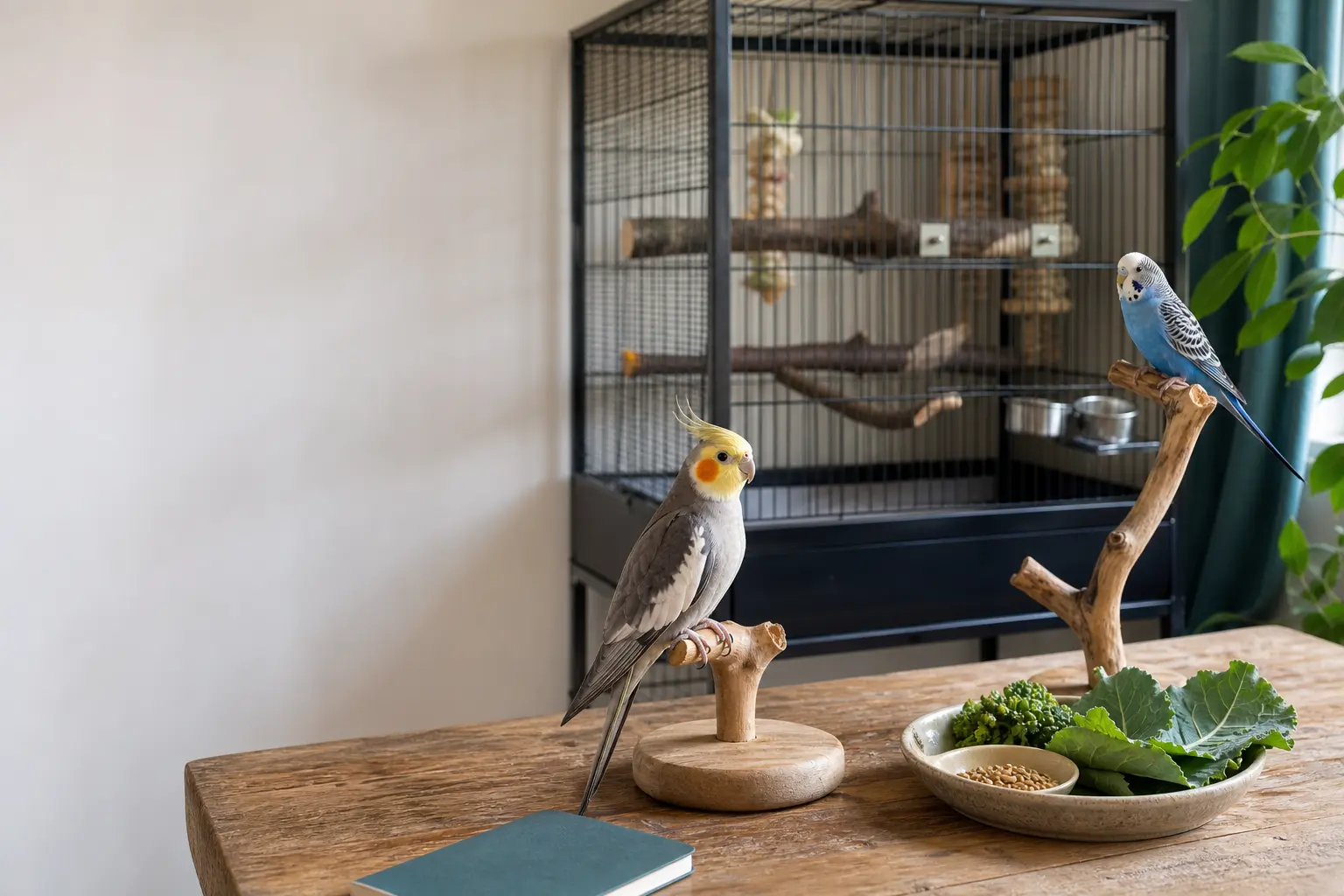
One budgie can work with strong daily attention, but many enjoy compatible budgie company.
One cockatiel can be happy in a people-focused home, but it still needs daily social time.
Zebra finches are usually best planned as compatible pairs or groups, not single hand pets.
Many canaries are kept singly, especially males kept for song. Do not assume every canary wants a cage mate.
A new bird needs separate housing first, not an immediate cage share. A practical starting point is at least 30 days with avian-vet guidance.
Two birds need more room, extra bowls, and escape space.
Mixed sexes can create egg laying, nesting, aggression, and rehoming problems.
Birds may prefer each other over people, which is fine if you planned for that.
Same species is usually safer than mixing species without experience.
Two birds means two health histories, two weights, and possibly two vet bills.
If you want handling and training, a single social parrot with daily attention may fit. If you want natural flock behavior, compatible same-species birds may be kinder.
A new bird needs separation before introductions, not an immediate cage share. A practical starting point is at least 30 days of separate housing with avian-vet guidance, separate bowls and tools, and careful observation before shared space. Wash hands between birds and avoid sharing perches, toys, carriers, or cleaning tools during the separation period.
A bird who bonds with another bird may be less interested in people. That is not failure if the setup was chosen for the bird's welfare.
Two birds in a cage built for one can create stress, guarding, feather damage, and fights.
One budgie can work with daily attention, but many budgies enjoy compatible budgie company. The setup and owner time matter.
Not always. Some do well with people-focused daily attention; others benefit from compatible bird company.
Most zebra finches and many social finches do better with compatible finch company.
Sometimes in experienced aviary setups, but it is not a beginner shortcut. Size, temperament, disease risk, and breeding matter.
Start with the pieces that make daily care easier and safer. Match final sizes to the species you choose.
Affiliate links: Furball Cove may earn from qualifying purchases at no extra cost to you.

Choose safe bar spacing and enough room for movement, perches, bowls, and toys.

Gives step-up practice and short trust-building sessions a predictable place.

Turns part of the meal into a small job instead of leaving the bird bored.

Keeps transport secure for adoption day, avian-vet visits, and emergencies.