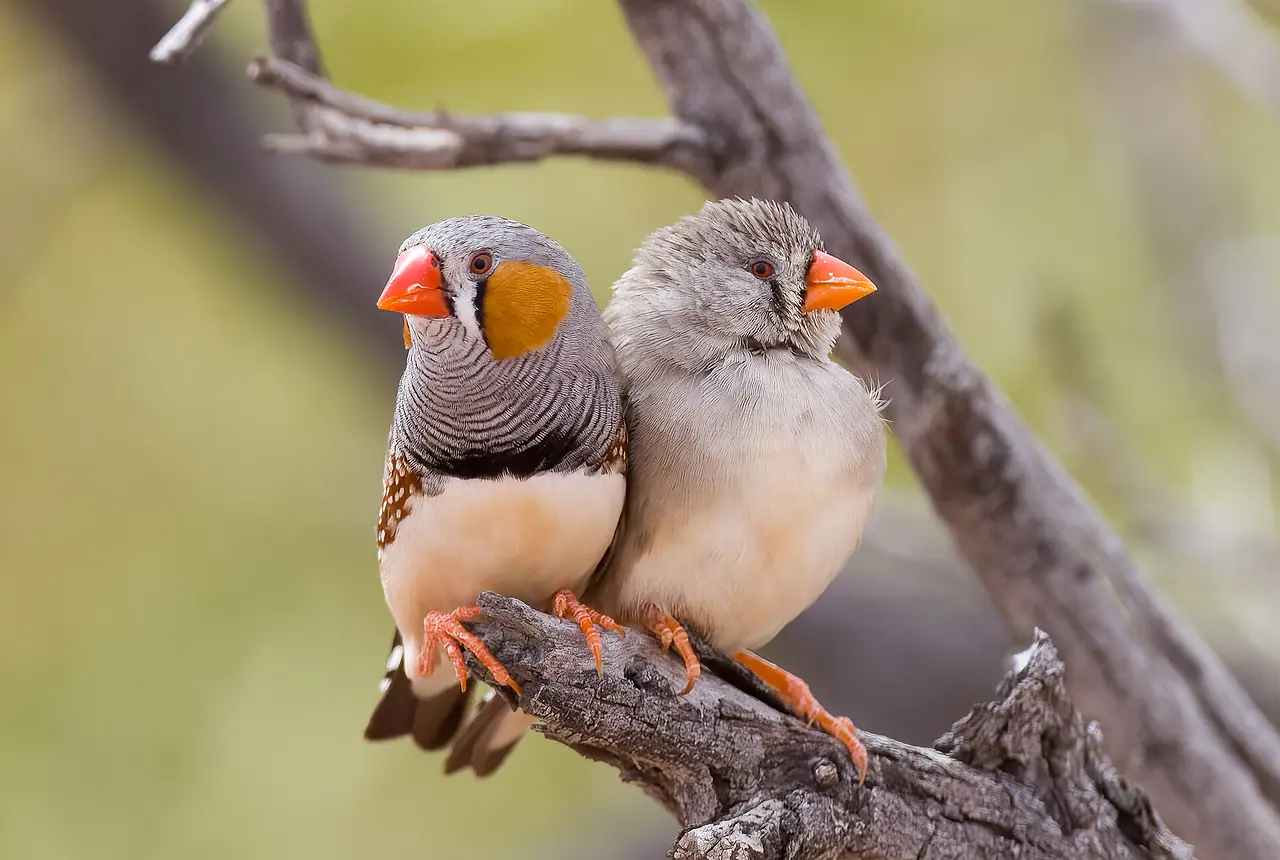
Zebra Finches are fast flock birds whose contact peeps, bathing, and horizontal flights create constant small movement. Their low handling needs do not mean low care: compatible company and daily observation are central. They suit people who want a lively aviary-style relationship, not a bird expected to sit on a hand.
Clear flight lanes and more than one feeding place help the keeper notice social pressure, appetite changes, and breathing changes early.
Lifespan
Typical group range: 5-10 years
Noise
Soft busy chatter, not hands-on parrot noise
Daily social time
Usually watch-and-listen birds that need compatible flock or pair planning
Space
Needs horizontal flight space, safe perches, and group-aware layout
Handling style
Keep handling rare and practical
Experience
Better for prepared homes that can support flight space, independent behavior, and species-specific care
The honest fit
Could this bird fit your life?
The match may work if…
Zebra finches fit homes that want cheerful movement and soft chatter, with room for a flight cage and a plan for pairs or small groups.
You are comfortable with the bird's normal sound, movement, and daily social rhythm.
You have room for the recommended enclosure, safe movement, and a practical cleaning area.
Think twice if…
The room cannot fit a horizontal flight cage, safe placement, and daily cleanup without crowding the bird.
Feeding would likely become loose seed refills instead of seed or pellet base plus greens and clean daily water.
The household wants a bird to hold instead of an observation-first bird whose handling stays rare, calm, and practical.
The daily rhythm
A normal day with Zebra Finches
Zebra Finches rely on compatible company, frequent contact peeps, bathing, and rapid horizontal flight. Keep handling expectations low, preserve clear flight lanes, and monitor each bird's food access and breathing during the daily flock check.
The surprise with zebra finches is breeding. Zebra finches may start nesting quickly if the setup encourages it, so plan before adding nests or mixed sexes.
Zebra Finches are tiny Australian grassfinches with orange bills; adult males commonly show cheek patches and barred throats.
A Zebra Finch household is built around flock observation, direct flight, and social calls rather than routine handling.
Home and movement
Use a wide flight cage, safe perches, clean flooring, bathing, and enough space for social movement. Avoid tiny decorative cages.
Food and daily care
Build the feeding routine around a finch-appropriate base, clean water, and additions suitable for the birds' condition and life stage. Watch each finch reach the food; flock activity can hide one bird eating less.
Zebra Finches move quickly through horizontal flight lanes, carrying fine seed hulls and feather debris around the enclosure. Damp-wipe surfaces and change plain liners without raising dust; keep smoke, sprays, candles, perfume, and overheated nonstick cookware away.
Social life, sound and handling
Zebra Finches trade frequent contact peeps as they move around the enclosure. Their individual voices are small, but a lively group is rarely silent; protect a dark, undisturbed sleep period without isolating a healthy flock member.
Keep handling rare and practical. Trust comes from calm cage care, not picking them up for attention.
Careful, not fearful
Health and safety considerations
Compare Zebra Finches as a finch, with the final choice based on noise, space, diet, social routine, legal sourcing, and avian-vet access.
Sudden changes in appetite, breathing, posture, droppings, weight or usual voice deserve a call to an avian veterinarian.
Before adoption
Before you bring one home
Ask about sex, age, pair bonds, breeding history, diet, and whether the birds have lived in a flock or cage pair.
Confirm what species the bird is and ask for any available health and history records.
Ask what the bird currently eats, how it uses its enclosure, and how it responds to handling.
Measure the enclosure location, doorway route, and safe out-of-cage area before committing.
Confirm an avian veterinarian is accessible before the bird comes home.