Updated

Bird guides

What is the best beginner bird?

For most first-time bird homes, compare budgies and cockatiels first. Pick a budgie if you want a small, busy bird you can train every day. Pick a cockatiel if you want a calmer companion and can handle dust, whistles, and a longer lifespan. If you mostly want song or movement, look at canaries or zebra finches.

The best first bird is the one whose normal day fits your home: noise, cleaning, safe air, daily time, space, and lifespan.

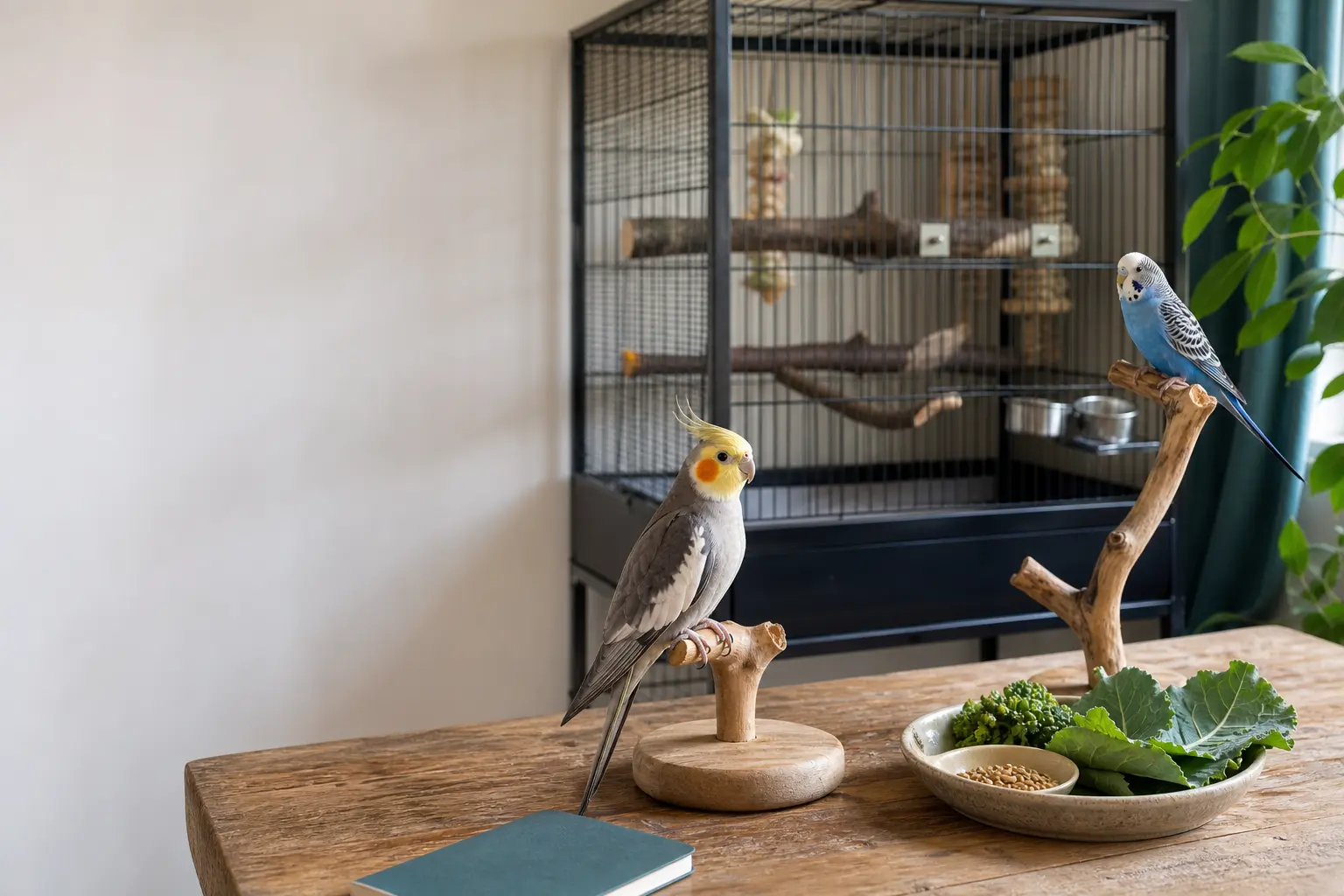
Cockatiel and budgie in separate safe bird care areas with a roomy rectangular cage, bowls, perches, toys, greens, and care notes.

Short answer

Best beginner bird: quick picks

First decide whether you want a bird who interacts with you or a bird you mainly enjoy watching. That one choice cuts the shortlist down fast.

Match your situation

I want a bird that bonds with people

Look at budgies and cockatiels first. Keep sessions short, let the bird choose to approach, and make safe out-of-cage time part of the routine.

I need a quieter home

Start with canaries, zebra finches, or ringneck doves, and listen to adult birds before deciding. No bird is silent, but these are usually easier than loud parrots.

This is for a child

Choose a bird only if an adult owns the care. Kids can help with simple routines and gentle observation; adults handle safety, cleaning, and vet decisions.

I live in an apartment

Avoid large parrots and loud conures as a first bird. Hear the species' normal morning and evening sounds before you bring one home.

I want a talking bird

A budgie is the best beginner bird to research for talking, but speech is individual. Choose a bird you would still enjoy if it only chirps, whistles, or sings.

I am gone most of the day

Be careful with a single social parrot if it will be alone for long stretches. Zebra finches, canaries, or doves may fit better when the setup is built around watching, not handling.

01

What makes a bird beginner-friendly

Beginner-friendly means forgiving enough for a new owner who is learning and trying hard. You can clean the cage area, refresh food and water, notice changes, give quiet sleep, offer enrichment, and stay patient through normal noise.

02

Have the basics ready first

Set up the cage, carrier, perches, bowls, food plan, toys, gram scale, and avian-vet contact before pickup day. You should not be shopping for basics after the bird is already stressed in your home.

03

Make the room safe

Birds share your air and your rooms. Smoke, aerosols, candles, overheated nonstick cookware, ceiling fans, open doors, open windows, and loose pets can become dangerous quickly.

04

Talking is a bonus

Some birds mimic sounds; some never do. If talking is the only reason you want the bird, pause and choose a different pet.


Before you decide

  • Can you refresh food and water, clean the cage area, and check the bird every day?
  • Can you keep the bird away from fumes, fans, open doors, unsafe pets, and hot cookware?
  • Can you live with morning and evening sound without getting angry at the bird?
  • Can you afford the cage, carrier, diet, toys, and avian-vet care?
  • Can you commit to the bird's full lifespan?

Next best moves

  • Read the species guide for your top two choices before you contact a seller or rescue.
  • Listen to adult birds of that species in person if you can. Baby birds and quiet store moments do not tell the whole story.
  • Set up the cage, carrier, food plan, and avian-vet contact before pickup day.

Common questions

What is the easiest bird for beginners?

For many prepared beginners, a budgie is the best starting point to research first. Budgies are small, social, trainable, and easier to house than larger parrots, but they still need daily attention and a proper setup.

Is a budgie or cockatiel better for a beginner?

Choose a budgie if you want a smaller, livelier bird with a shorter average lifespan. Choose a cockatiel if you want a calmer companion and can handle more dust, more space, and a longer commitment.

What is the quietest beginner bird?

Canaries, zebra finches, and ringneck doves are usually easier for quiet homes than parrots. They still make sound, so listen to adult birds before deciding.

What bird is best for kids?

The best bird for a child is the bird an adult is fully prepared to care for. Budgies and cockatiels can work with calm supervision; canaries and finches are better when the child mainly wants to watch.

Are lovebirds good beginner birds?

Lovebirds can be wonderful, but they are not the easiest default first bird. They can be bold, loud for their size, nippy, and territorial around the cage.

Should a beginner get one bird or two?

It depends on the species and your goal. A single budgie or cockatiel may work if you provide daily attention. Zebra finches usually need compatible finch company.

What birds should beginners avoid?

Avoid large parrots and specialty birds as a first bird unless you already have expert help. Cockatoos, macaws, African greys, Amazons, lorikeets, toucans, and mynahs are usually too demanding for a first bird home.

First-bird setup pieces

Start with the pieces that make daily care easier and safer. Match final sizes to the species you choose.

Affiliate links: Furball Cove may earn from qualifying purchases at no extra cost to you.

Roomy rectangular bird cage with safe perches and clean bowls.

Roomy rectangular cage

Choose safe bar spacing and enough room for movement, perches, bowls, and toys.

Tabletop bird training perch for calm beginner handling sessions.

Training perch

Gives step-up practice and short trust-building sessions a predictable place.

Bird foraging toy for beginner enrichment and meal activity.

Foraging toy

Turns part of the meal into a small job instead of leaving the bird bored.

Hard-sided bird carrier for adoption day and avian-vet trips.

Hard-sided bird carrier

Keeps transport secure for adoption day, avian-vet visits, and emergencies.

References