

Updated

Bird guides

How often should I clean a bird cage?

Clean the bird cage lightly every day and more deeply on a regular schedule. Change liners, wash food and water dishes, remove wet food, spot-clean droppings, and do a fuller cage wash as needed, often weekly for many homes.

A clean cage is about air, feet, food safety, and noticing health changes early.

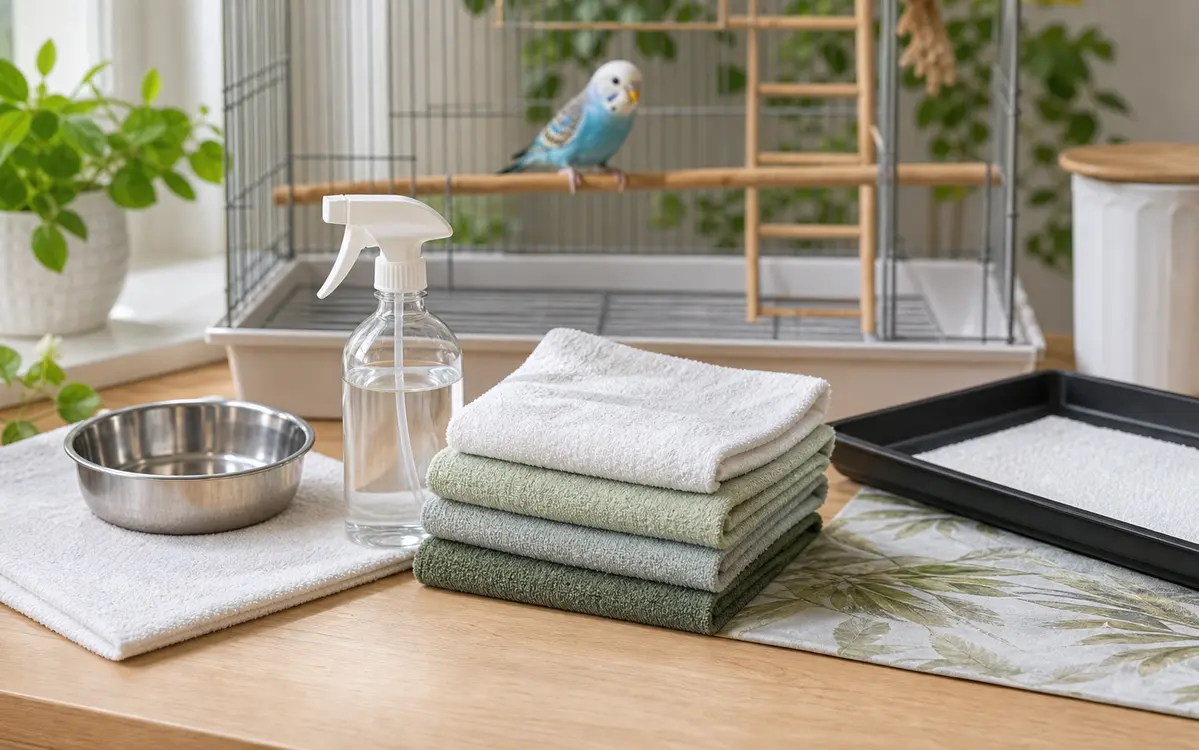
Bird-safe cleaning cloths, water spray bottle, stainless bowl, clean tray, and a budgie in the background.

Cleaning and Air Safety

Answer first

Clean the bird cage lightly every day and more deeply on a regular schedule. Change liners, wash food and water dishes, remove wet food, spot-clean droppings, and do a fuller cage wash as needed, often weekly for many homes.

What to check before you act

Daily

Bowls and wet food come first.

Liners

Plain paper shows droppings.

Perches

Clean buildup where feet go.

Fumes

Avoid scents and harsh products.

Schedule

Deep clean before buildup.

Health

Mess can hide warning signs.

01

How to act on this

Daily care should include fresh water, clean bowls, fresh-food removal, liner checks, and obvious mess cleanup.

02

Use the liner as a health tool

Plain paper makes droppings easier to see. Change it often enough that old droppings, seed hulls, and wet spots do not hide changes.

03

Wash contact points

Perches, grates, trays, bowls, and favorite cage corners collect droppings and food. Clean more often where the bird actually spends time.

04

Keep fumes out

Avoid scented cleaners, aerosols, bleach fumes, candles, and harsh residues around birds. Clean with bird-safe methods and good ventilation.

05

Best rhythm

Small daily cleaning prevents the cage from becoming a major weekend rescue job.

Before you decide

  • Were food and water dishes washed today?
  • Was wet food removed?
  • Can you see today's droppings clearly?
  • Are perches and favorite spots free of buildup?
  • Are cleaners fragrance-free and bird-safe?

Next best moves

  • Use plain paper liners and change them often.
  • Keep spare bowls so daily swaps are easy.
  • Do deeper cleaning before odor or buildup appears.

Common questions

Do I need to deep-clean every day?

Usually no, but bowls, wet food, liners, and obvious mess need daily attention.

What cleaner is safe for bird cages?

Use bird-safe, fragrance-free methods and avoid fumes. Rinse and dry surfaces well.

Can I use scented liners?

No. Stick with plain paper so droppings are visible and fumes stay low.

Why does the cage smell?

Odor usually means wet food, dirty bowls, damp liners, poor ventilation, or buildup that needs cleaning.

Useful setup pieces

Use these after the care plan is clear. Match size and materials to the bird you actually keep.

Affiliate links: Furball Cove may earn from qualifying purchases at no extra cost to you.

Bird-safe cleaning cloths, water spray bottle, stainless bowl, clean tray, and a budgie in the background.

Bird-safe cleaning cloths

Keeps daily cage wipe-downs simple without fragrance or harsh residue.

Plain paper cage liners stacked beside a clean removable cage tray and a small finch on a nearby stand.

Paper cage liners

Plain paper makes droppings easier to monitor without scented products.

Stainless bird bowls with clean water, pellets, greens, and a budgie perched beside the feeding station.

Stainless bowls

Separate clean food and water dishes that are easy to wash every day.

Open blank bird care notebook with pencil, small supplies, and a cockatiel on a tabletop stand.

Care notebook

Tracks food, weight, sleep, droppings, behavior, and vet questions in one place.

References