

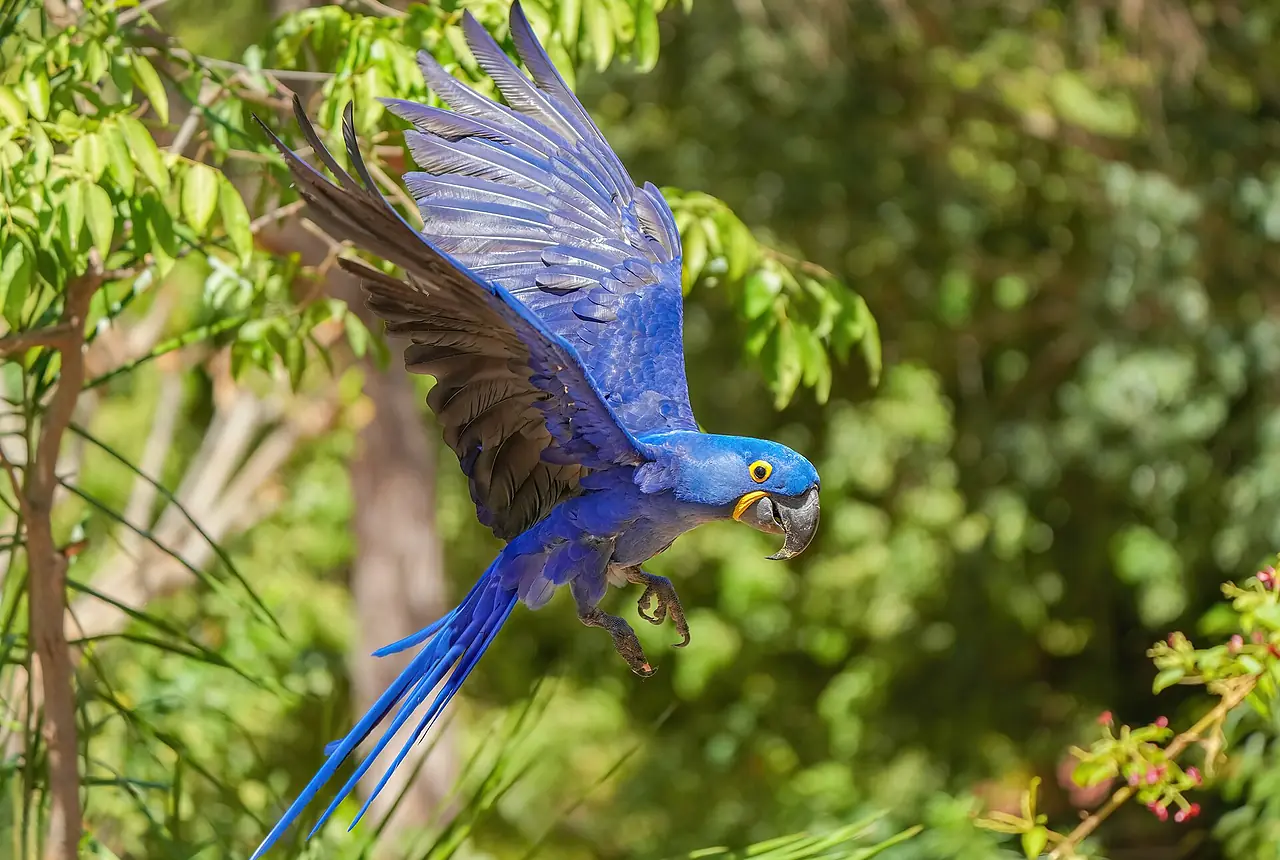
Cage
Very large and sturdy.
Updated
Bird guides
A macaw needs a very large, sturdy setup plus safe daily out-of-cage space. The cage should allow full posture, climbing, wing movement, strong perches, large toys, and easy cleaning, but the cage alone is not enough.
With macaws, space means cage, room plan, play stand, storage, and supervised movement.

Large Parrot Questions
A macaw needs a very large, sturdy setup plus safe daily out-of-cage space. The cage should allow full posture, climbing, wing movement, strong perches, large toys, and easy cleaning, but the cage alone is not enough.
Review macaw size, noise, and daily care.
Use the hub for nearby questions after this answer.
Use supplies after the care plan is clear, not before.
Pick gear that makes the daily routine easier to repeat.
Very large and sturdy.
Safe out time needs space.
Large beaks test hardware.
Out time needs a station.
Big supplies take room.
Mess scales up.
Plan for the largest safe macaw cage you can fit, then add a bird-safe room routine and a strong play stand.
A macaw needs room to move and hardware strong enough for a large beak, not a tall decorative cage.
Daily supervised time outside the cage needs protected doors, windows, cords, trim, furniture, and other pets.
Large perches, spare toys, cleaning gear, food, carrier, and chew materials take more room than people expect.
If the setup only fits in a corner, it is probably too small for a macaw's real life.
No. A macaw still needs supervised out time, training, movement, and enrichment.
Usually no. Macaws need macaw-scale space, bar strength, perches, doors, and toys.
Less than large macaws, but still more than many people expect.
Usually a poor fit because space, sound, chewing, and long-term housing risk all stack up.
Use these after the care plan is clear. Match size and materials to the bird you actually keep.
Affiliate links: Furball Cove may earn from qualifying purchases at no extra cost to you.

Start with safe space, ventilation, bar spacing, and room for natural perches.

Plain bird-safe chewing work gives busy beaks something useful to do.

Keeps transport secure for adoption day, avian-vet visits, and emergencies.

Keeps daily cage wipe-downs simple without fragrance or harsh residue.