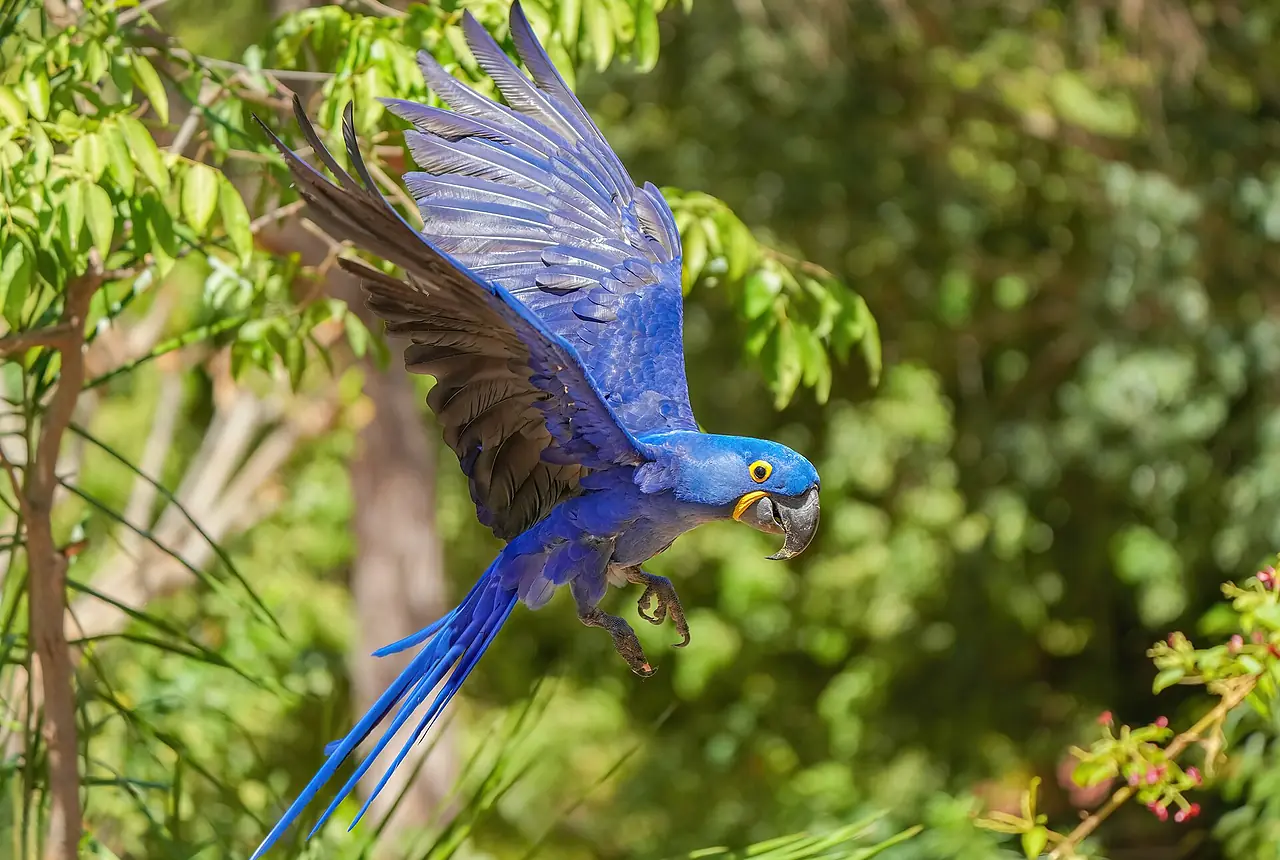
Macaws are enormous household presences: intelligent, physically powerful, very loud, and long-lived. Prepared owners are often surprised by the space, repairs, food work, cleanup, and handling skill involved every single day. They suit a small number of experienced homes with durable plans; they are not a step up from a small parrot simply because the person loves birds.
Meet adult macaws and hear their normal calls before deciding. The beak, voice, housing, cost, and care horizon all need honest answers.
Lifespan
50-70+ years
Noise
Extremely loud with a beak built for serious chewing
Needs very large housing, strong stands, major chew work, and safe room planning
Handling style
Teach step-up, stationing, recall in safe spaces, and calm beak manners
Experience
Expert-level size, cost, sound, strength, and lifespan
The honest fit
Could this bird fit your life?
The match may work if…
A good macaw home has room, money, time, and handling skill. Plan for a very large cage, stands, safe movement, huge chew items, a real carrier, and people who can train calmly around a powerful beak.
You are comfortable with the bird's normal sound, movement, and daily social rhythm.
You have room for the recommended enclosure, safe movement, and a practical cleaning area.
Think twice if…
The home cannot tolerate powerful calls, expensive gear, destructive chewing, daily training, and decades of care.
The routine would likely rely on snacks and handling pressure instead of training, enrichment, balanced food, and mood awareness.
The household expects instant cuddles instead of patient, choice-based trust.
The daily rhythm
A normal day with Macaws
A macaw's routine takes real space: long movement paths, heavy chewing materials, substantial food preparation, training, cleanup, and planned social time. Powerful calls and beak strength make calm handling skills and predictable boundaries essential every day.
The surprise with macaws is scale. A toy, perch, doorframe, food bill, vet visit, or scream that seems manageable for a smaller parrot is much bigger with a macaw.
Home and movement
Plan the adult setup first: oversized cage, sturdy stands, safe room boundaries, chew protection, door safety, and a carrier the bird can enter without a fight.
Food and daily care
Macaw diets can vary by species, especially around fat needs, so use avian-vet guidance. Nuts are useful rewards, not a free-choice meal plan.
A macaw can throw food, wood chips, and feather debris across a large area. Design the room for wet wiping and strong ventilation without fragrance or drafts; smoke, aerosols, candles, perfume, and overheated nonstick cookware are incompatible with the setup.
Social life, sound and handling
Macaw calls are physically powerful and can dominate a house and its surroundings. Meet adults indoors at active times, then plan uninterrupted sleep; no training method makes that normal voice disappear.
Teach step-up, stationing, recall in safe spaces, and calm beak manners. Physical play needs rules because a normal macaw beak can hurt without meaning to.
Careful, not fearful
Health and safety considerations
Sudden changes in appetite, breathing, posture, droppings, weight or usual voice deserve a call to an avian veterinarian.
Before adoption
Before you bring one home
Meet adult macaws and hear their normal calls before deciding. Price the cage, carrier, toys, vet care, repairs, and food before you contact a seller.
Confirm what species the bird is and ask for any available health and history records.
Ask what the bird currently eats, how it uses its enclosure, and how it responds to handling.
Measure the enclosure location, doorway route, and safe out-of-cage area before committing.
Confirm an avian veterinarian is accessible before the bird comes home.