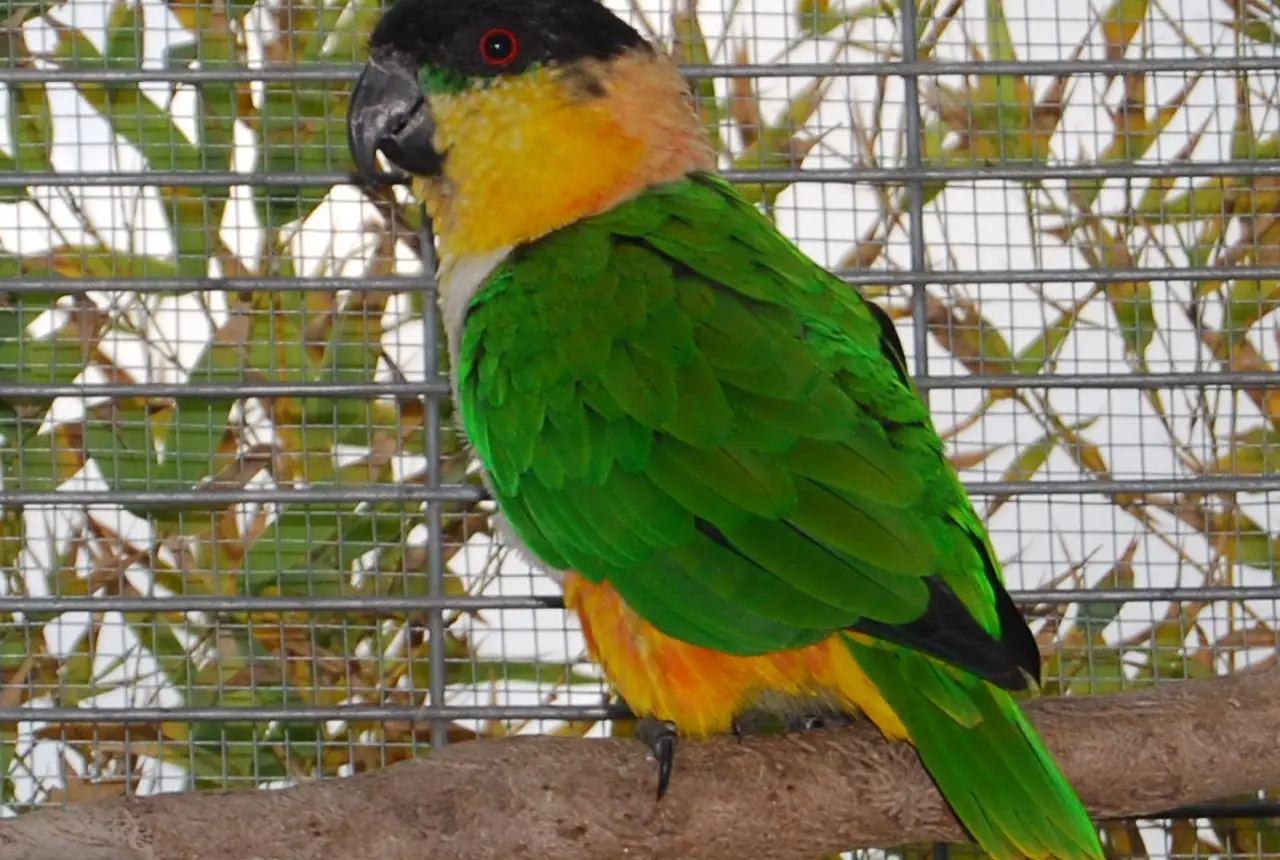
Black-headed Caiques are stocky South American parrots with a black cap, orange-yellow neck, green wings, and pale belly. Their athletic play and loud alarm calls can be delightful and demanding within the same hour. They suit experienced homes that can pair movement with training and stop play before excitement becomes rough.
Meet adults at an active time of day, then decide whether the bird's voice, beak use, supervision, and need for calm breaks fit the household.
Lifespan
25-40 years
Noise
Playful and energetic with real noise potential
Daily social time
Busy, physical parrots need guided play and clear rules before play gets rough
Space
Needs a strong cage, chew toys, foraging, and supervised activity
Handling style
Reward gentle play, stationing, and stepping down
Experience
Better for prepared homes that can support flight space, independent behavior, and species-specific care
The honest fit
Could this bird fit your life?
The match may work if…
Black-headed caiques fit active homes that enjoy busy birds and can manage wrestling energy, noise, nipping risk, and lots of enrichment.
You are comfortable with the bird's normal sound, movement, and daily social rhythm.
You have room for the recommended enclosure, safe movement, and a practical cleaning area.
Think twice if…
The room cannot fit a strong activity setup, safe placement, and a cleaning routine you can actually repeat.
The food routine would likely become seed-only, treat-led, or inconsistent instead of measured treats.
The household expects instant cuddles instead of patient, choice-based trust.
The daily rhythm
A normal day with Black-headed Caiques
Black-headed Caiques turn the day into short bursts of climbing, foraging, chewing, training, and athletic play. Calm breaks matter because a bird that stays highly excited can shift from playful beaking to painful nipping quickly.
Sustained excitement can turn playful beaking into painful nipping, so calm breaks should begin before the bird becomes frantic.
Black-headed Caiques are Pionites melanocephalus, also called Black-headed or Black-capped Parrots.
Adults have a black cap, orange-yellow neck and cheeks, green wings, pale chest and belly, and yellow-orange thighs.
Home and movement
Use sturdy housing, climbing toys, foraging, washable play areas, and safe out time with clear limits. These birds need movement and supervision.
Food and daily care
Build meals around a nutritionally balanced parrot diet with suitable vegetables and measured fruit, seed, nuts, and treats. Introduce changes gradually, track weight, and use tiny rewards so rich foods do not displace the daily base.
Black-headed Caiques scatter moist food, wood chips, and toy fragments across their play routes. Use washable surfaces and unscented cleaning, and keep smoke, sprays, candles, perfume, and overheated nonstick cookware out of their air.
Social life, sound and handling
Black-headed Caiques use loud shrieks, alarm calls, trills, and softer social sounds. Hear adults indoors, protect a dark and predictable sleep period, and do not expect training or a cage cover to remove normal calling.
Reward gentle play, stationing, and stepping down. End sessions before the bird gets frantic, not after the first hard nip.
Careful, not fearful
Health and safety considerations
Compare Black-headed Caiques as a caique, with the final choice based on noise, space, diet, social routine, legal sourcing, and avian-vet access.
Sudden changes in appetite, breathing, posture, droppings, weight or usual voice deserve a call to an avian veterinarian.
Before adoption
Before you bring one home
Meet adult caiques and ask about bite history, play style, sleep, diet, and whether the bird can settle when fun stops.
Confirm what species the bird is and ask for any available health and history records.
Ask what the bird currently eats, how it uses its enclosure, and how it responds to handling.
Measure the enclosure location, doorway route, and safe out-of-cage area before committing.
Confirm an avian veterinarian is accessible before the bird comes home.