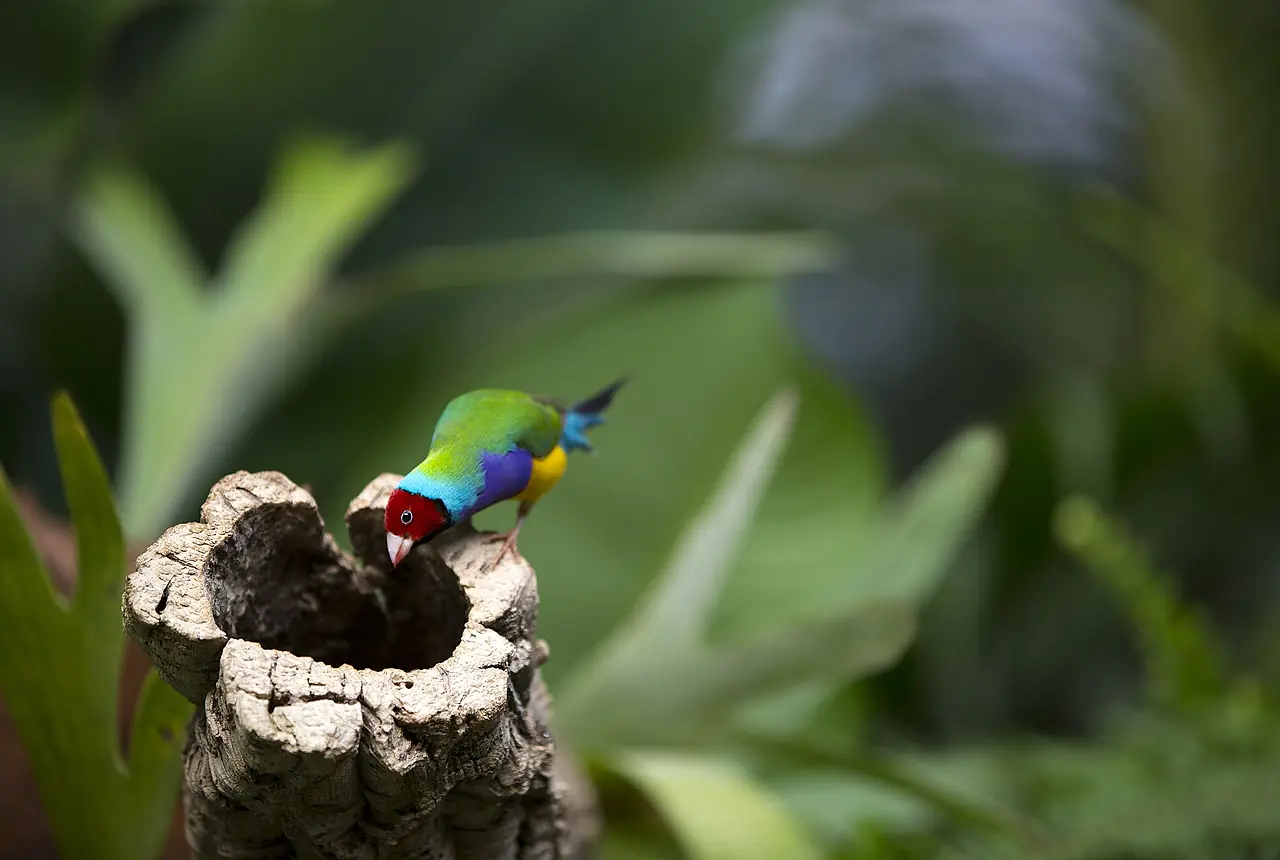
Finches are a broad group of small perching birds, not one species with one care plan. Common companion finches are active, social observation birds that need horizontal flight room and compatible company rather than regular handling. They suit people who enjoy watching a flock closely enough to notice quiet competition or illness.
Start with this group overview, then confirm the diet, pairing, temperature, and breeding risks for the exact finch species.
Lifespan
Group overview: often 5-10 years, depending on species and care
Noise
Soft busy chatter, not hands-on parrot noise
Daily social time
Usually watch-and-listen birds that need compatible same-species company
Space
Needs horizontal flight space, safe perches, and group-aware layout
Handling style
Keep handling practical and rare
Experience
Better for prepared homes that can support flight space, independent behavior, and species-specific care
The honest fit
Could this bird fit your life?
The match may work if…
A good finch home values flight, flock comfort, and low-stress care. Plan a wide cage, safe perches, multiple feeding spots, bathing, and compatibility before choosing birds by color.
You are comfortable with the bird's normal sound, movement, and daily social rhythm.
You have room for the recommended enclosure, safe movement, and a practical cleaning area.
Think twice if…
The room cannot fit a horizontal flight cage, safe placement, and daily cleanup without crowding the bird.
Feeding would likely become loose seed refills instead of seed or pellet base plus greens and clean daily water.
The household wants a bird to hold instead of an observation-first bird whose handling stays rare, calm, and practical.
The daily rhythm
A normal day with Finches
Finches turn a room into a small flock environment of contact calls, bathing, feeding, and fast horizontal flight. Daily care means watching the group closely enough to notice quiet exclusion or illness without trying to make these observation birds enjoy handling.
The surprise with finches is that tiny birds can be socially complicated. Pairing, crowding, bullying, nesting pressure, and stress matter even when the birds are not handled.
Finch is a broad label covering many small passerine species rather than one exact companion bird.
Common companion estrildid finches include Zebra, Society, Gouldian, and Owl Finches.
Home and movement
Use horizontal flight space, fine safe bar spacing, simple cleaning access, baths, and a layout with more than one perch, food area, and resting option.
Food and daily care
Use a finch-appropriate balanced base with clean water and additions chosen for the exact species and life stage. Several feeding points help reveal whether one bird is excluded; confirm breeding foods, grit, and supplements rather than adding them by default.
A finch group spreads seed hulls, bath splash, and fine debris through several flight and feeding zones. Use plain liners and damp cleaning without raising dust, and keep smoke, sprays, candles, perfume, and overheated nonstick cookware away.
Social life, sound and handling
Finches use persistent contact peeps and species-specific songs throughout an active day. Their calls are smaller than a parrot's but a flock is rarely silent; give the group a consistent dark night without isolating a healthy member.
Keep handling practical and rare. Your relationship is built through calm routines, not picking the birds up.
Careful, not fearful
Health and safety considerations
Sudden changes in appetite, breathing, posture, droppings, weight or usual voice deserve a call to an avian veterinarian.
Before adoption
Before you bring one home
Ask whether the species should be kept in pairs, groups, or single-sex setups, and whether the birds have been breeding, fighting, or losing feathers.
Confirm what species the bird is and ask for any available health and history records.
Ask what the bird currently eats, how it uses its enclosure, and how it responds to handling.
Measure the enclosure location, doorway route, and safe out-of-cage area before committing.
Confirm an avian veterinarian is accessible before the bird comes home.