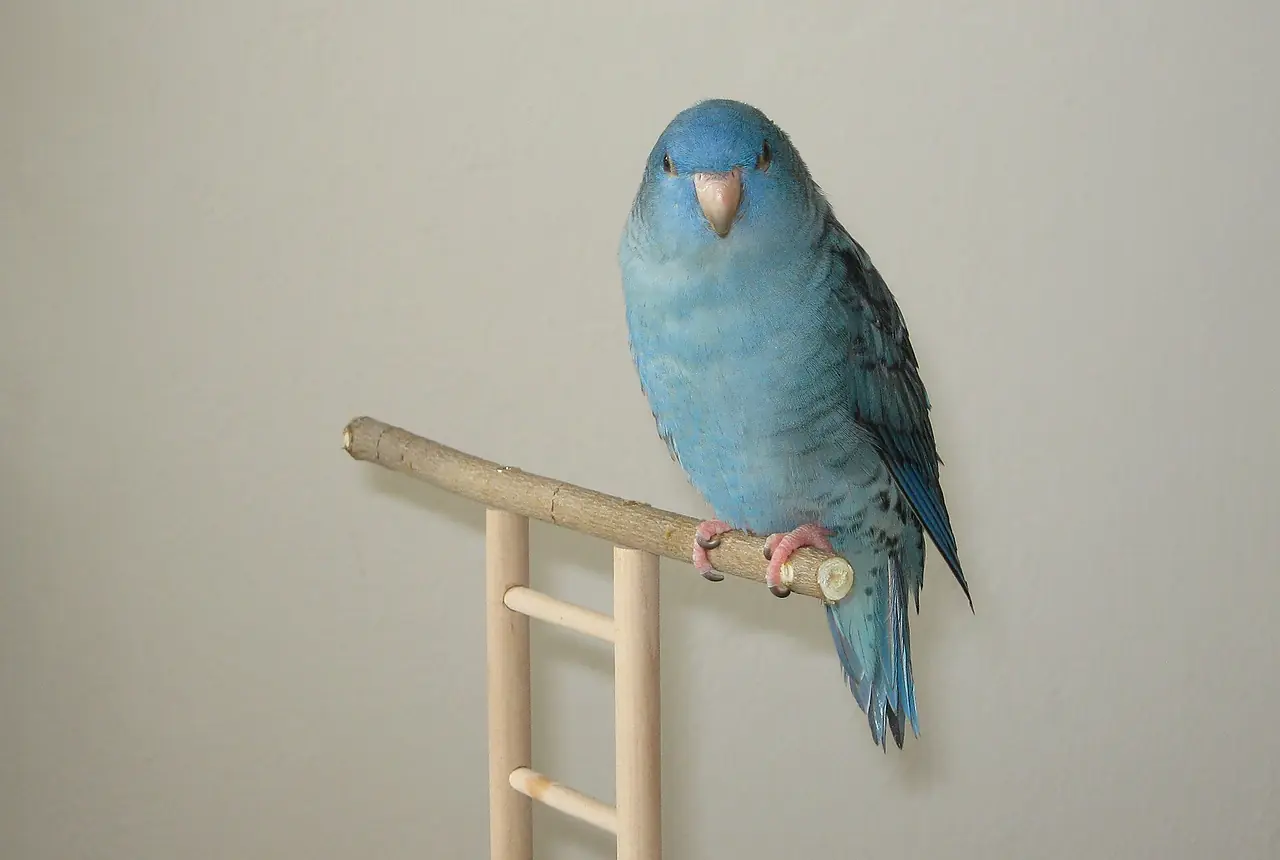
Lineolated Parakeets are small Central and South American parrots known for a near-horizontal resting posture, soft chatter, and deliberate climbing. Their quieter reputation is comparative, not a promise of silence or effortless care. They suit calm homes that can provide flock contact, movement, bathing, and patient positive training.
Give a linnie safe walking and climbing routes as well as flight room, and watch the floor whenever this small bird leaves its stand.
Lifespan
Typical group range: 10-30 years
Noise
Usually active and vocal, with calls that still matter in shared walls
Daily social time
Needs daily interaction, safe flight or movement, and respectful training
Space
Needs a roomy cage with correct bar spacing, varied perches, toys, and safe out-of-cage time
Handling style
Offer slow step-up practice, treats, and calm routines
Experience
Better for prepared homes that can support flight space, independent behavior, and species-specific care
The honest fit
Could this bird fit your life?
The match may work if…
Lineolated Parakeets fit calm homes that want a smaller parrot with soft interaction, safe climbing, and patient hand-taming.
You are comfortable with the bird's normal sound, movement, and daily social rhythm.
You have room for the recommended enclosure, safe movement, and a practical cleaning area.
Think twice if…
The room cannot fit a roomy small-bar cage, safe placement, and a cleaning routine you can actually repeat.
The food routine would likely become seed-only, treat-led, or inconsistent instead of pellets, greens, and measured seed.
The household expects instant cuddles instead of patient, choice-based trust.
The daily rhythm
A normal day with Lineolated Parakeets
Lineolated Parakeets often move by climbing as readily as flying and appreciate dense but safe routes among perches and enrichment. Build the day around compatible company, gentle voices, baths, and short choice-based training sessions.
The surprise with lineolated parakeets is how different they can feel from louder, faster parakeets. A linnie may be sweet and quiet but still needs daily attention.
Lineolated Parakeets are Bolborhynchus lineola, small parrots from mountain forests of Central and South America.
Dark barring across the green body gives the Lineolated Parakeet its common name and becomes more distinct with age.
Home and movement
Use small-bar spacing, secure doors, varied perches, climbing options, and safe out time. Their quiet nature is not a reason to undersize the cage.
Food and daily care
Use a nutritionally balanced small-parrot diet with suitable vegetables and measured seed or fruit, introduced gradually. Lineolated Parakeets may eat throughout the day, so keep portions and dish changes consistent enough to read appetite, droppings, and weight.
Lineolated Parakeets often walk and climb through lower parts of their setup, where loose food and larger, wetter droppings can collect. Use plain liners and damp unscented cleaning, and keep smoke, sprays, candles, perfume, and overheated nonstick cookware out of their air.
Social life, sound and handling
Lineolated Parakeets usually murmur and chatter more softly than many parrots, but flock calls can still become sharp. Mimicry varies by individual; protect a dark, predictable night rather than choosing the species on a promise of quiet or speech.
Offer slow step-up practice, treats, and calm routines. They often respond better to gentle consistency than big excited handling.
Careful, not fearful
Health and safety considerations
Compare Lineolated Parakeets as a parakeet, with the final choice based on noise, space, diet, social routine, legal sourcing, and avian-vet access.
Sudden changes in appetite, breathing, posture, droppings, weight or usual voice deserve a call to an avian veterinarian.
Before adoption
Before you bring one home
Ask whether the bird is hand-fed, parent-raised, housed with another linnie, and comfortable stepping up outside the cage.
Confirm what species the bird is and ask for any available health and history records.
Ask what the bird currently eats, how it uses its enclosure, and how it responds to handling.
Measure the enclosure location, doorway route, and safe out-of-cage area before committing.
Confirm an avian veterinarian is accessible before the bird comes home.