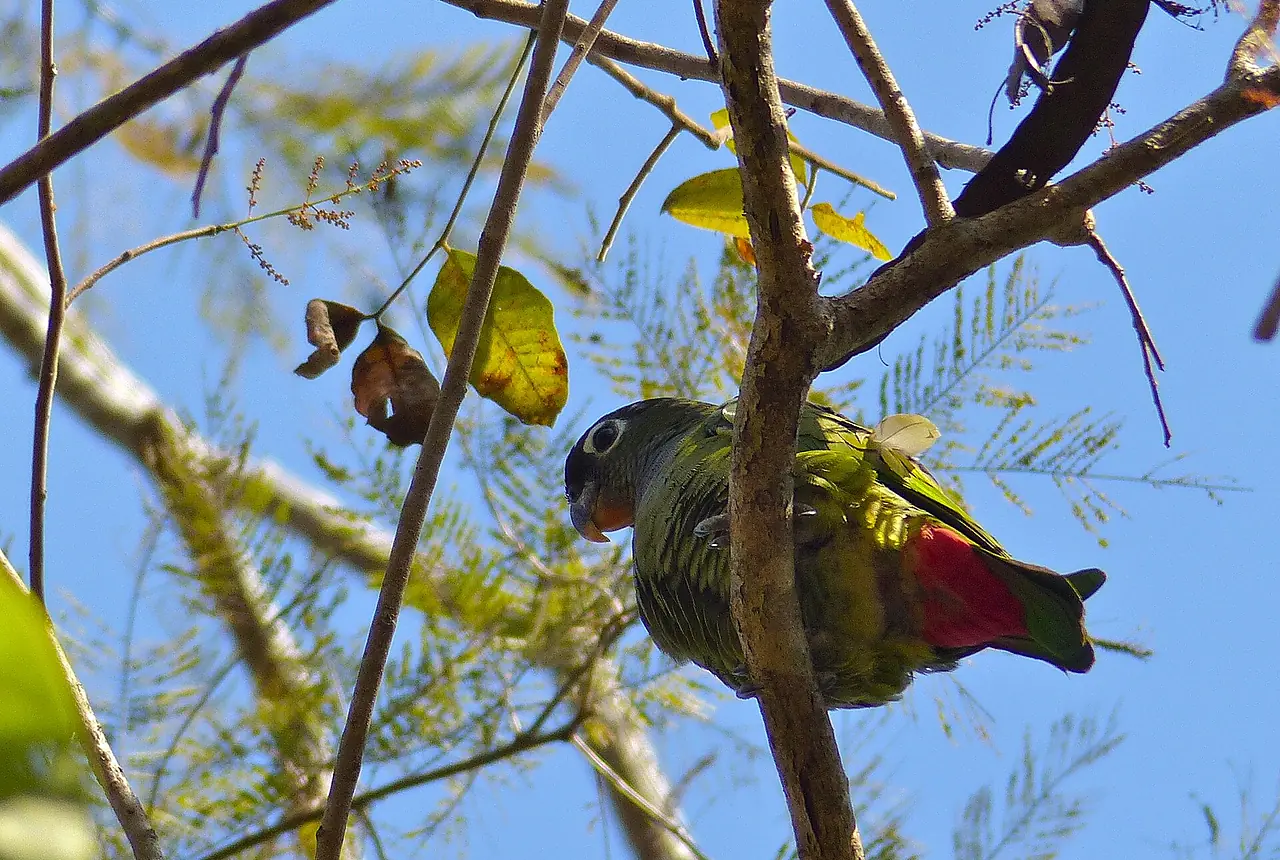
Maximilian's Pionus, also called the Scaly-headed Parrot, is a medium South American Pionus with a green body, dusky scaled head, and red undertail. Its measured manner and comparatively moderate voice are not promises of silence or effortless handling. It suits steady homes that value bathing, movement, and low-pressure companionship.
Hear the individual adult, watch its relaxed posture, and plan enough room for climbing and flight before choosing this understated parrot.
Lifespan
About 20 years
Noise
Often calmer than many parrots, but not silent
Daily social time
Steady, observant, and usually less frantic than some parrots
Space
Needs a medium-large cage, perches, baths, and foraging
Handling style
Use calm, consistent training and let the bird choose closeness
Experience
Better for prepared homes that can support flight space, independent behavior, and species-specific care
The honest fit
Could this bird fit your life?
The match may work if…
Maximilian's Pionus fit steady homes that can provide spacious movement, bathing, foraging, measured food, and low-pressure training.
You are comfortable with the bird's normal sound, movement, and daily social rhythm.
You have room for the recommended enclosure, safe movement, and a practical cleaning area.
Think twice if…
The room cannot fit a medium-large cage, safe placement, and a cleaning routine you can actually repeat.
The food routine would likely become seed-only, treat-led, or inconsistent instead of careful weight checks.
The household expects instant cuddles instead of patient, choice-based trust.
The daily rhythm
A normal day with Maximilian's Pionus
Maximilian's Pionus parrots often move through the day at a measured pace, alternating climbing, bathing, chewing, foraging, and nearby company. Give the bird usable space and let it choose interaction instead of making every social moment hands-on.
Resonant flight calls and harsh squawks remain normal even within a parrot group known for comparatively moderate sound.
Maximilian's Pionus are Pionus maximiliani and are also called Scaly-headed Parrots.
Adults are mainly green with a dusky scaled head and neck, pale eye ring, horn-colored bill, blue-purple throat, and red undertail.
Home and movement
Use sturdy medium-parrot housing, foraging, bathing, and safe out time. Give the bird places to perch near people without being handled nonstop.
Food and daily care
Build meals around a nutritionally balanced parrot diet and suitable vegetables, keeping fruit, seeds, nuts, and treats measured. Track weight and discuss supplements with an avian veterinarian instead of diagnosing a deficiency from appearance.
Maximilian's Pionus parrots spread bath water, food pieces, and chewing debris around their favored perches. Use washable surfaces and plain cleaning products, and exclude smoke, sprays, candles, perfume, and overheated nonstick cookware.
Social life, sound and handling
Maximilian's Pionus parrots use resonant flight calls and can produce harsh squawks even though Pionus are comparatively quiet companions. Hear the exact adult and preserve a dark, uninterrupted sleep period.
Use calm, consistent training and let the bird choose closeness. Respect keeps these relationships stronger than pressure does.
Careful, not fearful
Health and safety considerations
Compare Maximilian's Pionus as a pionus, with the final choice based on noise, space, diet, social routine, legal sourcing, and avian-vet access.
Sudden changes in appetite, breathing, posture, droppings, weight or usual voice deserve a call to an avian veterinarian.
Before adoption
Before you bring one home
Ask about diet, hand comfort, noise, feather condition, and whether the bird accepts stepping up away from the cage.
Confirm what species the bird is and ask for any available health and history records.
Ask what the bird currently eats, how it uses its enclosure, and how it responds to handling.
Measure the enclosure location, doorway route, and safe out-of-cage area before committing.
Confirm an avian veterinarian is accessible before the bird comes home.