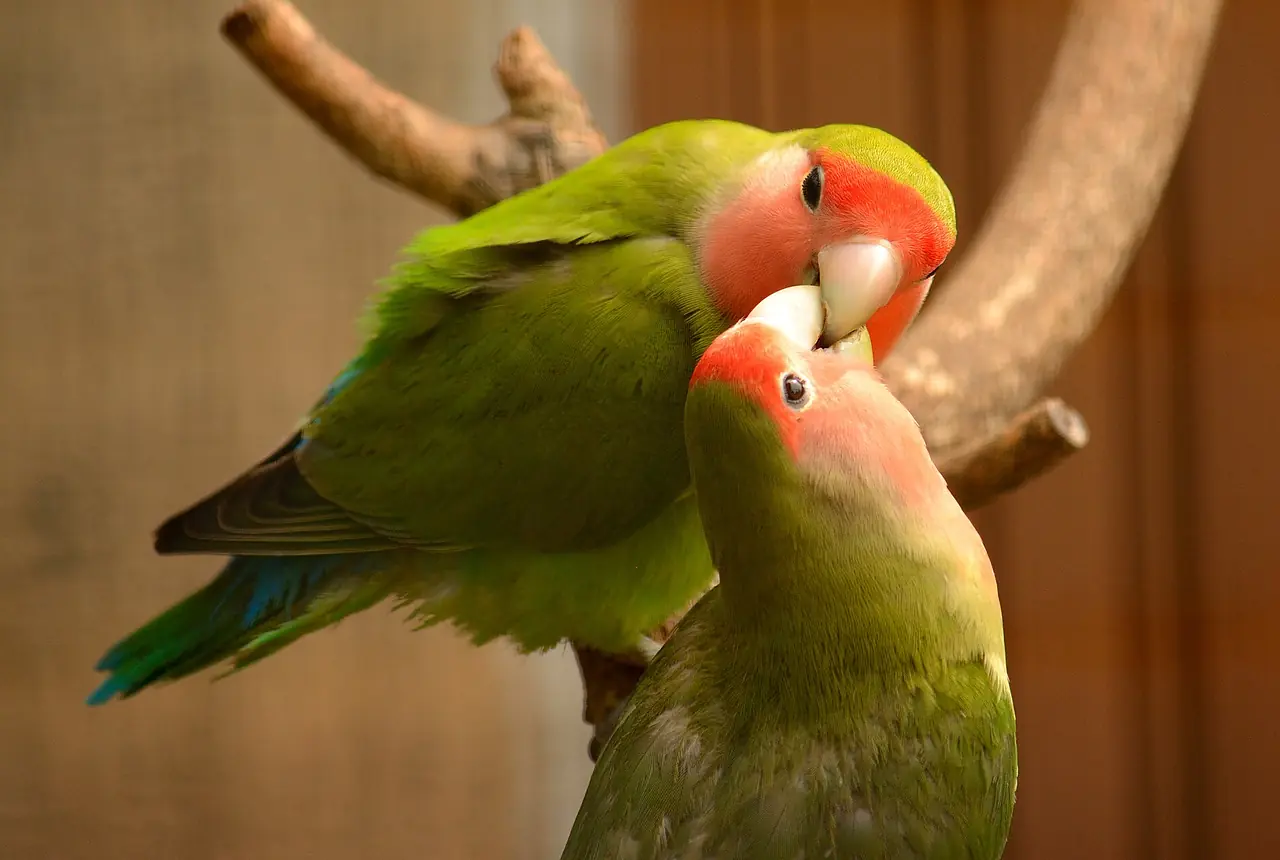
Peach-faced Lovebirds are active African parrots with short tails, strong beaks, and a persistent urge to chew and shred. Their cheerful chatter and small size can hide territorial behavior, pair conflict, and reproductive risks. They suit involved homes that can provide daily movement and manage nest-seeking without encouraging it.
Plan generous housing, safe shredding, measured food, and choice-based handling while keeping huts and other nest-like spaces out of the routine.
Lifespan
10-20 years
Noise
Small bird, sharp calls
Daily social time
Very attached to favorite people or bird partners
Space
Needs chew-safe enrichment, secure doors, and room for fast movement
Handling style
Respect the bird's signals and reward calm step-ups
Experience
Better for prepared homes that can support flight space, independent behavior, and species-specific care
The honest fit
Could this bird fit your life?
The match may work if…
Peach-faced lovebirds fit people who like a small parrot with confidence and can provide daily attention, safe chewing, and patient training.
You are comfortable with the bird's normal sound, movement, and daily social rhythm.
You have room for the recommended enclosure, safe movement, and a practical cleaning area.
Think twice if…
The room cannot fit a chew-safe cage, safe placement, and a cleaning routine you can actually repeat.
The food routine would likely become seed-only, treat-led, or inconsistent instead of pellets, greens, and measured seed.
The household expects instant cuddles instead of patient, choice-based trust.
The daily rhythm
A normal day with Peach-faced Lovebirds
Peach-faced Lovebirds stay busy with shredding, climbing, social calls, and close attention to favored people or companions. Their day needs movement and safe chewing without huts or nesting material that encourage defensive behavior.
The surprise with peach-faced lovebirds is how quickly a cute bird can become bossy if people ignore early warnings or let cage habits slide.
Peach-faced Lovebirds are Agapornis roseicollis, also called Rosy-faced Lovebirds.
The wild-type adult is green with a peach-to-rose face and blue rump, while captive color mutations vary widely.
Home and movement
Use secure latches, chew-safe toys, room for fast movement, and a routine that makes cage cleaning calm instead of a daily battle.
Food and daily care
Use a nutritionally balanced small-parrot diet with suitable vegetables and measured fruit or seed rather than an all-seed bowl. Females can lay without a male, so calcium balance and any straining or lethargy belong in an avian-veterinary conversation.
Peach-faced Lovebirds create paper strips, wood fragments, and food scatter wherever they investigate. Remove debris with damp unscented cleaning and keep smoke, aerosols, candles, perfume, and overheated nonstick cookware away.
Social life, sound and handling
Peach-faced Lovebirds produce regular chatter and whistles with louder bursts in the morning, evening, and during excitement. Talking is uncommon, so hear adult birds and protect steady sleep rather than choosing one for speech.
Respect the bird's signals and reward calm step-ups. If a bird is paired, work with the pair dynamic instead of forcing one bird away from the other.
Careful, not fearful
Health and safety considerations
Compare Peach-faced Lovebirds as a lovebird, with the final choice based on noise, space, diet, social routine, legal sourcing, and avian-vet access.
Sudden changes in appetite, breathing, posture, droppings, weight or usual voice deserve a call to an avian veterinarian.
Before adoption
Before you bring one home
Ask whether the bird is hand-comfortable, paired, nesty, or protective of cage areas. Adult behavior matters more than baby sweetness.
Confirm what species the bird is and ask for any available health and history records.
Ask what the bird currently eats, how it uses its enclosure, and how it responds to handling.
Measure the enclosure location, doorway route, and safe out-of-cage area before committing.
Confirm an avian veterinarian is accessible before the bird comes home.