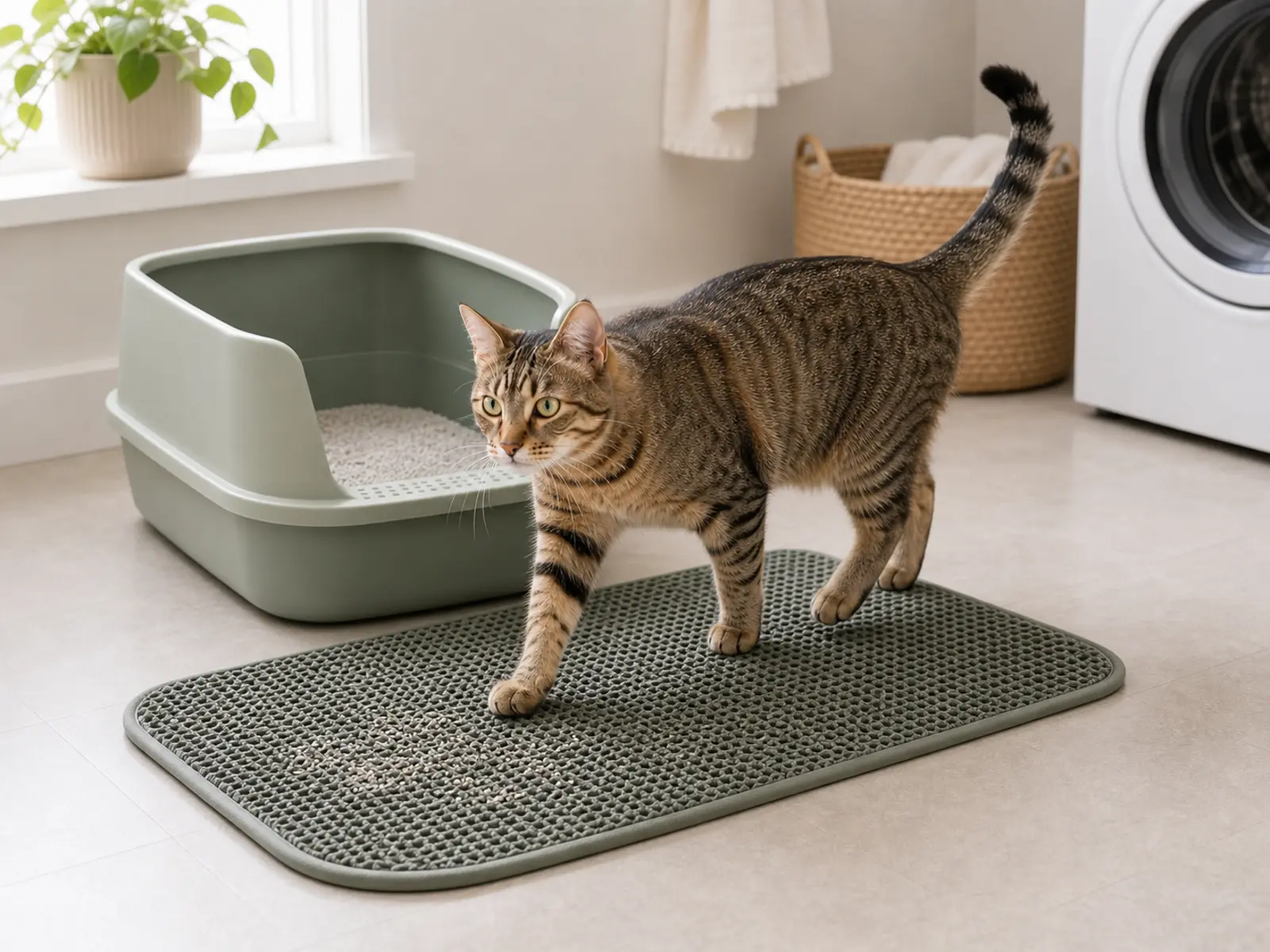
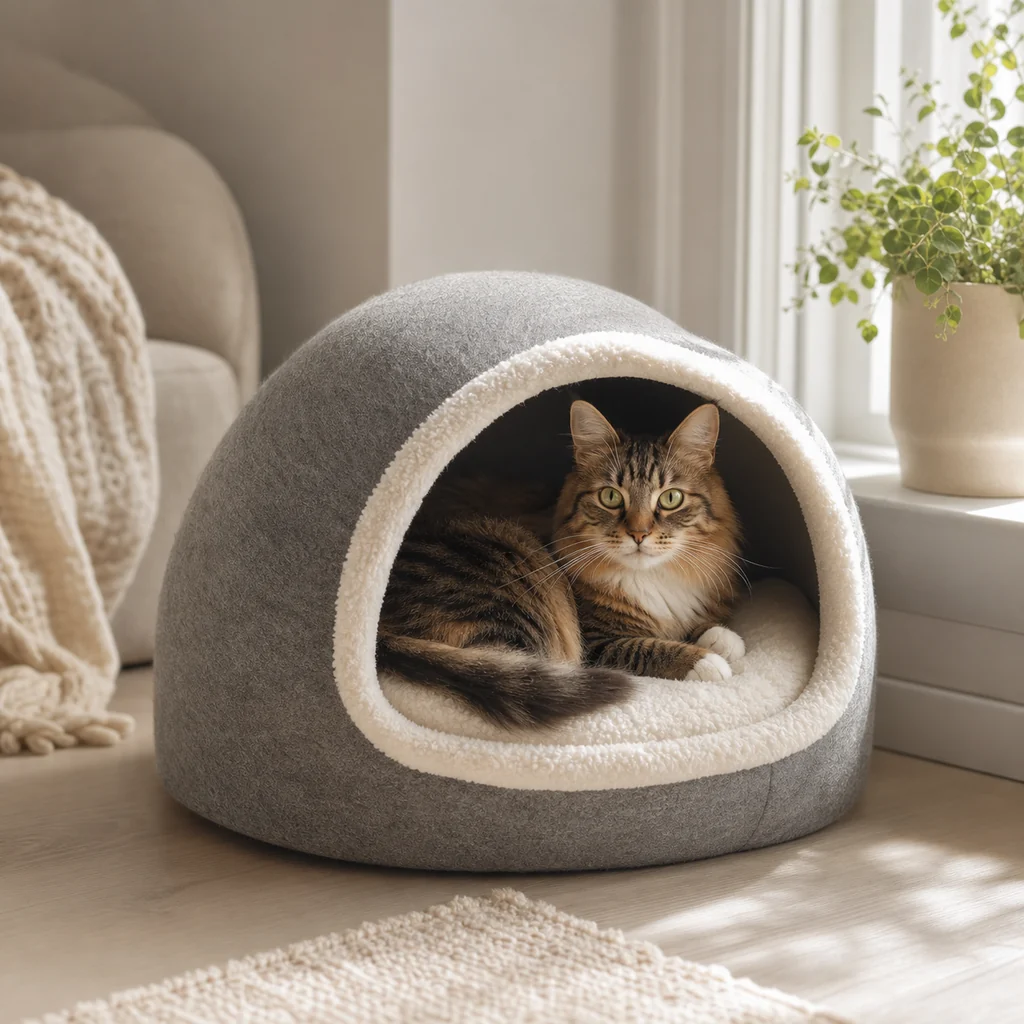
Brush a cranky senior cat in seconds, not sessions: choose a gentle tool, touch only easy areas first, reward calm moments, and stop before pain or frustration takes over.
Crankiness is often information. The brush may pull, the position may hurt, or the session may simply be too long for an older cat who used to tolerate more.
Start with one calm touch
Let your cat settle, touch the brush to an easy area once, reward, and stop. For some senior cats, that is a complete first session and a better choice than pushing for more.
Start by comparing today with your cat's normal. A senior cat who changes appetite, litter habits, jumping, grooming, sleep, or social behavior is giving useful information.
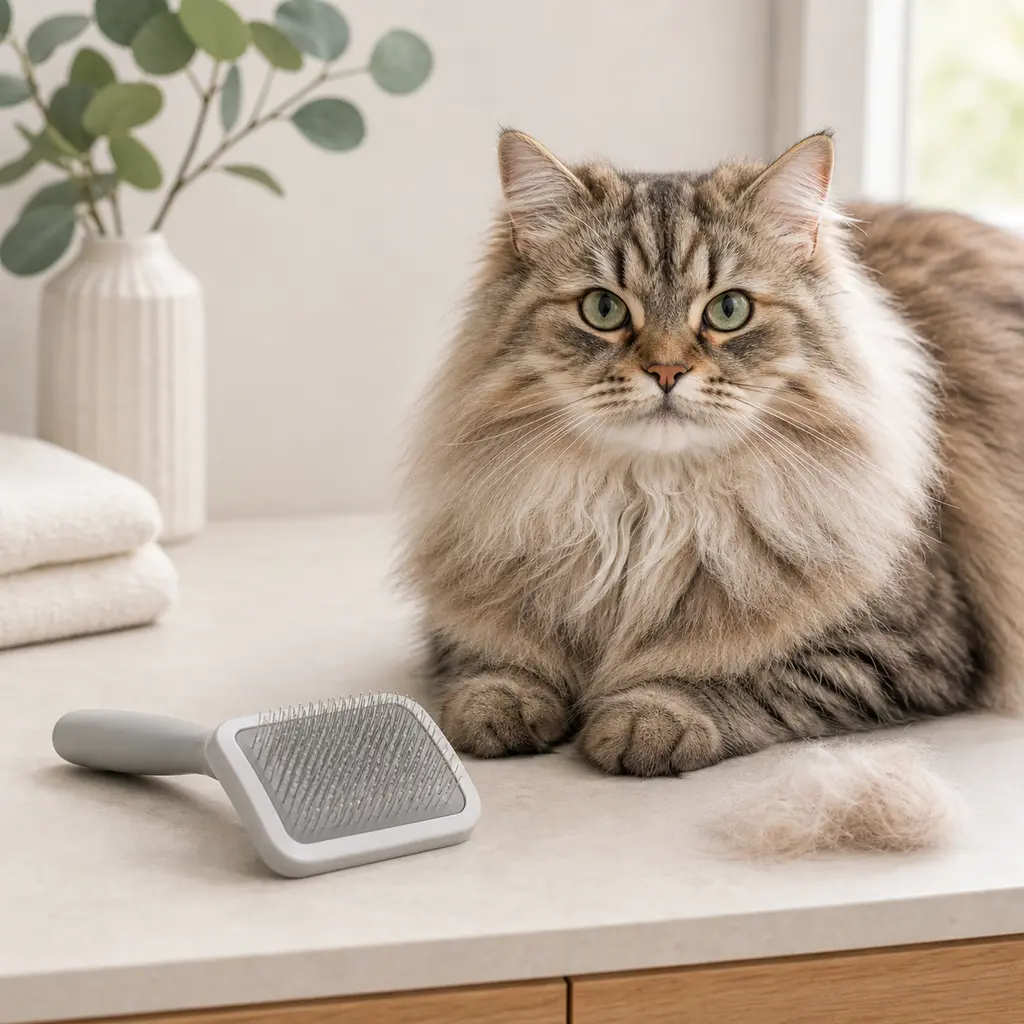
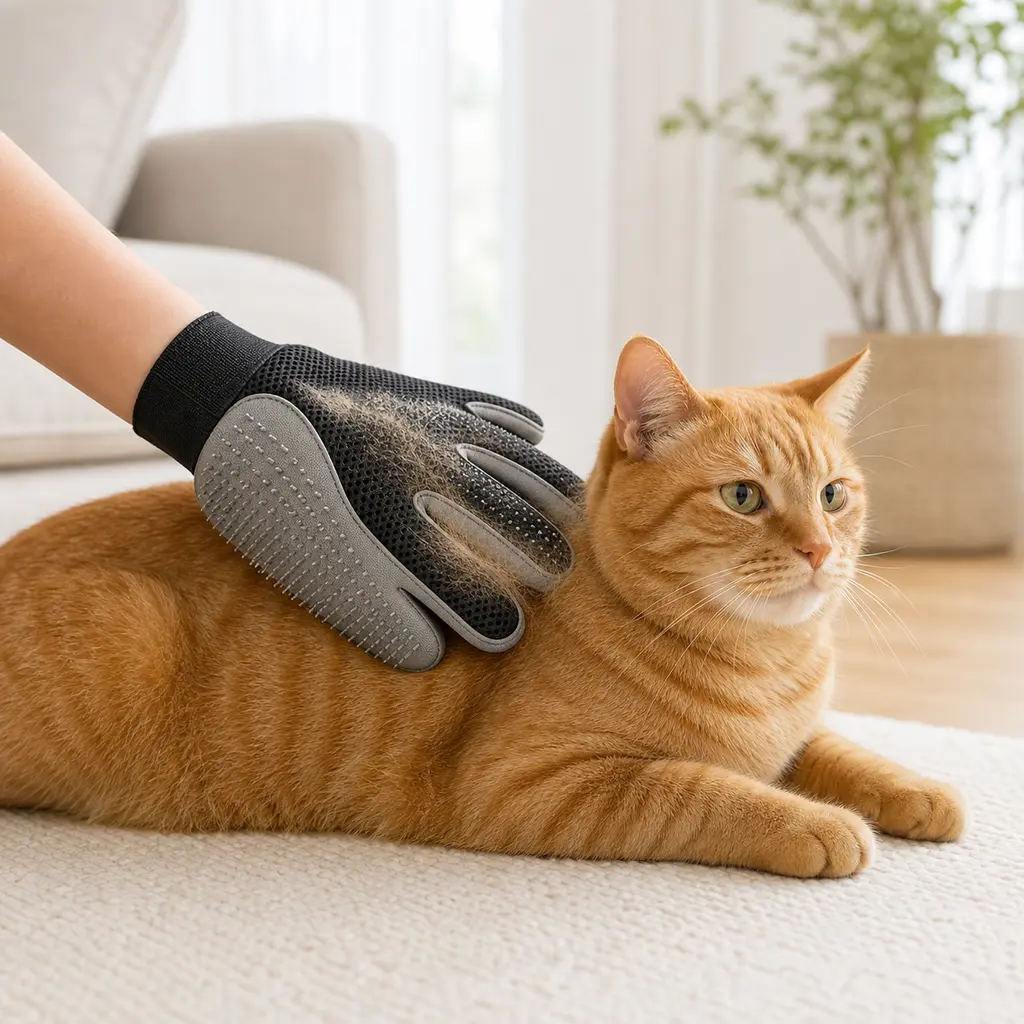
Use a tool that does not pull
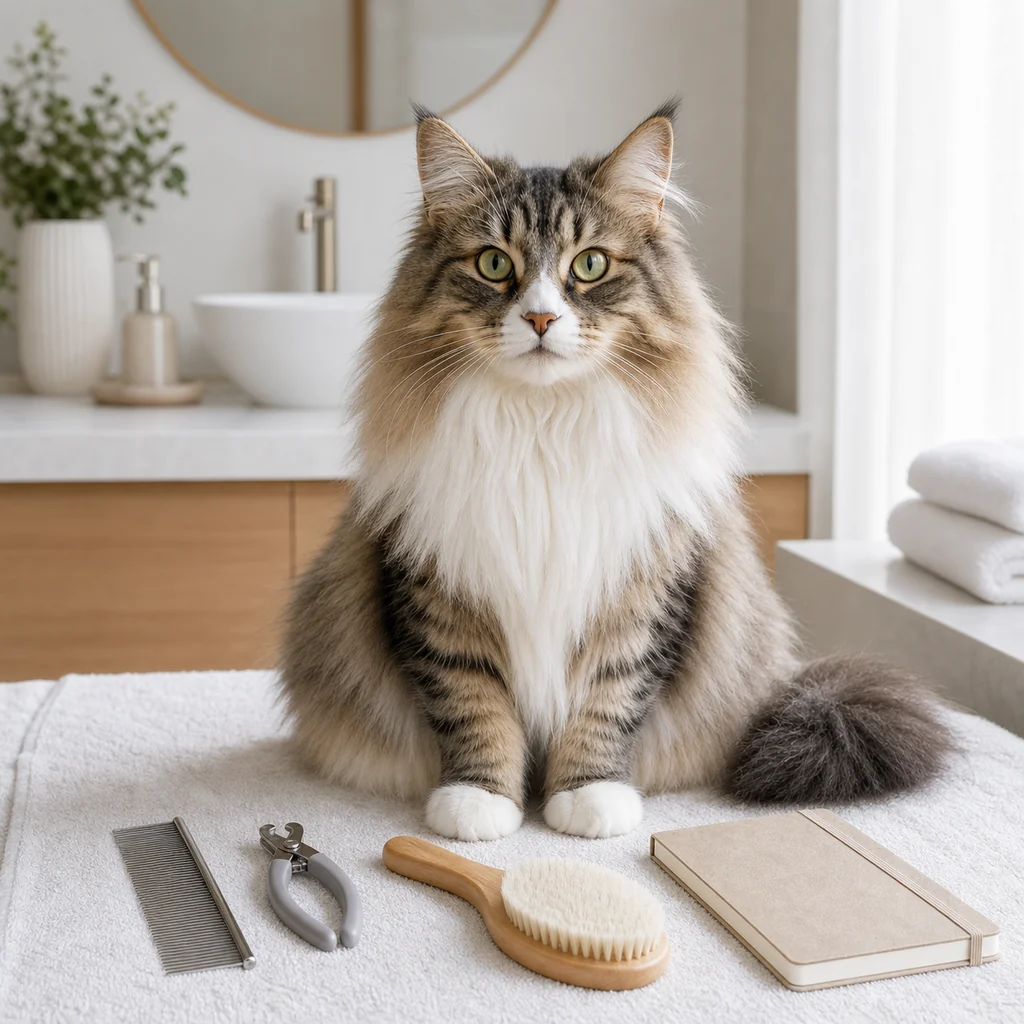
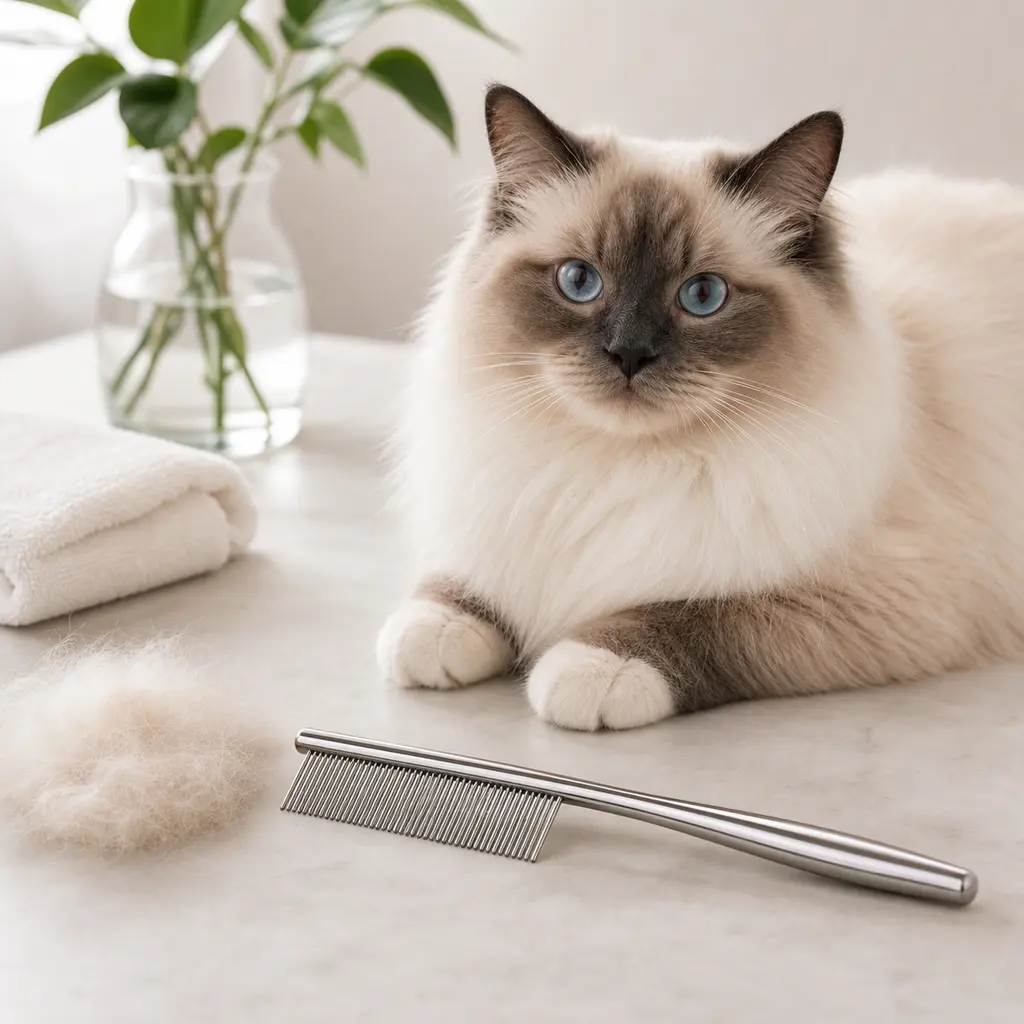
A comb, glove, or very gentle brush should move through loose coat without dragging the skin. If it catches, do not tug; change tools or get help with the mat.
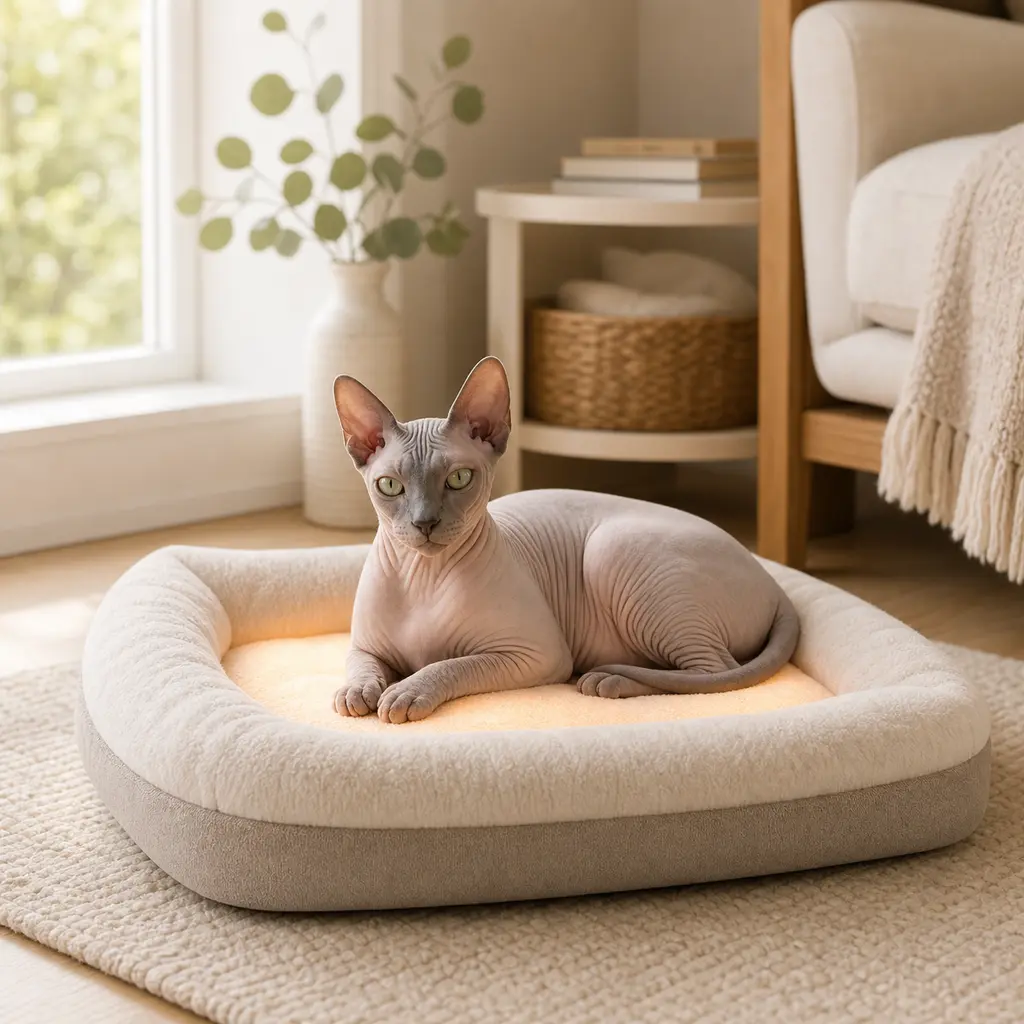
Make the next step easy on joints and predictable for the routine. Lower the entry, shorten the jump, add traction, warm the bed, or schedule the checkup before guessing.
Reward the pause, not the argument
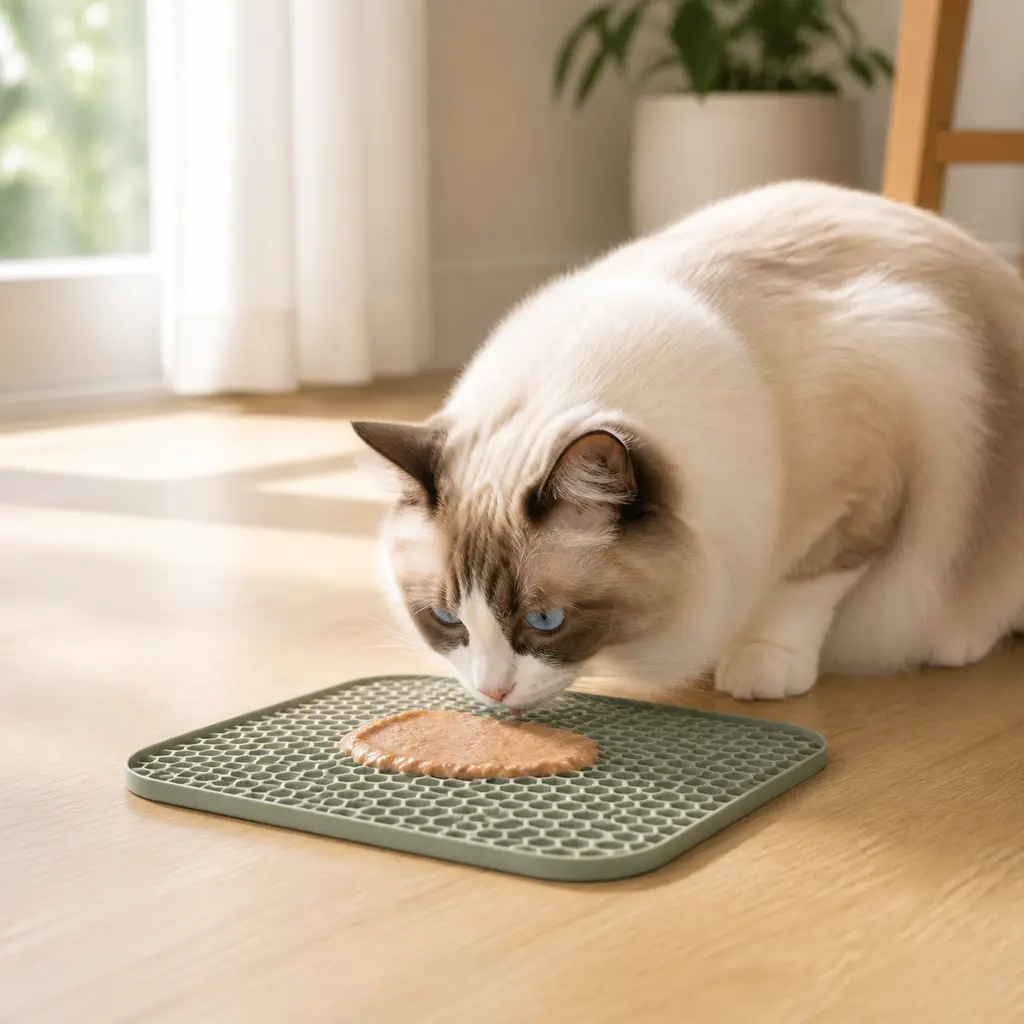
Use a tiny treat, lick mat, or favorite calm voice while your cat is still relaxed. End before tail flicking, skin twitching, growling, or biting becomes the routine.
Senior-cat changes deserve a slower read. Compare the new pattern with appetite, weight, litter habits, jumping, grooming, sleep, and whether the room has become harder to use.
Do not fight through pain
A senior cat who gets cranky only over one hip, back spot, armpit, or mat may be sore. Stop and ask a veterinarian or groomer what is safest.
Do not write off sudden senior changes as age. Appetite loss, weight loss, new hiding, pain, falls, litter changes, or confusion deserve a veterinary conversation.
Before you decide
Is your cat cranky everywhere or only over one sore-looking area?
Does the tool pull, catch, or make the skin twitch?
Can you stop while your cat is still calm?
Are there mats, wounds, stiffness, weight loss, or sudden handling changes?
Next best moves
Try one calm brush touch, reward, and stop.
Switch tools if the coat catches or the skin pulls.
Ask a groomer or veterinarian for painful mats, sudden crankiness, or unsafe handling.
Helpful supplies
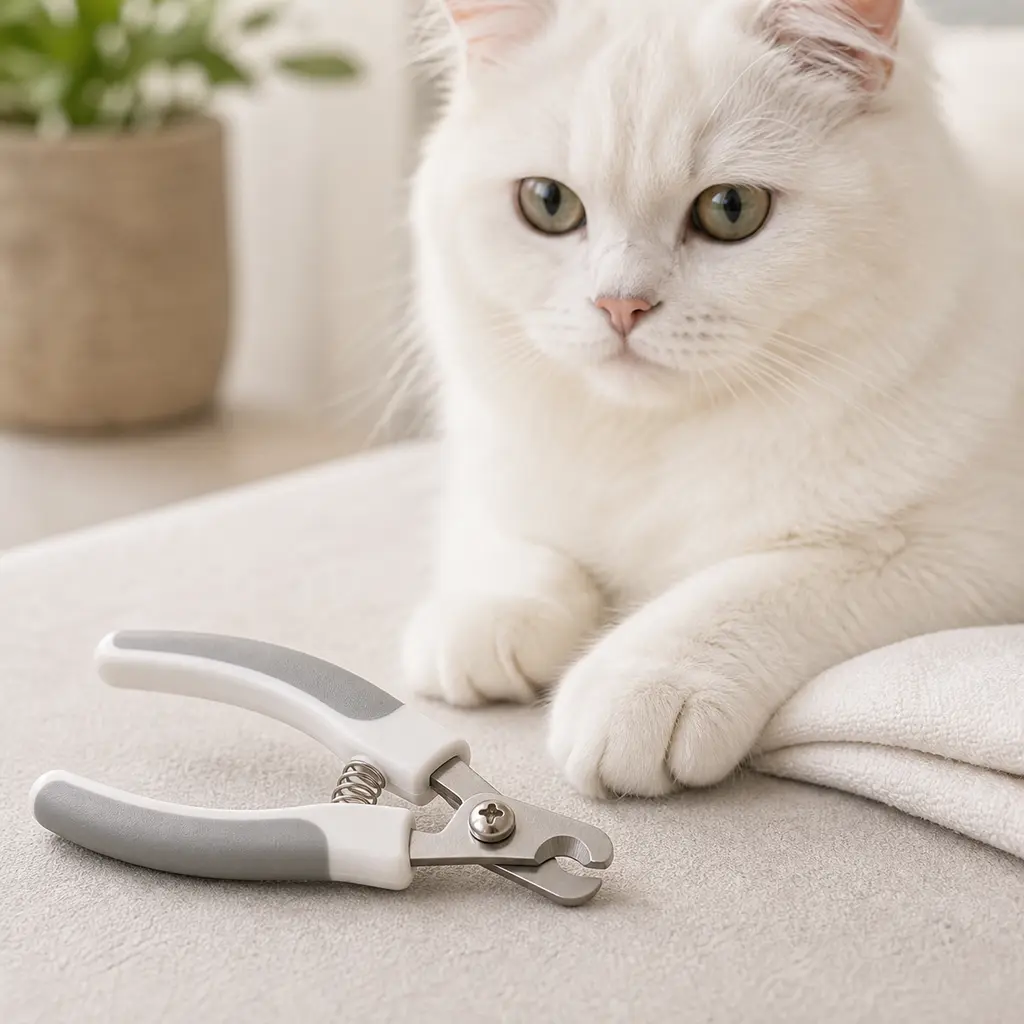
These tools help with short, gentle sessions. Painful mats, eye issues, skin wounds, or paw-pad nail problems still belong with a groomer or veterinarian.
Affiliate links: Furball Cove may earn from qualifying purchases at no extra cost to you.
Brush a cranky senior cat in seconds, not sessions: choose a gentle tool, touch only easy areas first, reward calm moments, and stop before pain or frustration takes over.
When should I get help?
Ask a groomer or veterinarian for tight mats, painful skin, sudden brush hatred, biting from pain, weight loss, stiffness, wounds, or a cat who cannot be handled safely.