Updated
Cat food safety
Can Cats Eat Olives? Usually Skip Them
Usually skip
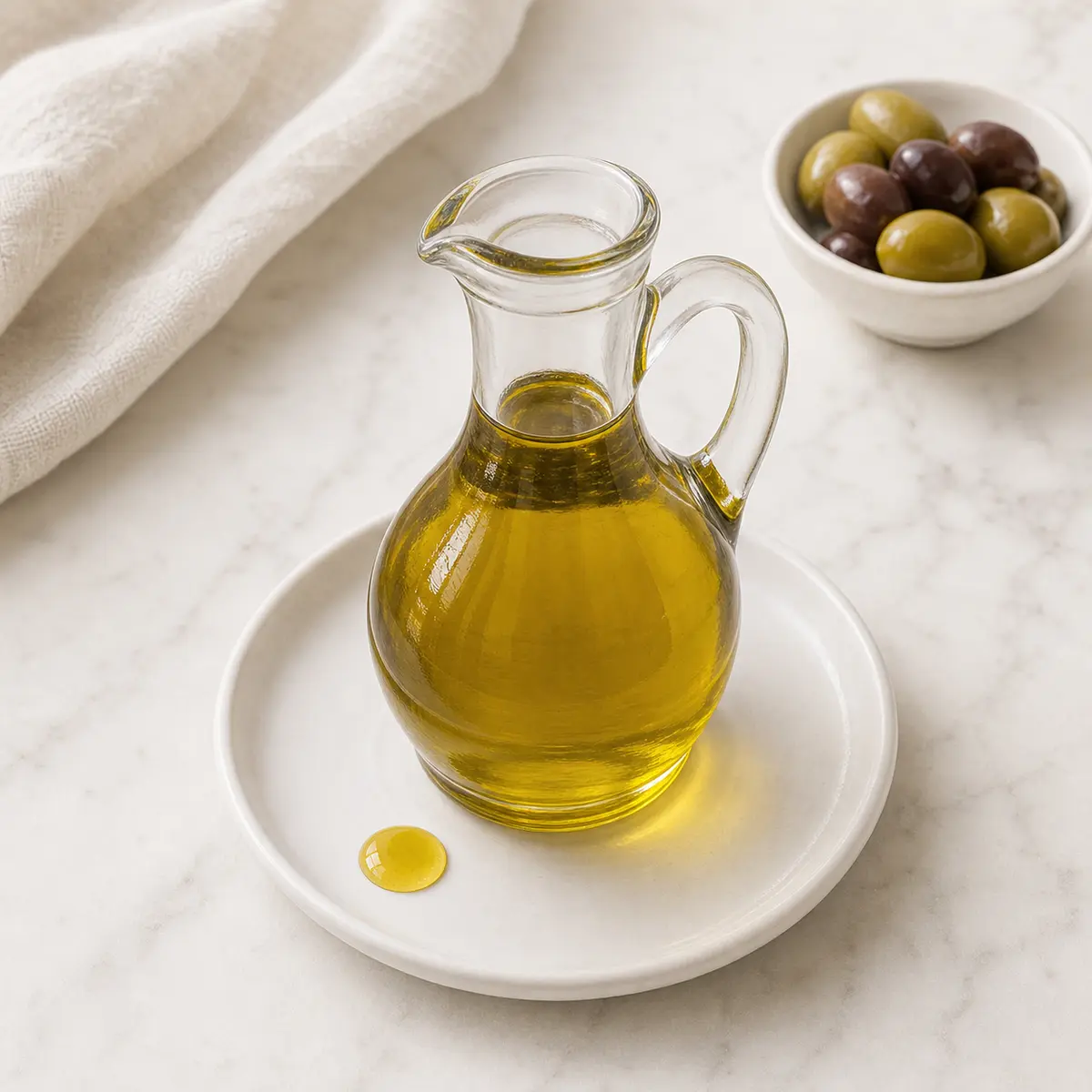
Usually skip olives. Salt, brine, pits, stuffing, and seasonings make them poor cat treats.
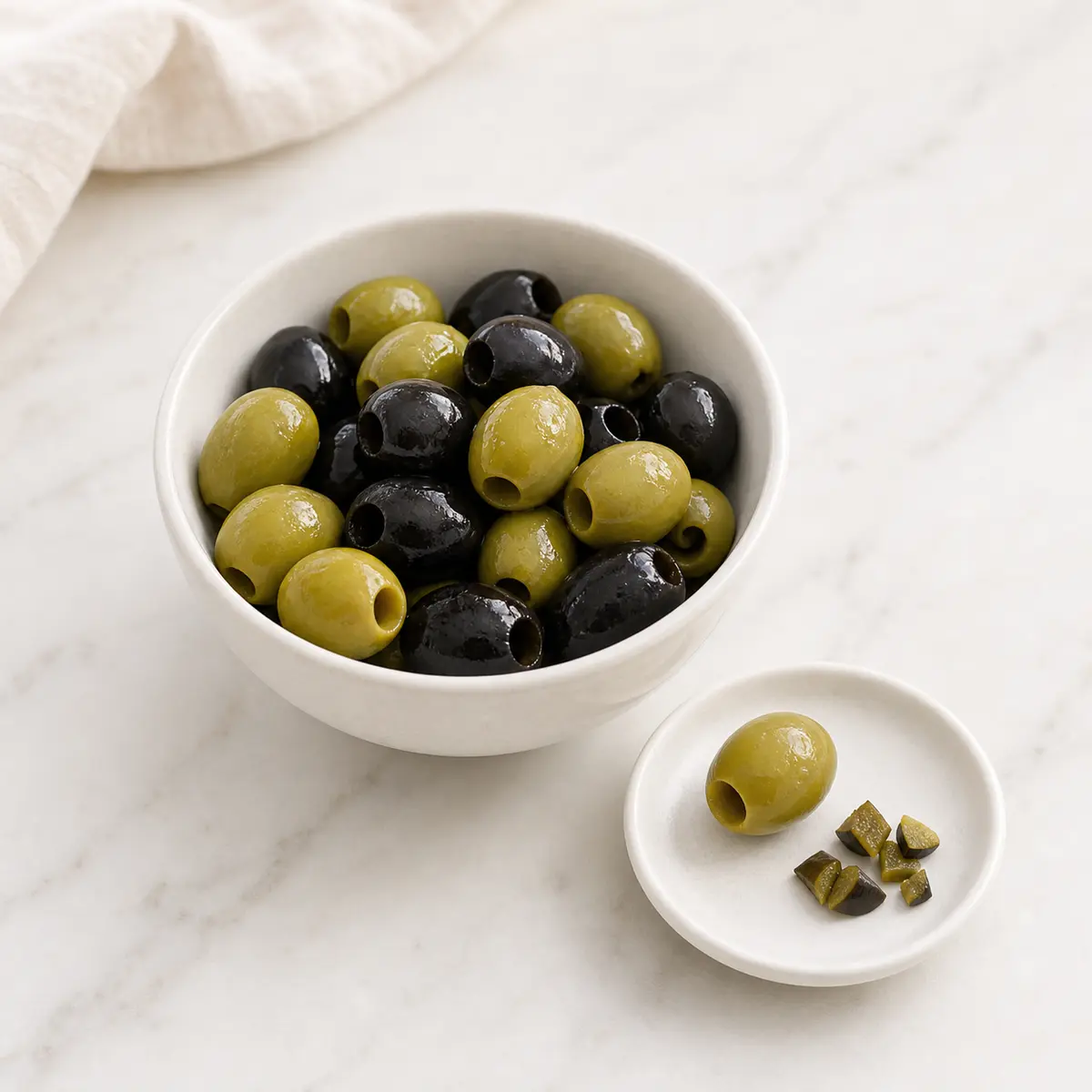 Olives
Ask your vet
Call your veterinarian if your cat swallowed a pit, ate garlic- or onion-stuffed olives, had alcohol exposure, or symptoms start.
Pits and stuffing matter
The olive itself is only part of the question; pits, garlic, onion, cheese, chili, and cocktails change the risk.
Salt is enough reason to skip
Cats do not benefit from salty brined snacks, even if they seem curious about them.
How to handle it
- Do not offer olives as a snack. If a tiny piece was eaten, confirm it was pitted and not stuffed or seasoned.
- Give fresh water and return to normal food if there are no concerning ingredients or symptoms.
Avoid
- Olive pits, brine, stuffed olives, garlic, onion, blue cheese, chili, cocktail olives, martini olives, tapenade, salty appetizers, and large amounts.
- Olives for cats with heart disease, kidney disease, urinary issues, pancreatitis risk, prescription diets, or stomach sensitivity unless your veterinarian approves them.
Watch
- Vomiting, diarrhea, thirst, drooling, belly pain, choking, coughing, lethargy, or behavior that feels wrong.
Portion
No routine serving. If a healthy cat got a tiny plain pitted piece, check for stuffing, garlic, onion, alcohol, and salt.
Helpful food-safety supplies
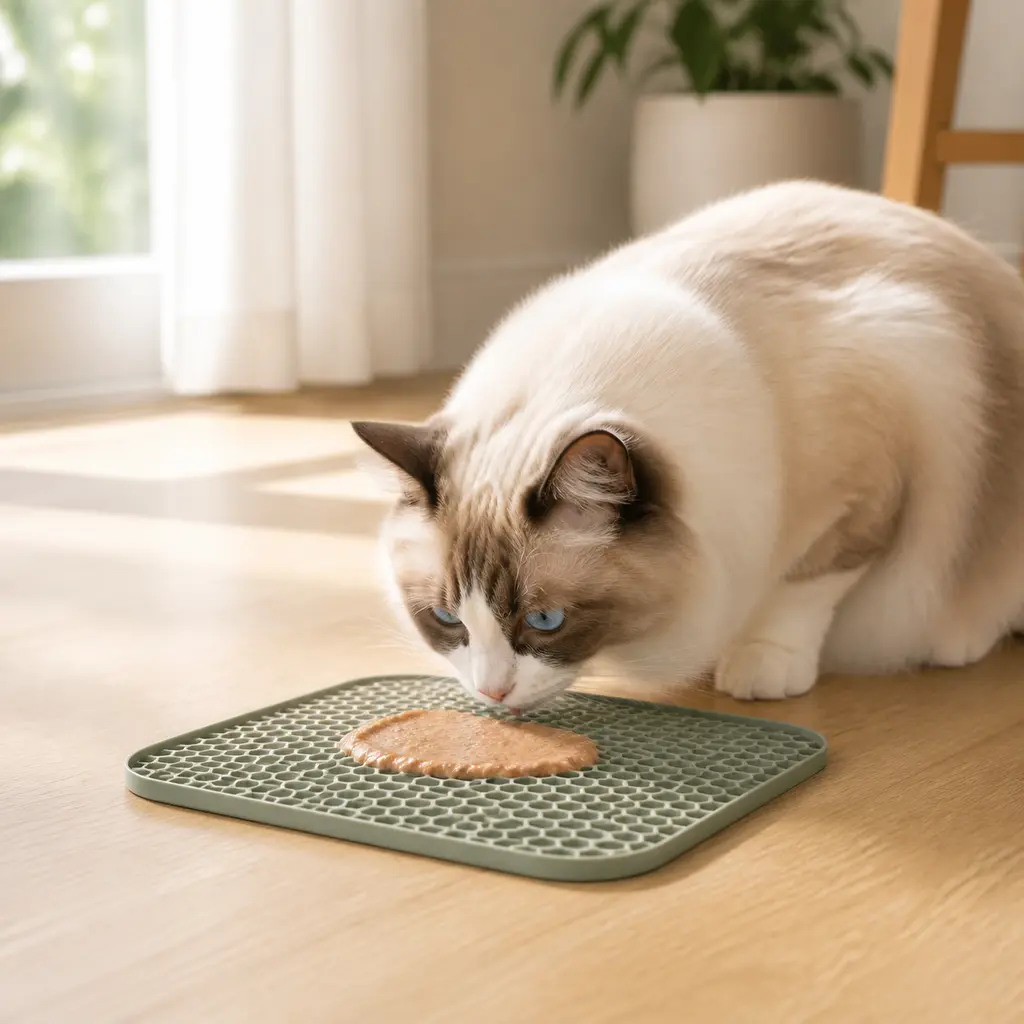
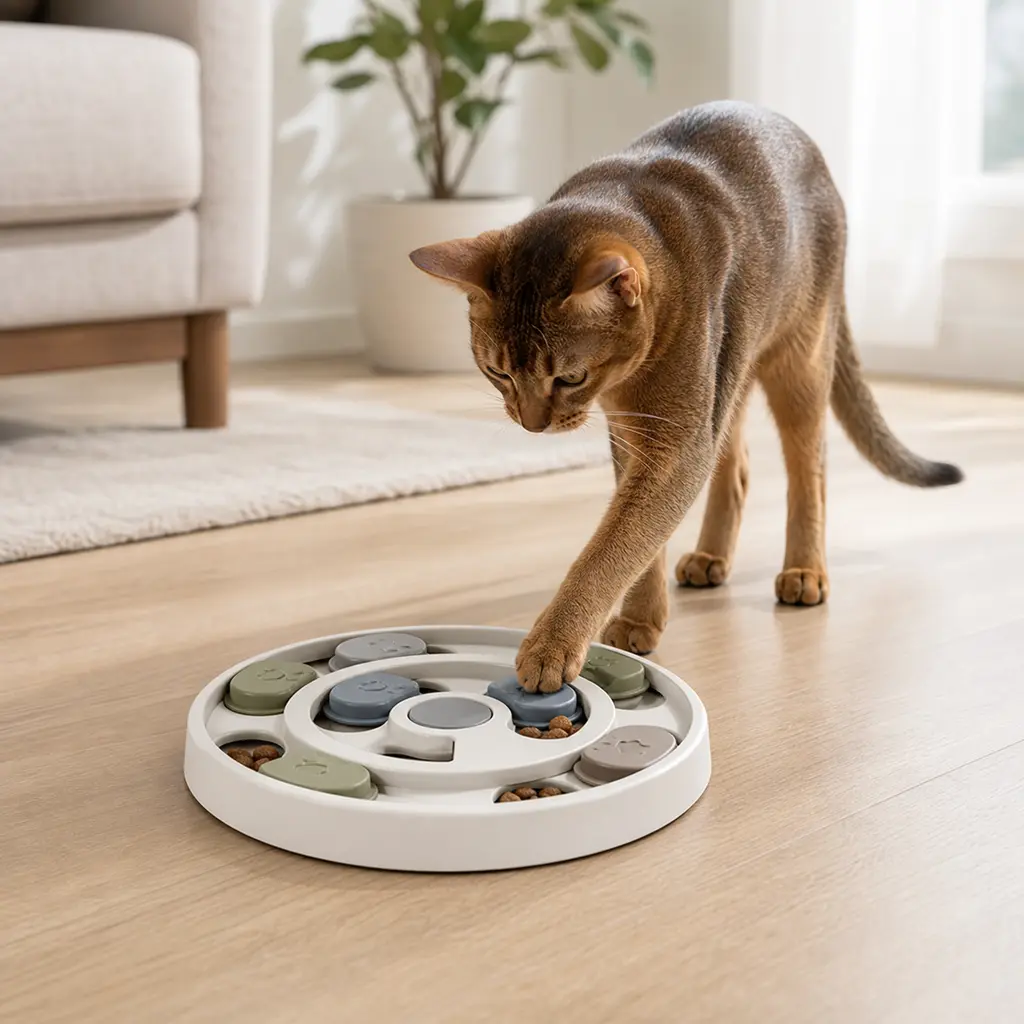
Optional tools for measuring, storing, serving, and cleaning up tiny portions safely.
Affiliate links: Furball Cove may earn from qualifying purchases at no extra cost to you.