Updated
Rabbit food check
Can Rabbits Eat Alfalfa Cubes? It Depends on Life Stage
It depends—age and health
Sometimes. A plain alfalfa cube can fit a growing rabbit or a specific veterinary feeding plan, but it is too rich to become a casual treat for most healthy adults. Confirm why you are using it, count the alfalfa already in the hay and pellets, and keep the loose-hay rack stocked through every grazing period.
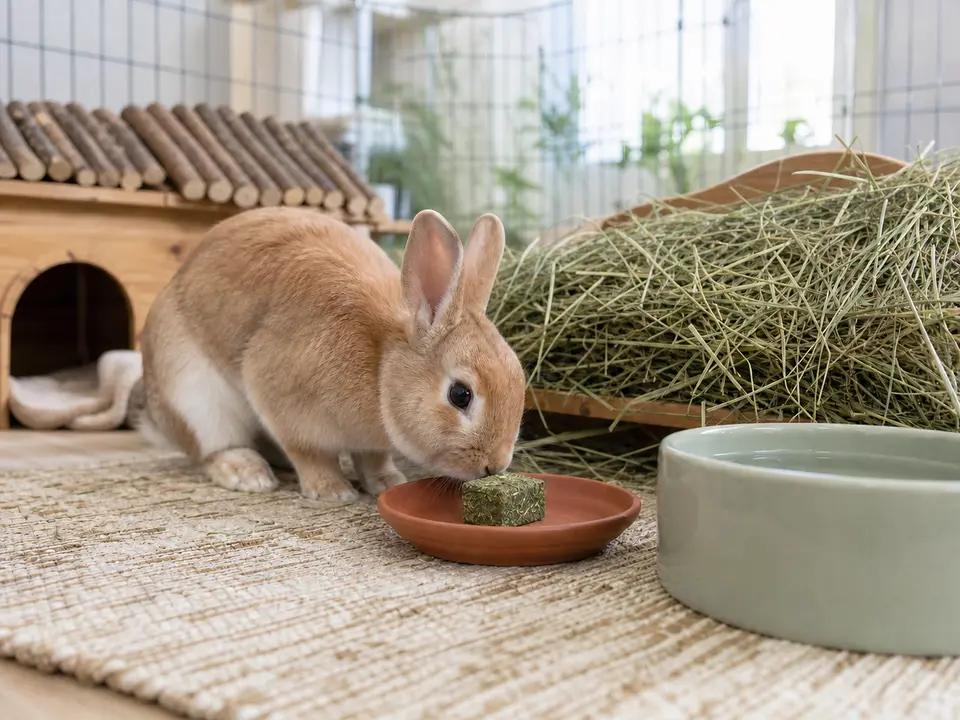 Alfalfa Cubes
Compression changes the shape, not the hay type
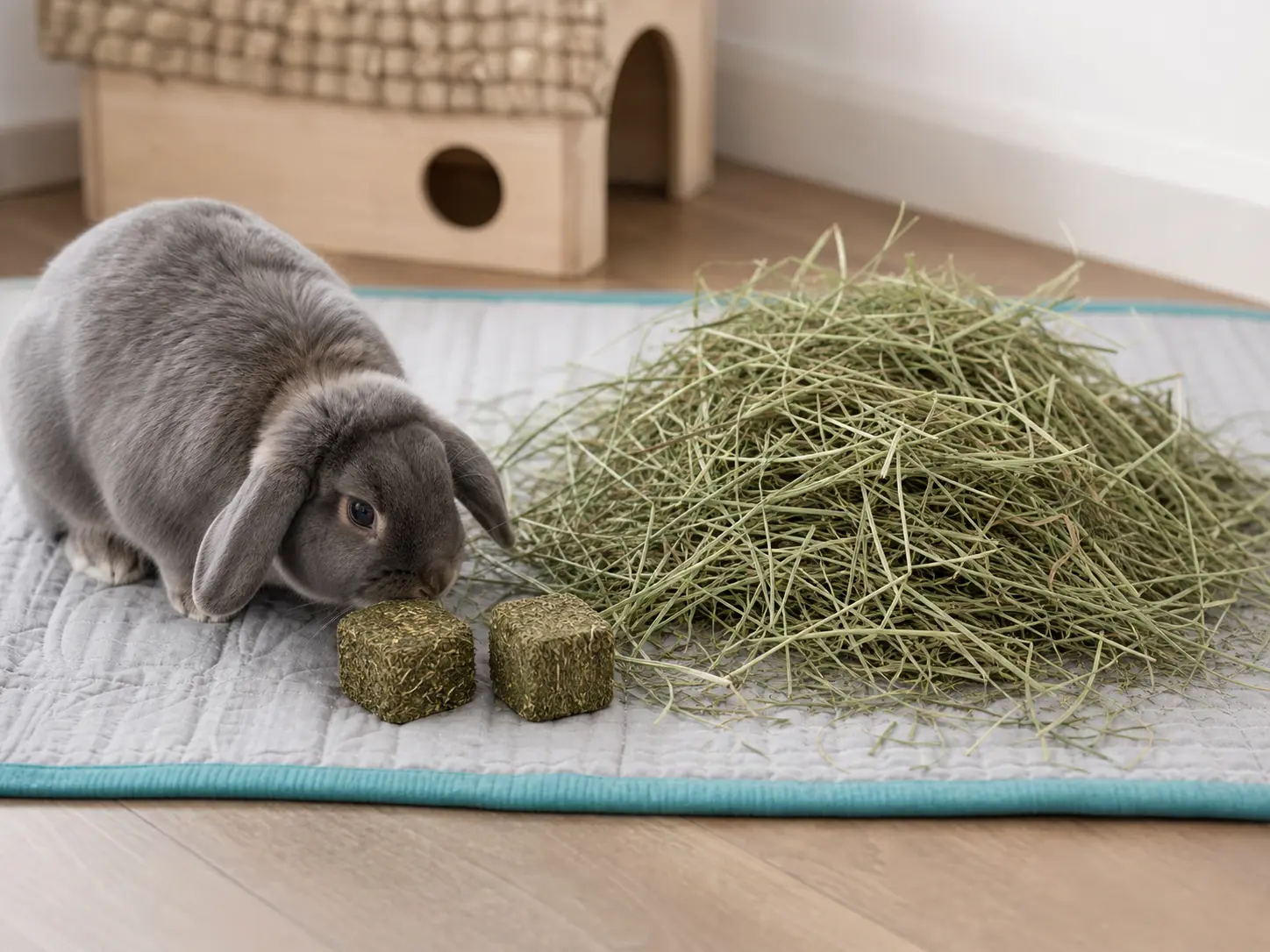
An alfalfa cube is chopped legume hay pressed into a block. Compression cannot make it equivalent to long timothy or orchard strands. In the House Rabbit Society diet guide, alfalfa carries more calories and calcium than grass hay. That is why the first question is who the cube is for—not whether the square looks small.
Growing rabbits and healthy adults have different baselines
Young rabbits still growing can have alfalfa in an age-appropriate diet. Most healthy adult pets do better with unlimited grass hay. Do not empty the old bag overnight just to hit a birthday. Match the transition to the individual rabbit and change the diet gradually. Ask the clinic when age, breed size, growth, or health makes the handoff unclear.
An adult exception needs a named goal
Pregnancy, nursing, low body condition, illness, and recovery can change nutritional needs, but the word special-case is not a feeding amount. Write down the goal—such as supporting a nursing doe or reversing documented weight loss—the quantity, and the date it will be reviewed. Unexplained weight loss or poor appetite requires diagnosis before richer food becomes the plan.
Count the alfalfa already on the shelf
Look at the loose hay and pellet labels as well as the cube bag. A rabbit may already receive alfalfa meal in pellets or alfalfa hay in the rack. Showing the clinic all three labels gives a clearer picture than discussing one cube in isolation and helps keep the final diet anchored by the right loose hay and constant clean water.
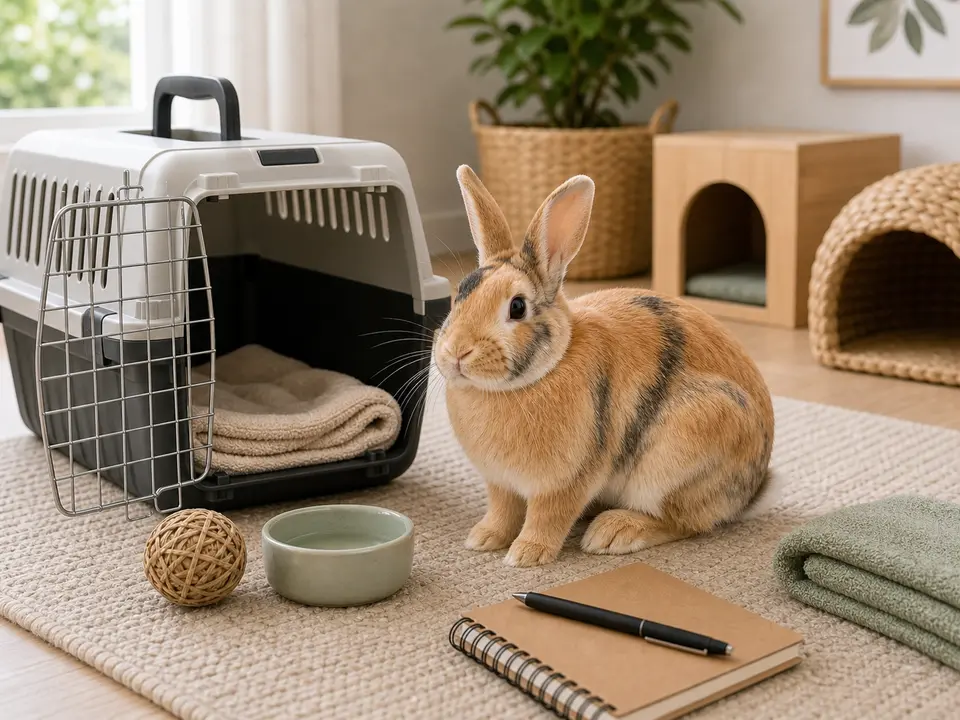
Start with one sentence in the care notebook
At the pantry table, write the rabbit's current weight, life stage, ordinary hay and pellet brands, and the exact reason alfalfa is being considered. For an adult in ordinary body condition with no clinical goal, that sentence usually points back to a plain grass-hay cube. For a growing or medically managed rabbit, it gives the clinic something specific to review.
Read the green square before the rabbit does
Find the ingredient list and look for alfalfa named plainly. At the kitchen counter, rotate one block over a cream saucer. The chopped leaves and stems should be dry and clean; a sweet molasses odor, powder cloud, damp corner, webbing, or fuzzy patch means the block goes nowhere near the rabbit room.
Measure the plan beside a full rack
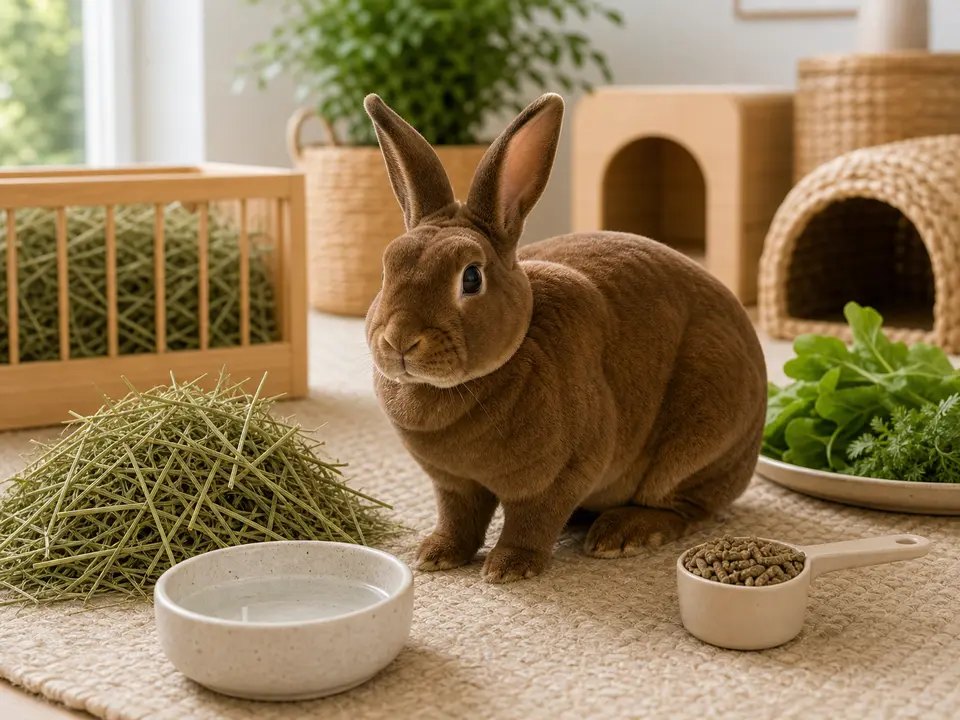
When the clinic has specified grams for an adult, use the same small scale and dish each time rather than estimating from broken corners. Set the portion near the replenished loose-hay station and sage water bowl. The young cinnamon rabbit may investigate the cube first, but long strands must remain easy to reach through the day.
Close the loop on the review date
Record whether the cube was eaten, how the loose-hay pile changed, and what appeared on the litter liner. Weigh on the agreed schedule, not every anxious hour. At the review, the trend and the original goal decide whether the cube continues, changes, or leaves the cupboard; enthusiasm for the taste does not make that decision permanent.
How to offer it
- Confirm that the product is a plain compressed alfalfa cube, not a horse treat, mixed forage block, grain-and-molasses cube, or bag of unidentified green squares.
- Read every ingredient and reject added corn, oats, seeds, fruit, honey, molasses, salt, colored pieces, flavoring, or mineral supplements that were not part of the feeding plan.
- Set one cube on a pale saucer and check every face for heavy dust, dampness, webbing, insects, a sour or musty odor, dark stains, and fuzzy growth.
- Keep the cube dry. Refresh the appropriate loose-hay station and water first, then place the measured piece where each rabbit can approach without guarding or competition.
Avoid
- Adding alfalfa cubes to the routine of a healthy adult simply because the rabbit likes them or because the package calls them natural.
- Stacking an alfalfa cube on top of unlimited alfalfa hay and alfalfa-based pellets without checking the total diet and the rabbit's life stage.
- Using a rich cube as a home treatment for unexplained weight loss, poor appetite, smaller droppings, dental discomfort, or recovery from surgery.
- Serving damp, moldy, stale, insect-damaged, sweetened, seeded, mineral-fortified, or heavily dusty blocks, or letting one absorb splashes next to the drinking crock.
Watch
- Comfortable chewing followed by normal visits to the loose-hay pile
- Weight moving in the direction and at the pace agreed with the rabbit-savvy clinic
- Ordinary drinking, urination, posture, activity, and litter-box output for this rabbit
- Reduced food or droppings, damp fur under the jaw, chewed pieces slipping from the lips, urinary straining, blood, thick persistent residue, or unusual quietness; contact the clinic promptly
Portion
For a growing rabbit already eating alfalfa, one small plain cube can be an occasional texture project beside loose hay. For an adult on a medical or reproductive feeding plan, use the amount and review date provided for that individual; do not turn another rabbit's serving or a package suggestion into a universal dose.
Make the alfalfa plan measurable—and temporary
These tools keep the plan visible: the reason for alfalfa, the measured amount, the full loose-hay rack, and the review date.
Affiliate links: Furball Cove may earn from qualifying purchases at no extra cost to you.
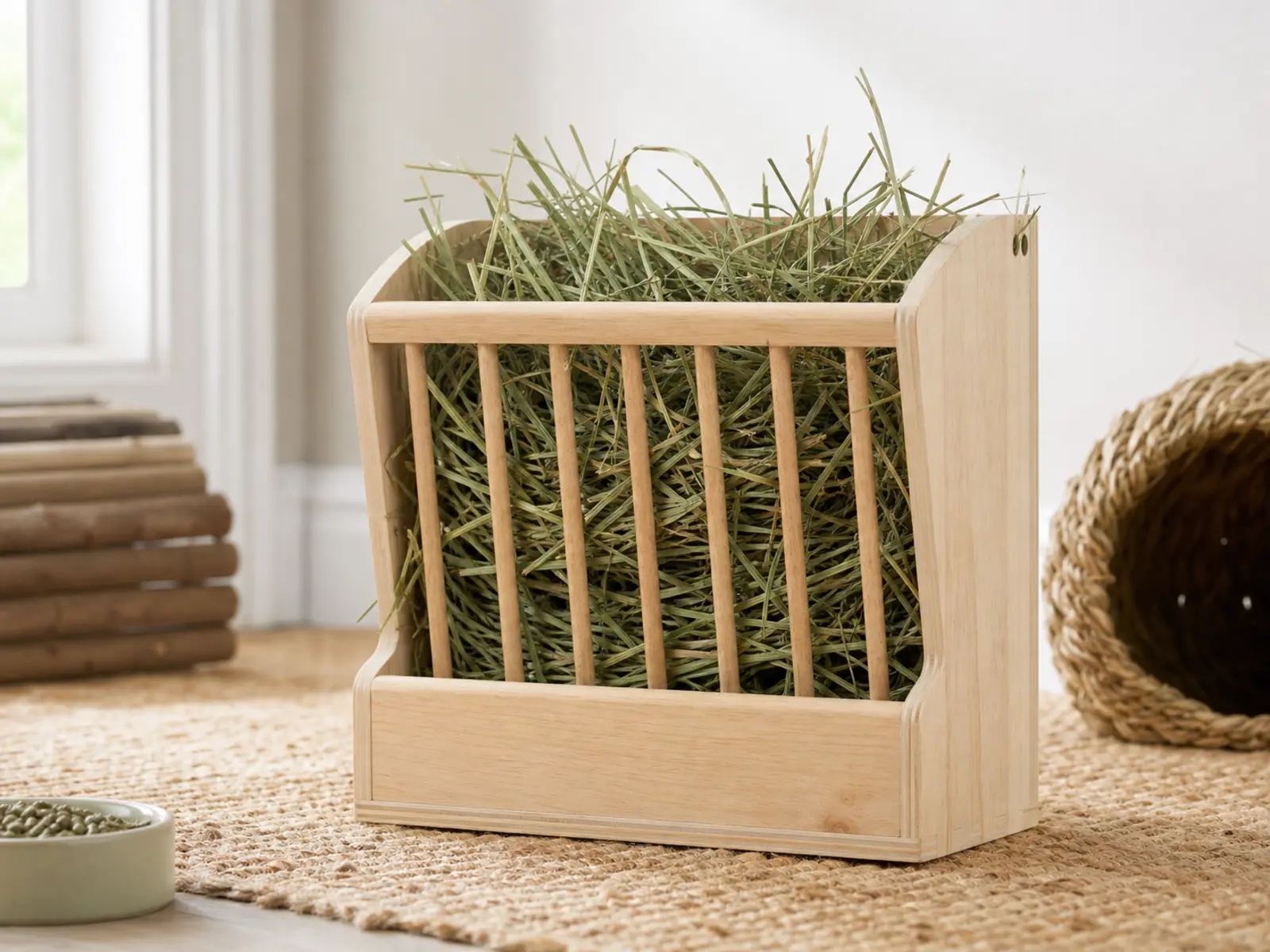
Rabbit hay feeder
Keep the appropriate loose hay abundant and easy to revisit so one rich block never becomes the whole chewing routine.
Shop rabbit hay feeder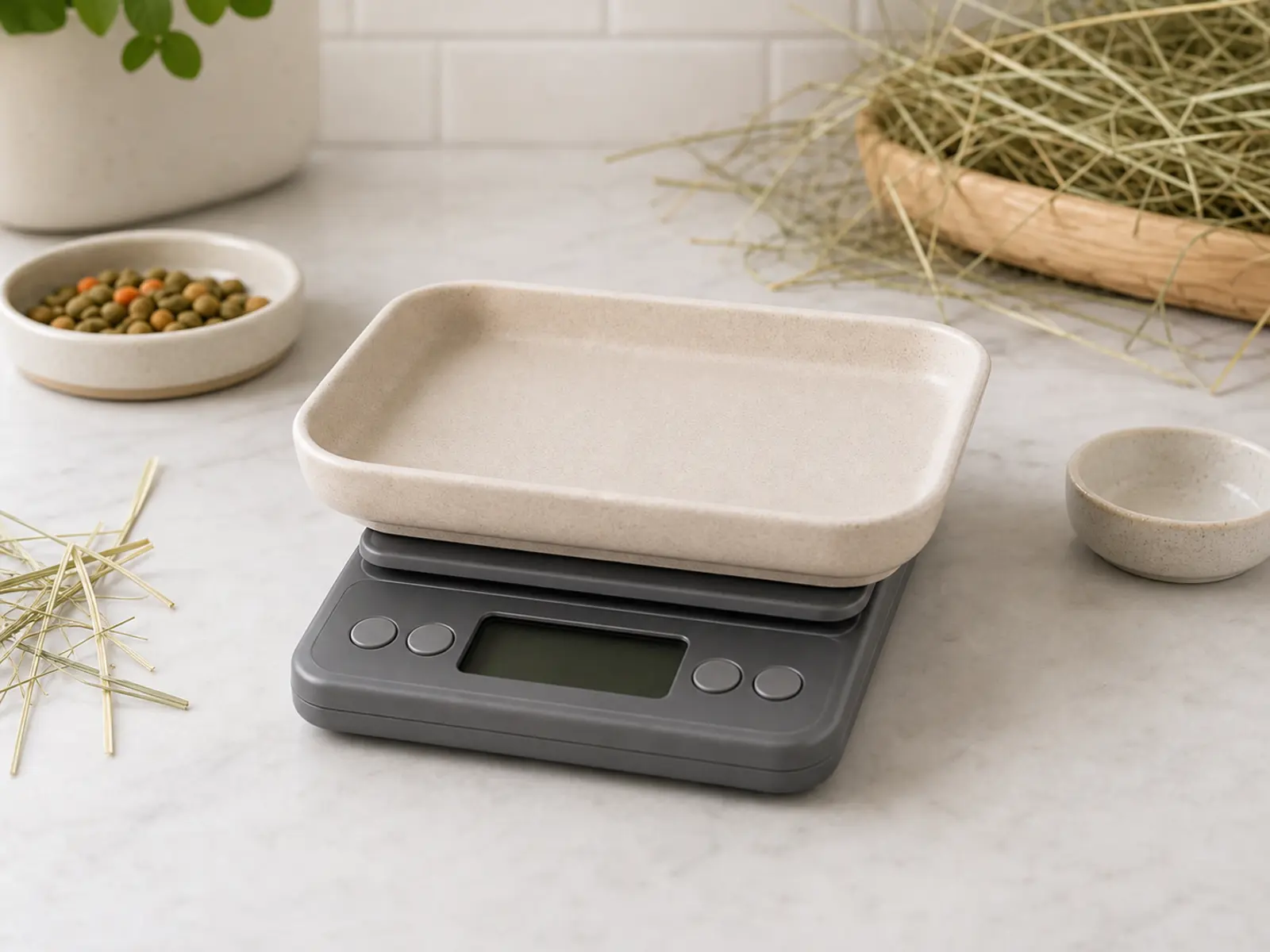
Weighing tray
Use a stable low tray for scheduled weigh-ins when body condition is the reason behind a veterinarian-directed feeding change.
Shop weighing tray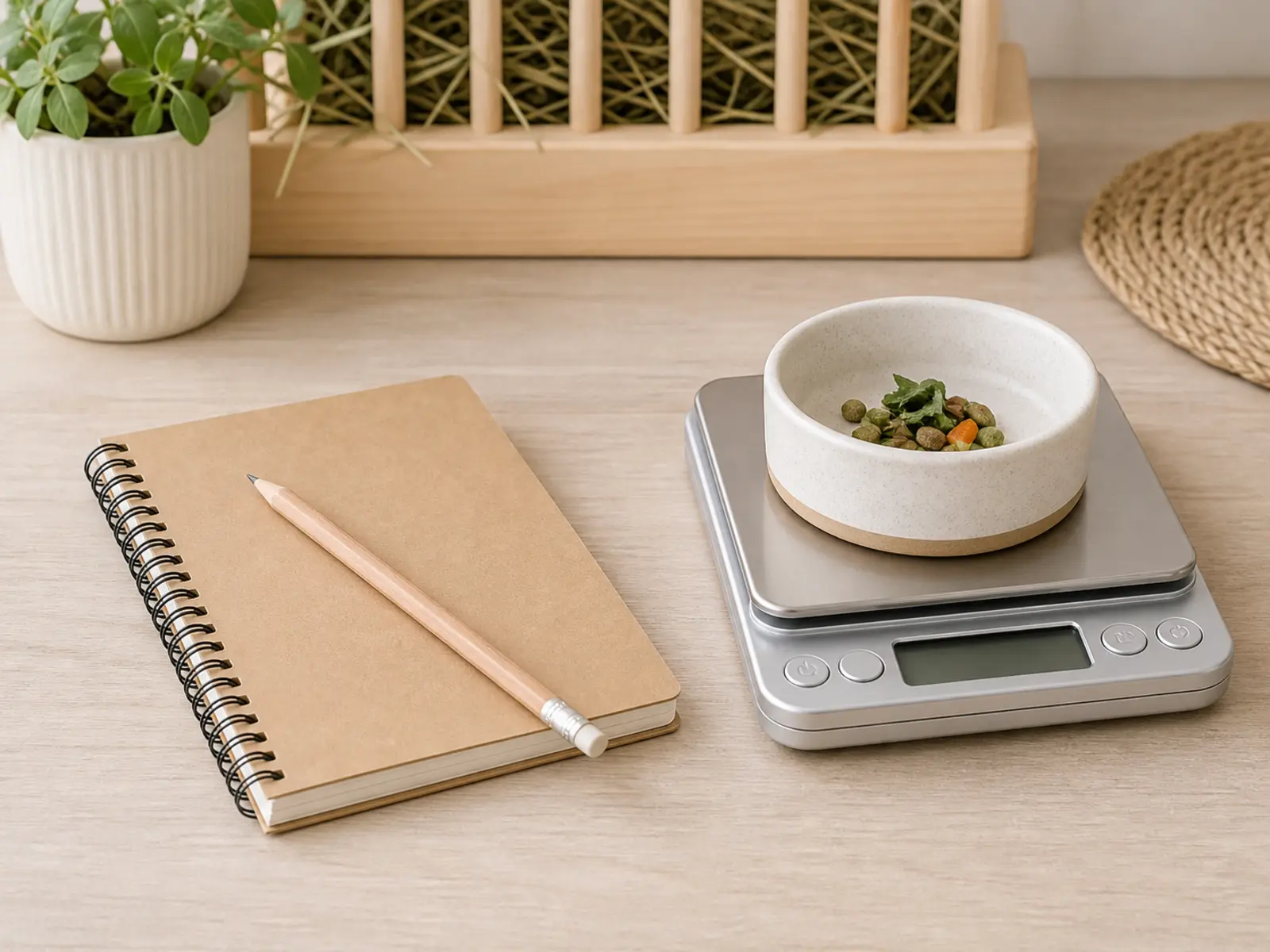
Rabbit care notebook
Record the goal, cube amount, hay intake, litter notes, weight trend, and review date on one page the clinic can actually use.
Shop rabbit care notebook