Updated
Rabbit food check
Can Rabbits Eat Basil? Yes—Serve a Plain Sprig
Yes—fresh culinary basil
Yes. Adult rabbits can eat fresh culinary basil leaves and tender stems. Confirm that the plant or package is labeled basil, wash one modest sprig, and serve it plain before the rest becomes pesto or sauce. Let basil share a varied greens plate while grass hay remains available all day.
 Basil
BasilYes—fresh culinary basil is rabbit-safe
House Rabbit Society, VCA Animal Hospitals, and the Rabbit Welfare Association all list basil as a rabbit-safe green. That answer covers fresh culinary basil such as sweet or Genovese basil. It does not turn a jar of pesto, a seasoning blend, or every basil-named product into rabbit food.
The label settles a leafy lookalike
Sweet basil usually has broad, smooth, oval leaves growing in opposite pairs on a green stem. Mint and several other relatives can look similar in a hurried kitchen glance. Keep the produce label or plant tag until the sprig is served; if the plant has no reliable name, choose a green you can identify.
Tender green stems can stay attached
A soft upper basil stem can go on the plate with its leaves. Trim away a woody flower stalk, a tough brown base, or any damaged section, then wash the sound sprig. There is no benefit in stripping every leaf from a stem the rabbit can comfortably chew.
Pesto is a different food
Pesto mixes basil with rich, salty ingredients that do not belong on a rabbit's plate. Pull the plain sprig from a clean bunch before meal prep starts. That also keeps tomato sauce, pizza toppings, restaurant garnish, and oily cutting-board scraps out of the pen.
Start with the name on the package
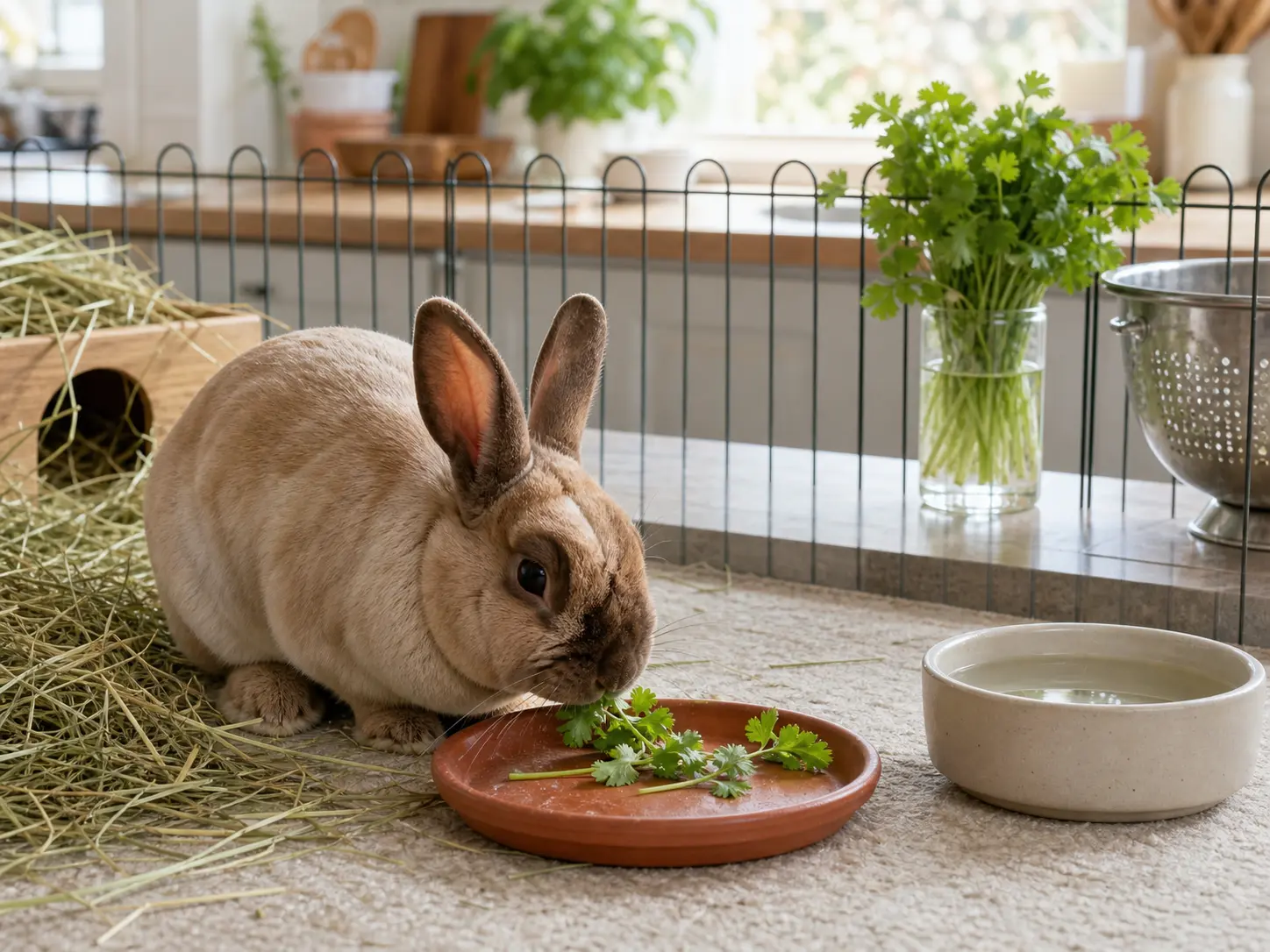
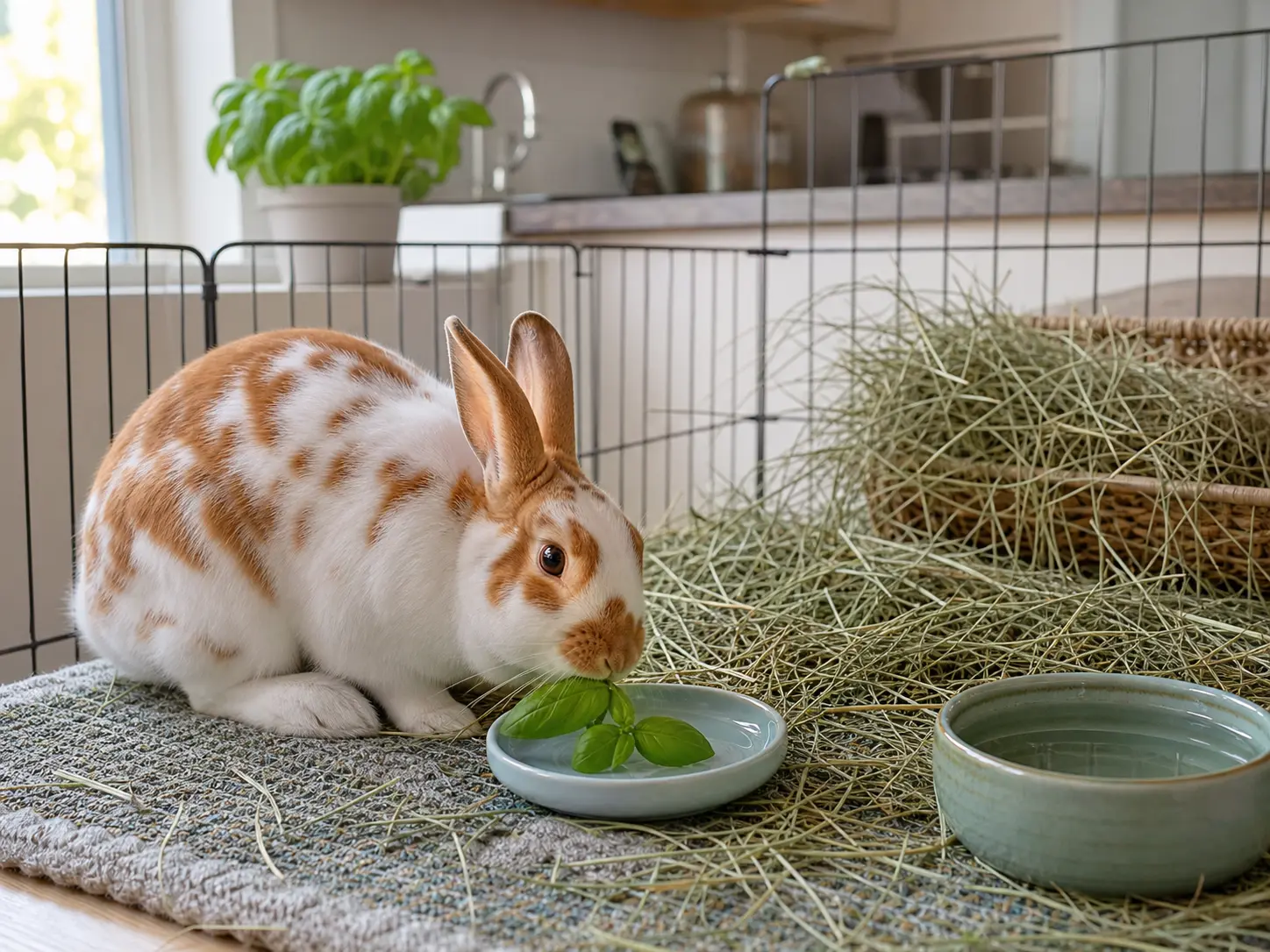
The produce sleeve says sweet basil. Broad oval leaves sit in opposite pairs along a tender green stem. While the rabbit waits beside the hay rack and water bowl, an unmarked potted leaf stays on the counter; only the labeled sprig moves to the sink.
Turn every leaf under the tap
Hold one sprig over a small colander and rinse the upper and lower leaf surfaces. Check the joints where paired leaves meet the stem. Black slime, fuzzy growth, a sour smell, and tiny insects are reasons to choose another piece, not details to hide under the saucer.
Save the plain sprig first
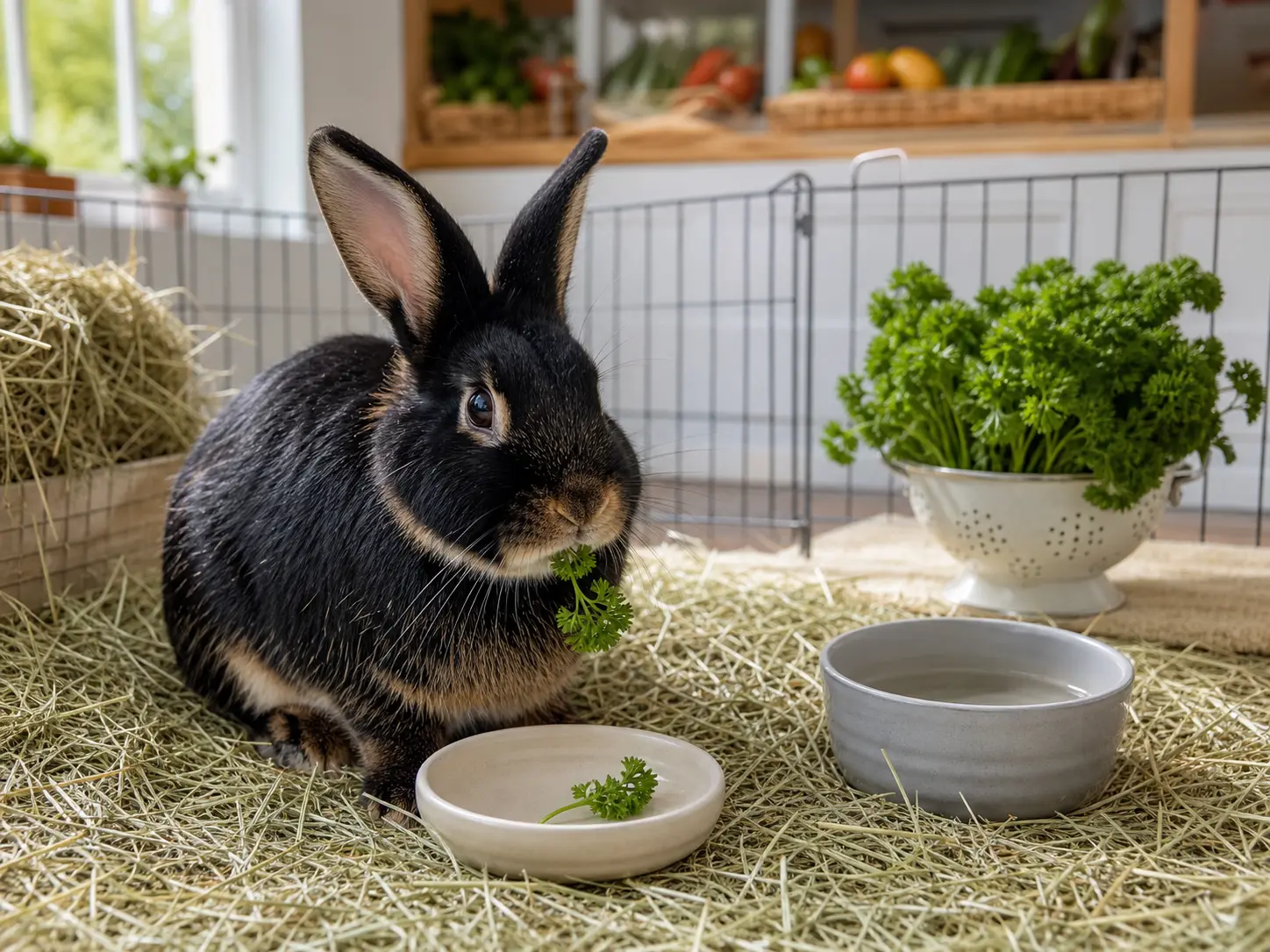
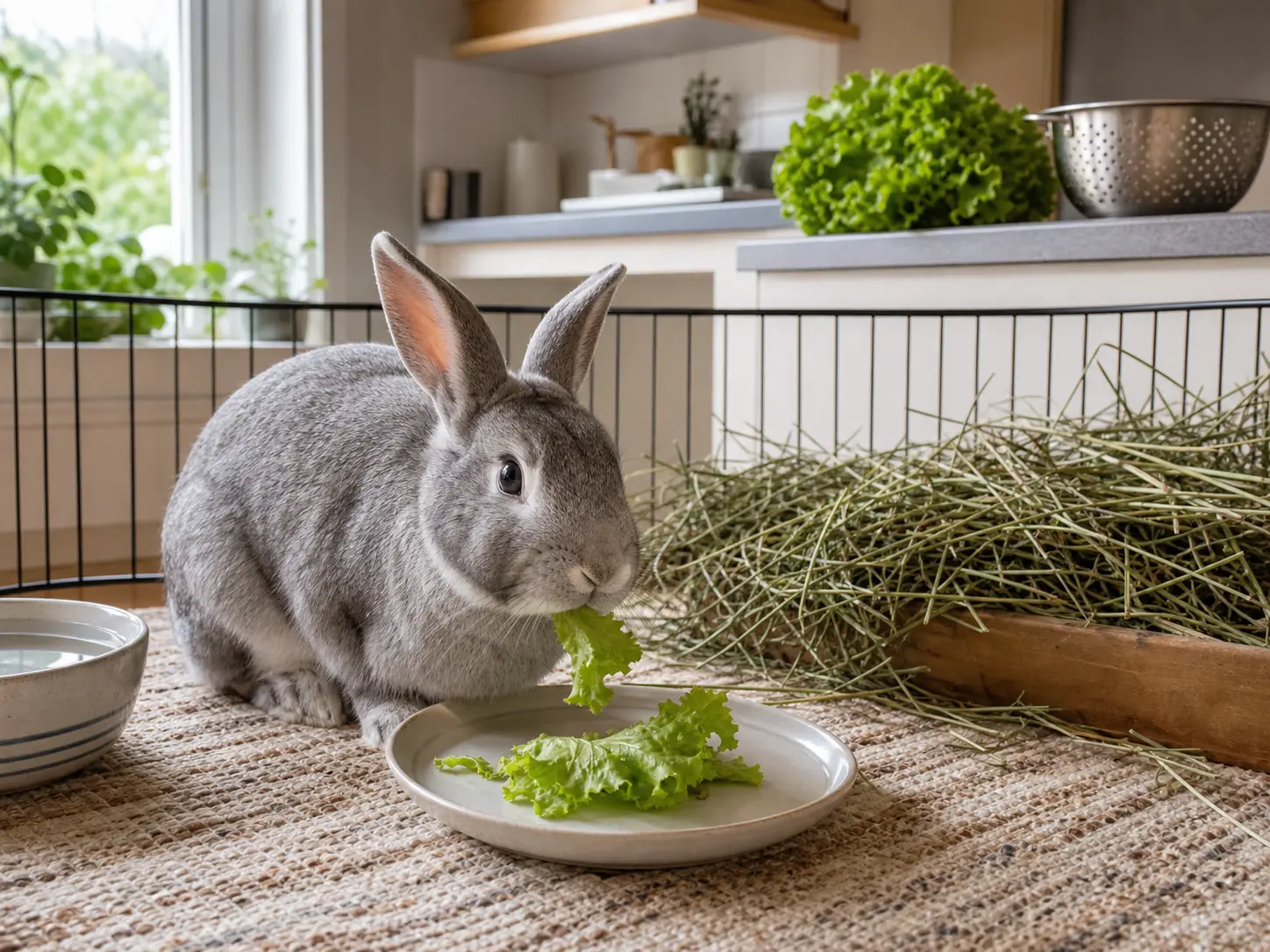
Set one or two leaves with their tender stem on the pale-blue saucer. Only then does the rest of the bunch reach the human cutting board. The orange-and-white rabbit gets fresh plain basil beside a generous timothy pile and water bowl, with no pesto ingredients nearby.
Look beyond the empty saucer
Finishing the basil shows appetite for basil. Over the next several hours, the useful signs are ordinary hay chewing, relaxed movement, and the usual round droppings. If eating or output slows, call the rabbit-savvy clinic promptly rather than offering another fragrant food.
Serve
- Confirm culinary basil from the produce package, nursery tag, or a garden plant grown from a known seed. Sweet or Genovese basil has broad smooth oval leaves in opposite pairs.
- Choose a crisp green sprig. Discard blackened or slimy leaves, fuzzy growth, sour-smelling stems, pest-damaged clumps, and any piece exposed to garden chemicals.
- Rinse both faces of the leaves and the points where paired leaves meet the stem. Shake away excess water and check once more for grit or tiny insects.
- Serve the clean leaves and tender upper stem plain. Return the rest to safe storage before oil, cheese, garlic, salt, tomato sauce, or other dinner ingredients reach the counter.
Avoid
- Pesto, pasta sauce, pizza basil, seasoned tomato dishes, restaurant garnish, or salad carrying oil, cheese, garlic, onion, salt, dressing, or other toppings.
- Basil essential oil, extracts, tinctures, capsules, concentrated supplements, and dried seasoning blends used as though they were a fresh leaf.
- An unidentified potted plant or loose leaf guessed to be basil. Mint-family plants can resemble one another, and an ordinary houseplant is not cleared by a basil-like leaf.
- A wilted, slimy, moldy, frost-damaged, blackened, pesticide-treated, or sour-smelling sprig.
Watch
- The basil sprig disappearing while the rabbit continues ordinary visits to the hay pile
- Normal posture, activity, water use, and interest in familiar food
- The rabbit's usual separate round droppings after the basil trial
- Reduced eating or droppings, soft stool, diarrhea, belly pressing, hunching, tooth grinding, weakness, or unusual quietness; remove the new food and contact a rabbit-savvy veterinarian promptly
Portion
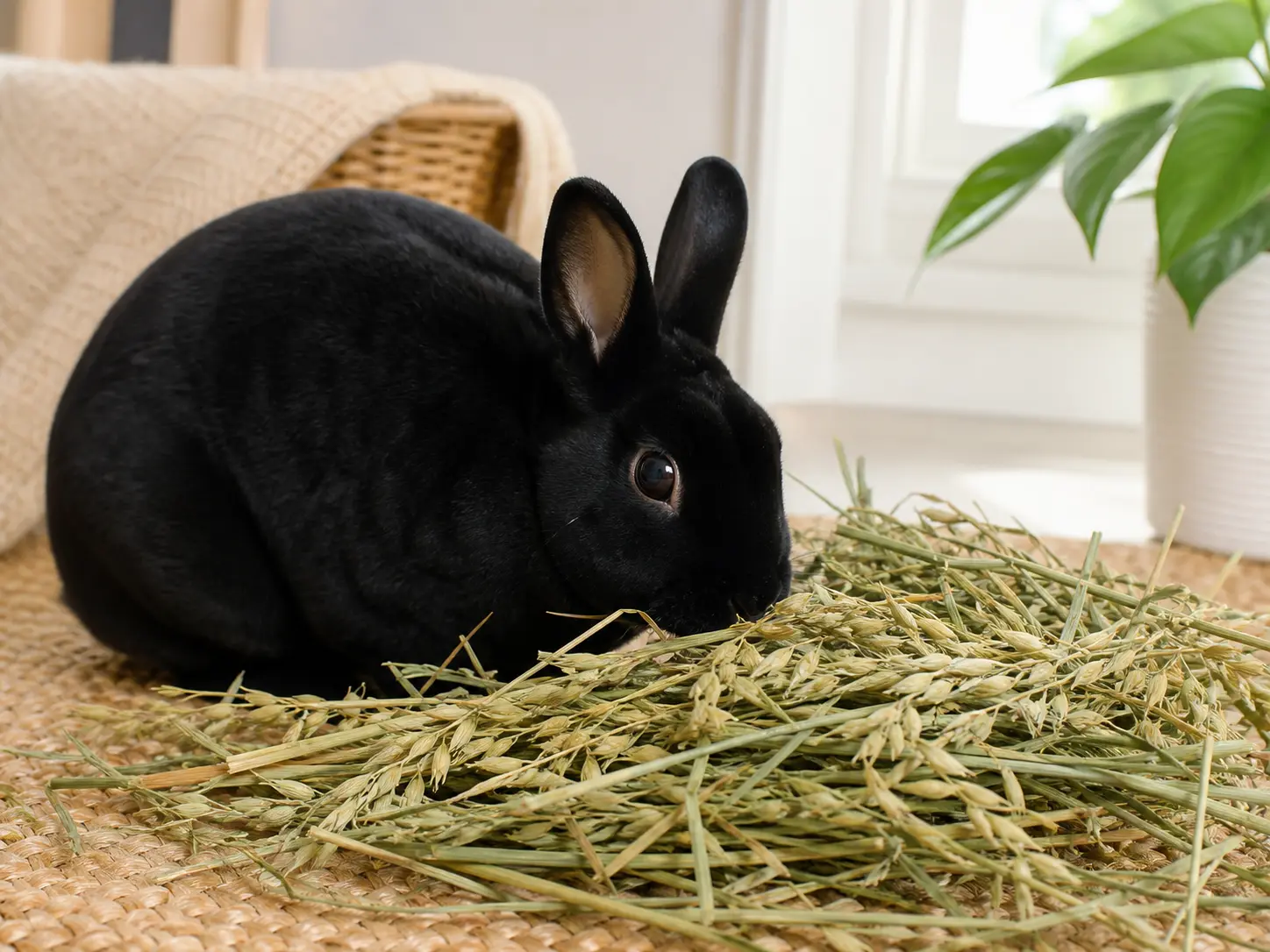
For an adult already eating leafy greens, one modest basil sprig can share the usual greens allowance. If basil is new, begin with one or two leaves and a short tender stem rather than a basil-filled bowl. A rabbit that begs for the fragrant herb still needs most of the day’s chewing to come from grass hay.
Keep the basil sprig plain from plant to plate
These produce-prep tools help preserve the basil label, expose damaged leaves, rinse one small sprig, and reserve a plain rabbit portion before pesto or sauce prep begins.
Affiliate links: Furball Cove may earn from qualifying purchases at no extra cost to you.
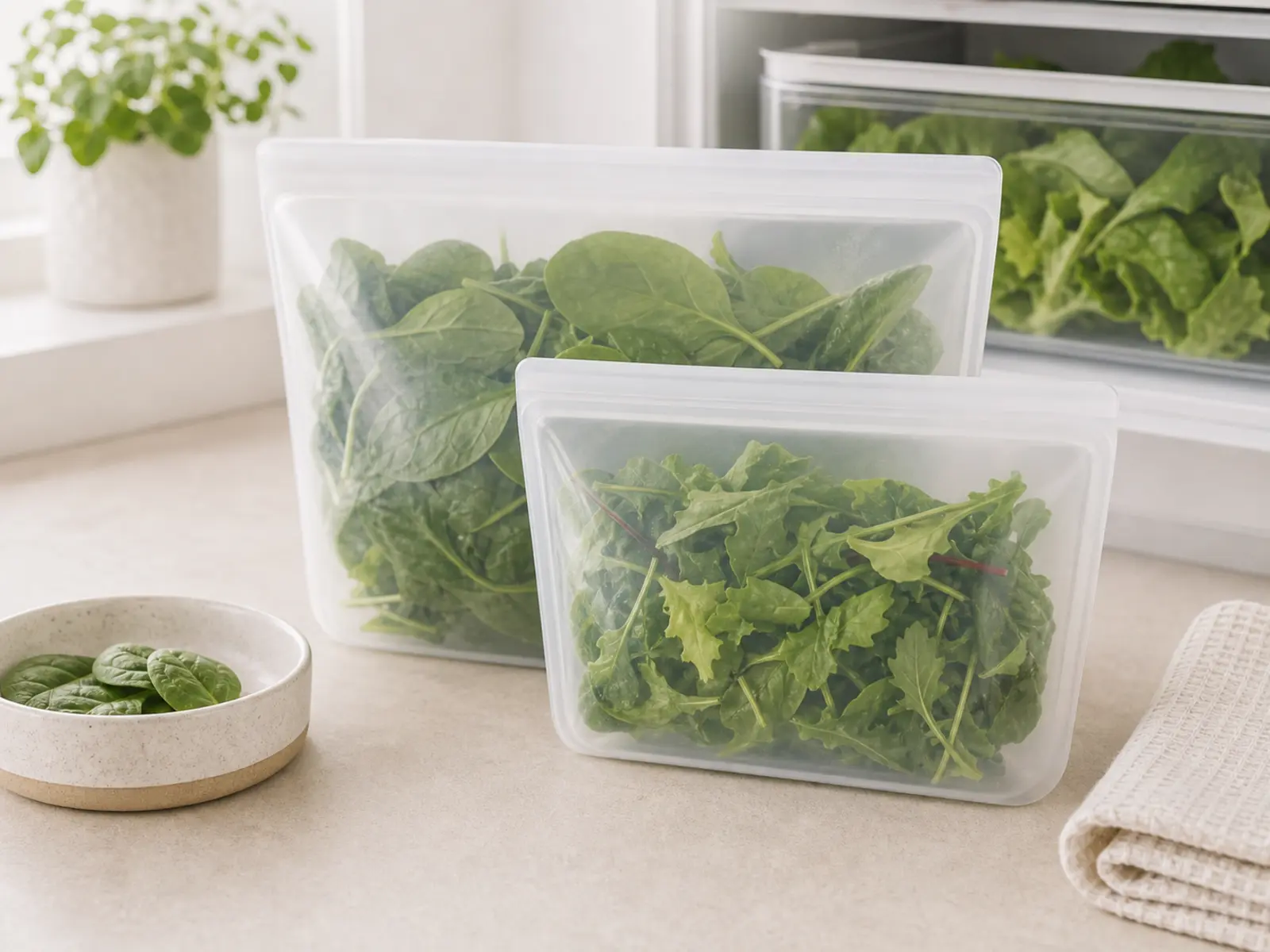
Produce storage bags
Store cut basil loosely with an absorbent liner instead of crushing its delicate leaves inside a wet sealed bundle.
Shop produce storage bags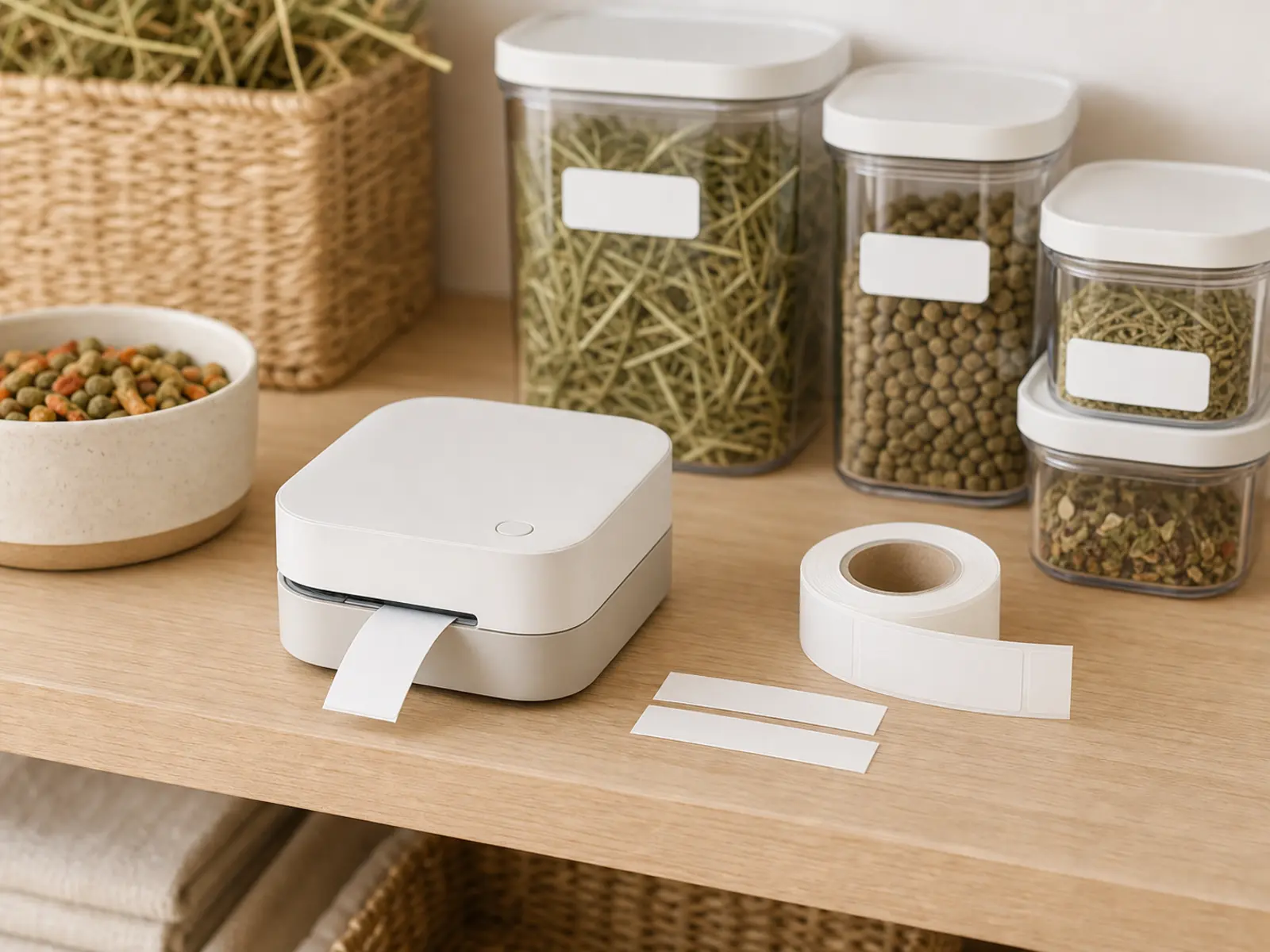
Label maker
Mark a home-grown or repackaged bunch sweet basil and add the picked or opened date while the original plant tag is still available.
Shop label maker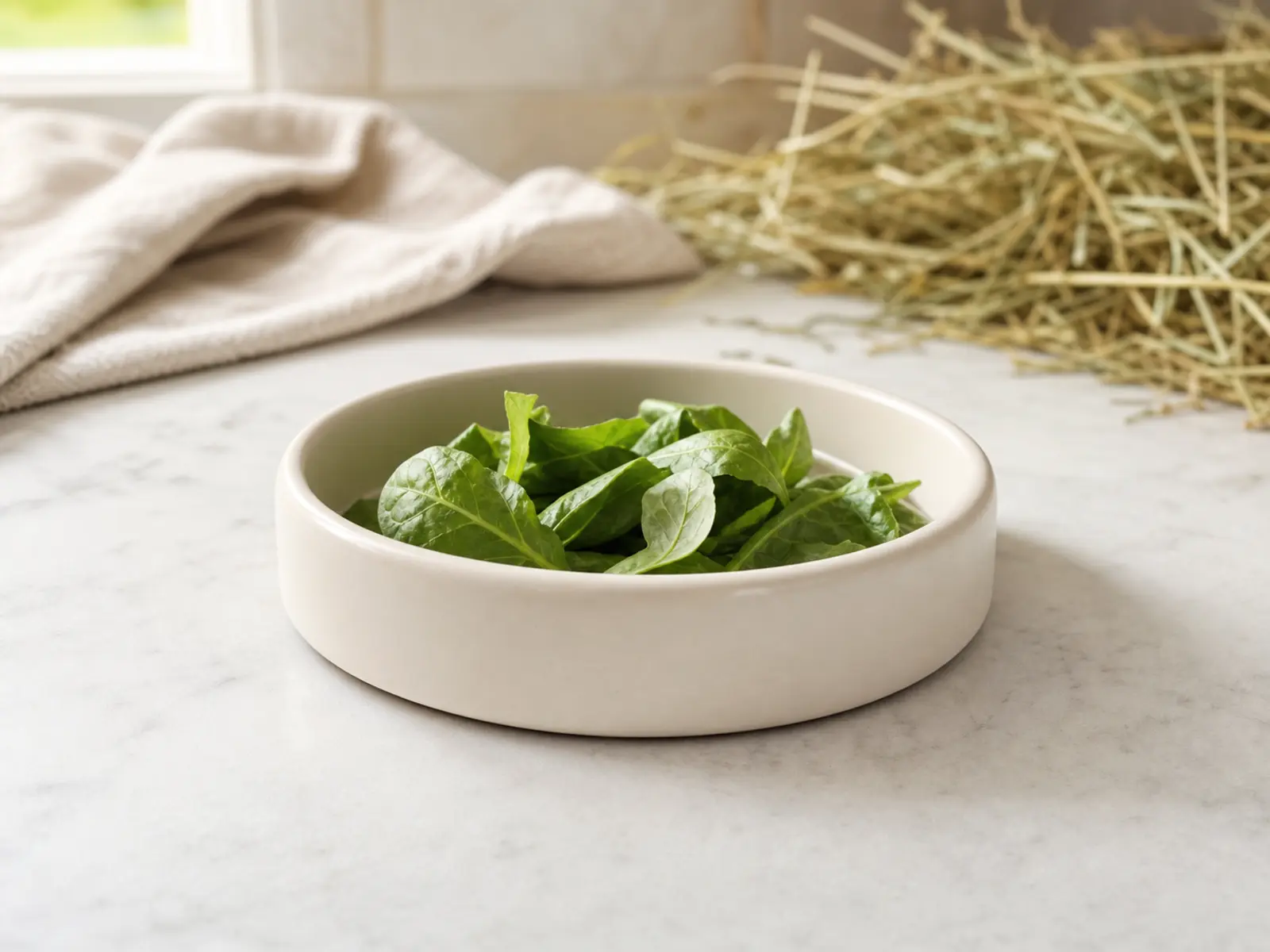
Ceramic food dish
Put one plain basil sprig on a washable saucer so it cannot be mistaken for seasoned kitchen scraps or a pellet refill.
Shop ceramic food dish