Updated
Rabbit food check
Can Rabbits Eat Oat Hay? Yes—Keep the Rack Full
Yes—good daily grass hay
Yes. Clean, dry oat hay is a grass hay and can be part of the unlimited daily hay supply for most adult rabbits. It can fill the rack on its own or be mixed with timothy, orchard, meadow, or another grass hay your rabbit already eats.
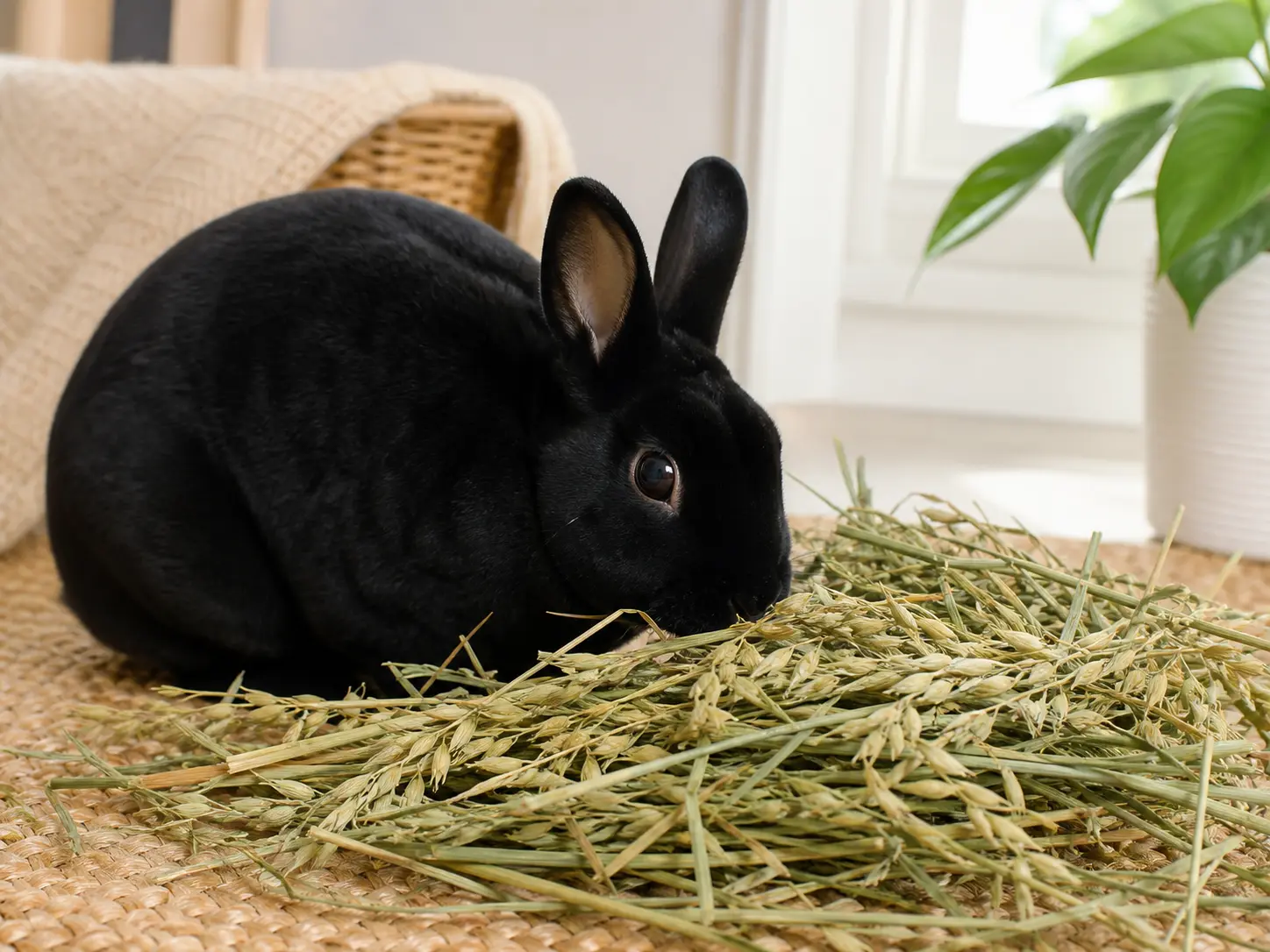 Oat Hay
Oat hay is hay, not breakfast oats
Oat hay is the dried grass plant, cut with its stems and often its seed heads still attached. Rolled oats and whole oat grain are concentrated foods with a different job. For most adult rabbits, the loose fibrous hay belongs in the all-day rack; a scoop of grain does not replace it.
Open the bag before you fill the rack
A printed harvest date cannot tell you what happened after the bag left the field. Reach into the middle, lift out a handful, and check it. Dry stems that bend or snap, loose leaves, and a clean hay smell are useful signs. Damp clumps, fuzzy growth, webbing, insects, a sour odor, or dust that hangs in the air mean the bag should not go into the rabbit area.
Seed heads belong in the bale
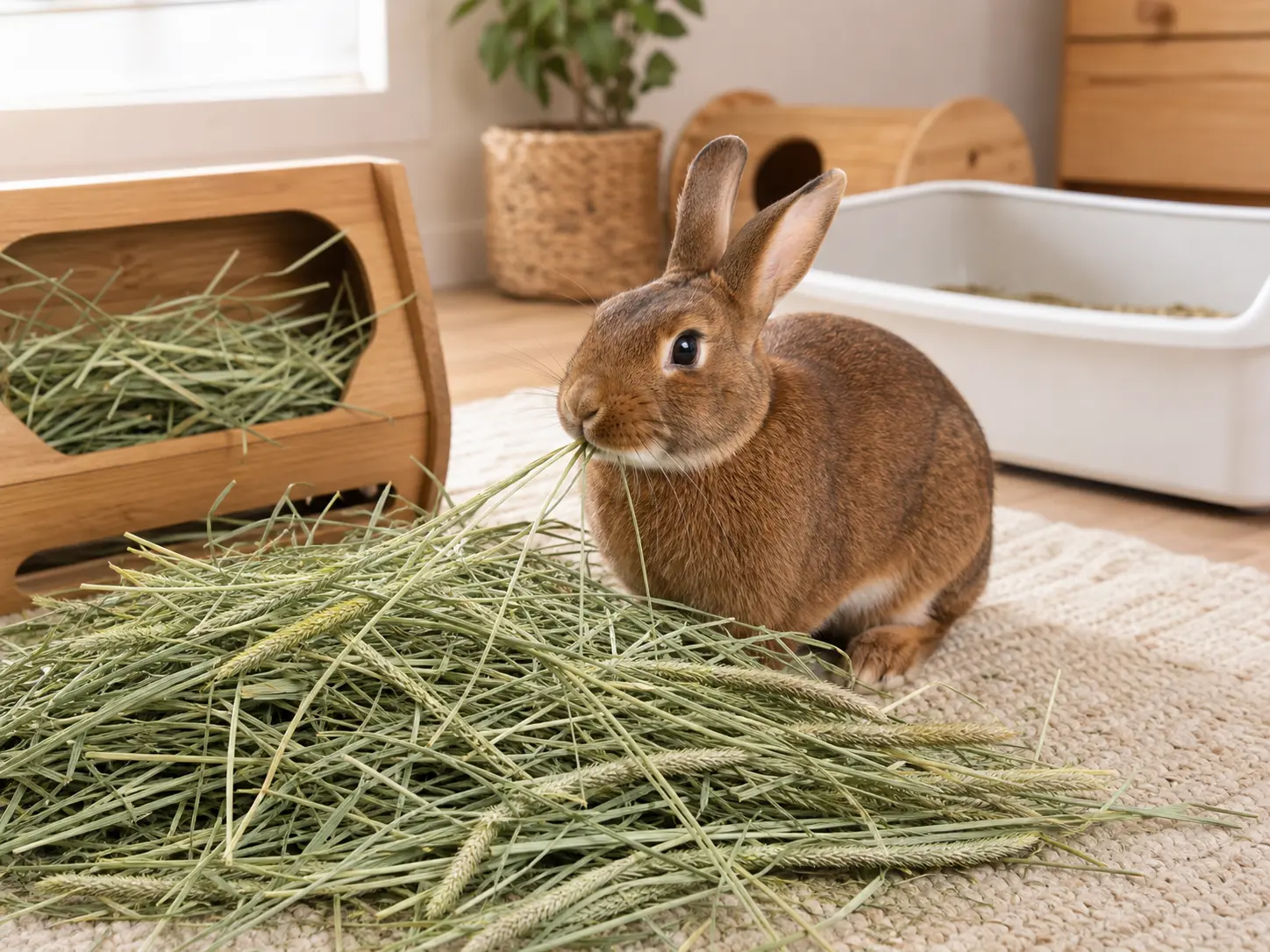
The oat heads in this hay are part of the cut plant, not cereal sprinkled over the top. Some rabbits pick them out first and then return for the stems; others eat the softer leaves before the coarse pieces. That sorting is normal. Keep offering a generous mixed handful rather than stripping out every head or rationing the hay like a treat.
An untouched rack is worth noticing
A rabbit may dislike one harvest, but a sudden change in hay eating can also point to dental pain or illness. Refresh the rack once and offer the familiar hay. If your rabbit is still eating less, producing fewer droppings, dropping food, sitting hunched, or acting unusually quiet, call a rabbit-savvy veterinarian instead of starting a tour of new hay brands.
Pull apart the first handful
Open the bag somewhere bright and lift hay from below the tidy top layer. Shake it gently over a clean floor or large tray. A few crumbs are ordinary; a drifting dust cloud, damp knot, sour smell, webbing, or fuzzy patch is a reason to stop and check the rest of the bag.
Give a new hay one side of the rack
Put the oat hay beside the timothy, orchard, meadow, or other grass hay your rabbit already knows. Do not bury the familiar strands. A side-by-side pile lets the rabbit investigate the new smell without waking up to an entirely different feeder.
Keep the best spot full
Many rabbits settle in to eat hay while they use the litter box. Place the rack or a loose pile where the rabbit already likes to graze, keep it clear of urine and wet litter, and top it up before the center is bare. Plain water should remain within easy reach.
Clear yesterday's leftovers
The next day, remove soiled hay and the stale bottom layer instead of burying it. Notice which stems disappeared, then add a loose fresh handful. If both the oat hay and the familiar hay remain untouched, check the rabbit rather than blaming the bag immediately.
Serve
- Read the bag and confirm that it says oat hay. Whole oats, rolled oats, breakfast cereal, pellets, cubes, and oat straw are different products.
- Pull apart a handful in good light. Stems, leaves, and seed heads are normal; damp clumps, fuzzy patches, webbing, insects, or a heavy cloud of dust are not.
- Smell the hay before it reaches the feeder. Use it only when it smells dry and grassy, never sour, moldy, smoky, perfumed, or strongly musty.
- Store the open supply dry, ventilated, and off the floor. Refill with loose handfuls instead of pressing hay so tightly into the rack that the rabbit cannot pull out a stem.
Avoid
- Treating oat hay like a measured treat. It is an everyday grass hay, not one special seed head after dinner.
- Confusing oat hay with a bowl of oats, granola, cereal, or a sweetened small-animal mix.
- Hiding a damp, stale bottom layer beneath fresh hay or using a bag that smells musty and throws dust into the air.
- Buying one new variety after another to explain a sudden refusal to chew. A rabbit who abruptly stops eating hay needs a rabbit-savvy veterinary check.
Watch
- Long stems disappearing from the rack during several visits across the day
- Comfortable side-to-side chewing without food falling from the mouth
- The usual supply of separate round droppings in the litter box
- Eating less, fewer or smaller droppings, a wet chin, food dropping from the mouth, a hunched pose, tooth grinding, weakness, or unusual quietness; call a rabbit-savvy veterinarian promptly
Portion
Do not measure oat hay into a snack-size serving. Most adult rabbits should have unlimited grass hay, so the rack should never run out. If this is a new variety, start by mixing a handful into the hay your rabbit already eats rather than replacing the whole pile at once.
Build an oat-hay station that stays fresh
These practical hay-station pieces help keep a large supply dry, put loose stems at rabbit height, contain the inevitable scatter, and leave water and litter easy to inspect.
Affiliate links: Furball Cove may earn from qualifying purchases at no extra cost to you.
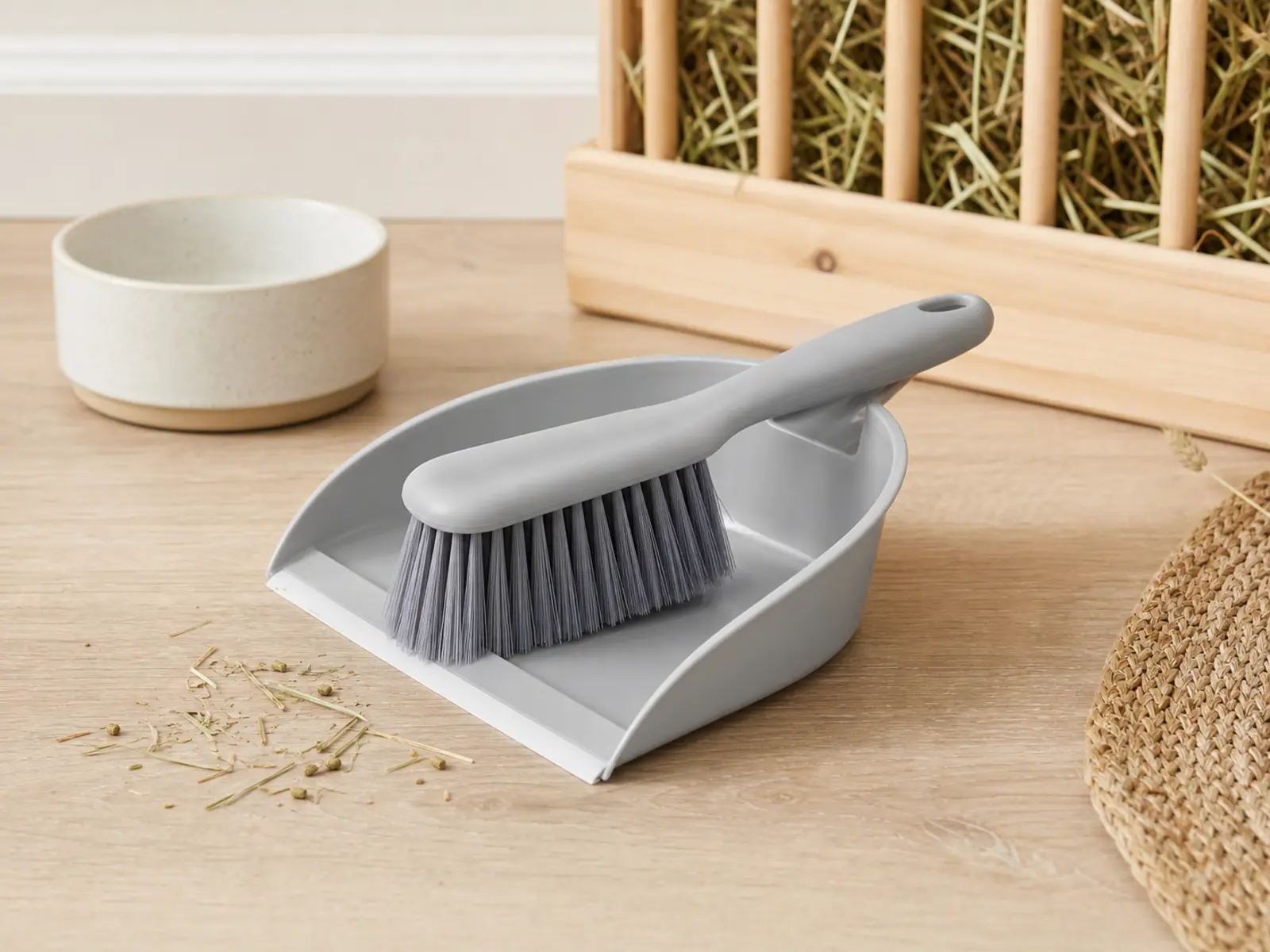
Small dustpan and brush
Sweep up seed heads and brittle stems around the rack without turning a normal hay mess into a reason to offer less hay.
Shop small dustpan and brush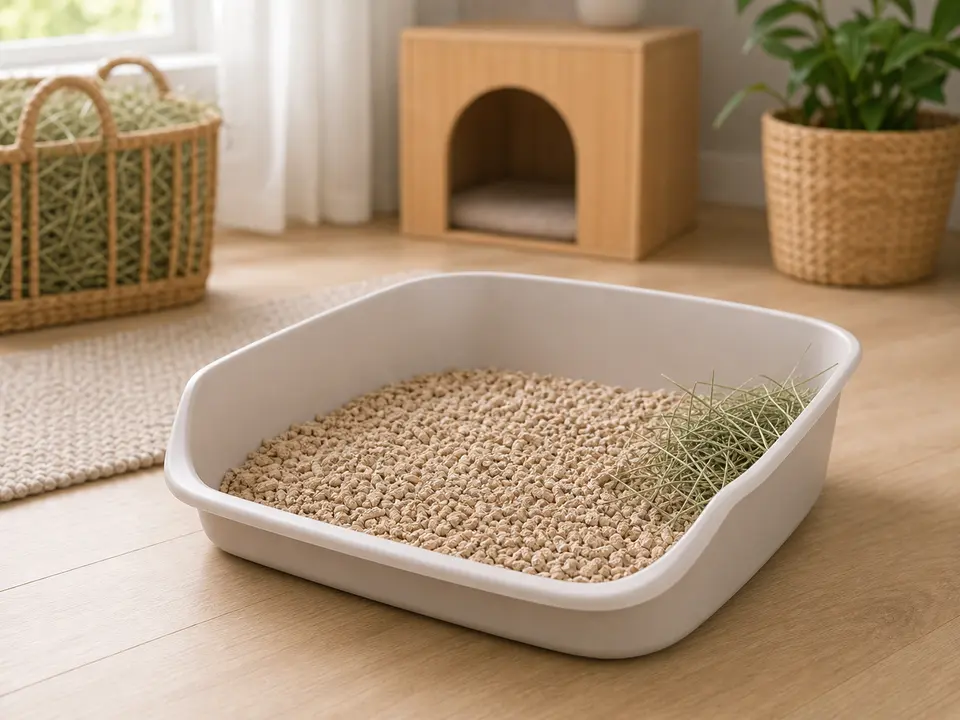
Roomy litter box
Give the rabbit room to sit and graze beside the hay without forcing clean stems into a wet corner.
Shop roomy litter box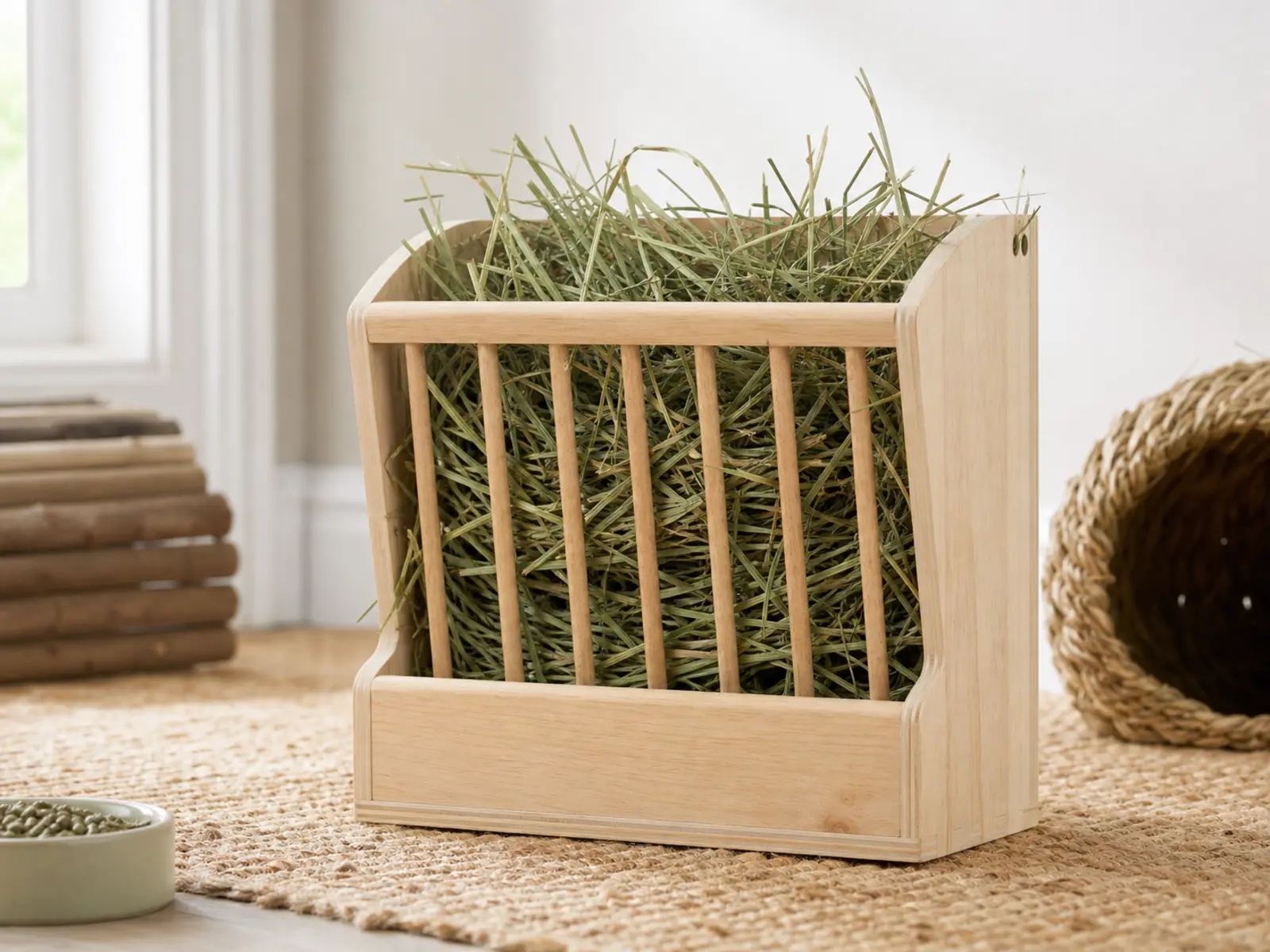
Rabbit hay feeder
Hold a generous loose pile where long oat stems stay easy to pull instead of packing them into a tight decorative bundle.
Shop rabbit hay feeder