Updated
Rabbit food check
Can Rabbits Eat Beans? No—But Green Beans Are Different
No—skip beans and bean dishes
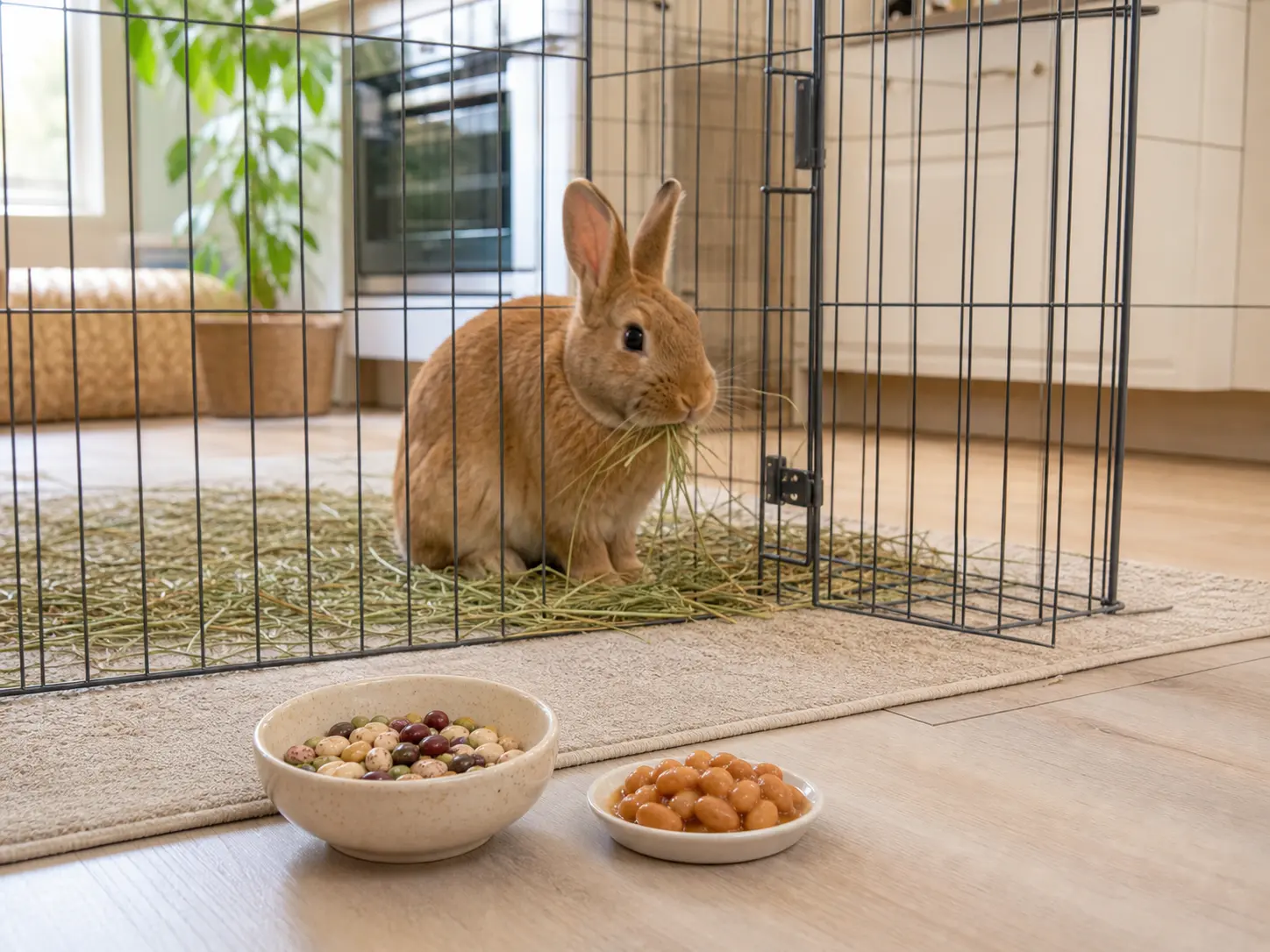
No—skip dried, cooked, and canned beans. Kidney, black, pinto, navy, lima, soy, and similar beans are legumes, not rabbit greens. Fresh green-bean pods are a different food; use the green-beans guide if that is what you have.
 Beans
BeansWhen to call your vet
Call a rabbit-savvy veterinarian promptly if raw beans, garlic, or onion were eaten; a large or unknown amount is gone; or you cannot identify the finished dish. Eating less, fewer droppings, a hunched pose, belly pressing, tooth grinding, weakness, or unusual quietness also warrant a call. Keep the package or recipe nearby.
Which beans are we talking about?
This answer covers the beans people dry, soak, cook, or buy in cans: kidney, black, pinto, navy, lima, soy, and similar legumes. House Rabbit Society guidance says not to feed legumes. They do not belong beside the hay and leafy greens in a rabbit's everyday diet.
Green beans get their own answer
A fresh green bean is the whole crisp pod, not a cooked kidney bean with a similar name. House Rabbit Society's vegetable guide lists green beans among rabbit-safe non-leafy vegetables. If that is the food in your hand, use our green-beans guide for a small first portion and a slow introduction.
Raw beans deserve extra caution
House Rabbit Society's vegetable guide specifically places many raw common beans on its avoid list because of their lectins. Soaking and cooking change those compounds, but they do not turn a cooked bean into useful rabbit food. Keep both the dry bag and the cooked pot out of reach.
A bean dish is more than the beans
Chili, baked beans, refried beans, soup, dip, and restaurant bowls can add garlic, onion, salt, oil, sugar, sauce, or spice. Check the actual label or recipe. If garlic or onion was eaten, or you cannot identify the dish, phone a rabbit-savvy veterinarian promptly.
Keep the pot above rabbit height
Set the can, drained beans, hot pan, and serving bowl on a full-height counter while the pen is closed. Once dinner is served, put leftovers in a sealed container instead of leaving the pot on a low table or the floor.
Catch the pieces that roll
Dry beans travel under cabinets; cooked beans cling to spoons and drop beside the bin. Sweep the prep area, check beneath the table, and wipe up sauce before your rabbit starts another kitchen patrol.
Make the two meals obvious
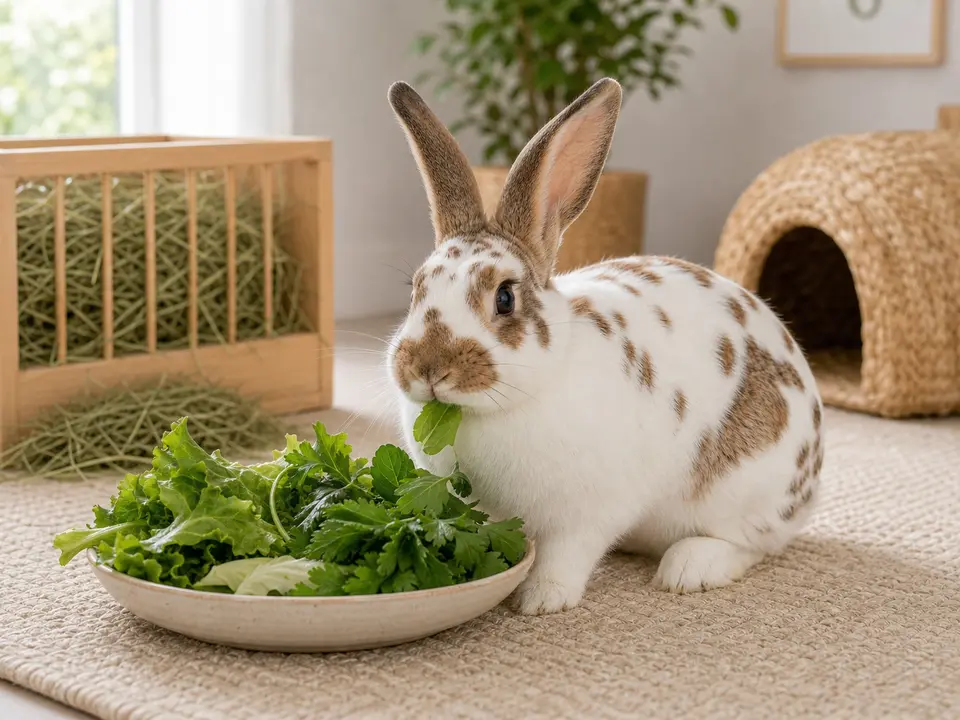
Refill the hay rack and wash the rabbit's familiar greens before people sit down. The rabbit plate goes beside the pen. Bean dishes, serving spoons, and seasoned toppings stay together on the people side of the kitchen.
If one disappears, grab the label
See whether a dry bean, one plain cooked bean, or a spoonful from a finished dish is missing. Keep the package or recipe and note the time. Then look for actual hay chewing and fresh round droppings; a slowdown, painful posture, or unusual quietness warrants a call to the clinic.
How to handle it
- Move the pan, bowl, open can, cooking liquid, and serving spoon away before the pen opens.
- If food is missing, identify the bean and the dish: dry kidney beans, plain cooked black beans, baked beans, chili, refried beans, and bean salad are not the same exposure.
- Read the label or recipe for garlic, onion, salt, oil, sugar, sauce, chili, and seasoning. Call your veterinarian promptly if garlic or onion was eaten.
- Sweep up dry beans and wipe away sauce or cooking liquid before your rabbit returns to the room.
Avoid
- Raw or dry kidney, black, pinto, navy, lima, soy, and similar beans.
- Cooked, canned, baked, refried, or seasoned beans offered as a rabbit snack or protein food.
- Treating a shelled or cooked bean as though it were a fresh whole green-bean pod.
- Offering fruit repeatedly to test appetite after a stolen bite; watch hay eating and fresh droppings instead.
Watch
- The usual steady visits to the hay rack
- Normal interest when the next familiar meal arrives
- The usual number and size of round droppings
- Eating less, fewer droppings, diarrhea, belly pressing, a hunched pose, tooth grinding, weakness, or unusual quietness; call a rabbit-savvy veterinarian promptly
Portion
Do not plan a serving of kidney, black, pinto, navy, lima, soy, or similar beans. If one small cooked bean was stolen, clear the rest and watch the hay rack and litter box. Call your veterinarian if the food was raw, dry, heavily seasoned, part of a mixed dish, or followed by any change in appetite, droppings, posture, or energy.
Keep bean spills off the rabbit floor
These kitchen basics help catch rolling beans, contain leftovers and scraps, clean sauce from the floor, and keep the hay rack full while people eat.
Affiliate links: Furball Cove may earn from qualifying purchases at no extra cost to you.
Pet-safe cleaner
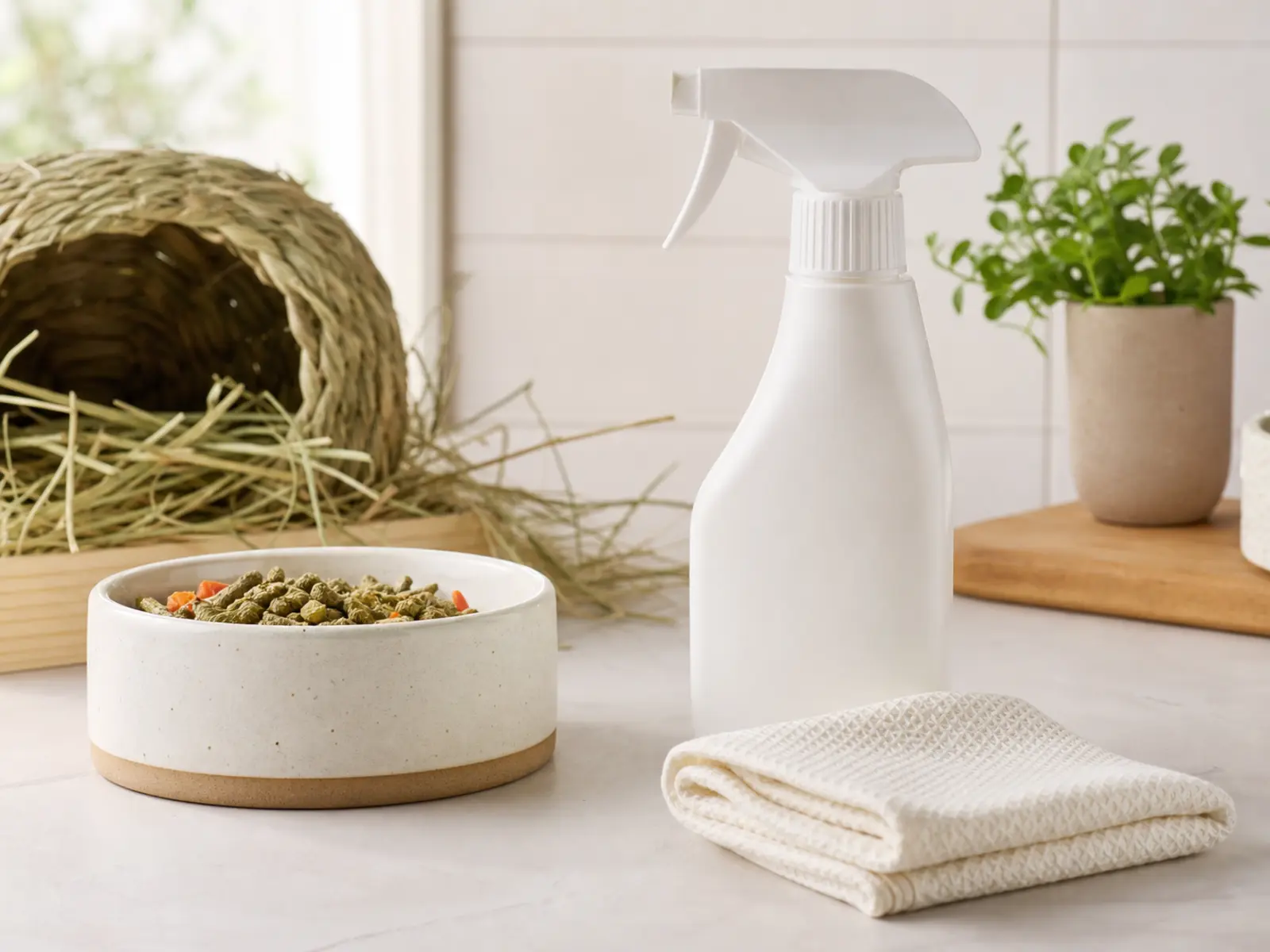
Use an unscented cleaner on a sticky or oily floor spot, then let the area dry before floor time resumes.
Shop pet-safe cleaner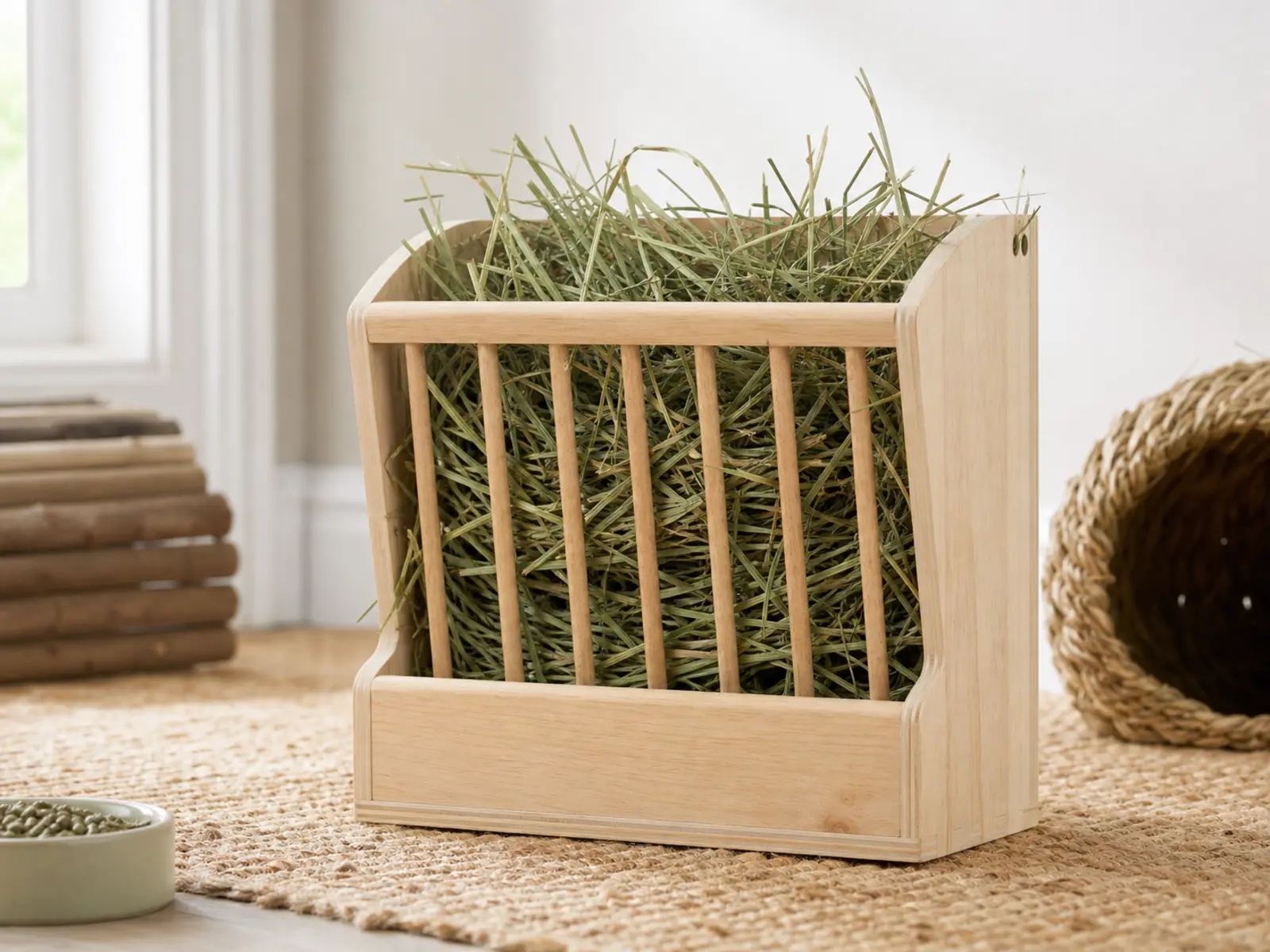
Rabbit hay feeder
Fill the hay feeder before dinner so your rabbit has the right food to work on while the bean dish stays on the counter.
Shop rabbit hay feeder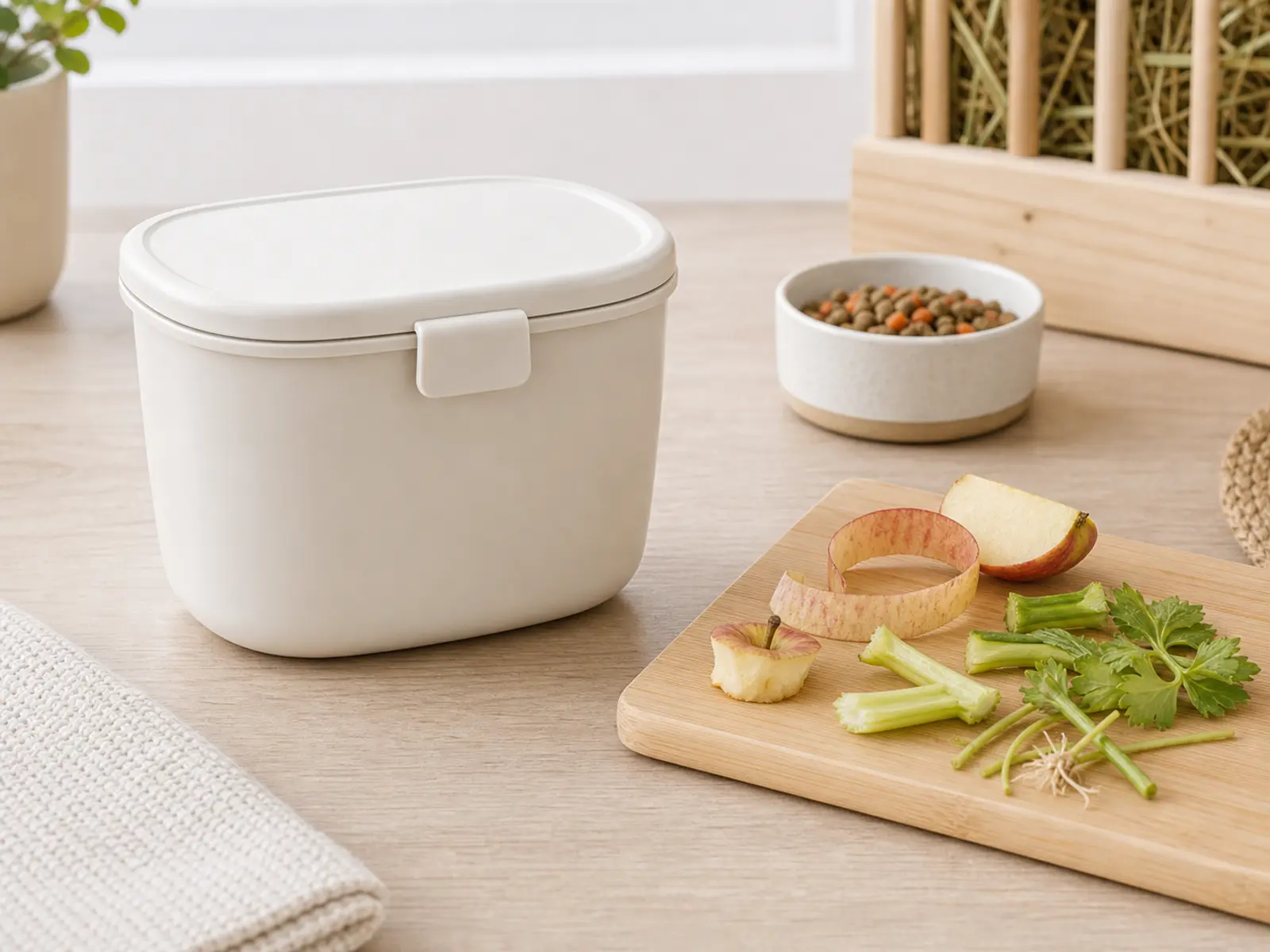
Lidded scrap bin
A covered bin keeps empty cans, sauce-covered paper, bean trimmings, and dinner scraps away from a rabbit checking the floor.
Shop lidded scrap bin