What Should Rabbits Eat Every Day? Hay, Water, Greens & Pellets
Fresh grass hay should stay within reach all day, every day, with clean water beside the feeding area. Add the leafy greens your rabbit already handles well and a measured pellet serving when appropriate; keep fruit and rich treats rare and tiny.
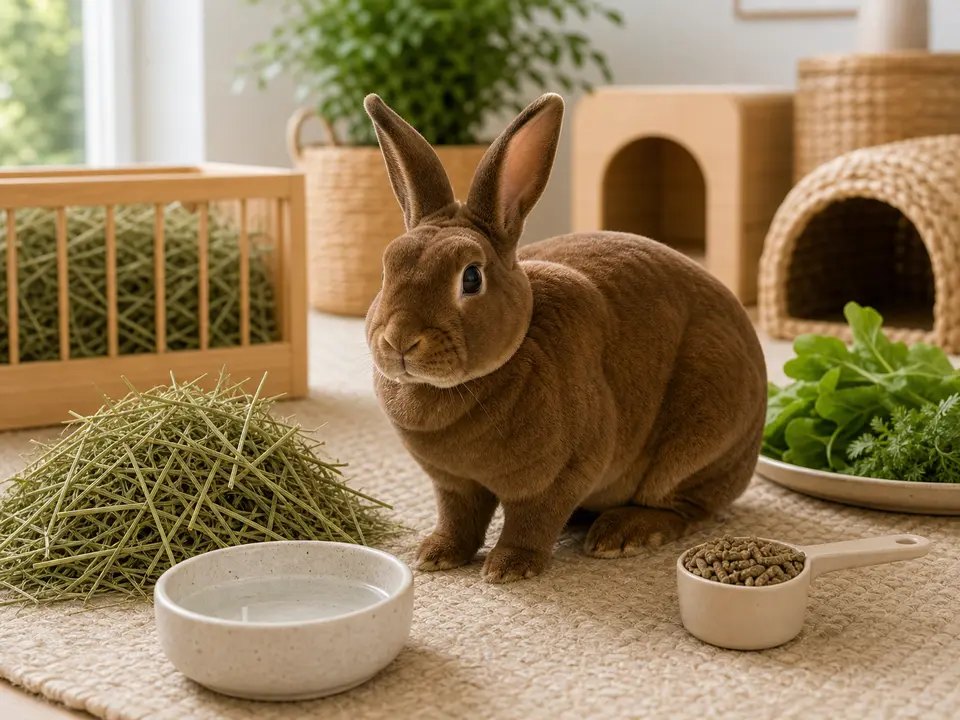
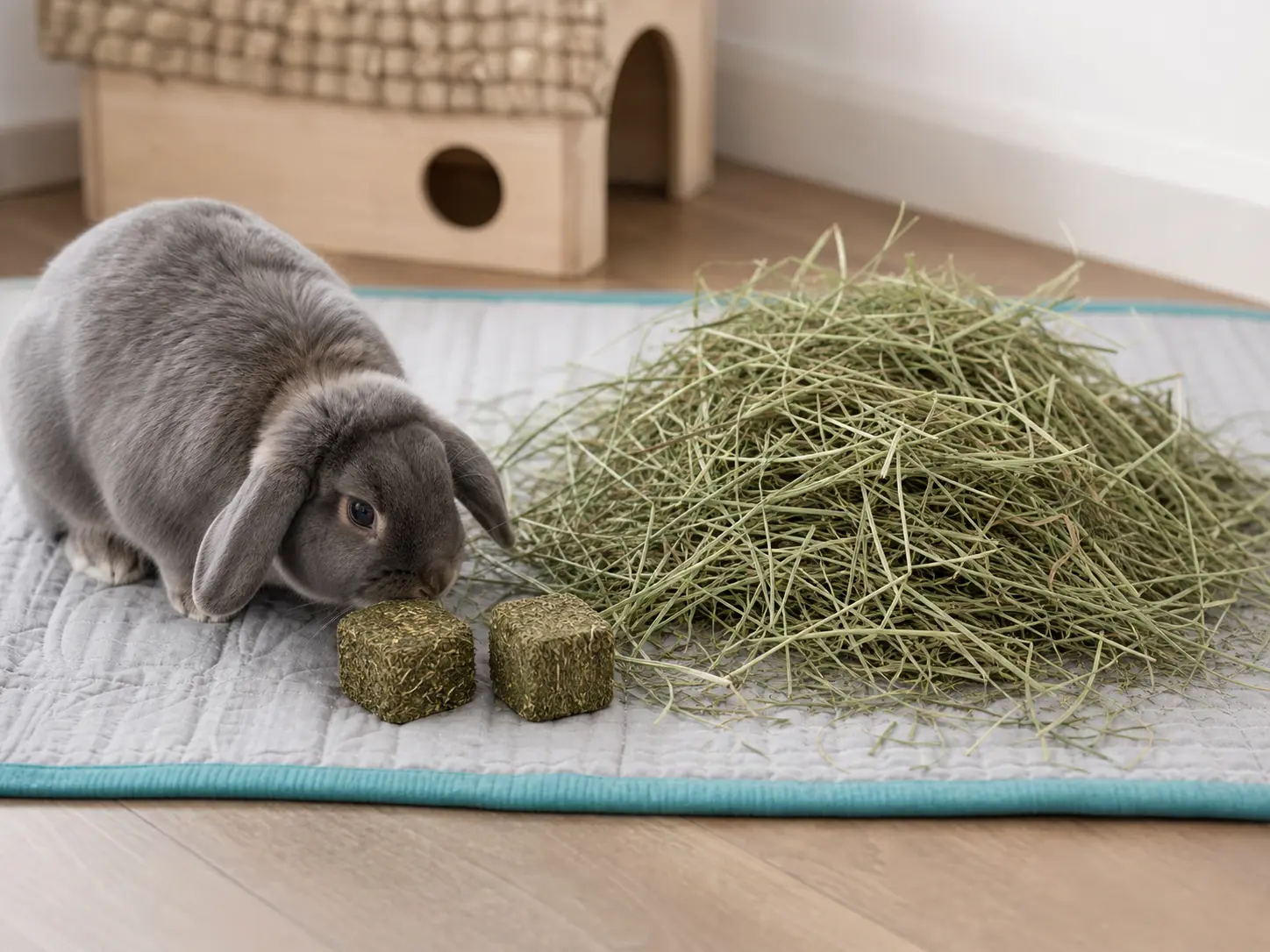
The useful picture is simple: a hay pile that keeps shrinking, a clean water bowl, ordinary meals, and normal round droppings in the litter box.
What rabbits eat every day starts with grass hay
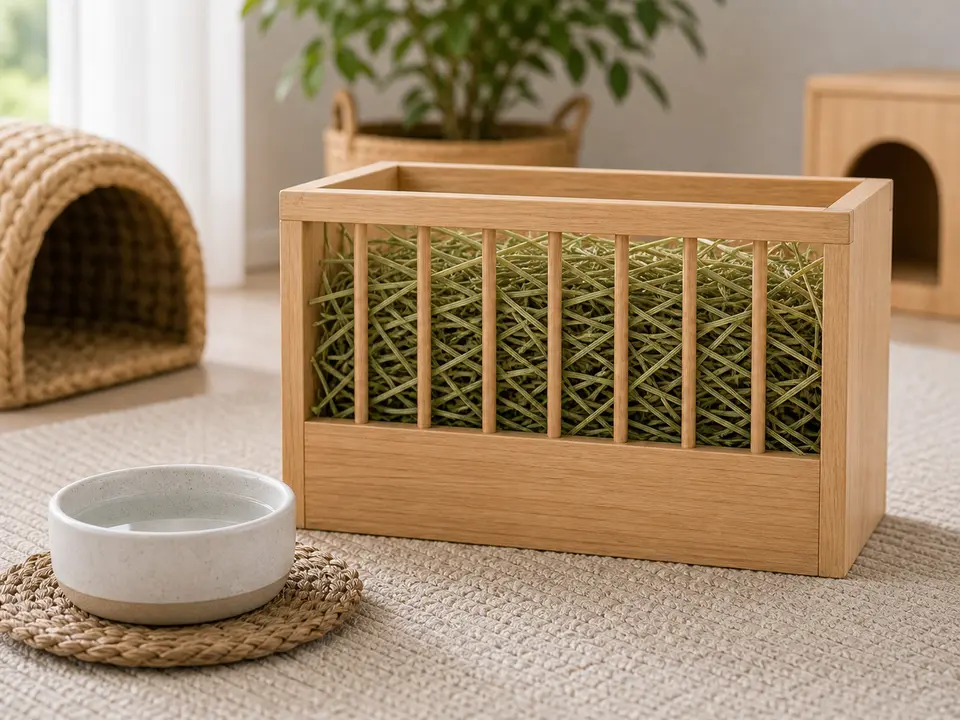
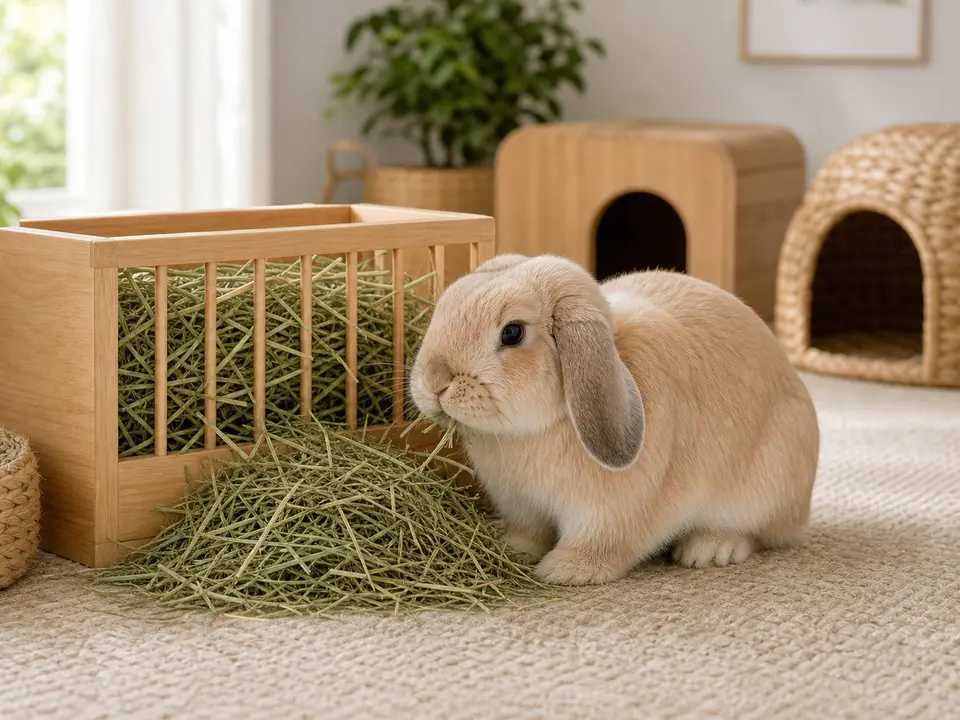
Hay should do most of the daily work. Offer a generous clean pile where your rabbit already likes to eat, and refresh it often enough that the smell and texture remain inviting.
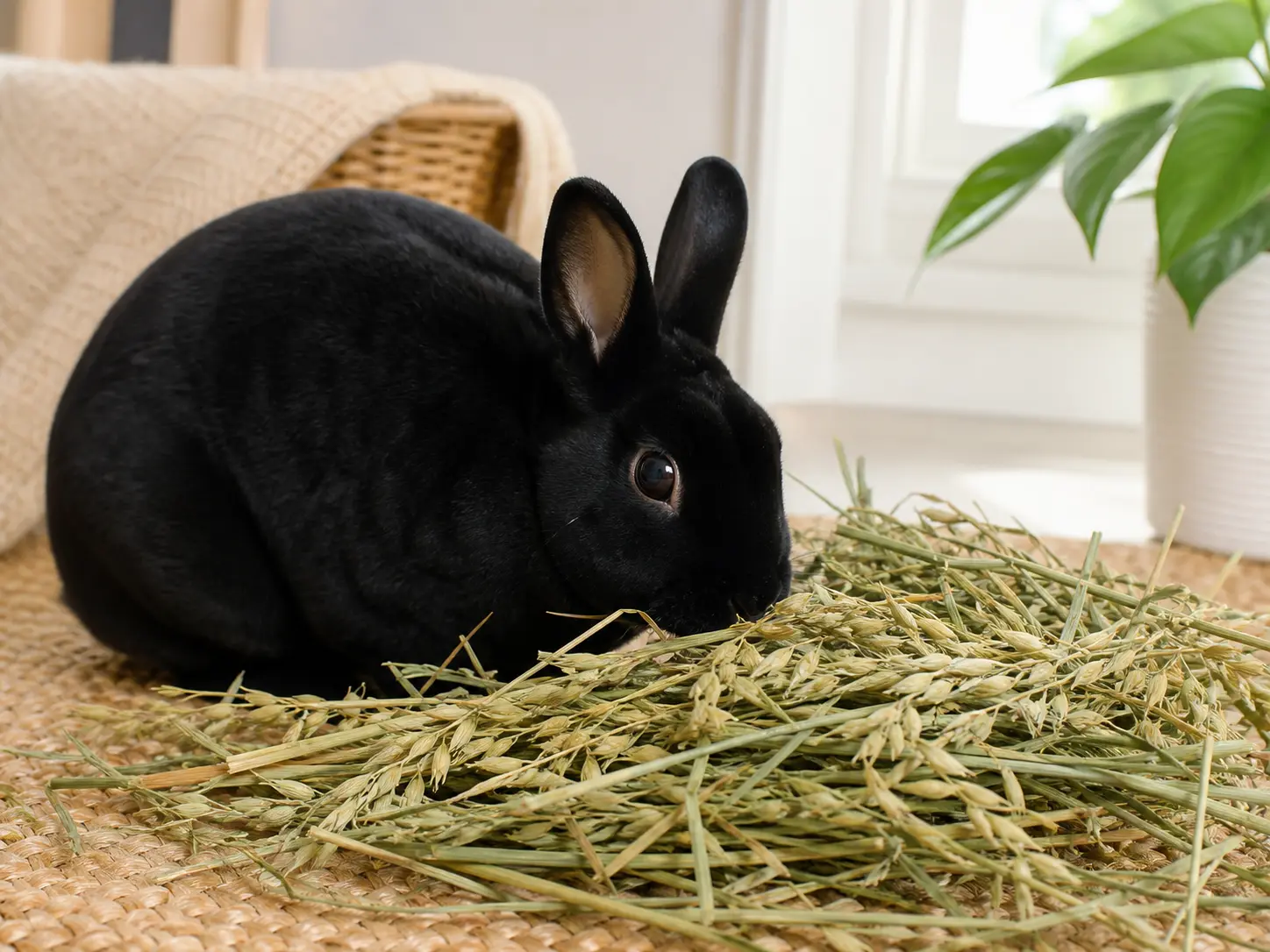
For most adult pet rabbits, timothy, orchard, oat, meadow, or another appropriate grass hay is the usual baseline. Age, growth, pregnancy, nursing, weight, or illness can change the plan, so ask a rabbit-savvy veterinarian about exceptions.
Offer clean water at all times
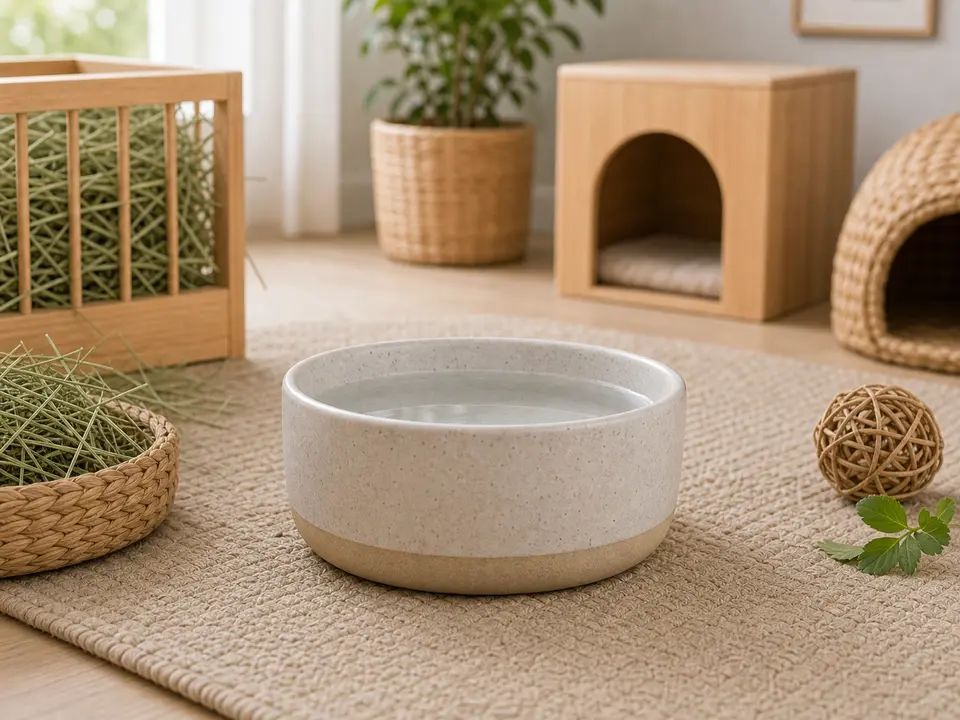
Set a heavy ceramic bowl on steady flooring near the hay pile. Rinse and refill it each morning, and shift it a few inches if the rack or litter box keeps filling it with debris.
Learn where the water line normally sits by evening. A sudden rise or fall means more when urine, appetite, droppings, posture, or energy has changed at the same time.
Keep greens familiar and pellets measured
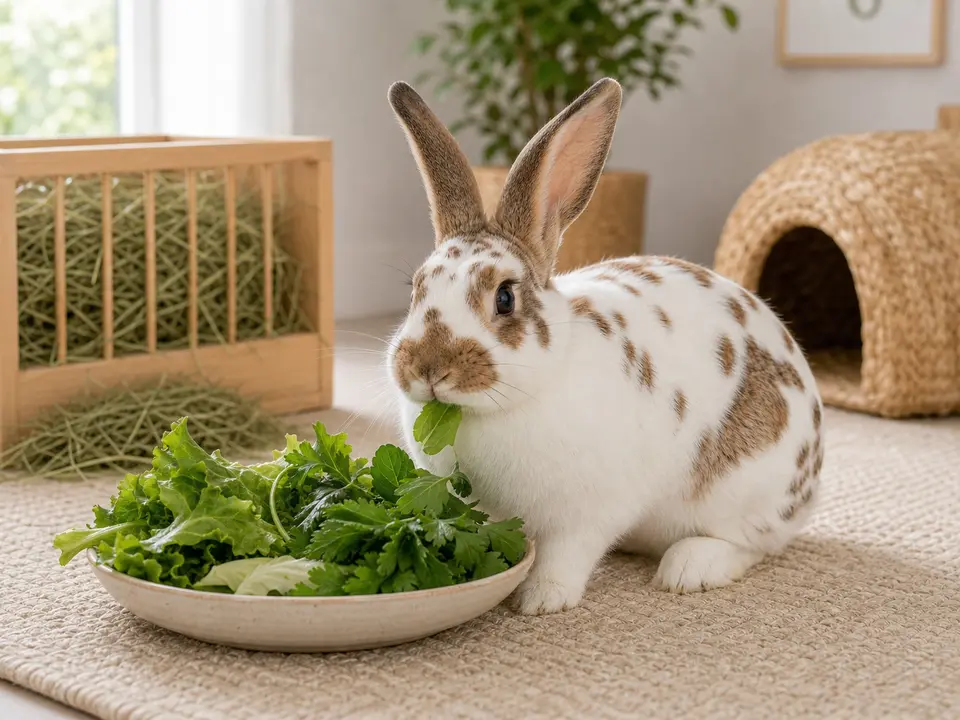
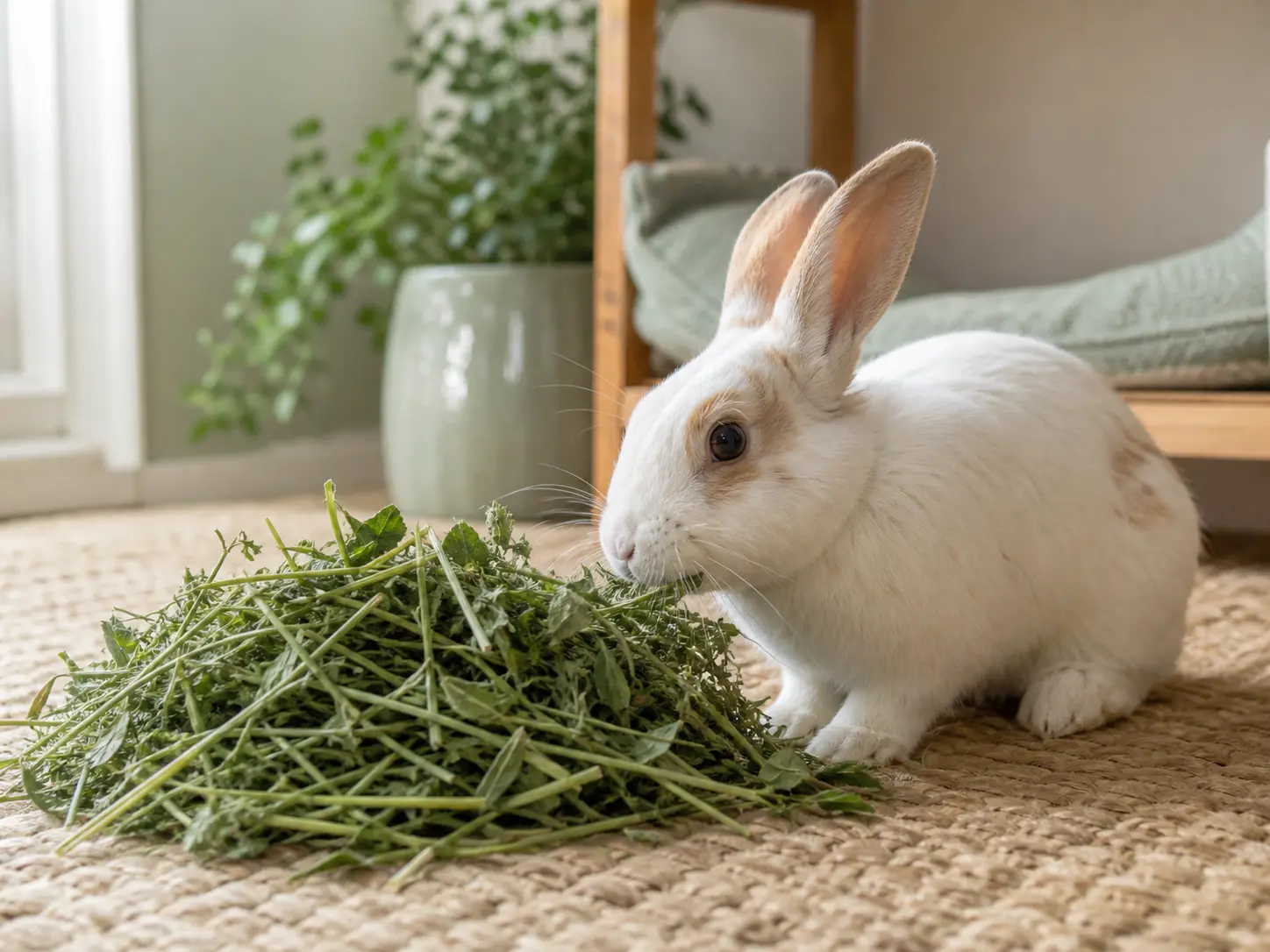
Wash the leafy greens your rabbit already handles well and keep the rotation familiar. Test one new leaf on an ordinary day so the next litter-box check has a clear meaning.
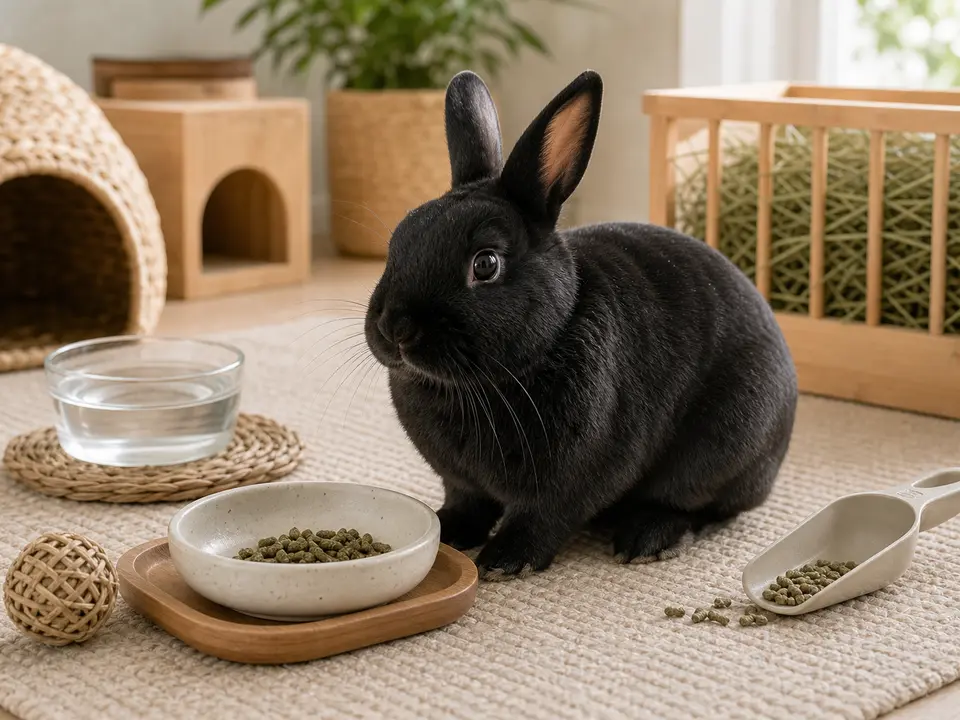
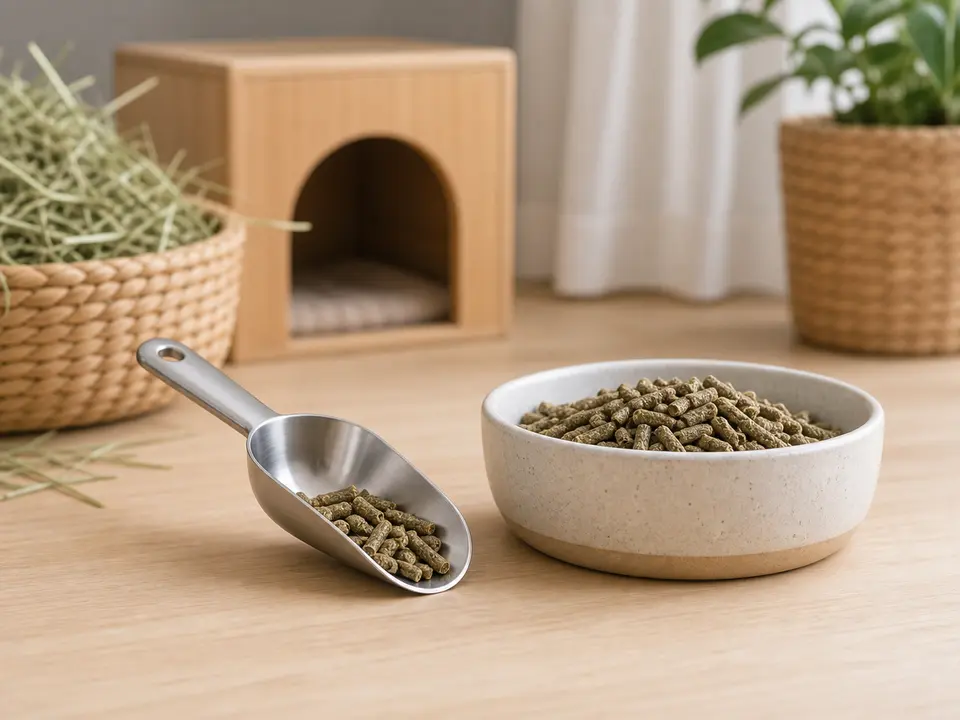
Scoop the pellet serving once instead of topping up the bowl by eye. Ask your veterinarian to help set the amount for this rabbit's age, weight, health, and hay appetite.
Use the hay pile and litter box as feedback
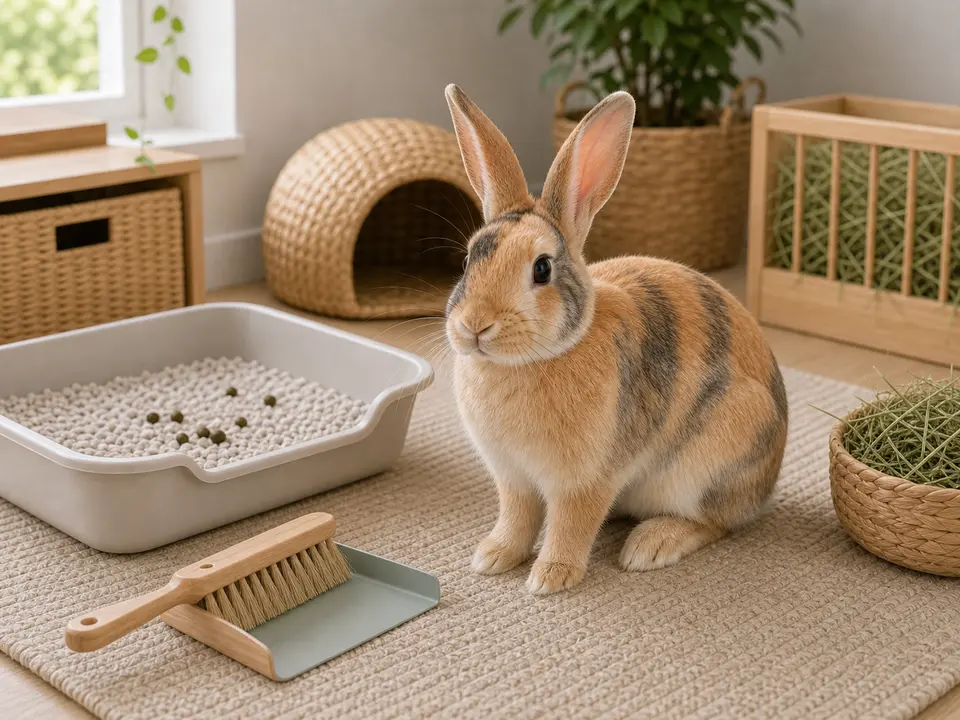
Watch what disappears, not only what you served. Hay should be eaten steadily, water should remain available, and the litter box should hold the normal number and size of round droppings for your rabbit.
A tipped bowl or scattered meal can look finished when it was not eaten. Checking the feeding corner and litter box together turns the daily plan into something you can actually assess.
Treat sudden appetite or poop changes as urgent
Contact a rabbit-savvy veterinarian promptly if your rabbit stops eating, refuses usual favorites, produces fewer or smaller droppings, sits hunched, seems weak, or looks painful. Do not wait for several missed meals to make the call.
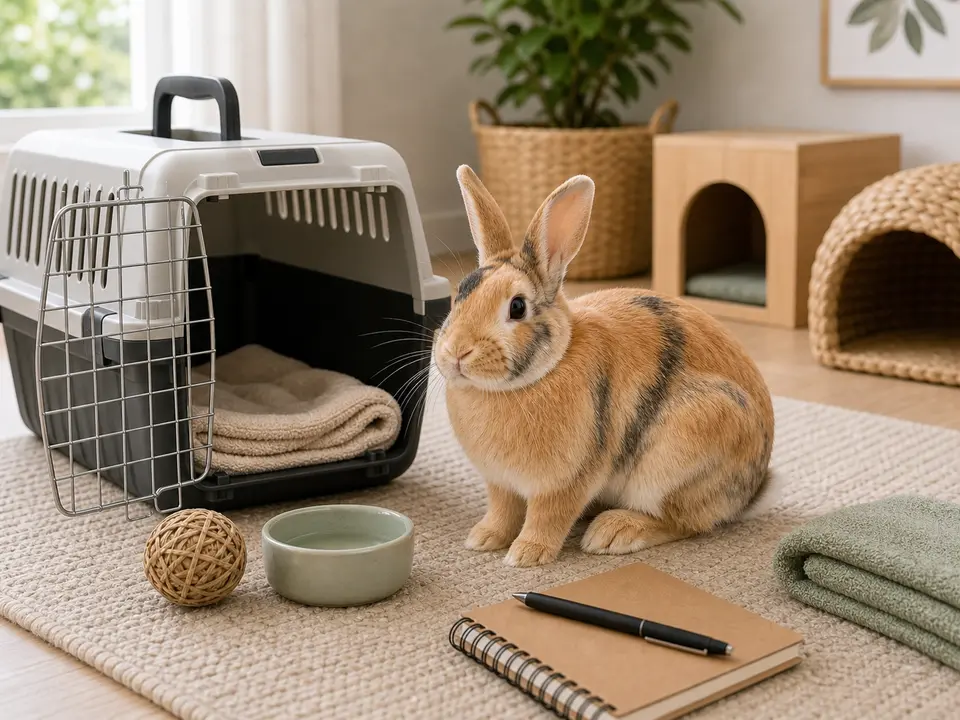
Keep the carrier and clinic number ready before a problem starts. A clear note about the last normal meal, hay intake, water, droppings, and behavior helps the veterinarian understand what changed.
Before you decide
Has the hay pile clearly shrunk since the last refill?
Is the water clean, reachable, and changing by its usual amount?
Were greens familiar and pellets measured rather than poured freely?
Do today's droppings match this rabbit's normal size and number?
Next best moves
Refill grass hay whenever the inviting strands become picked over.
Put water where you can rinse it easily and your rabbit can drink without stretching.
Introduce one green at a time and measure the pellet serving once.
Treat stopped eating or a sharp drop in droppings as a prompt veterinary call.
Everyday feeding pieces worth keeping close
The best tools make hay, water, and portions easier to see at a glance during an ordinary morning reset.
Affiliate links: Furball Cove may earn from qualifying purchases at no extra cost to you.
What food should be available to a rabbit all day?
Fresh grass hay should remain available around the clock, along with clean water your rabbit can reach comfortably.
Do rabbits need pellets every day?
Many pet rabbits receive a measured pellet serving, but the amount depends on age, body condition, health, and hay intake. Ask your veterinarian about your rabbit's portion.
What is the clearest sign the feeding plan changed?
A shrinking hay pile and normal droppings are useful daily clues. Call promptly if your rabbit stops eating or droppings become markedly fewer or smaller.