Updated
Rabbit food check
Can Rabbits Eat Beet Greens? Yes—Use a Fresh Leaf
Yes—small fresh leaf in rotation
Yes. Adult rabbits can eat a small fresh beet-green leaf in rotation. Keep the top attached to a labeled beet bunch until prep, wash one young tender piece and its red stem, and serve it plain beside unlimited grass hay. Older leaves can carry more oxalate, while the starchy beetroot is a separate serving.
 Beet Greens
Yes—fresh beet tops are rabbit-safe
House Rabbit Society lists beet tops, Beta vulgaris, among safe leafy greens, and VCA names beet greens among particularly good vegetables. The useful serving is one small fresh leaf piece, washed and served plain beside unlimited grass hay.
Red veins tie the leaf to the beet bunch
Beet greens have green blades, burgundy veins, and red-purple stems. Keep them attached until prep; the root and label confirm their identity. A loose red-stemmed leaf may be chard.
Fresh smaller leaves make the better choice
RWAF notes that oxalate in beet leaves increases as the plant ages. That is a reason to choose a small fresh leaf and rotate it, not to call every beet top poisonous. Skip old leathery leaves and keep the rest of the greens plate varied.
The root and a red litter-box surprise are separate
Beetroot is starchier than its leafy top and belongs in a tiny occasional serving. Its pigment may also change urine color. Never assume every red patch came from food: straining, pain, weakness, or definite blood needs a prompt rabbit-savvy clinic call.
Keep the red-veined tops on the bunch
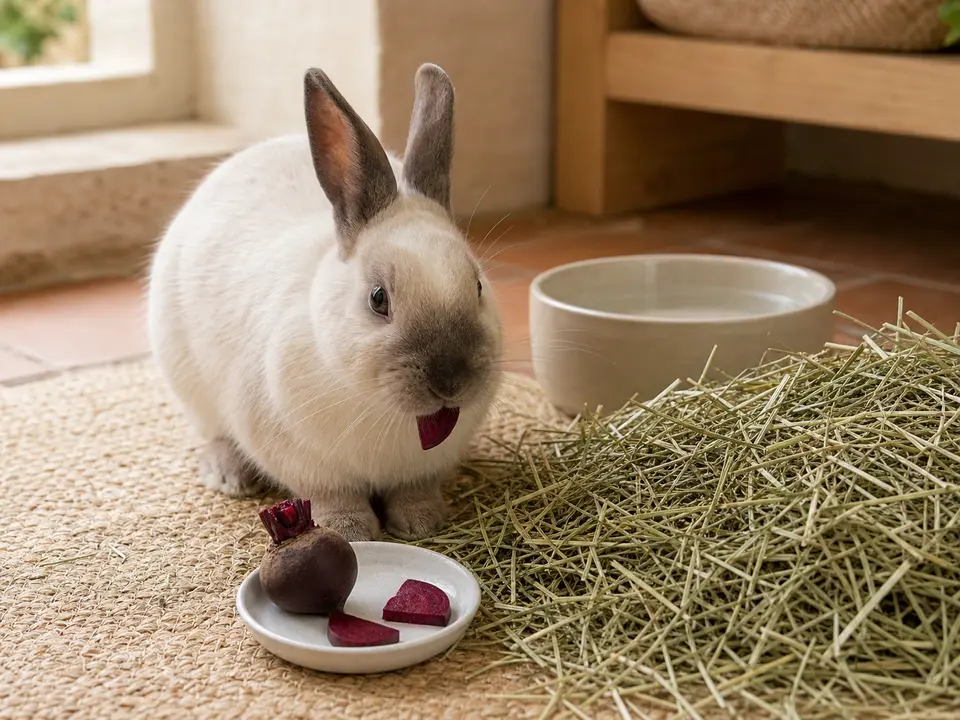
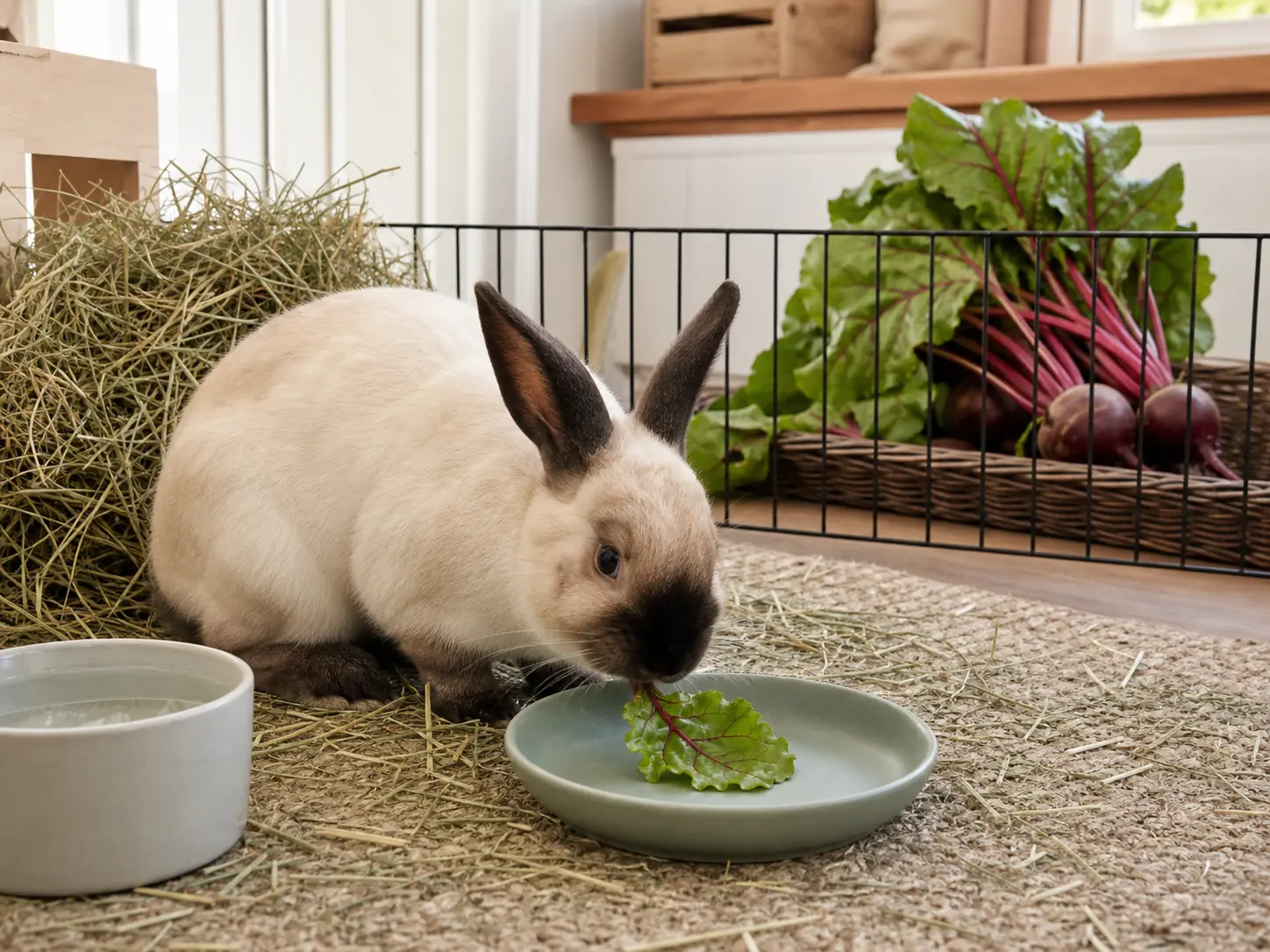
The beet shoulders, red stems, and green leaves remain connected. Beside meadow hay, the rabbit waits while one smaller leaf from the labeled bunch moves to the sink.
Rinse the crown and both leaf faces
Rub the red stem where soil crowds above the root, then turn the leaf under cool water. Yellow slime, fuzzy spots, sour odor, or a blackened junction sends that piece to the compost.
Serve the top without the ruby root
One small leaf piece with a short red stem goes on the sea-green saucer beside hay and water. The beetroot returns to the refrigerator instead of hiding beneath the greens as a large starchy extra.
Check the litter box without guessing
An empty saucer records interest in beet greens. Later, look for hay chewing, round droppings, relaxed movement, and comfortable urination. If red urine comes with straining, pain, weakness, or obvious blood, call the rabbit-savvy clinic promptly.
How to offer it
- Confirm beet greens from an intact labeled bunch. Look for green blades with branching red-purple veins and stems connected to recognizable round beet shoulders.
- Open the crown where leaves meet the root. Discard yellow slime, fuzzy growth, sour odor, blackened stems, pest damage, and old leathery or collapsed leaves.
- Choose a fresh smaller leaf, rinse both faces under cool water, and rub along the red stem and crowded base where soil collects.
- Serve one small plain leaf piece with a short tender stem. Put the beetroot and remaining tops away before pickling, roasting, dressing, salt, or seasoning enters the prep area.
Avoid
- A red-stemmed leaf guessed to be beet green after it is separated from the root. Swiss chard and other red-veined leaves need their own produce label and feeding decision.
- Old, oversized, tough beet leaves used as a daily green. RWAF notes that oxalate content rises as beet leaves age; choose a small fresh piece and rotate it.
- A whole beetroot attached to the leaf serving. The root is starchier, belongs in a smaller occasional portion, and can change urine color.
- Pickled beets, cooked greens, canned beets, juice, salad, restaurant sides, or leaves carrying vinegar, sugar, oil, salt, cheese, sauce, spice, or seasoning.
- A moldy, slimy, sour-smelling, badly wilted, heavily soiled, pest-damaged, chemically treated, or unidentified leaf.
Watch
- The beet-green piece disappearing while the rabbit continues ordinary visits to the hay pile
- Normal posture, movement, water use, urination, and interest in familiar food
- The rabbit's usual separate round droppings after a first beet-green tasting
- Reduced eating or droppings, soft stool, diarrhea, belly pressing, hunching, tooth grinding, straining to urinate, definite blood, weakness, or unusual quietness; contact a rabbit-savvy veterinarian promptly
Portion
For an adult already eating leafy vegetables, one small fresh beet-green piece can share the usual greens allowance. Start with less if it is new, and do not make old large beet leaves the daily default. The dense beetroot is starchier and needs its own much smaller occasional portion.
Keep beet tops attached, clean, and separate from the root
These produce-prep tools help preserve the beet-top identity, expose the soil-packed crown, rinse red-veined blades, and reserve one small plain rabbit piece.
Affiliate links: Furball Cove may earn from qualifying purchases at no extra cost to you.
Produce strainer
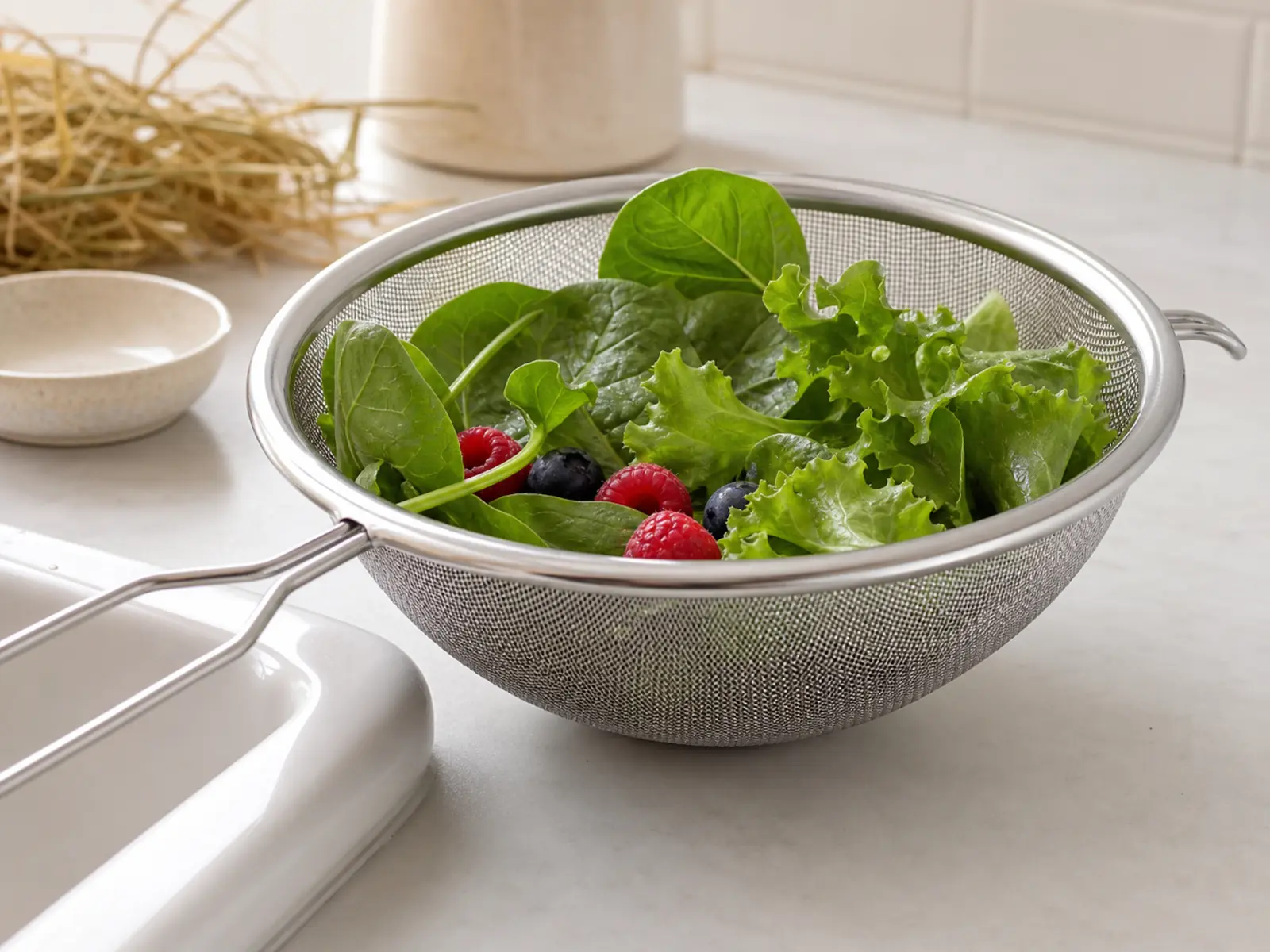
Spread the red-veined beet leaf over a small colander so soil rinses from both faces, the tender stem, and the crowded crown.
Shop produce strainer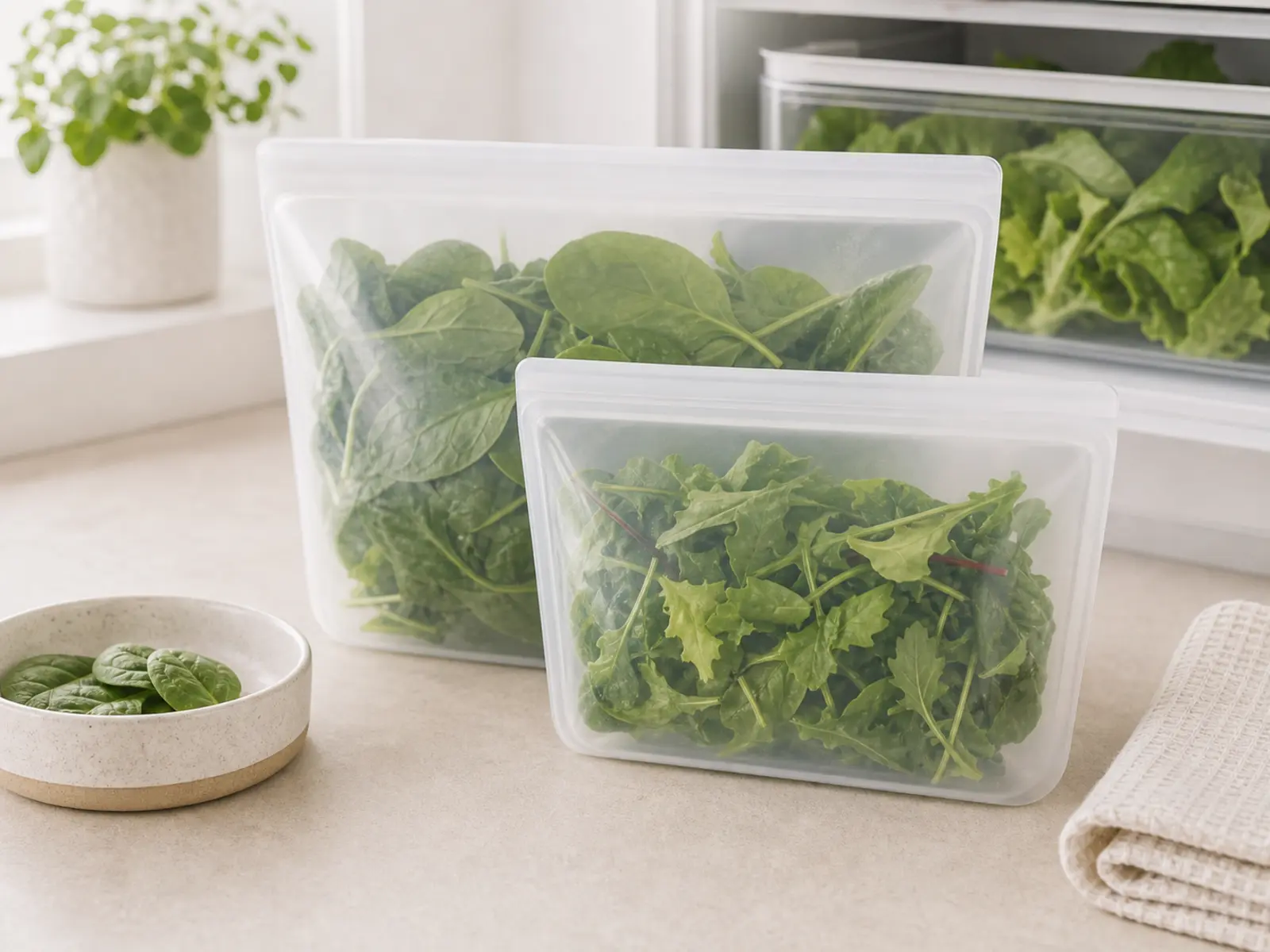
Produce storage bags
Store sound dry beet leaves loosely with an absorbent liner instead of sealing red stems and wet blades into a heavy bundle.
Shop produce storage bags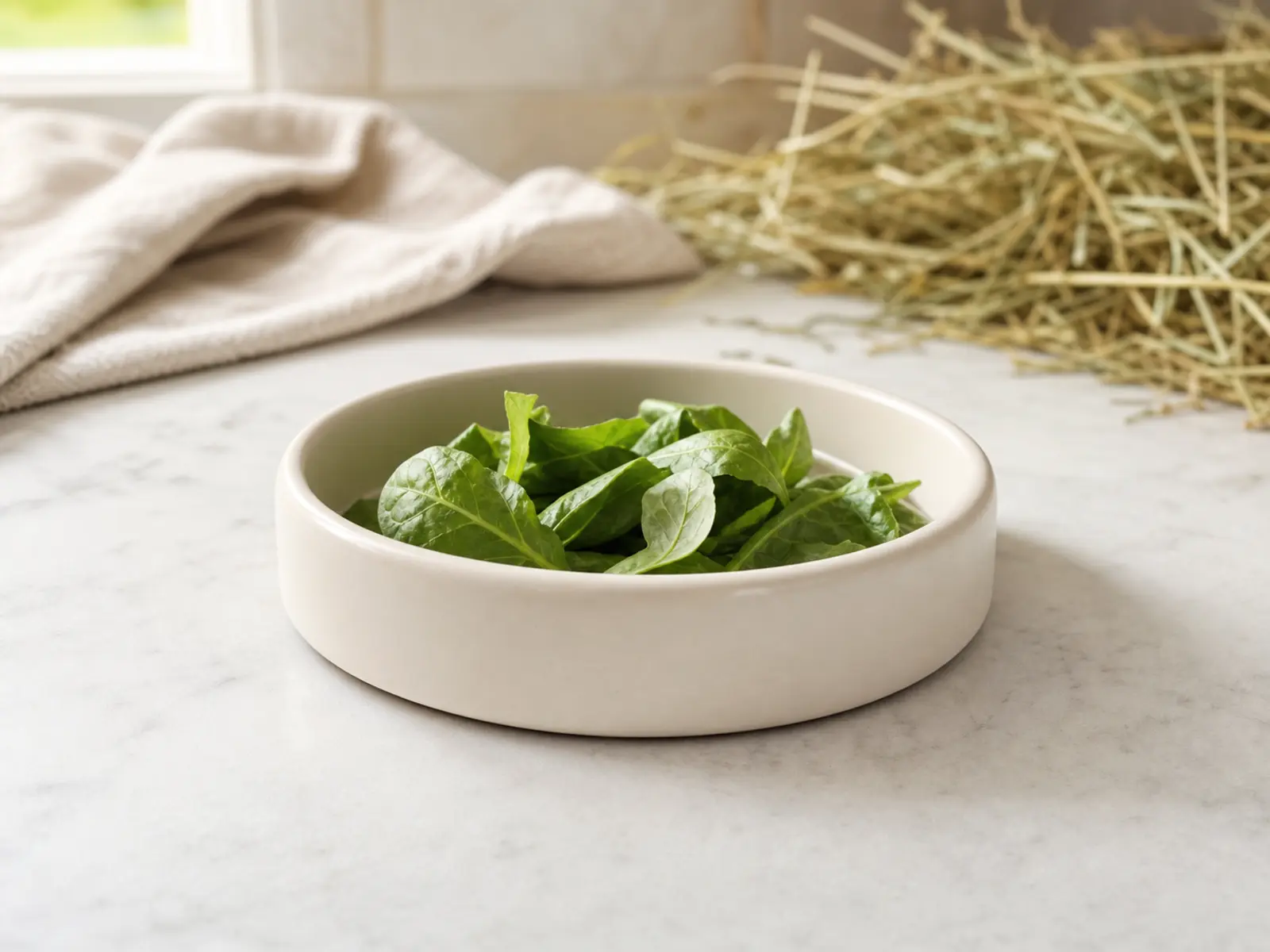
Ceramic food dish
Place one small fresh leaf piece on a washable saucer with no beetroot, pellets, dressing, or seasoned scraps underneath.
Shop ceramic food dish