Updated
Rabbit food check
Can Rabbits Eat Mint? Yes—Confirm the Plant First
Yes—identified culinary mint
Yes. Adult rabbits can eat fresh leaves and tender stems from identified culinary mint, including spearmint and peppermint. Wash one modest sprig and let it share a varied greens plate beside unlimited hay. Do not use the phrase mint family as proof that an unknown plant is safe.
 Mint
MintYes—spearmint and peppermint leaves are safe
House Rabbit Society lists several Mentha plants, including spearmint and peppermint, among rabbit-safe greens, and the Rabbit Welfare Association includes mint in its supermarket list. For an adult rabbit, that means a fresh plain sprig can join familiar greens while hay remains the main food.
Mint family does not identify the plant
Spearmint has a square green stem. Its toothed, wrinkled leaves sit in opposite pairs. Use those clues to check the labeled bunch in your hand, not to clear an unknown garden plant for the rabbit's saucer. If the package or plant tag does not name a culinary Mentha, leave it away from the hay rack.
Tender stems can go on the saucer
The soft green top of a mint stem is fine to serve with its leaves. Trim off a tough brown base, flower stalk, damaged joint, or root end, then rinse the sound sprig. The potting mix and roots stay behind the barrier even when the mint itself is home-grown.
The fresh leaf is not an essential oil
Crushing mint into a concentrated oil or extract changes the question. Do not add mint oil to food or water and do not use it as a digestive treatment. Candy, gum, sweetened tea, chocolate, toothpaste, and cocktails are also human products, not alternate ways to serve a leaf.
Read the small tag before picking
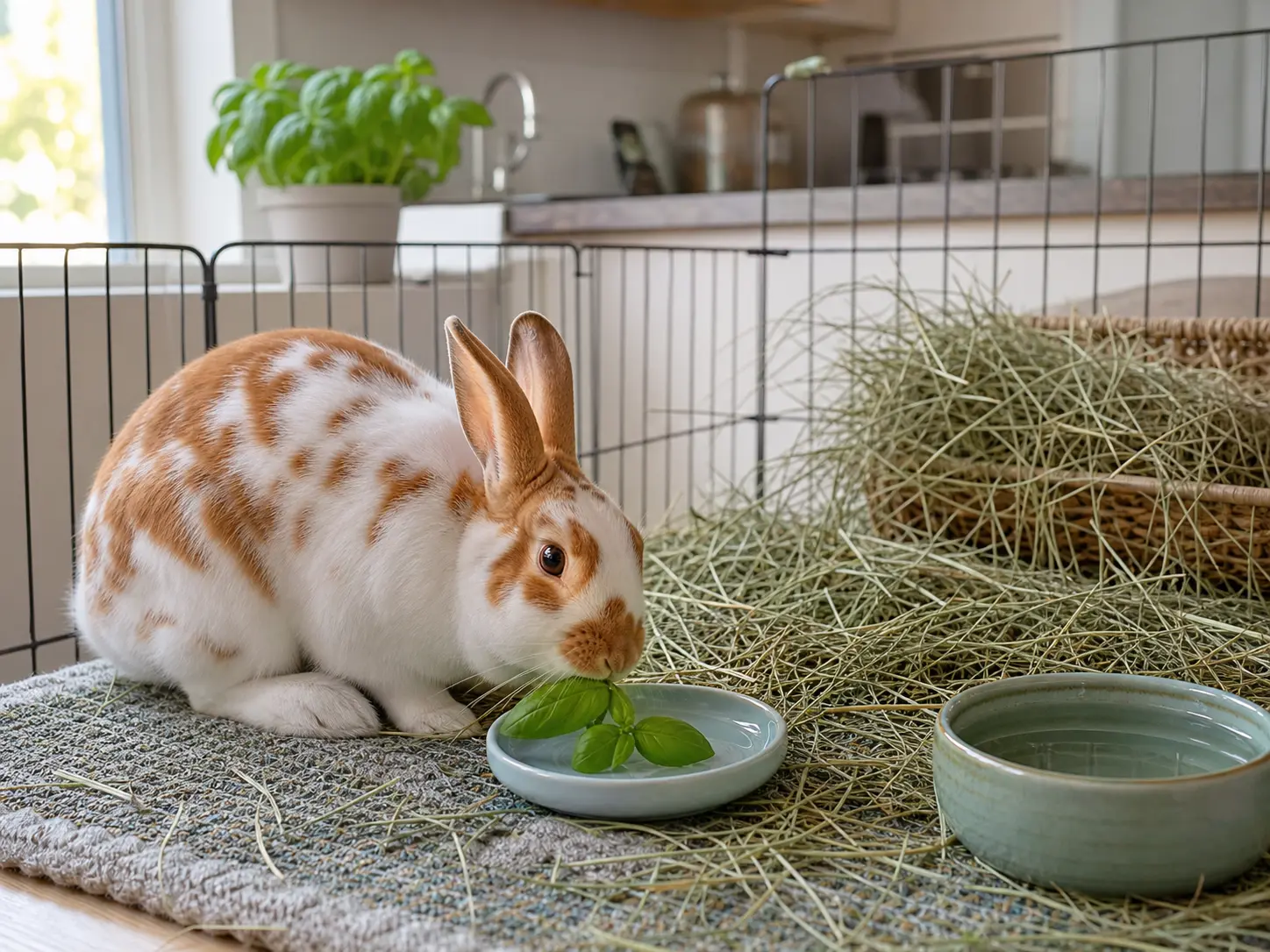
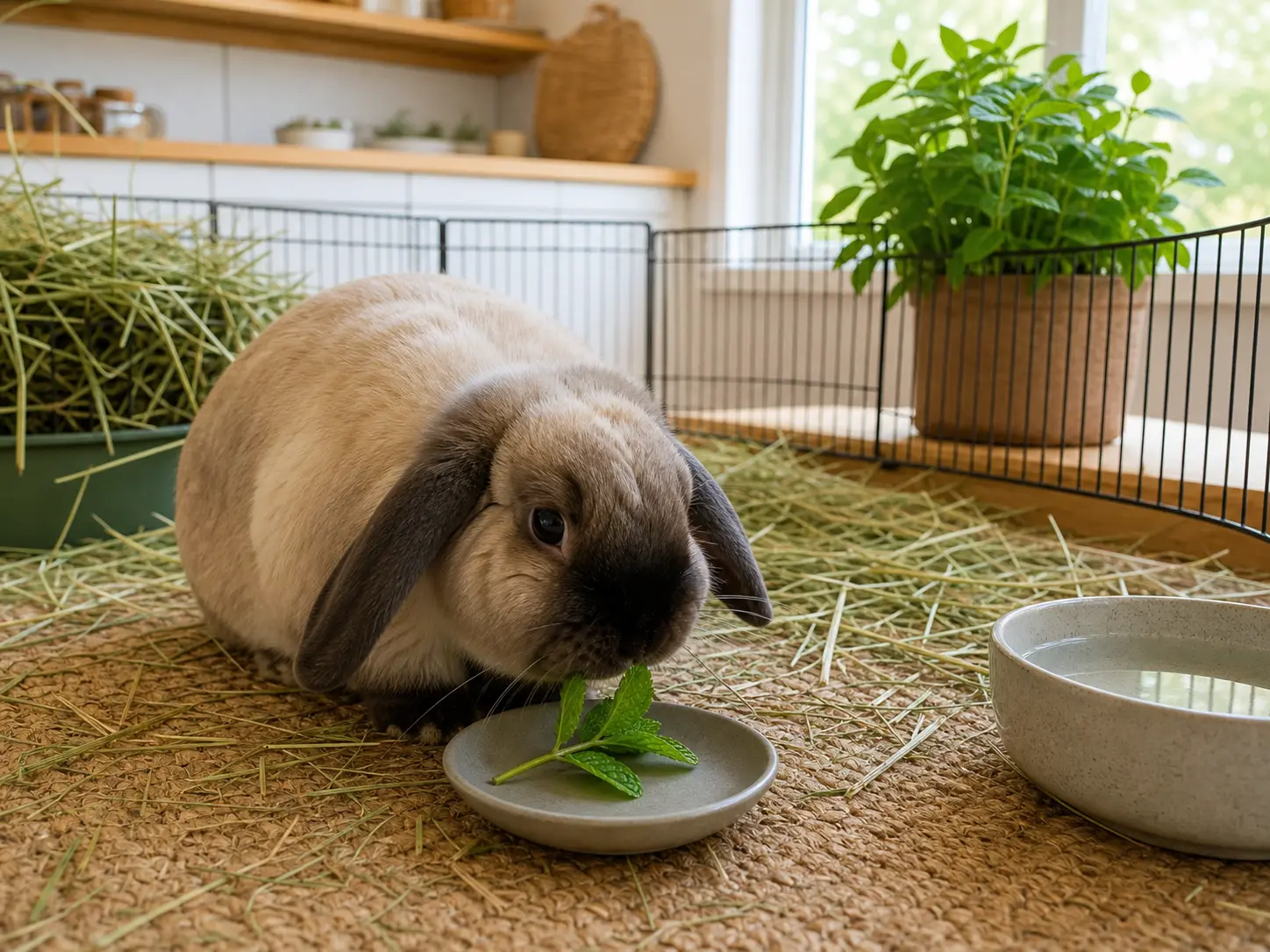
The nursery tag says spearmint, Mentha spicata. Paired leaves have toothed edges and a softly wrinkled surface. The rabbit waits beside the orchard-hay rack and water bowl while one labeled sprig moves to the sink. A different unmarked pot stays on the windowsill.
Check the hidden leaf joints
Turn the sprig over the warm-gray saucer and spread each opposite leaf pair. Tiny insects and white powder can hide where leaves meet the square stem. A crisp clean piece goes under cool running water; black slime and sour-smelling leaves go to the compost.
Leave the pot beyond the pen
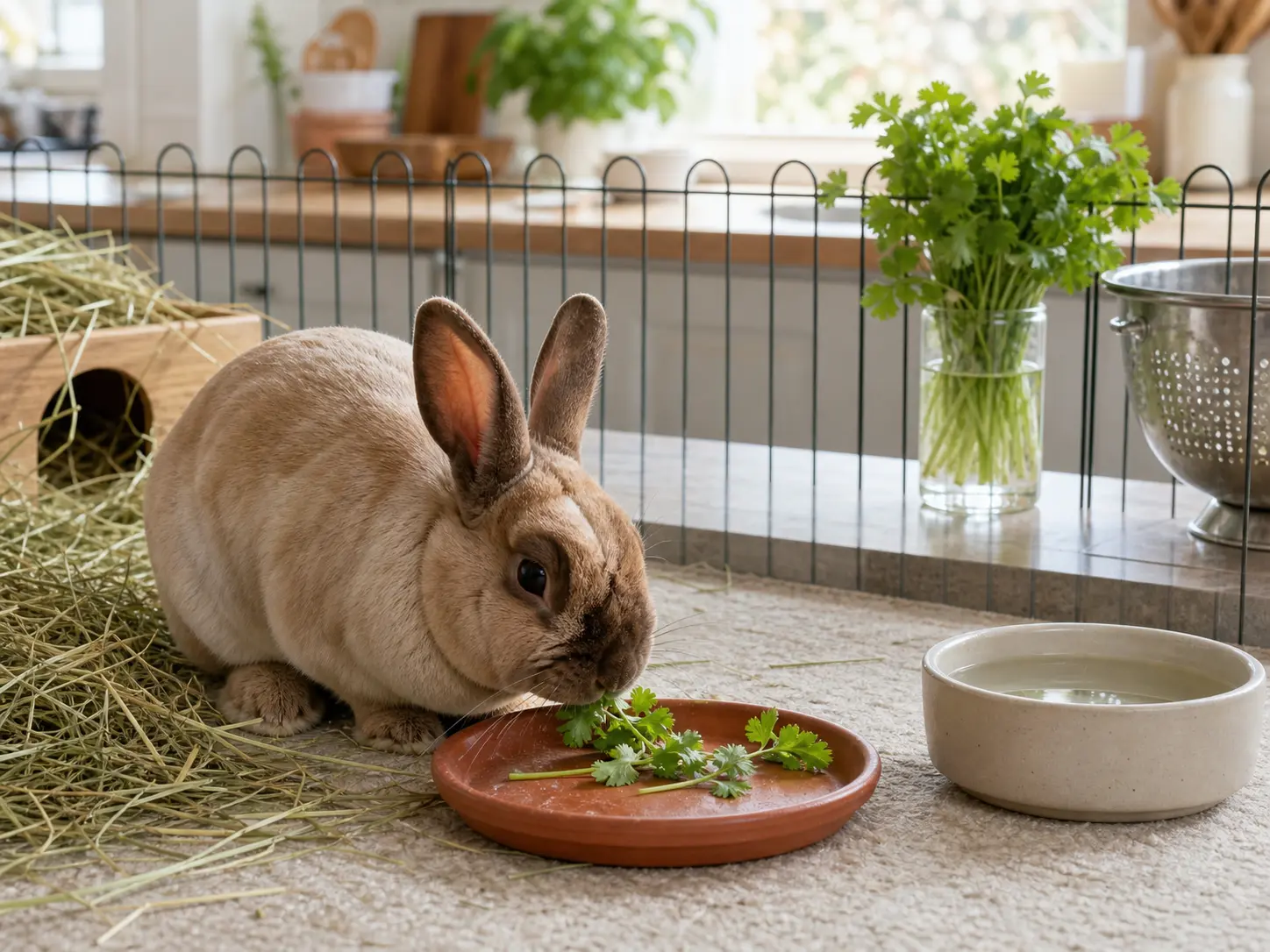
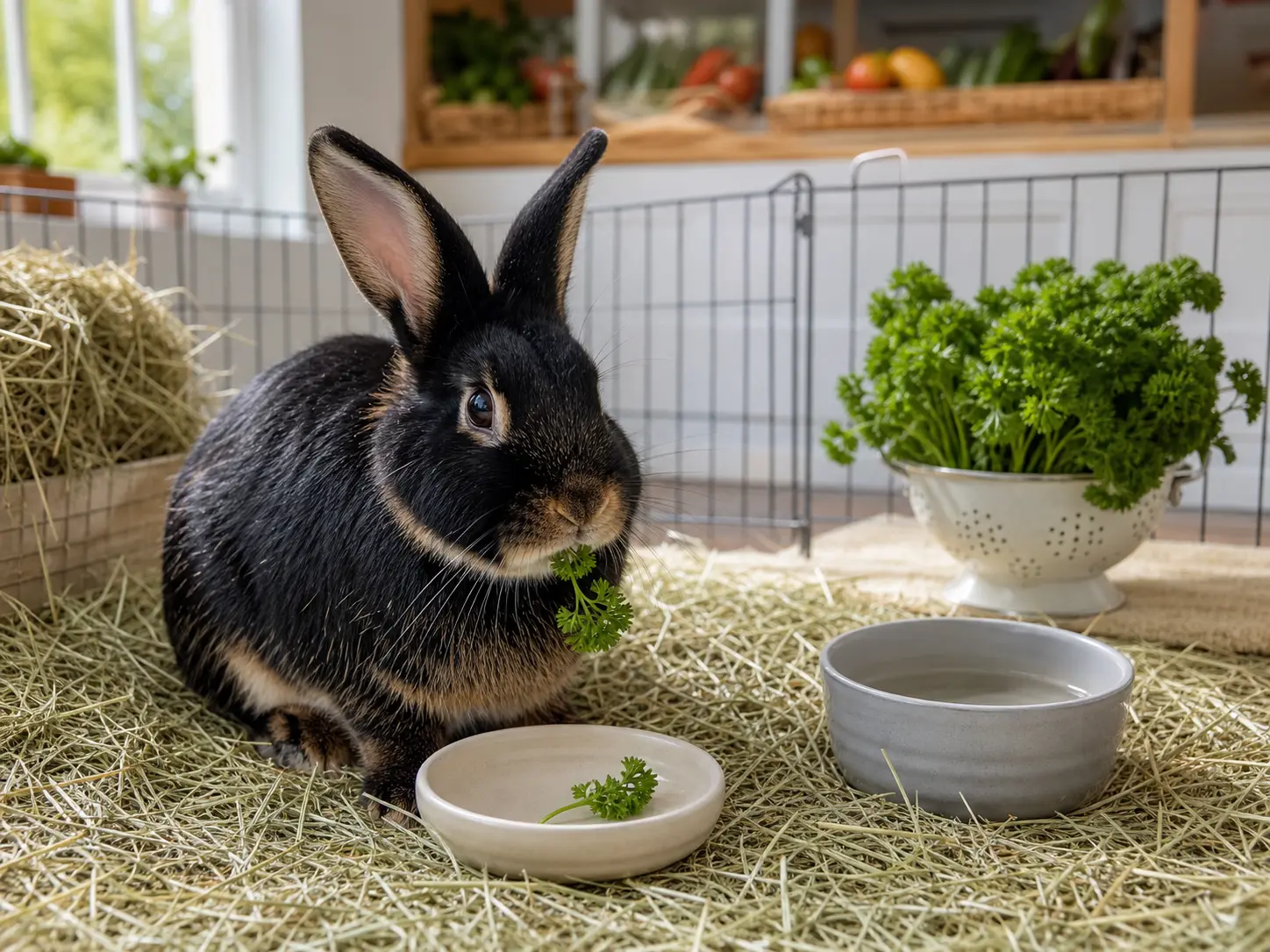
Set one or two washed leaves with a short tender stem on the saucer. The sable-point lop gets that small plain serving beside hay and water. Soil, roots, fertilizer, and the fast-growing mint plant remain safely beyond the exercise-pen panel.
Check the hay pile later
An empty saucer only says the mint was popular. Later, look for pulled hay stems, easy movement, and the rabbit's usual round droppings. If eating or output slows, contact the rabbit-savvy clinic promptly instead of trying mint tea or another scented remedy.
Serve
- Confirm spearmint, peppermint, or another edible Mentha species from the produce package, nursery tag, or a garden plant grown from a known seed.
- Choose crisp leaves on a tender green stem. Discard rusty spots, white powder, black slime, pest-heavy clusters, and any plant treated with lawn or garden chemicals.
- Rinse both sides of the wrinkled leaves and open the joints where opposite leaf pairs meet the stem. Shake away extra water and check once more for tiny insects.
- Serve the leaves and tender upper stem plain. Keep the pot, soil, roots, plant food, essential oils, and human mint products outside the rabbit area.
Avoid
- An unknown plant chosen only because it smells fresh or belongs to the mint family. That family includes many plants, and the label Mentha is the useful check here.
- Pennyroyal, a mint-like plant that should not be confused with an ordinary food-grade spearmint or peppermint bunch.
- Mint essential oil, extract, tincture, concentrated supplement, diffuser liquid, or a home remedy given without a veterinarian's direction.
- Mint candy, gum, chocolate, ice cream, sweetened tea, cocktails, toothpaste, sauce, or restaurant garnish.
- A moldy, slimy, pesticide-treated, sour-smelling, heavily spotted, or unidentified garden sprig.
Watch
- The mint leaves disappearing while the rabbit continues ordinary visits to the hay pile
- Normal posture, activity, water use, and interest in familiar food
- The rabbit's usual separate round droppings after the mint trial
- Reduced eating or droppings, soft stool, diarrhea, belly pressing, hunching, tooth grinding, weakness, or unusual quietness; remove the new food and contact a rabbit-savvy veterinarian promptly
Portion
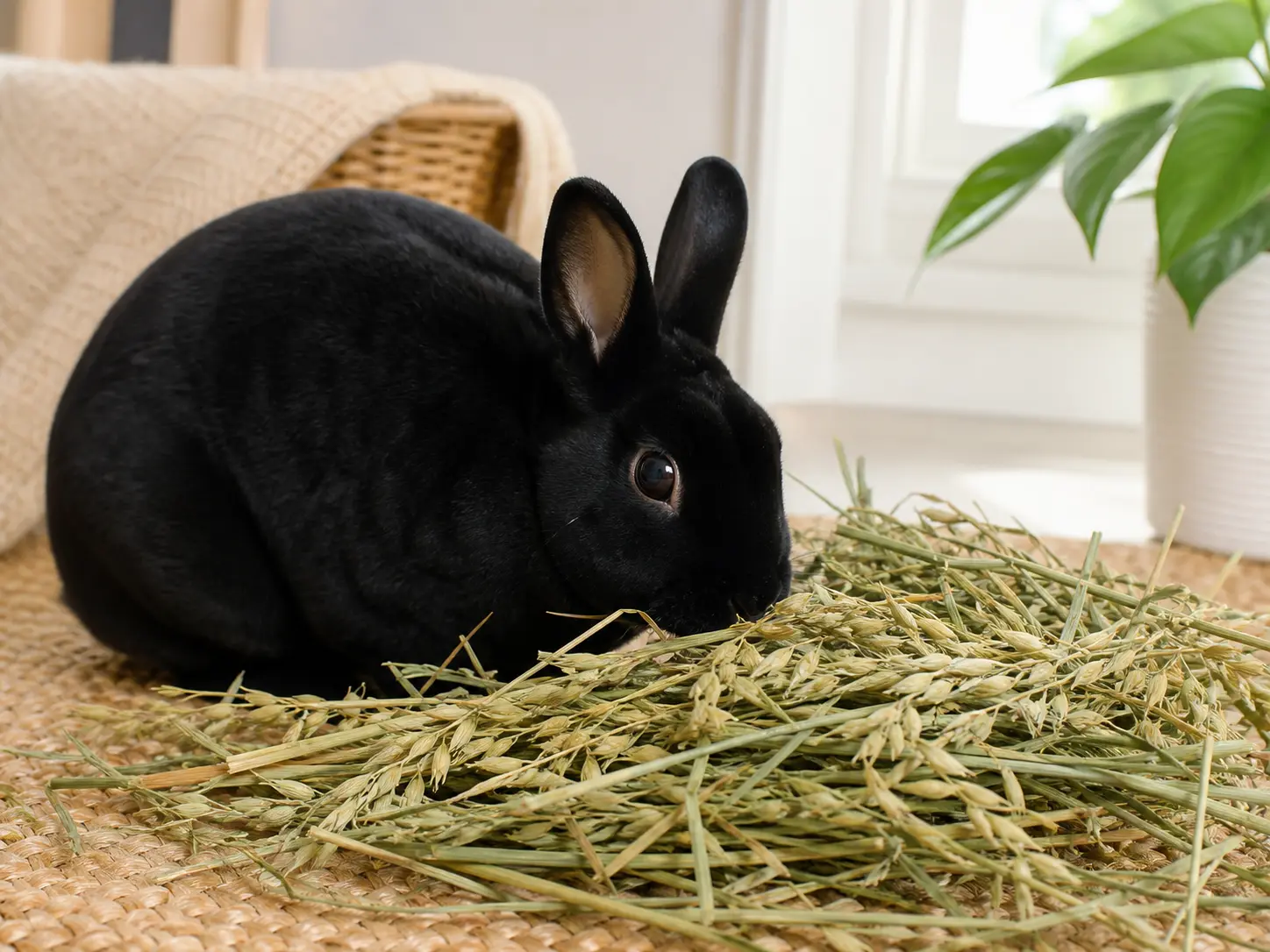
For an adult already eating leafy greens, one modest mint sprig can share the usual greens allowance. If mint is new, begin with one or two leaves and a short tender stem. A rabbit may rush over for the fragrance, but mint still does not replace the generous hay pile.
Keep one mint sprig labeled, clean, and plain
These produce-prep tools help keep the Mentha name with the plant, expose insects at the leaf joints, rinse one sprig, and separate the rabbit portion from human mint products.
Affiliate links: Furball Cove may earn from qualifying purchases at no extra cost to you.
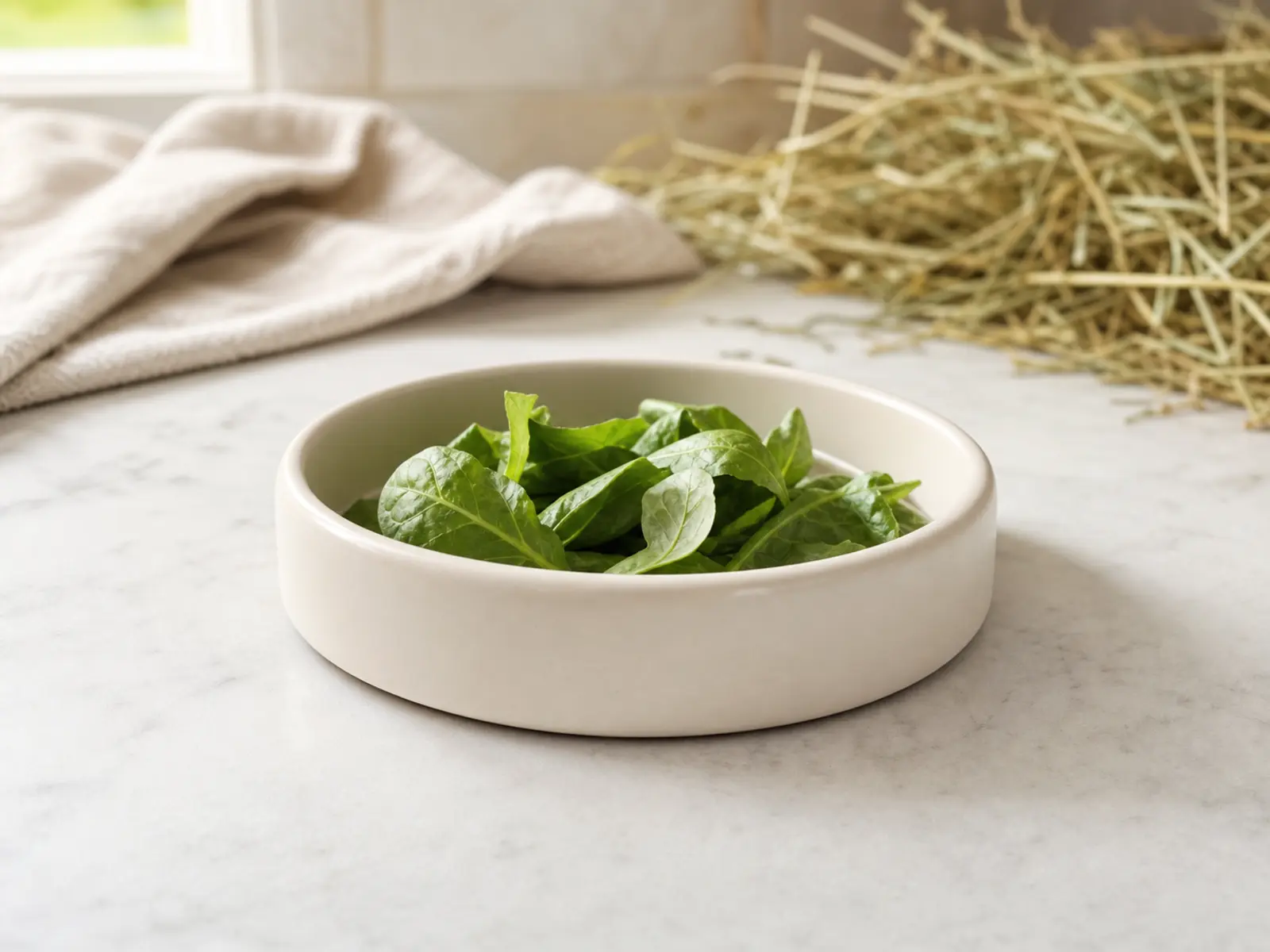
Ceramic food dish
Place one plain spearmint or peppermint sprig on a washable saucer apart from pellets, candy, tea bags, and seasoned scraps.
Shop ceramic food dish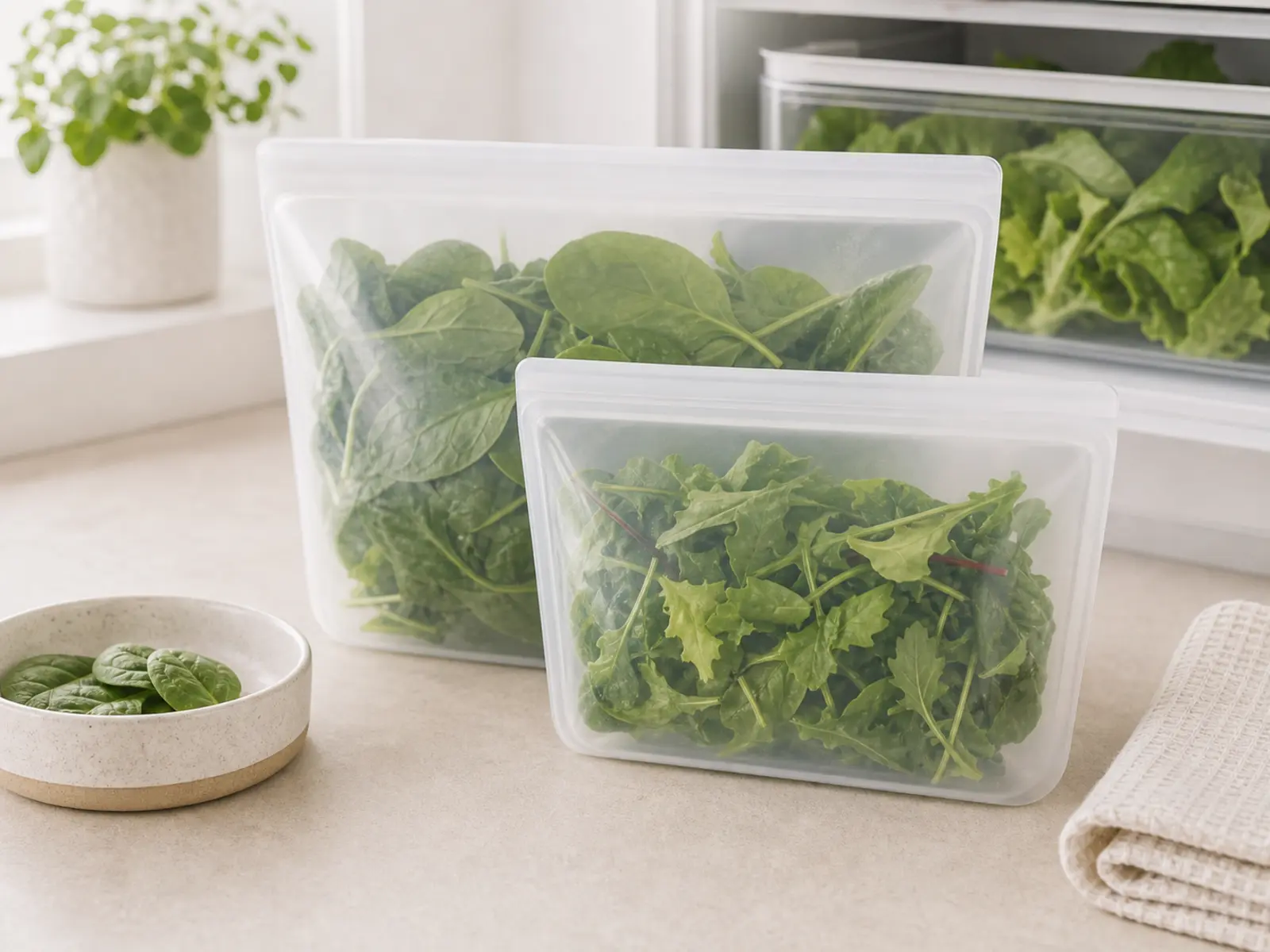
Produce storage bags
Store a cut mint bunch loosely with an absorbent liner instead of pressing its toothed leaves into a wet sealed clump.
Shop produce storage bags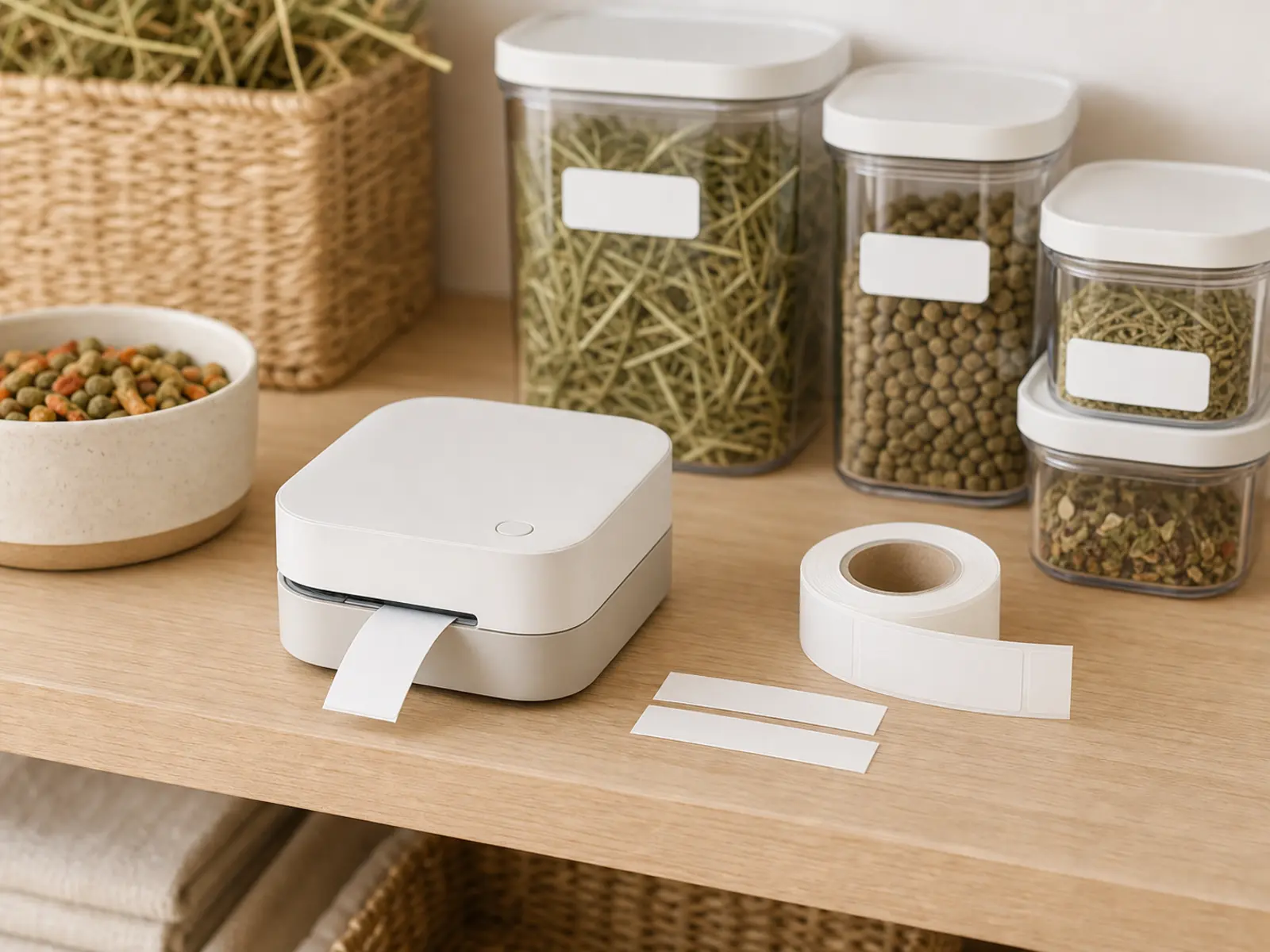
Label maker
Mark a divided or repotted herb with its Mentha name and date while the original nursery tag is still in your hand.
Shop label maker