Updated
Rabbit food check
Can Rabbits Eat Rutabaga? Yes—Only a Small Wedge
Yes—one small wedge
Yes, but only as an occasional root-vegetable extra. Offer one small raw yellow-fleshed wedge, and keep rutabaga greens as a separate leafy-food decision.
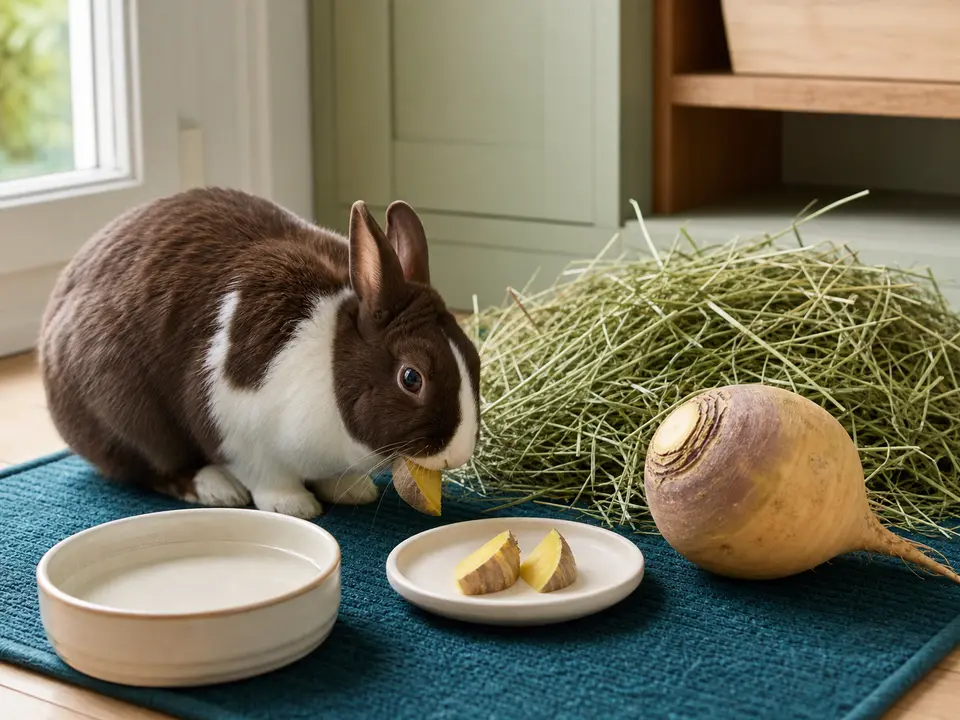 Rutabaga
Look for yellow flesh, not turnip white
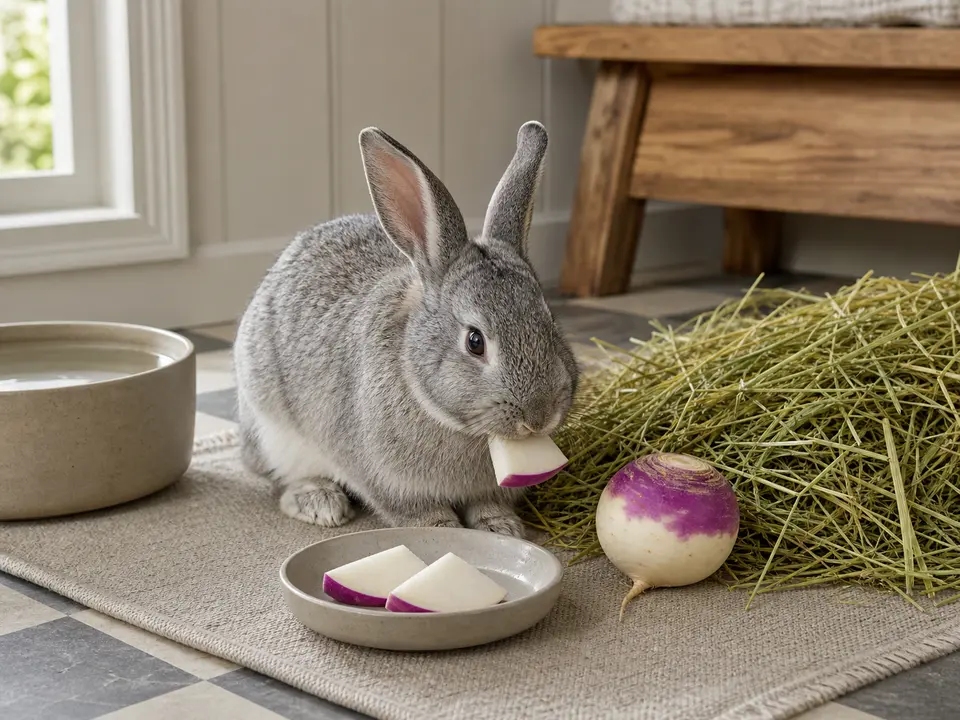
Rutabaga and turnip are easy to swap in a produce bin. Rutabaga is usually the larger, heavier globe, with tan skin, a muted purple-brown shoulder, and pale yellow flesh. A common purple-top turnip is smaller and white inside. Leave the coloured skin on one edge of the rabbit piece so the serving stays identifiable.
The root is an occasional extra
RSPCA recommends only small amounts of root vegetables as occasional treats. That is the useful lane for rutabaga root: one plain raw wedge now and then, never a replacement for leafy plants or long-strand grass hay. A rabbit does not need rutabaga in order to have a complete diet.
Root and leafy tops are two decisions
House Rabbit Society lists rutabaga greens among rabbit-safe leafy greens. A whole root-and-top bunch still is not one serving. Detach the leaves, wash and store them separately, and introduce the yellow root on its own day. If your rabbit follows a vet-directed urinary or calcium plan, ask how the greens fit that individual plan.
One quiet trial tells you more than a mixed salad
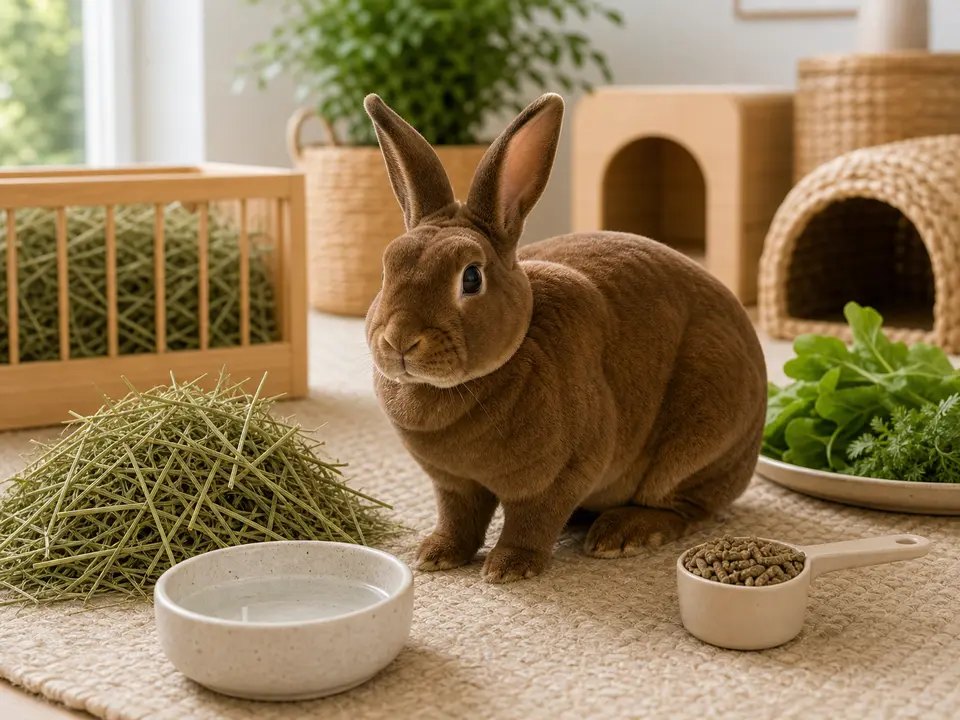
Offer the wedge with tonight's proven leaves, making it the only unfamiliar item. Once it disappears, leave the menu alone. Steady hay chewing, relaxed movement, and fresh dry pellets tell you the evening is still ordinary. If any of those falter, stop rutabaga and call your exotics vet.
Name the root before the knife comes out
On the kitchen counter, set the rutabaga beside any turnips. It should feel larger and denser, with a tan lower half and dull violet shoulder. Cut through the middle only to confirm the yellow interior, mark the human half, and store it in the fridge. Put one plain rabbit wedge on its dish.
Brush the crown rings and root channels
Hold the root under cool running water and turn it slowly. Grit settles in the rings around the trimmed crown and in shallow cracks near the tail. Brush those areas until a clean towel comes away spotless.
Cut one small crescent and stop
Steady the heavy globe on a flat cut face and slice one thin crescent with the skin edge attached. Move the remaining root to a separate storage bag before the small rabbit piece lands on its saucer; this keeps kitchen momentum from creating three or four extras.
Let hay be the refill
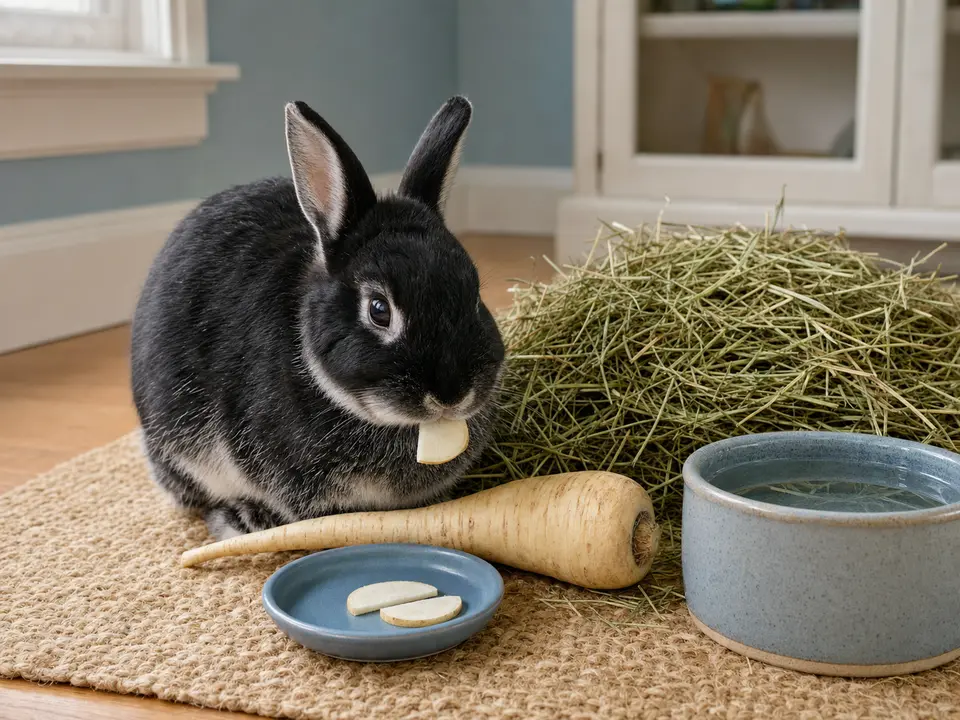
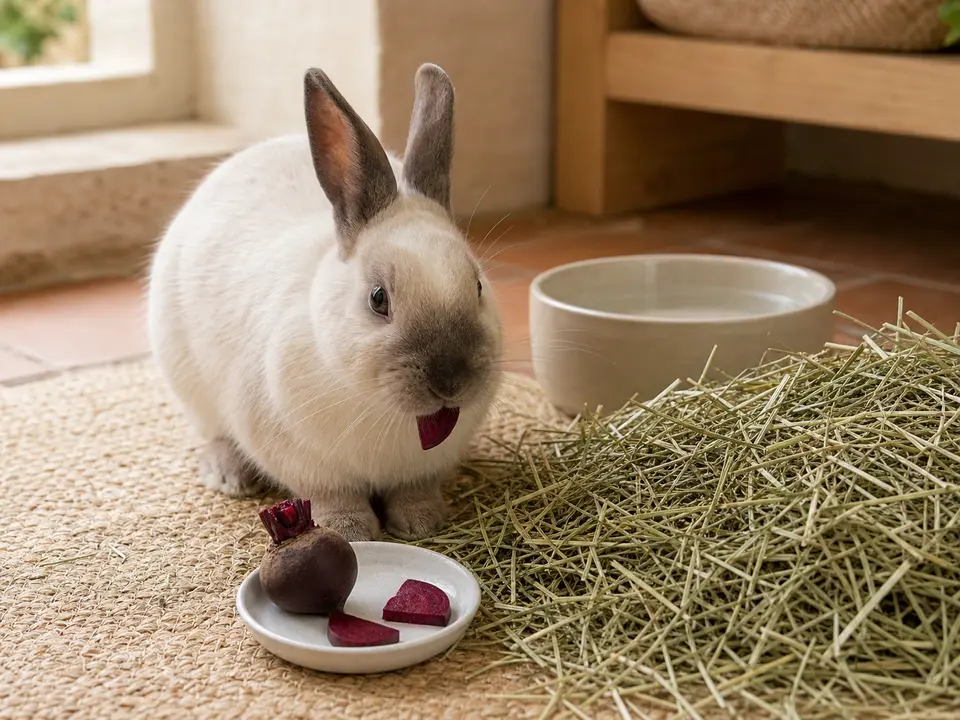
Place the saucer close to a full hay mound. Once the yellow crescent is gone, leave the dish empty. Tuck in a handful of fragrant hay; soon the rabbit should be sorting stems, crushing seed heads, and settling into the familiar meal.
Serve
- Confirm that the cut root has pale golden-yellow flesh; a white centre usually means you are holding a turnip instead.
- Scrub soil from the crown scar, dull purple shoulder, tan skin, and fine root grooves under running water.
- Cut one thin raw skin-edged wedge before the rest reaches the human chopping board or cooking pan.
- Trim away the stem scar, root tail, deep splits, soft bruises, mold, and any slimy or fermented-smelling patch.
Avoid
- Mashed, boiled, roasted, fried, pickled, canned, salted, buttered, or seasoned rutabaga made for people.
- A dish full of yellow cubes; one small wedge is enough to learn how this rabbit handles the root.
- Counting attached rutabaga greens as part of the root serving instead of deciding on the leafy portion separately.
- Roots or tops exposed to road spray, slug pellets, weed killer, pesticide, or another unknown garden treatment.
Watch
- A rabbit who goes back to pulling and chewing long hay strands
- Firm, dry pellets appearing on schedule in this rabbit's toilet corner
- Normal easy movement between the hay, water, litter box, and resting spot
- A normal appetite at the next familiar meal; call a rabbit-savvy vet promptly if eating or droppings slow or stop
Portion
Make the first serving one thin thumbnail-wide wedge. RSPCA places root vegetables in the occasional-treat category, so a successful taste should not become a bowlful or daily habit.
Tools for one clean rutabaga wedge—and no accidental bowlful
A swede is bulky, dusty, and awkward to cut for such a small rabbit serving. These picks separate the washed globe from its tops, contain the large human portion, and secure trimmings before the rabbit returns to the kitchen.
Affiliate links: Furball Cove may earn from qualifying purchases at no extra cost to you.
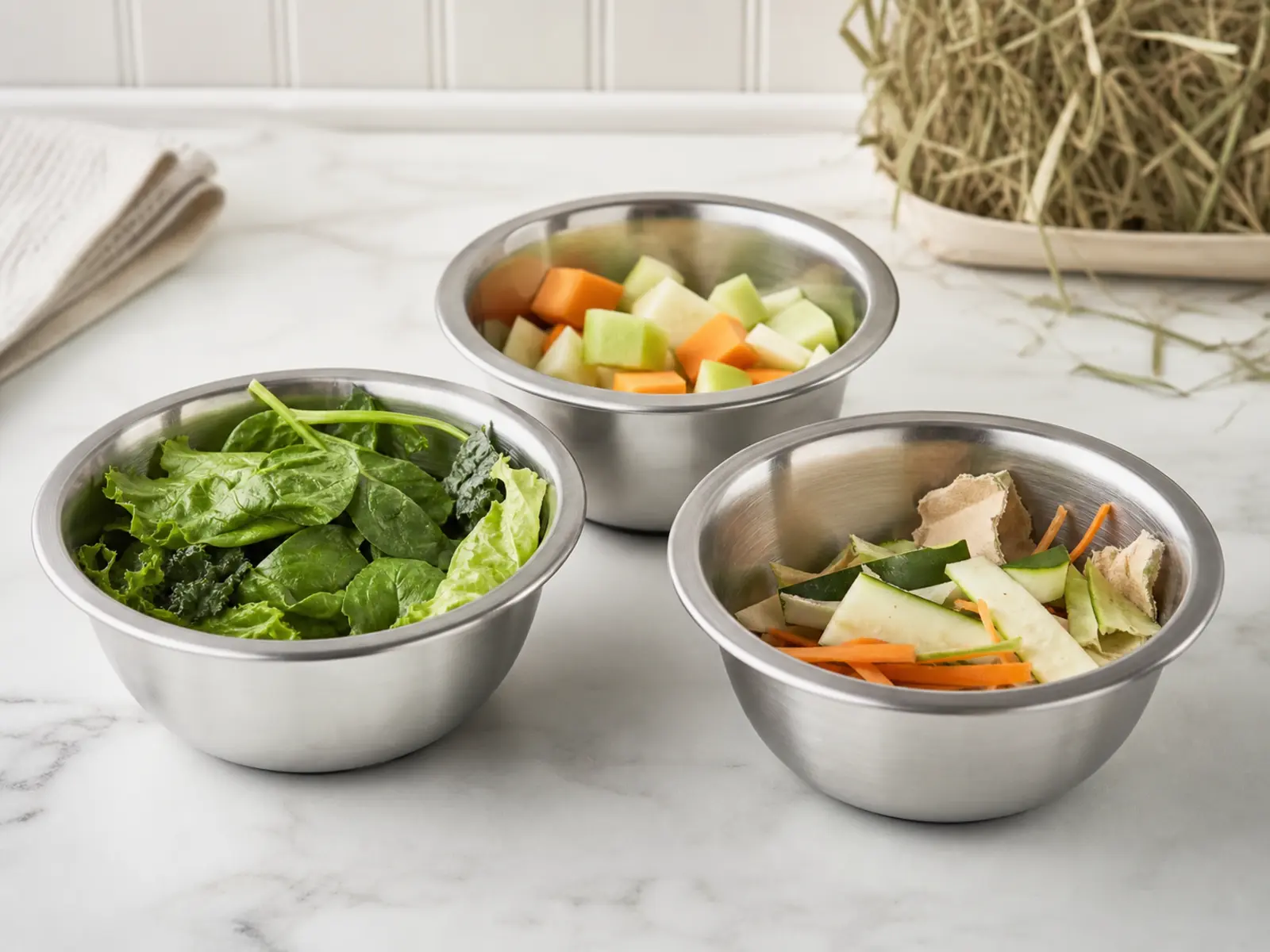
Stainless prep bowls
Use one bowl for detached greens and another for the scrubbed yellow root; the separation makes two different food decisions visible.
Shop stainless prep bowls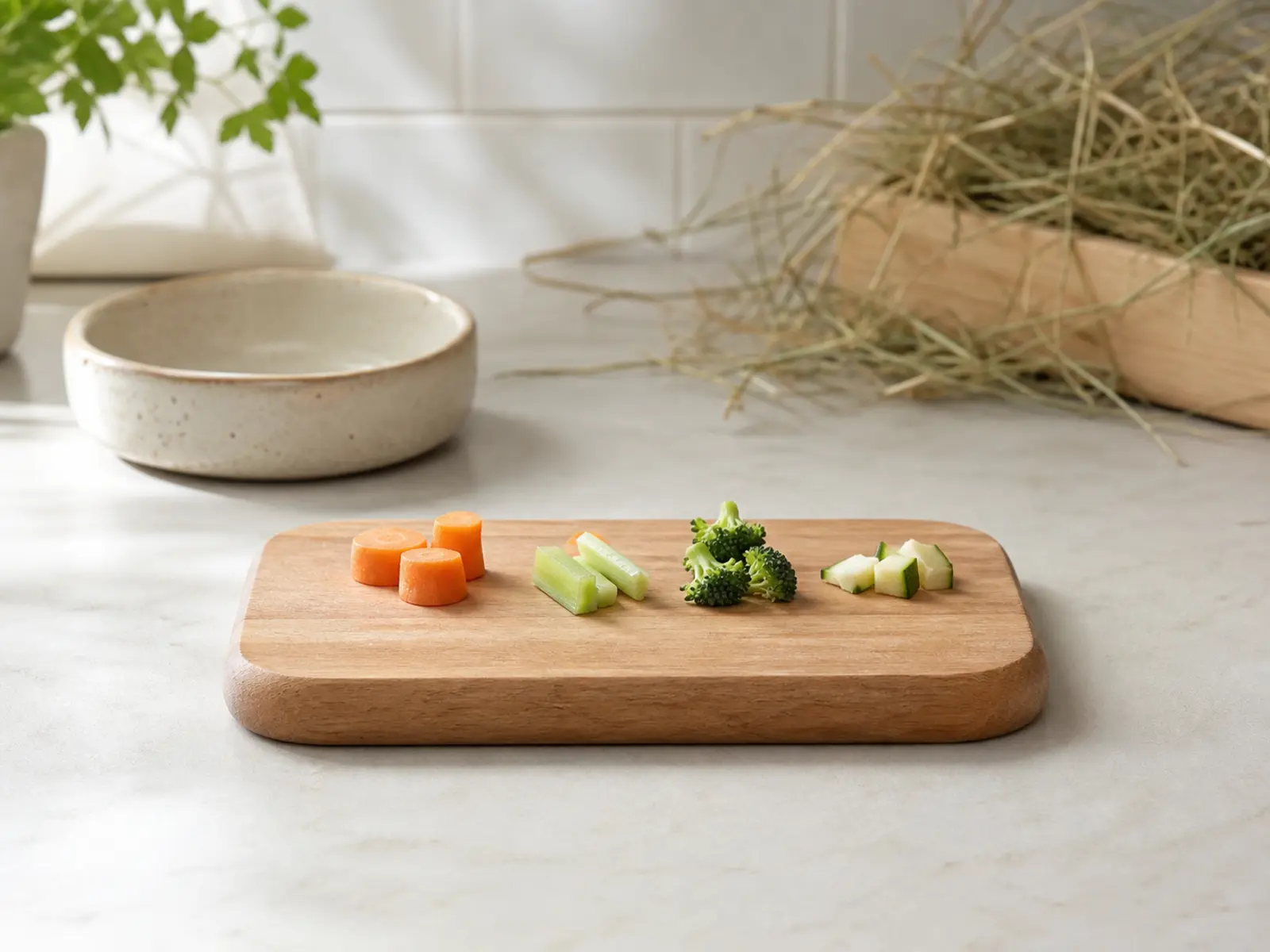
Mini cutting board
Give the heavy globe a clean, stable surface and stop after one thin skin-edged crescent instead of chopping a pile of cubes.
Shop mini cutting board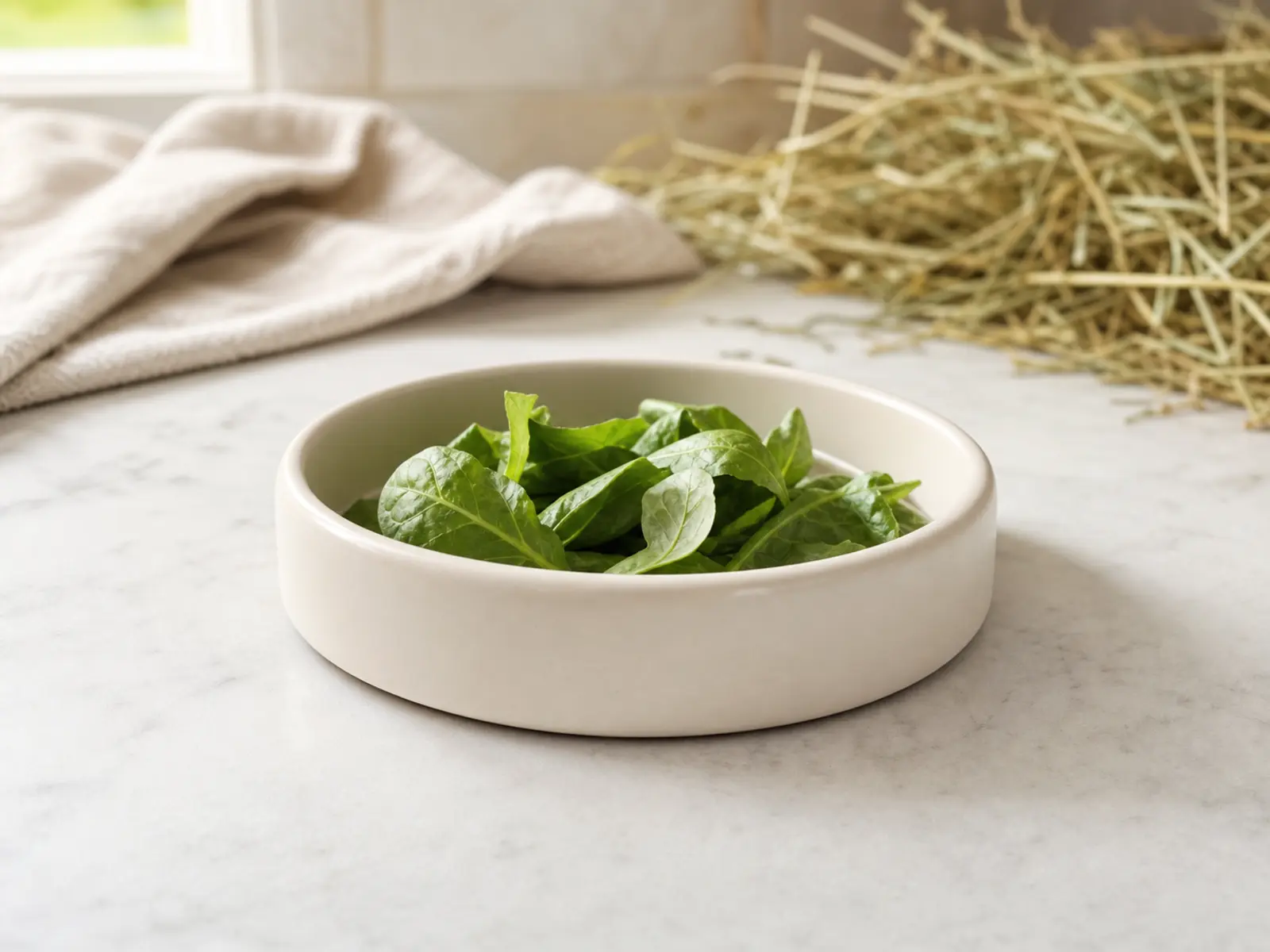
Ceramic food dish
Set the single yellow wedge on a shallow, tip-resistant dish beside the hay rather than hiding it in a deep bowl.
Shop ceramic food dish