Updated
Rabbit food check
Can Rabbits Eat Strawberry Tops? Yes—One Fresh Top
Yes—one fresh top
Yes. One fresh washed strawberry top is a safe occasional extra. Offer a leafy cap with only a thin red shoulder, and count that attached fruit as the day's fruit treat.
 Strawberry Tops
A grocery top is leaf plus fruit
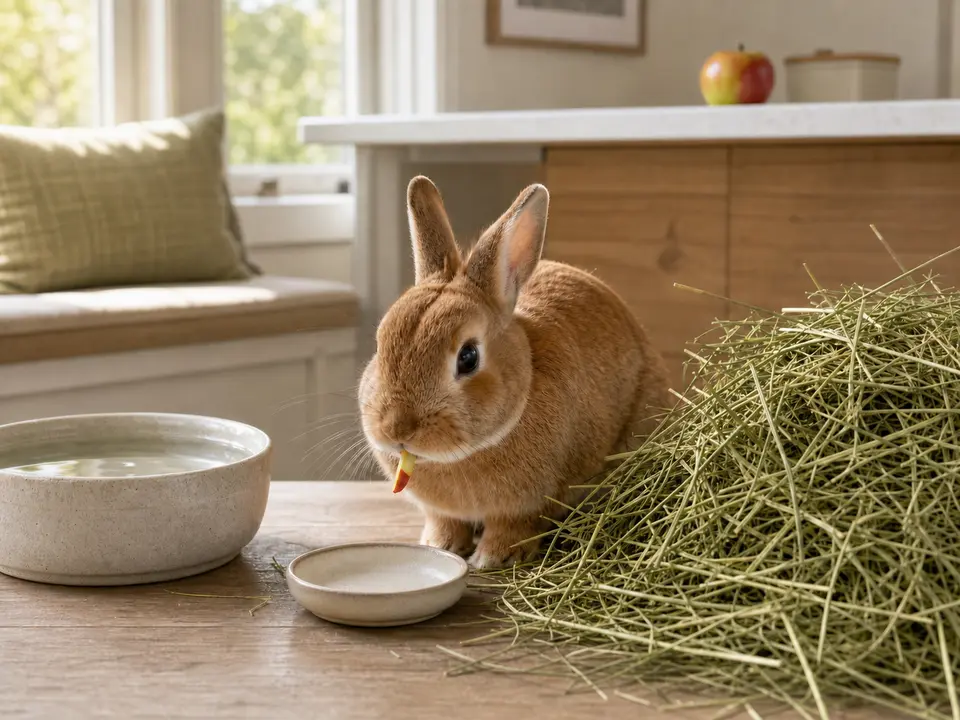
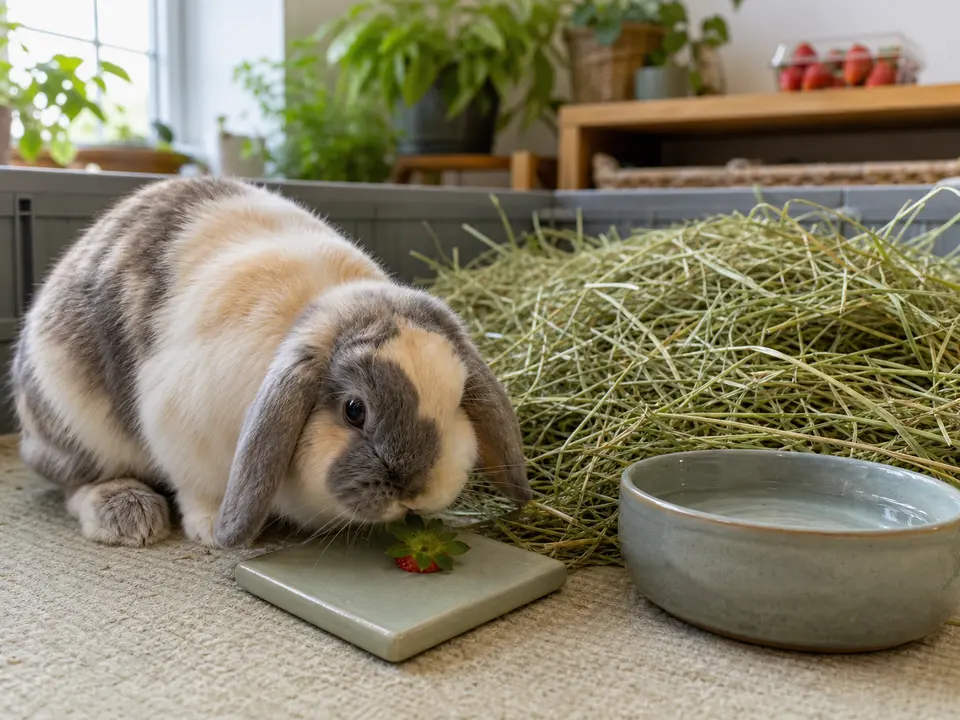
Look at a grocery strawberry top as two foods. PDSA lists the green calyx leaves among safe forage, while the red shoulder is fruit in the small occasional category. Put one mixed little extra beside the hay rack, then close the berry box instead of treating kitchen scraps as salad refills.
Lift the cap before deciding
Strawberries often soften first where the leafy crown meets the fruit. At the kitchen counter, turn the berry sideways and fan the leaves apart. Inspect the pale ring while the rabbit is still in its pen. A clean firm seam is usable; fuzz, wetness, a sunken patch, or a fermented smell sends the whole berry to compost.
Leave only a slim red shoulder
Hold the green cap and trim away most of the berry. Leave one narrow red sweep under the leaves. On the sage saucer, it should never look like half a strawberry.
The empty tile ends the serving
A rabbit may take the soft red edge first and return for the leaves. Let that single piece play out without adding another cap. Refill the hay mound, close the berry box, and check the litter box later rather than measuring success by how eagerly the top disappeared.
Sort the berry box in daylight
Set the punnet on the kitchen counter and remove any crushed berry before juices spread. Choose one firm strawberry with bright leaves, then close the box so the number of possible rabbit tops is no longer growing beside the cutting board.
Inspect the hidden ring
At the sink, rinse the whole berry and lift each leaf with a fingertip. Check the tucked-away seam, not just the glossy red face. Dry it on a clean towel; water trapped under the cap can hide a soft patch.
Cut a recognizable green star
On a small board, draw the knife just under the calyx so only a thin red rim remains. Place that single top on a sage tile beside the hay. The large berry body goes into human breakfast, not onto the rabbit plate.
Clear the counter before the pen opens
Return the closed punnet to the refrigerator, rinse away strawberry juice, and put the knife in the sink. Once floor time begins, the only fruit within reach should be the one top already counted. Hay, water, and familiar greens carry the rest of the meal.
Serve
- Rinse the intact berry under cool running water, rubbing gently around the leaves where grit can collect.
- Lift the green cap and inspect the pale seam underneath for fuzzy mold, mushy tissue, insects, or a sour smell.
- Slice one top with a thin red shoulder and remove any long dry stem. Save the ripe berry body for human breakfast.
- Offer the top on its own during a familiar greens meal so its portion and the rabbit's response stay easy to see.
Avoid
- A soft, leaking, fermented, or moldy top, even when only one side of the berry looks damaged.
- Several caps from a whole punnet; the little red shoulders add up to a real fruit serving.
- Jam-coated tops, sugared or confectionery-coated berries, smoothie scraps, dried strawberry pieces, or dessert garnish.
- Garden strawberry leaves exposed to weed killer, slug treatment, road spray, or animal waste; use only correctly identified, untreated plants.
Watch
- The rabbit leaving the tile and pulling coarse strands from the hay mound
- The usual firm round droppings scattered through the litter box later that day
- Usual interest in water, familiar greens, and a relaxed hop through the pen
- Soft stool, belly discomfort, hiding, or any drop in appetite or droppings; remove fruit treats and contact a rabbit-savvy vet promptly when eating or output slows
Portion
One ordinary grocery-store strawberry top is enough for a first serving. A broad cap cut from a very large berry may carry more fruit than it appears to, so trim the red shoulder thin and do not add another fruit that day.
Tools for one clean top, not a punnet of extras
The useful work happens before the rabbit sees a strawberry: rinse beneath the leaves, expose the hidden seam, cut a thin shoulder, and refrigerate everything else. These picks keep that one-top routine visible and tidy.
Affiliate links: Furball Cove may earn from qualifying purchases at no extra cost to you.
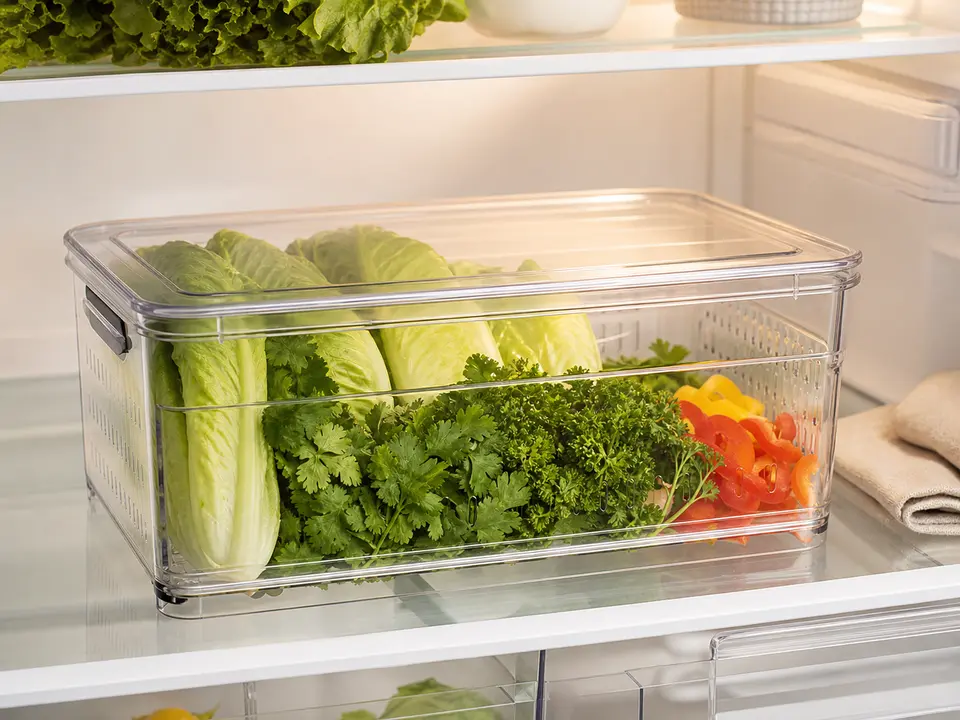
Rabbit greens bin
Keep the closed berry box dry and visible in the refrigerator so soft fruit is found before it becomes a rabbit trimming.
Shop rabbit greens bin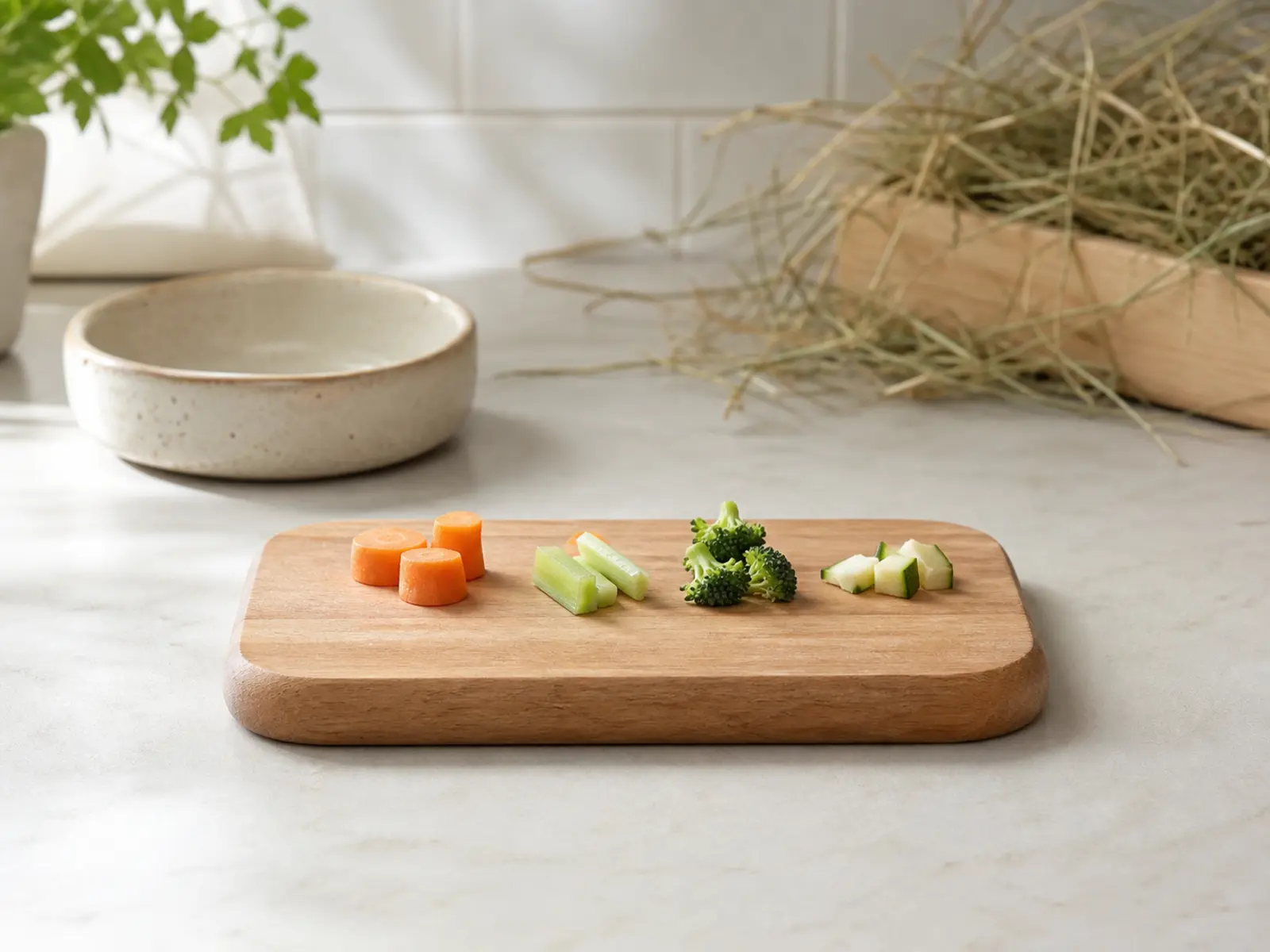
Mini cutting board
Use the compact board to slice just under the green star, leaving a thin red rim instead of half a berry.
Shop mini cutting board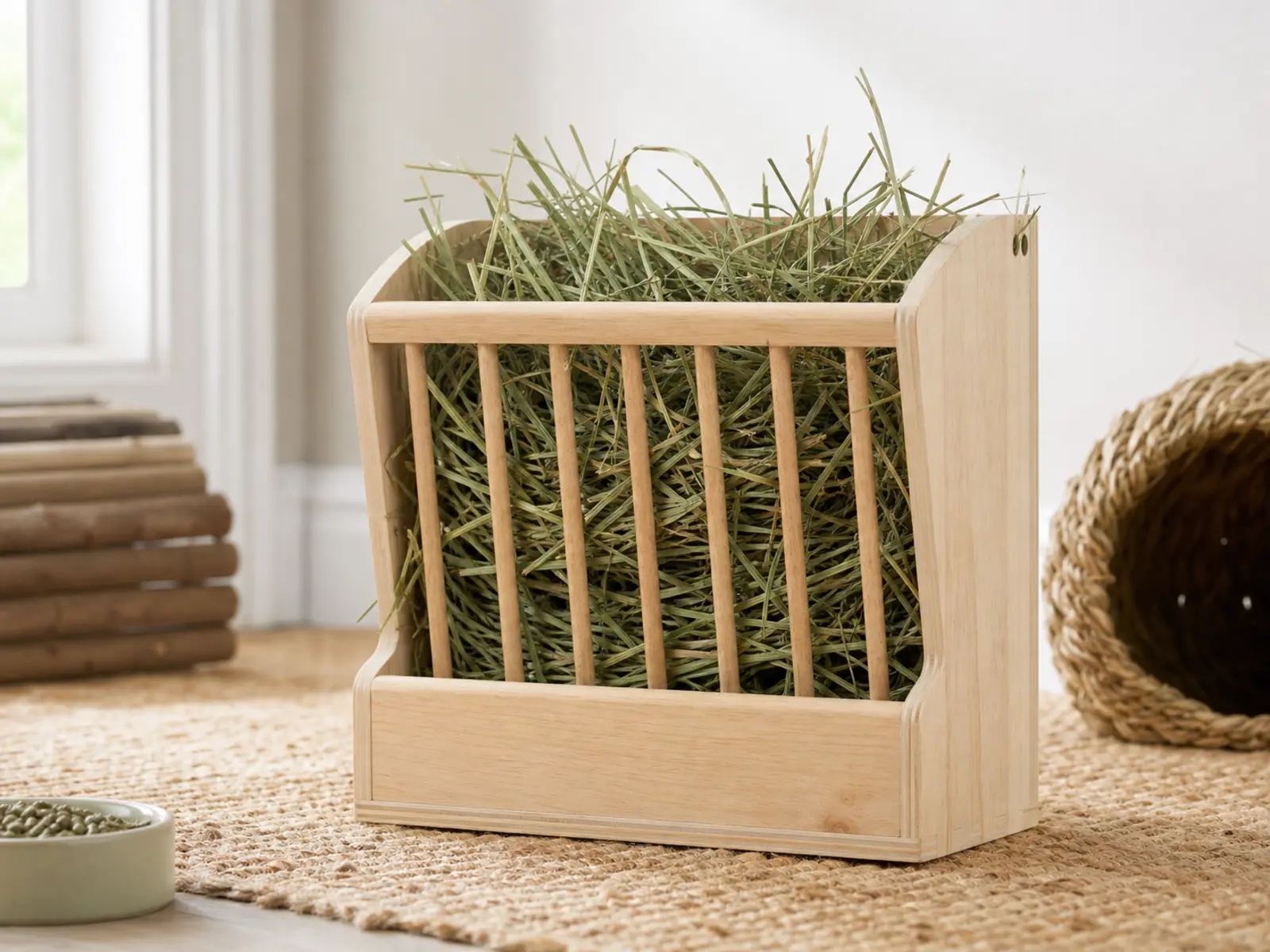
Rabbit hay feeder
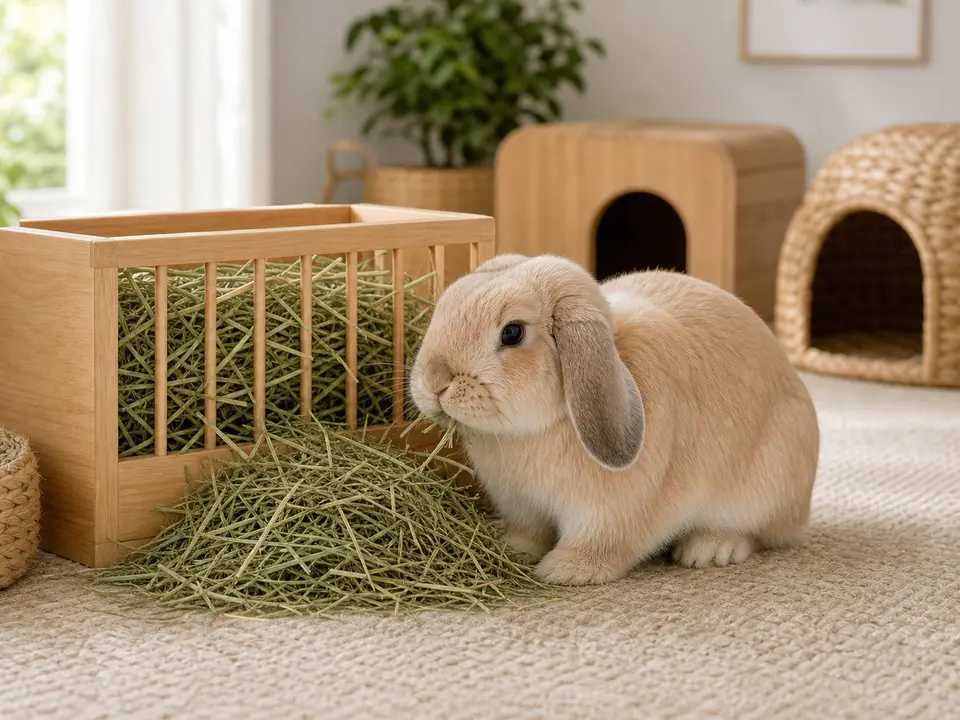
Pack the hay station first so the strawberry top remains one quick side note beside a full long-strand meal.
Shop rabbit hay feeder