Updated
Rabbit food check
Can Rabbits Eat Watercress? Yes—Rinse the Sprigs
Yes—fresh labeled sprigs
Yes. Adult rabbits can eat fresh watercress leaves and tender stems. Use a labeled grocery bunch, rinse one modest sprig through its clustered leaflets, and serve it plain among familiar greens beside unlimited grass hay. Do not substitute an unidentified streamside plant or a prepared soup or sandwich filling.
 Watercress
Yes—fresh watercress is a rabbit-safe green
House Rabbit Society lists watercress among safe leafy greens, while VCA names it among particularly good vegetables. One washed grocery sprig can join the adult greens plate. Keep unlimited grass hay available before and after the peppery leaves are gone.
Round leaflets cluster along tender stems
Watercress carries small smooth oval leaflets on branching succulent stems, often with a larger leaflet at the tip. The tender upper stem can stay with the leaves. Keep the label until the rabbit's sprig reaches the saucer.
Open every cluster before serving
A bunch can trap grit, damaged leaves, and moisture where several little stems meet. Pull one sprig free and fan it open under running water. Slippery joints, sour odor, black spots, or collapsed leaves mean that piece is finished.
Lower calcium does not make it an unlimited food
House Rabbit Society includes watercress among useful choices in a lower-calcium greens plan. That comparison does not turn one leaf into treatment. Rotate the sprig, keep hay and water central, and let the clinic review the whole diet for urinary disease.
Read watercress on the grocery band
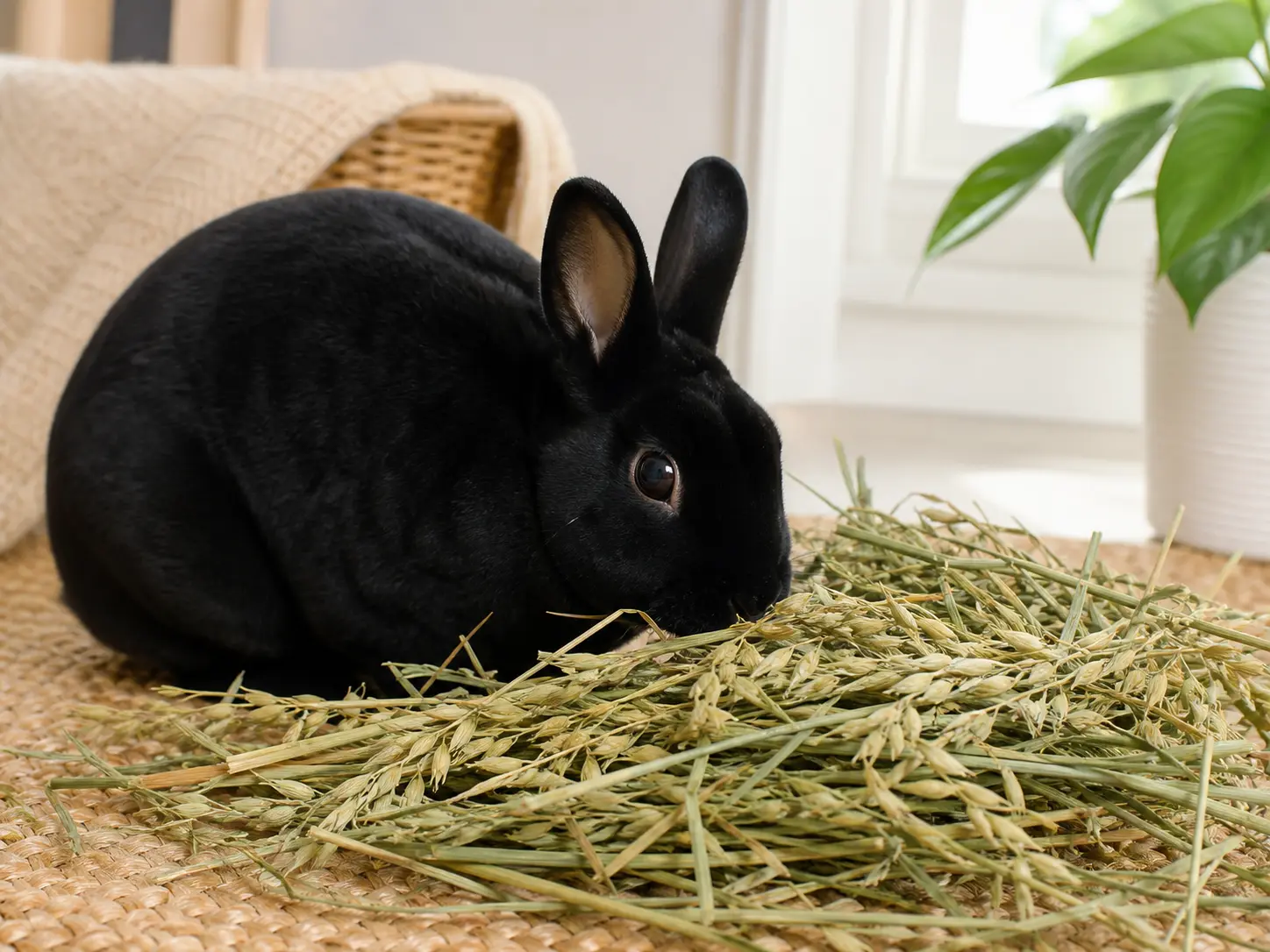
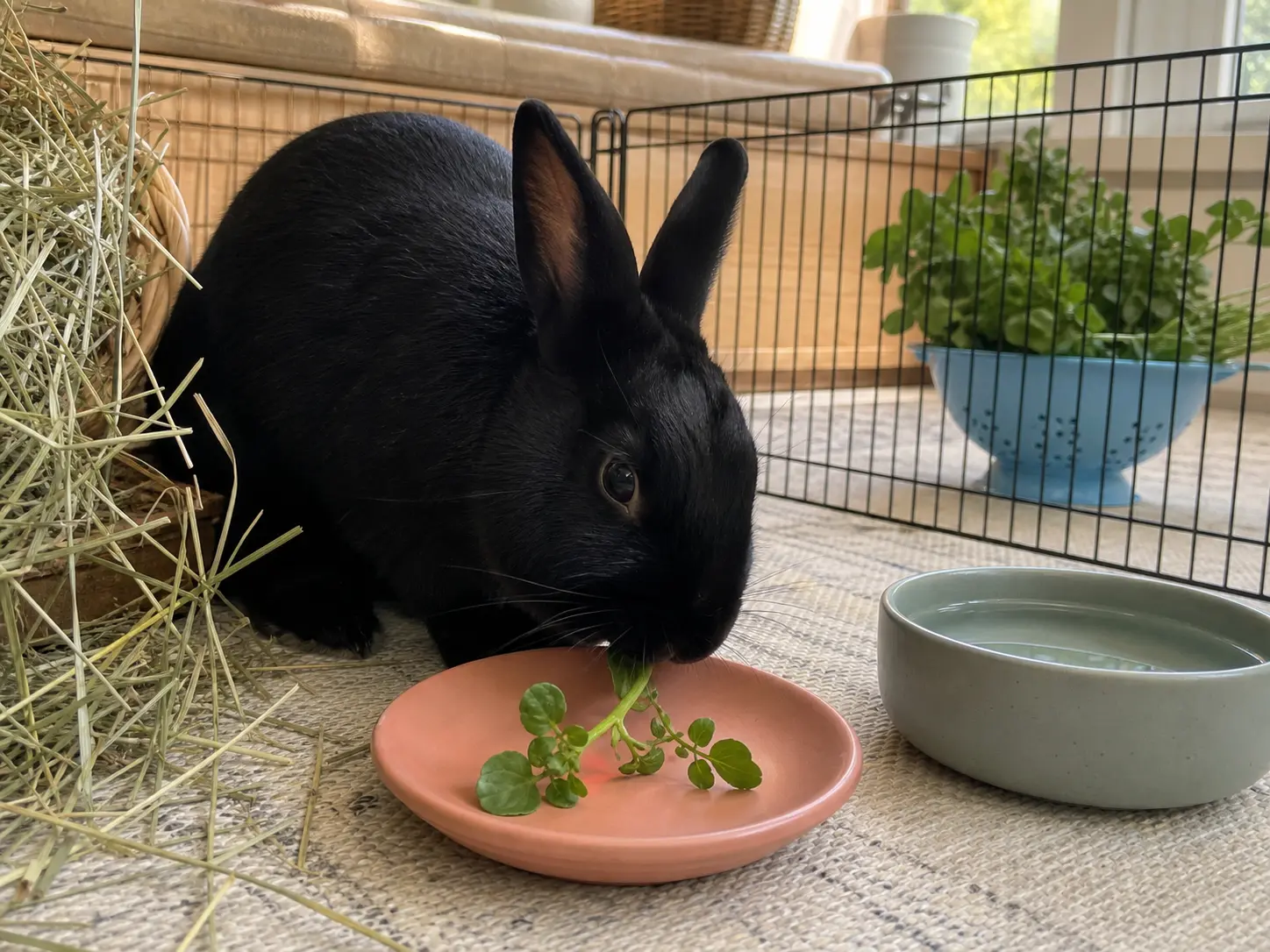
The band identifies the bunch as watercress. Rounded leaflets branch from pale-green tender stems in the blue colander. The black Havana waits beside oat hay while one sound sprig moves to the sink.
Fan out the little leaflet clusters
Turn the sprig under cool water and spread every fork with a fingertip. Yellow slime, fuzzy spots, sour odor, or a blackened joint sends that piece to the compost.
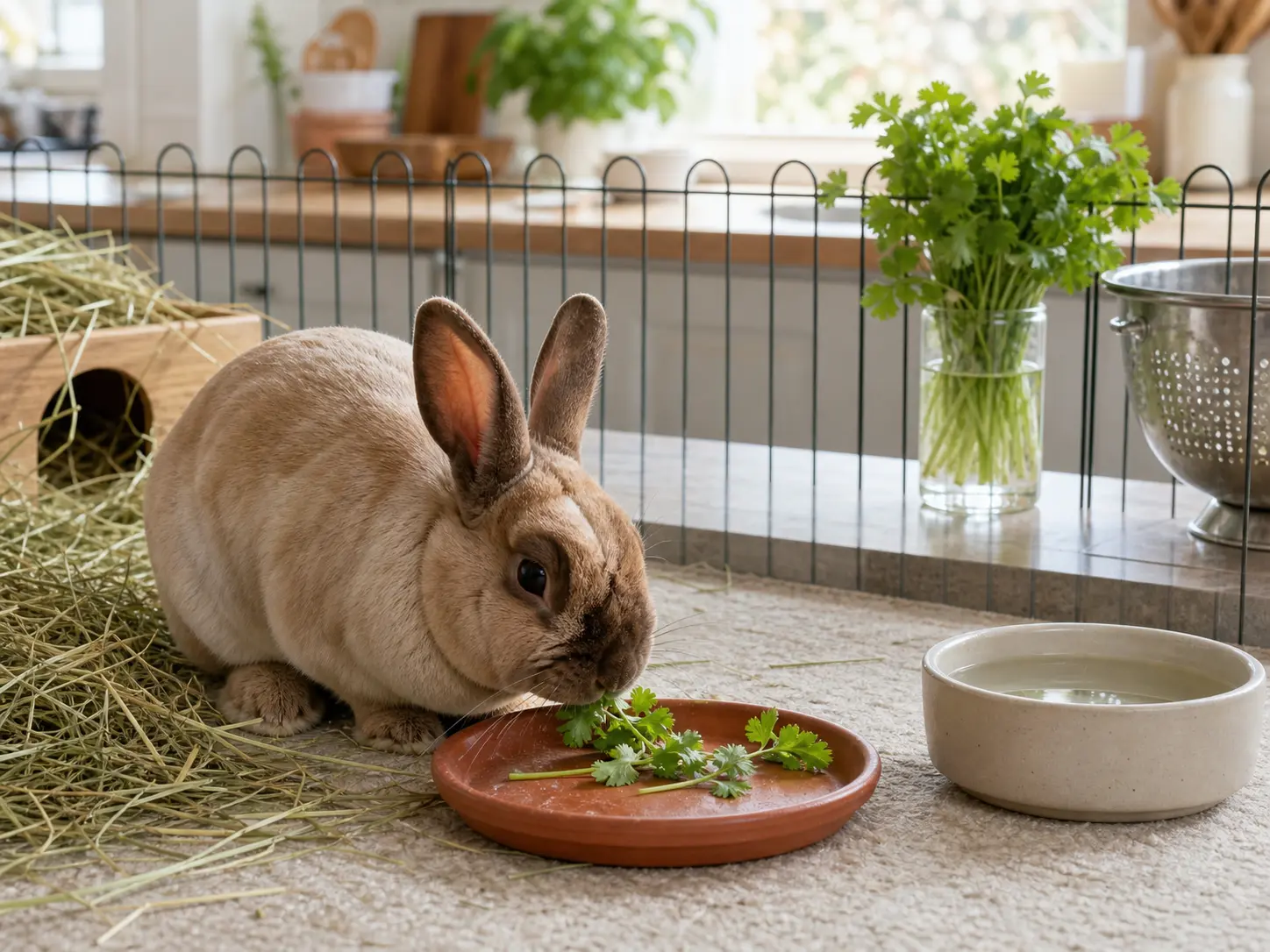
Set one peppery sprig on the coral saucer
The washed leaves and short tender stem go beside hay and water. The remaining bunch returns to the refrigerator before anyone blends soup or adds cream, oil, cheese, salt, or sauce.
Look for hay chewing after the sprig
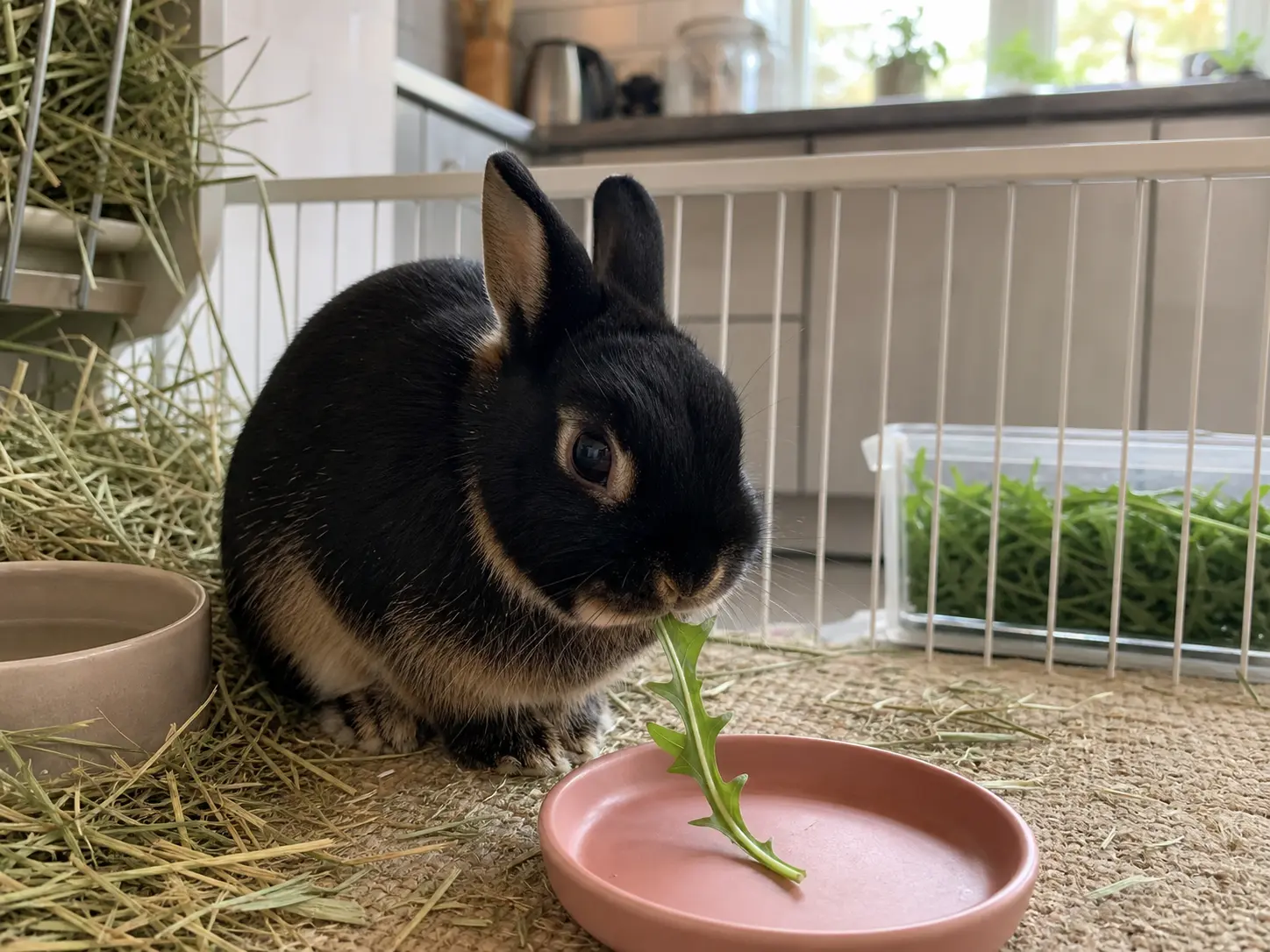
An empty saucer means the watercress was popular. Later, look for pulled hay stems, relaxed movement, and separate round droppings. Slower eating or output, hunching, or a painful posture needs prompt rabbit-savvy veterinary advice.
Serve
- Confirm watercress from a grocery label. Look for tender branching green stems with clusters of smooth rounded leaflets and a slightly larger leaflet at the tip.
- Spread the bunch and inspect the crowded lower stems. Discard yellow slime, fuzzy growth, sour odor, blackened joints, crushed wet leaves, and pest damage.
- Rinse one sprig under cool running water. Fan apart every leaflet cluster and rub the stem forks where grit and damaged tissue can hide.
- Serve the sound sprig plain with its short tender stem. Refrigerate the rest before soup, sandwich filling, dressing, sauce, salt, or seasoning reaches it.
Avoid
- A streamside, ditch, pond-edge, or garden plant identified as watercress from a photo alone. Unknown plants, water quality, animal waste, and spray history make a grocery bunch the safer choice.
- Garden cress sprouts, water spinach, arugula, clover, or a mixed salad substituted because the names or small leaves seem similar.
- Watercress soup, purée, pesto, sandwich filling, restaurant garnish, or leaves carrying cream, stock, oil, cheese, butter, salt, sauce, or seasoning.
- A large wet tangle used as one serving. Watercress should share a varied greens rotation rather than crowding out hay and every other leaf.
- A moldy, slimy, sour-smelling, badly wilted, gritty, pest-damaged, chemically treated, or unidentified sprig.
Watch
- The watercress sprig disappearing while the rabbit continues ordinary visits to the hay pile
- Normal posture, movement, water use, urination, and interest in familiar food
- The rabbit's usual separate round droppings after a first watercress tasting
- Reduced eating or droppings, soft stool, diarrhea, belly pressing, hunching, tooth grinding, weakness, or unusual quietness; contact a rabbit-savvy veterinarian promptly
Portion
For an adult already eating leafy vegetables, one modest watercress sprig can share the usual greens allowance. Begin with less if it is new. The moist peppery sprig adds variety; it does not replace unlimited grass hay or justify an overflowing bowl.
Keep delicate watercress sprigs labeled, open, and easy to rinse
These produce-prep tools help keep the bunch identifiable, expose wet stem forks, rinse clustered leaflets, and reserve one plain rabbit sprig before kitchen recipes begin.
Affiliate links: Furball Cove may earn from qualifying purchases at no extra cost to you.
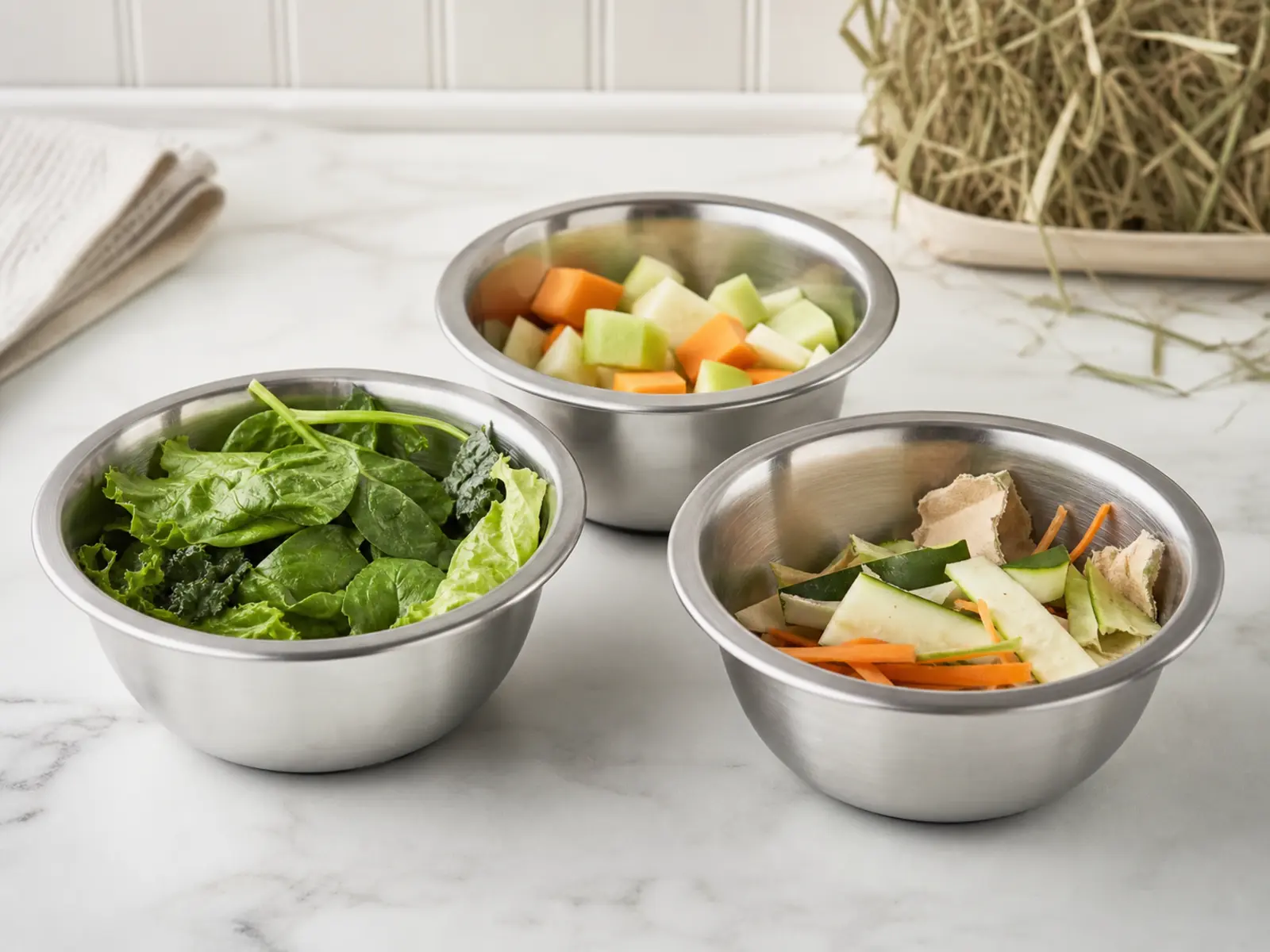
Stainless prep bowls
Reserve the rabbit's washed sprig before the rest meets cream, stock, oil, cheese, butter, salt, sauce, or a blender.
Shop stainless prep bowls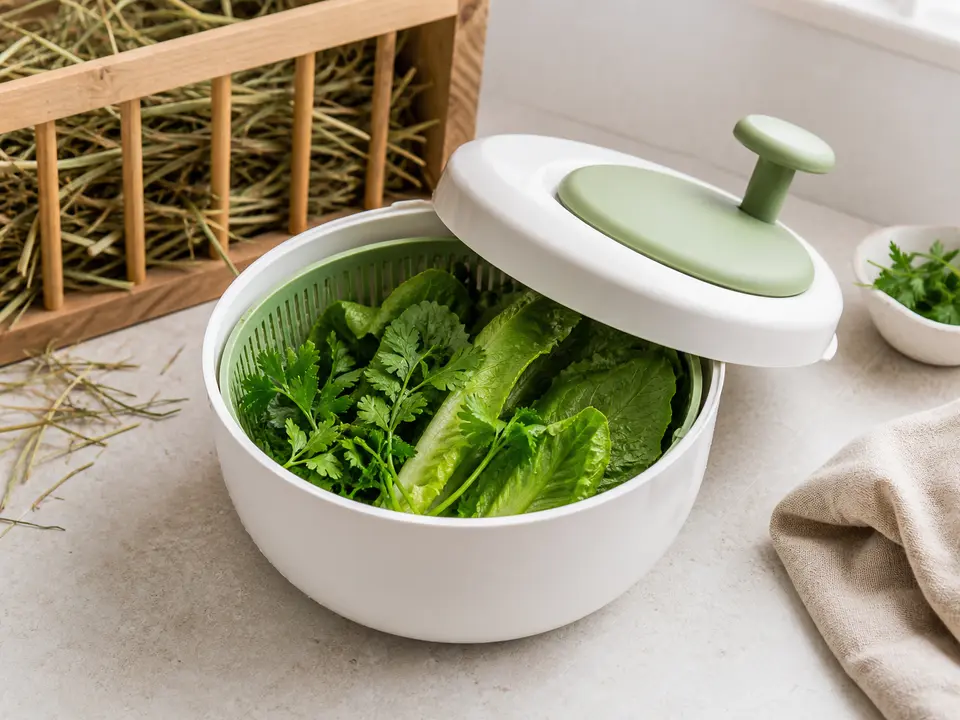
Salad spinner
Dry an already inspected batch gently before storage so rinse water does not pool around delicate stems and leaflets.
Shop salad spinner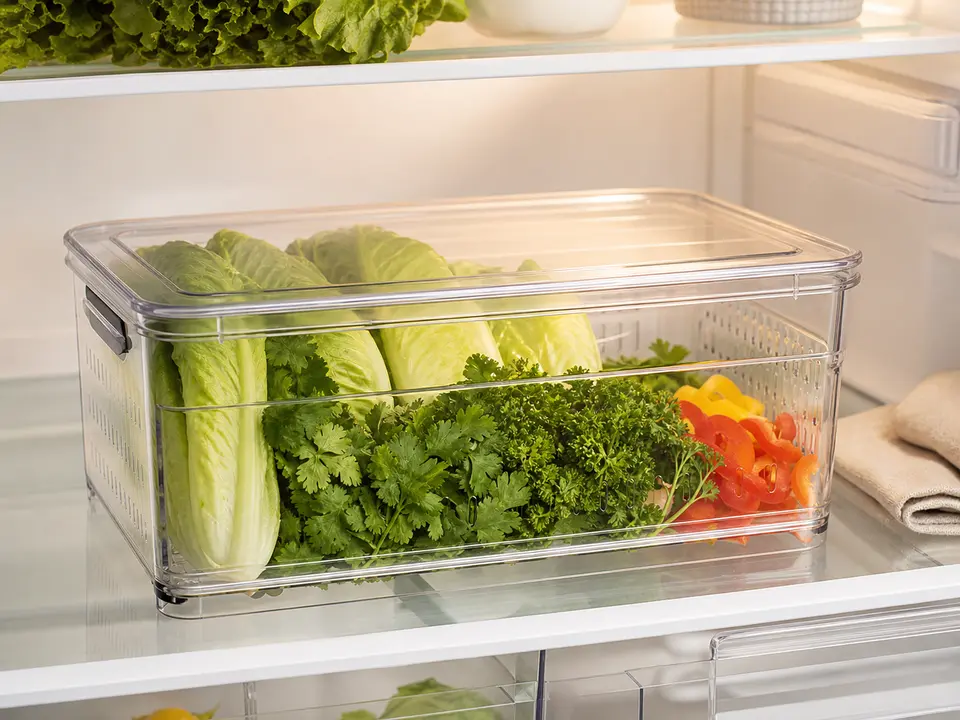
Rabbit greens bin
Give the labeled bunch a visible refrigerator space where yellow leaves, wet joints, and the opened date remain easy to inspect.
Shop rabbit greens bin