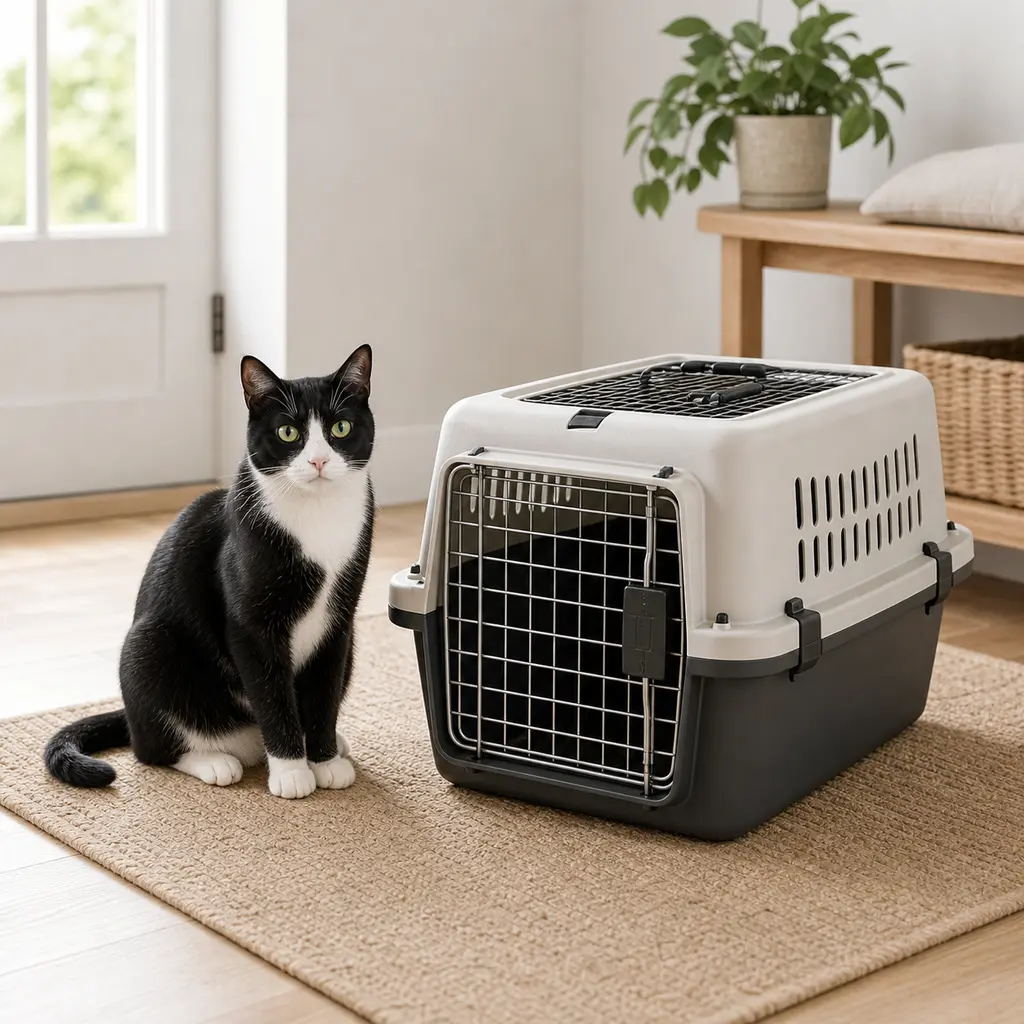
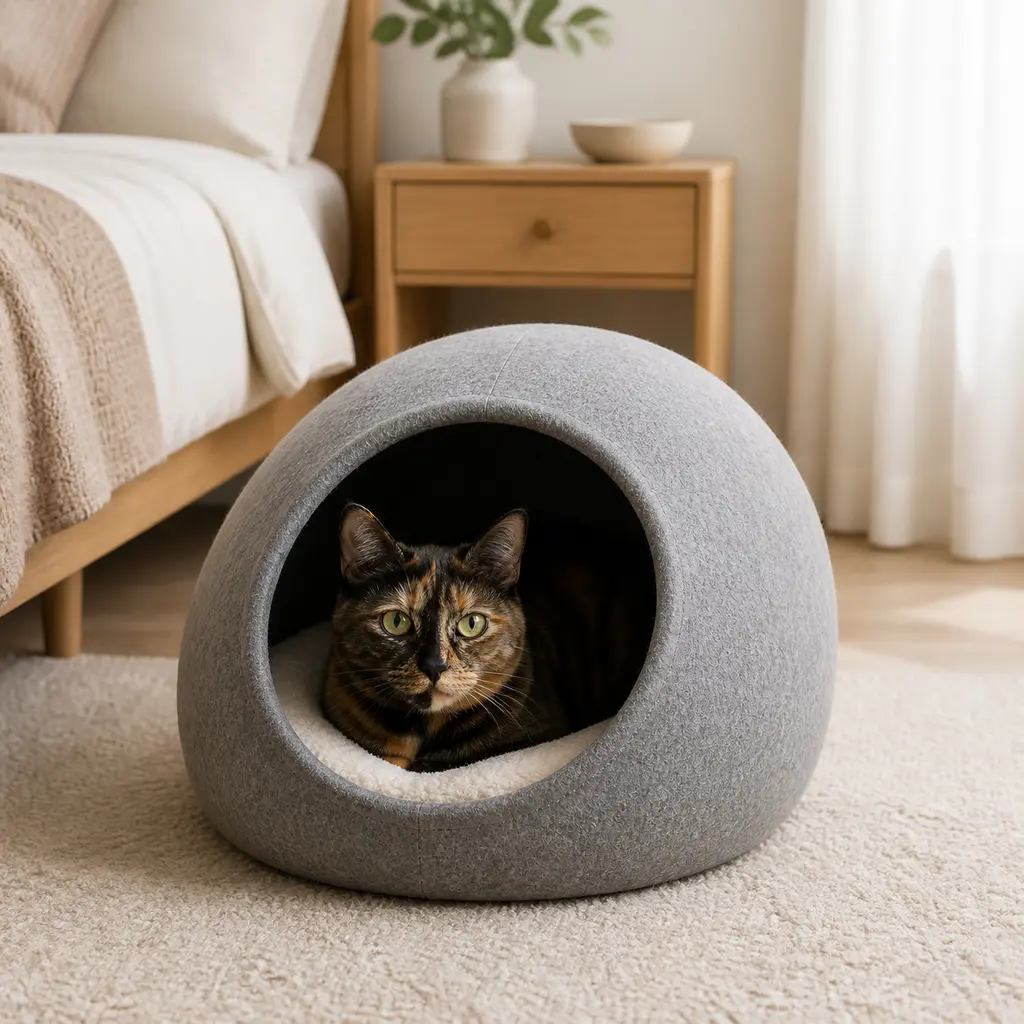
A cat-safe apartment manages windows, cords, plants, cleaners, balconies, hiding gaps, litter access, scratching, and vertical space.
A cat-safe home is built around what cats actually do: climb, chew, hide, sprint, scratch, nap in odd places, and investigate anything new.
Start with the room setup
A cat-safe apartment manages windows, cords, plants, cleaners, balconies, hiding gaps, litter access, scratching, and vertical space.
Start with the path your cat already uses. Food, water, litter, scratching, climbing, hiding, and rest should be easy to reach without crossing a stressful bottleneck.
What this looks like at home
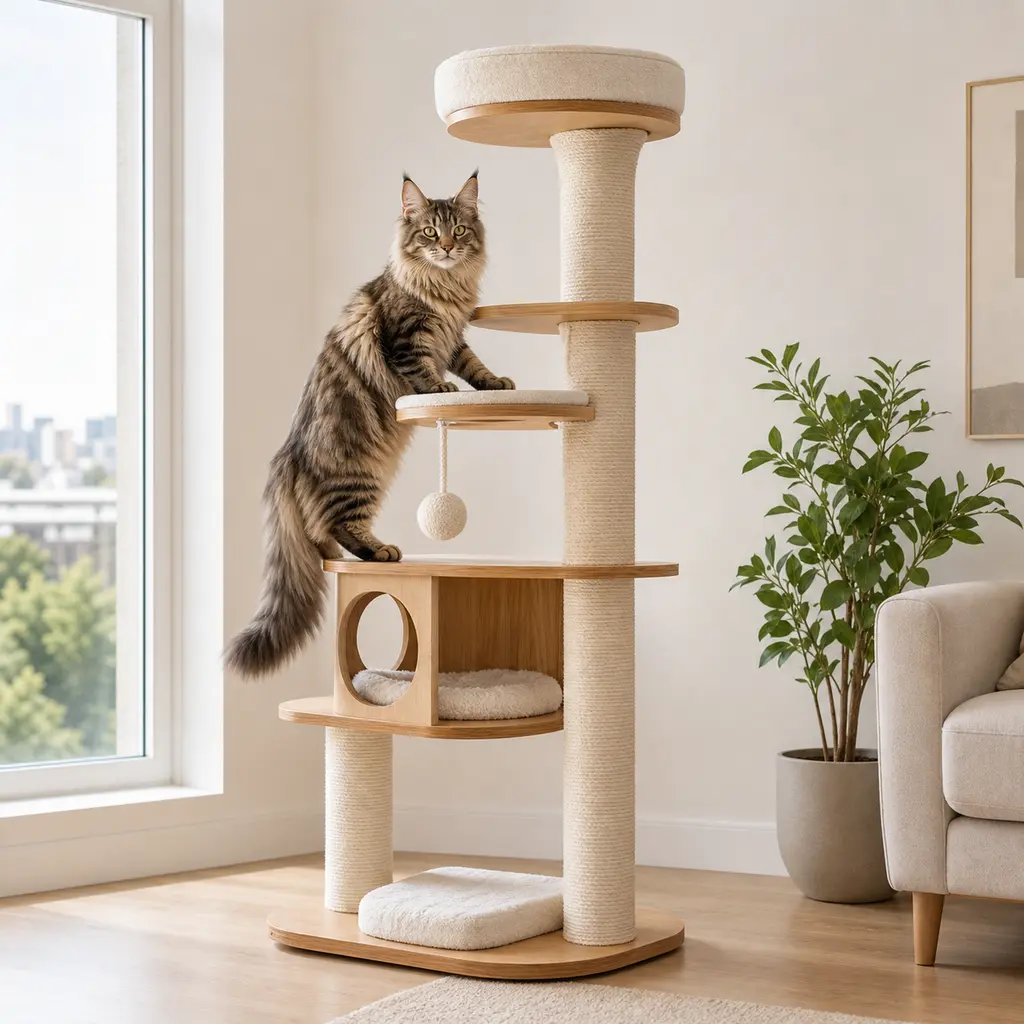
Small spaces can work beautifully for cats when the room has height, routine, safe windows, clean litter, and places to retreat.
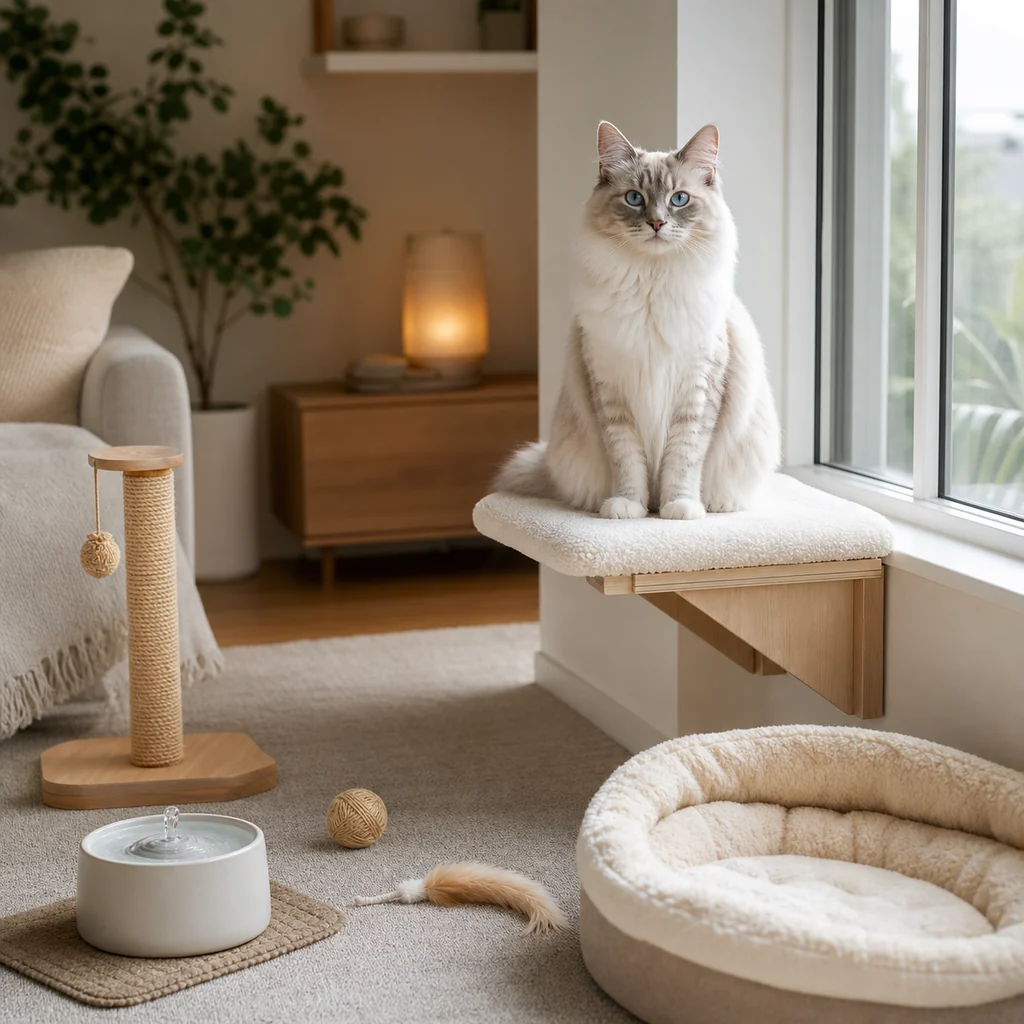
A useful setup gives your cat clear paths to food, water, litter, scratching, rest, hiding, and vertical space without forcing them through a noisy or crowded spot.
What to do next
Secure screens, remove toxic plants, hide cords, add scratchers and perches, and make sure litter is easy to reach.
Move one object, route, or resource at a time. Your goal is a room where the cat can choose food, litter, rest, scratching, and retreat without conflict.
Before you decide
Is this a new pattern or a long-standing habit?
Did food, litter, home setup, visitors, pets, or routine change recently?
Does your cat still eat, drink, use the box, move, and rest normally?
Would pain, toxin exposure, or sudden illness make this urgent?
Next best moves
Make one small change and observe before changing everything.
Keep notes if the pattern repeats.
Call your vet quickly for sudden health, pain, toxin, or litter-box warning signs.
Quick cat question
How do I make a cat-safe apartment?
A cat-safe apartment manages windows, cords, plants, cleaners, balconies, hiding gaps, litter access, scratching, and vertical space.
Is this a substitute for a veterinarian?
No. Use it to understand the routine and decide what to ask, but call your veterinarian for illness, pain, toxins, sudden behavior changes, or anything that feels urgent.