How do I monitor weight loss in a fluffy senior cat?
To monitor weight loss in a fluffy senior cat, use your hands, photos, meal notes, water and litter notes, and clinic weights instead of trusting the coat to show the change.
A thick coat can hide a thinning body for a long time. The best routine is gentle, repeatable, and focused on trends rather than one scary guess.
Use your hands under the fluff
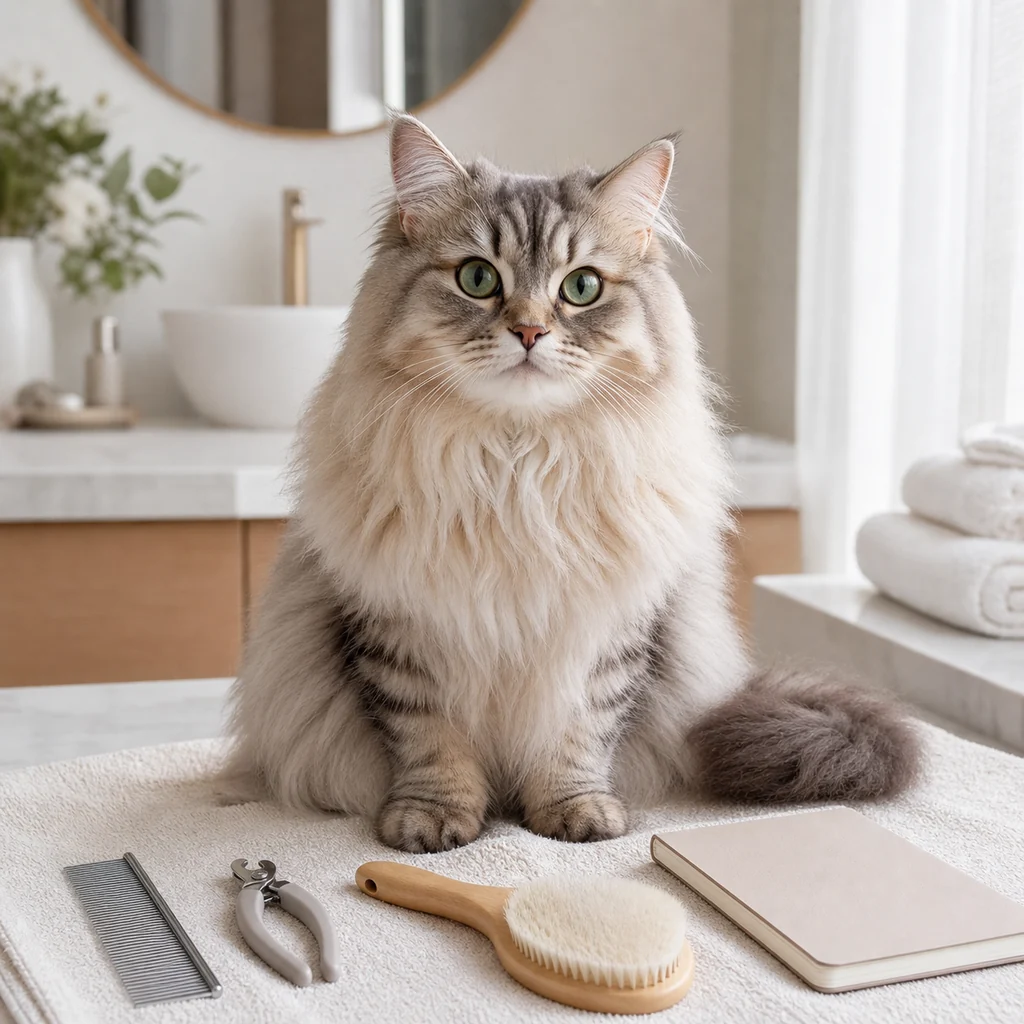
During calm petting or grooming, feel ribs, spine, hips, and muscle over the back legs. You are looking for change from your cat's normal body, not a perfect number.
Senior-cat changes deserve a slower read. Compare the new pattern with appetite, weight, litter habits, jumping, grooming, sleep, and whether the room has become harder to use.
Keep a simple weight record
Use veterinarian or clinic weights when you have them. If home weighing is safe and calm, record the date and method so you are comparing the same kind of number each time.
Make the next step easy on joints and predictable for the routine. Lower the entry, shorten the jump, add traction, warm the bed, or schedule the checkup before guessing.
Track meals, water, and litter together
Weight loss with more thirst, bigger urine clumps, vomiting, diarrhea, dropped food, or a bigger appetite is more concerning than a small change you cannot repeat.
Do not write off sudden senior changes as age. Appetite loss, weight loss, new hiding, pain, falls, litter changes, or confusion deserve a veterinary conversation.
Do not wait for the coat to prove it
Fluffy cats can look normal while losing muscle. If your senior cat feels thinner or the trend keeps moving down, call your veterinarian with the notes.
Start by comparing today with your cat's normal. A senior cat who changes appetite, litter habits, jumping, grooming, sleep, or social behavior is giving useful information.
Before you decide
Can you feel more ribs, spine, hips, or back-leg bone than before?
Do clinic or home weights show a trend?
Are appetite, thirst, urine clumps, stool, vomiting, dental comfort, and energy normal?
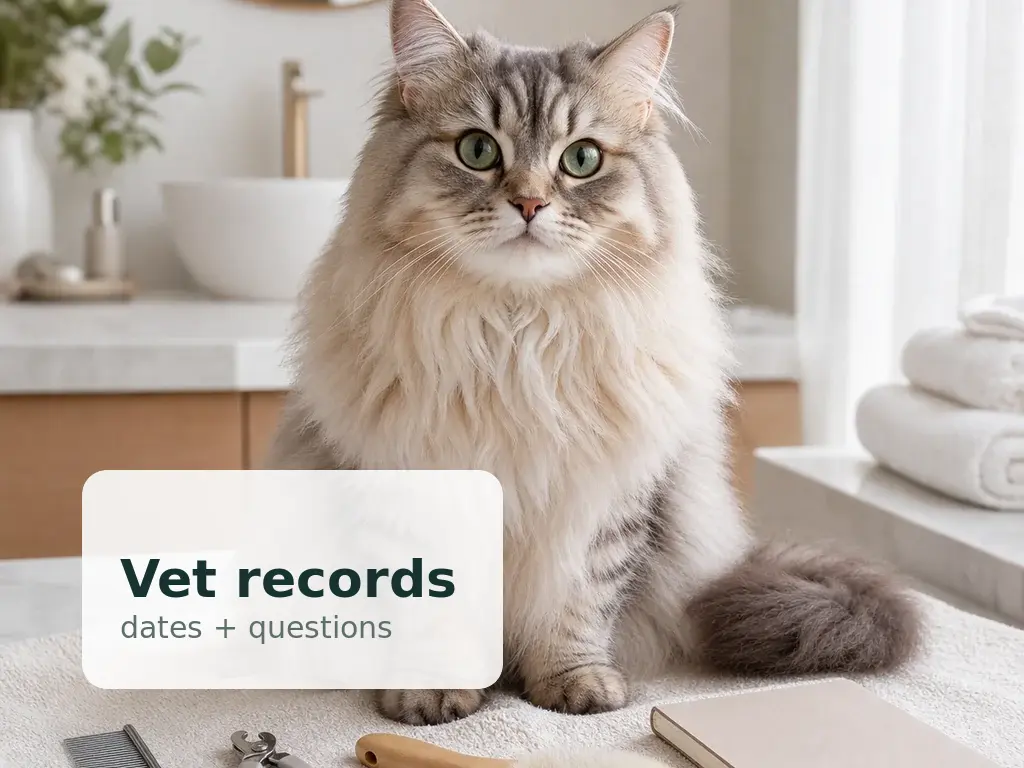
Is the coat hiding muscle loss or sudden thinness?
Next best moves
Take a calm body-feel note during grooming once a week.
Keep weight, meals, water, litter, and vomiting notes together.
Schedule a veterinarian visit for unexplained or continuing loss.
Quick cat question
How do I monitor weight loss in a fluffy senior cat?
To monitor weight loss in a fluffy senior cat, use your hands, photos, meal notes, water and litter notes, and clinic weights instead of trusting the coat to show the change.
When should I get help?
Schedule a veterinarian visit for unexplained weight loss, increased thirst, appetite change, vomiting, diarrhea, poor coat, weakness, hiding, dental clues, or a senior cat who feels suddenly thinner.