How Do I Keep Pellets From Becoming My Whole Rabbit Bond?
Measure pellets, refresh hay first, and spend calm floor time when no food is changing hands. Pellets can support trust and cooperation, but your rabbit should also learn that your presence means safety, choice, and ordinary companionship.
It is normal for a rabbit to race toward the sound of the scoop. The useful goal is not less enthusiasm—it is a relationship with more than one reason to approach you.
Measure the whole serving before it appears
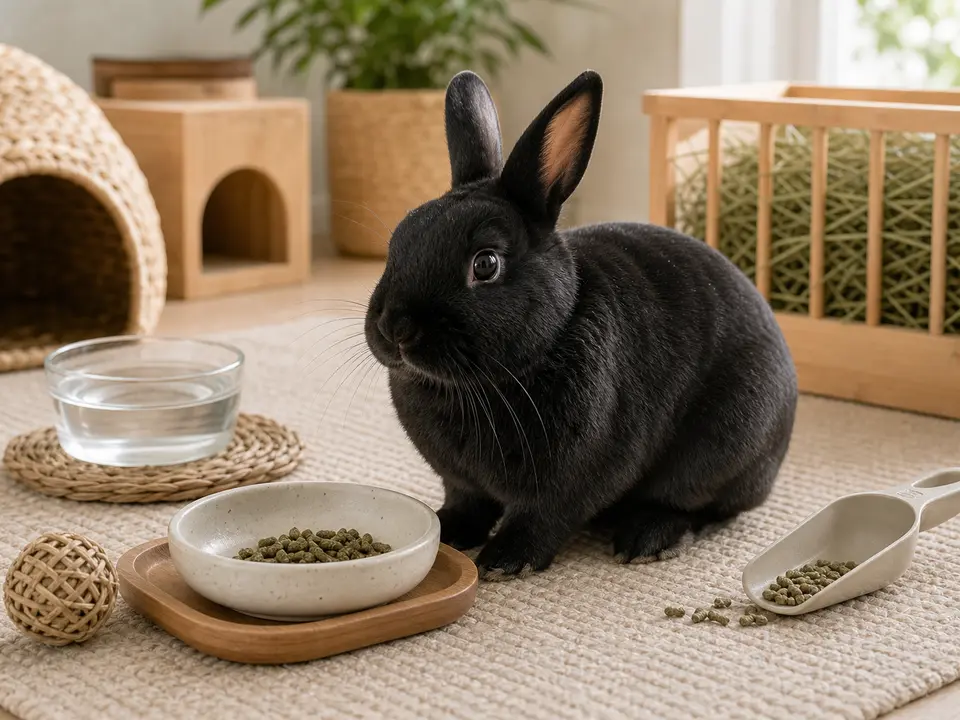
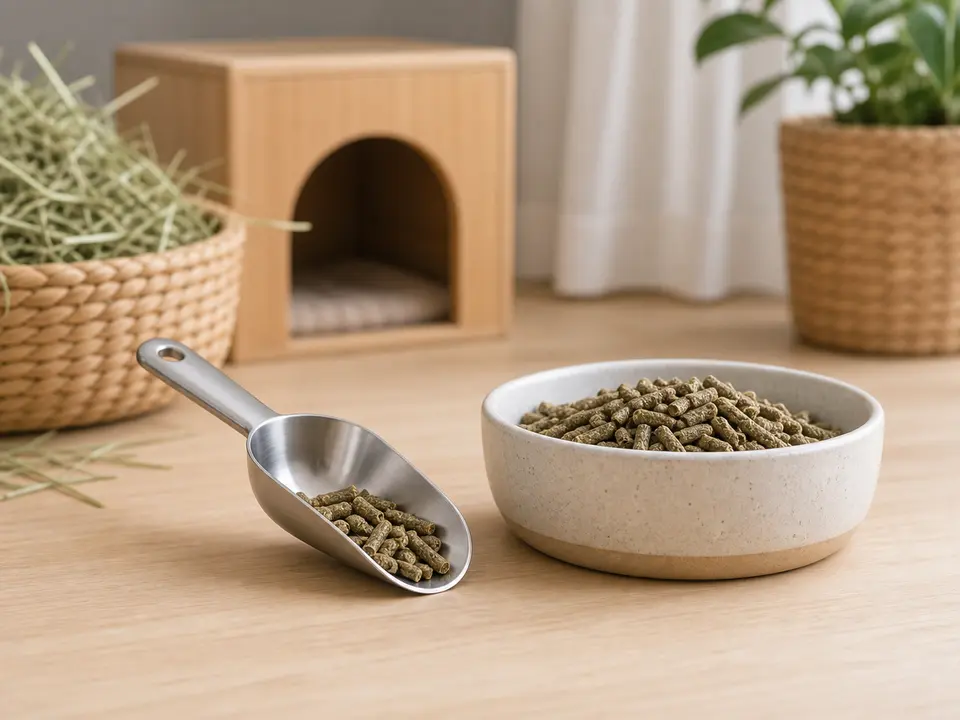
Use the same scoop and measure the day's pellets before your rabbit sees the bowl. Free-pouring makes the amount drift and turns every cupboard visit into a negotiation.
Ask your veterinarian to help set the serving for your rabbit's age, weight, health, and hay appetite. A measured scoop is easier to discuss and adjust than a bowl that gets topped up by eye.
Refresh hay before the pellet cue
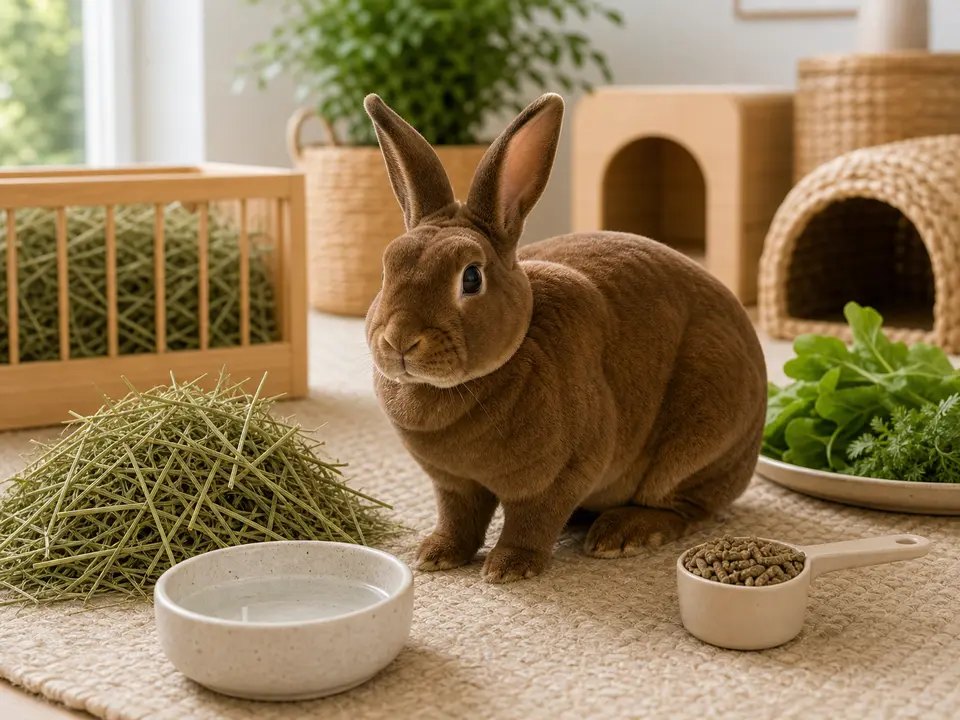
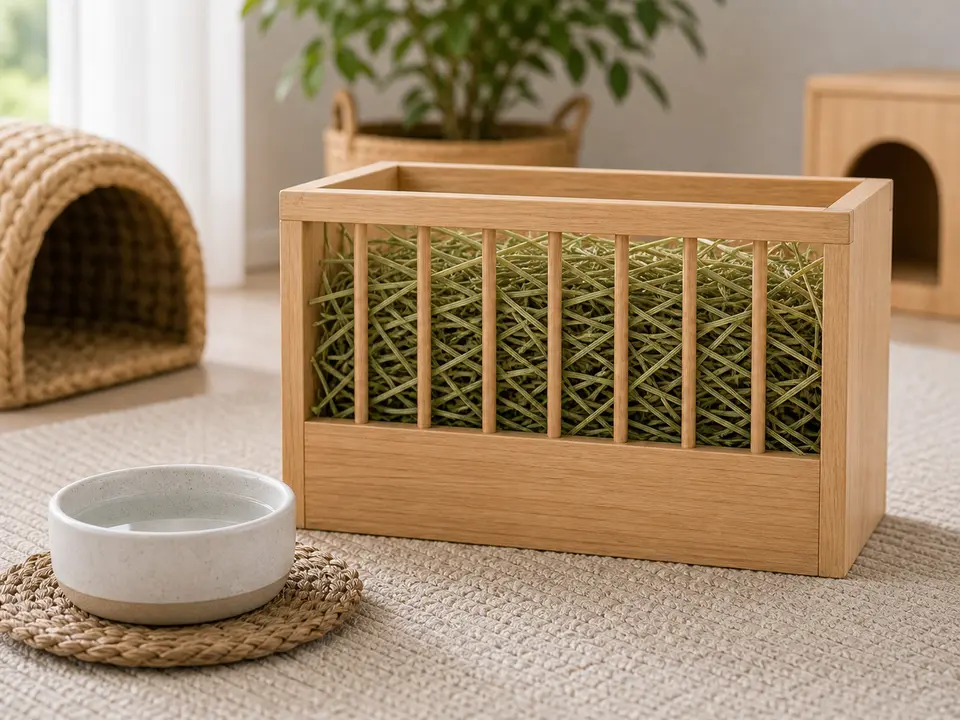
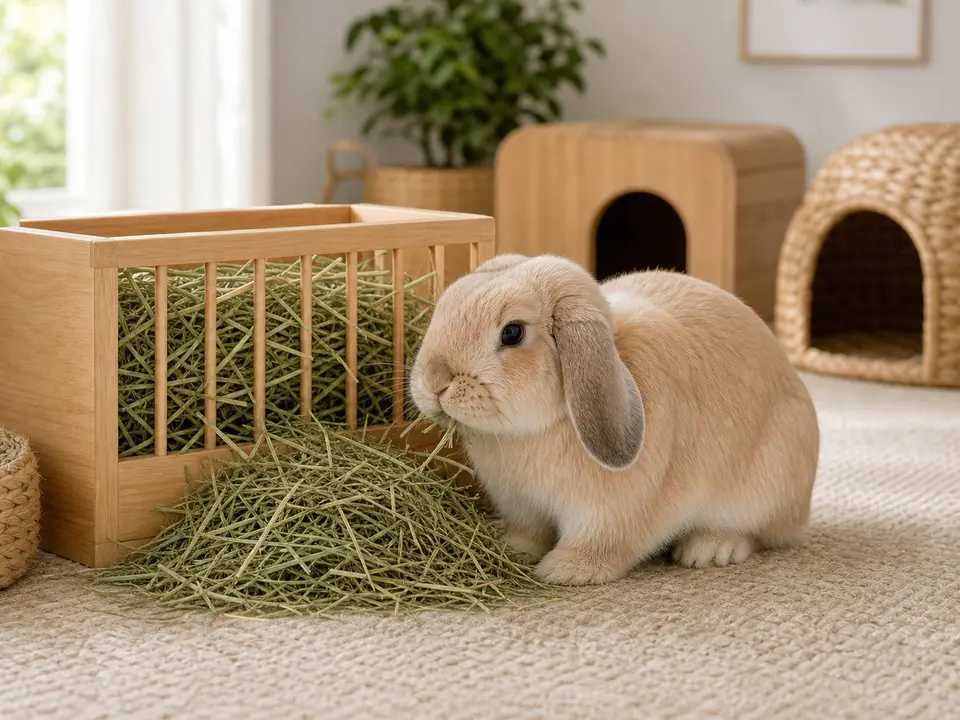
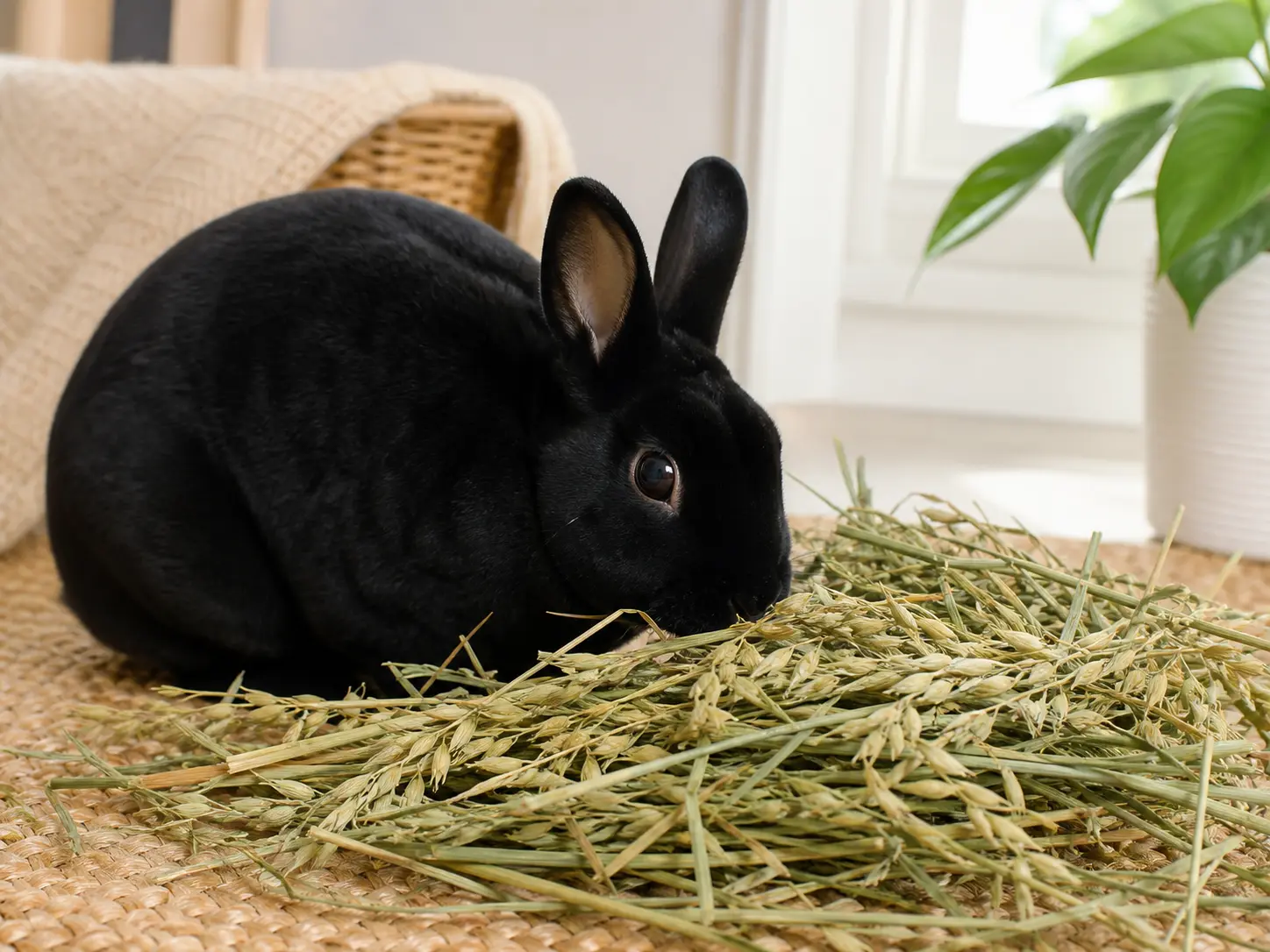
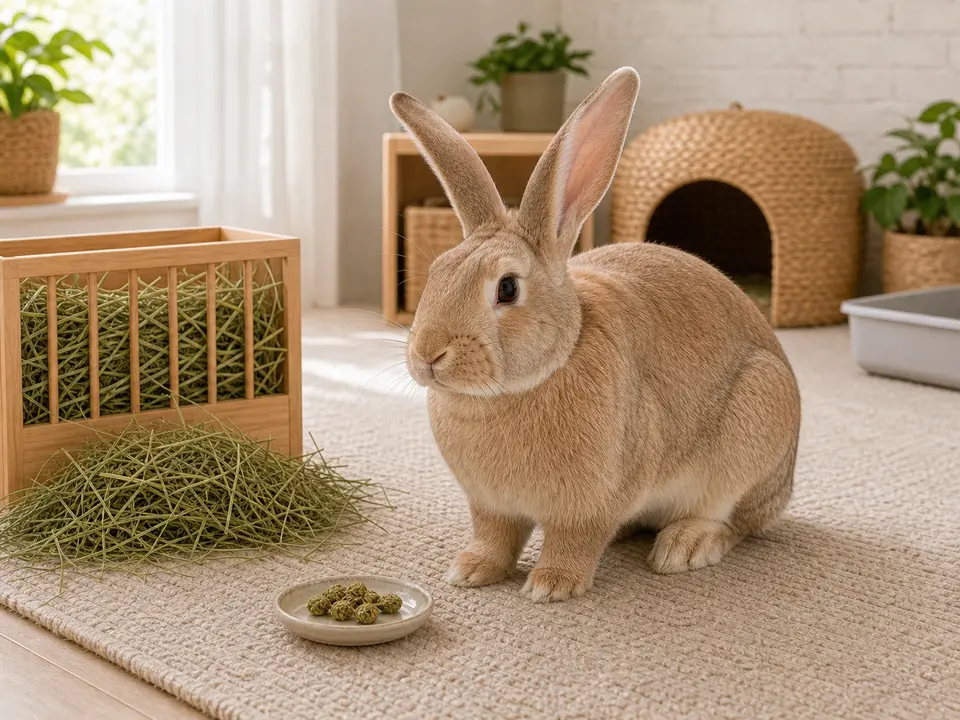
Put down a fragrant fresh handful of hay before opening the pellet container. A rabbit can still enjoy pellet time, but the room should make long, steady hay chewing the easiest food choice throughout the day.
If the pellets disappear while the hay pile barely moves, review the serving, hay freshness, rack placement, and any sudden appetite change rather than adding sweeter rewards.
Use a few pellets for useful cooperation
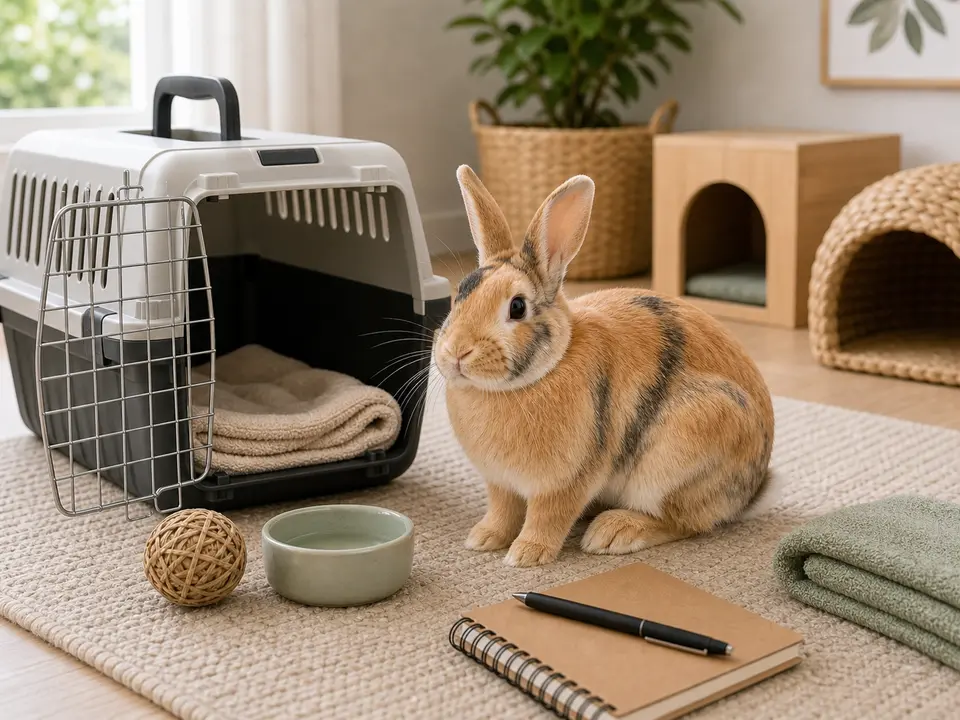
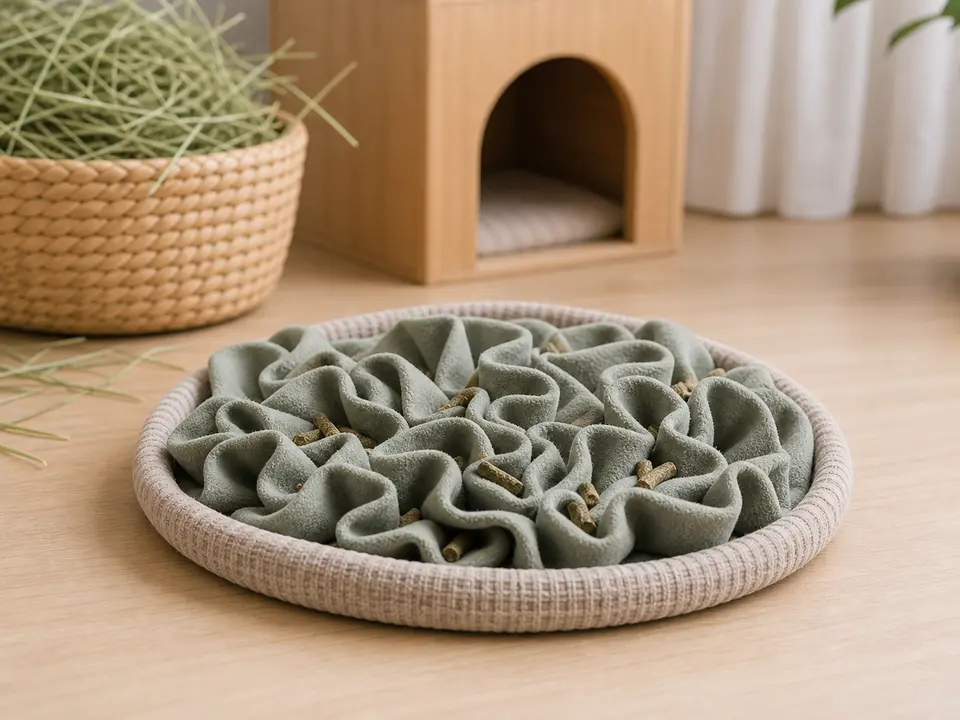
Set aside three or four pellets before breakfast. Use them for a name response, one step onto a mat, a calm carrier entry, or a short forage search; the bowl then receives what remains, so training never adds an unseen second serving.
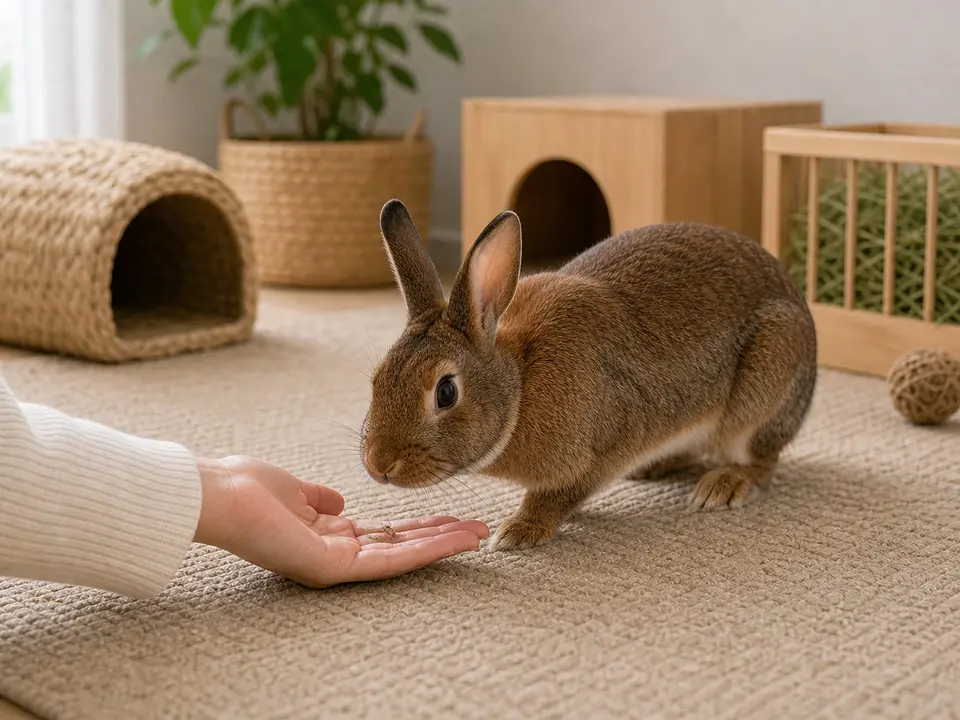
End the exercise while your rabbit is still comfortable. Hand over the pellet after a voluntary step onto the mat or into the carrier, then let leaving remain an option; never turn the reward into a surprise grab.
Share floor time with empty hands
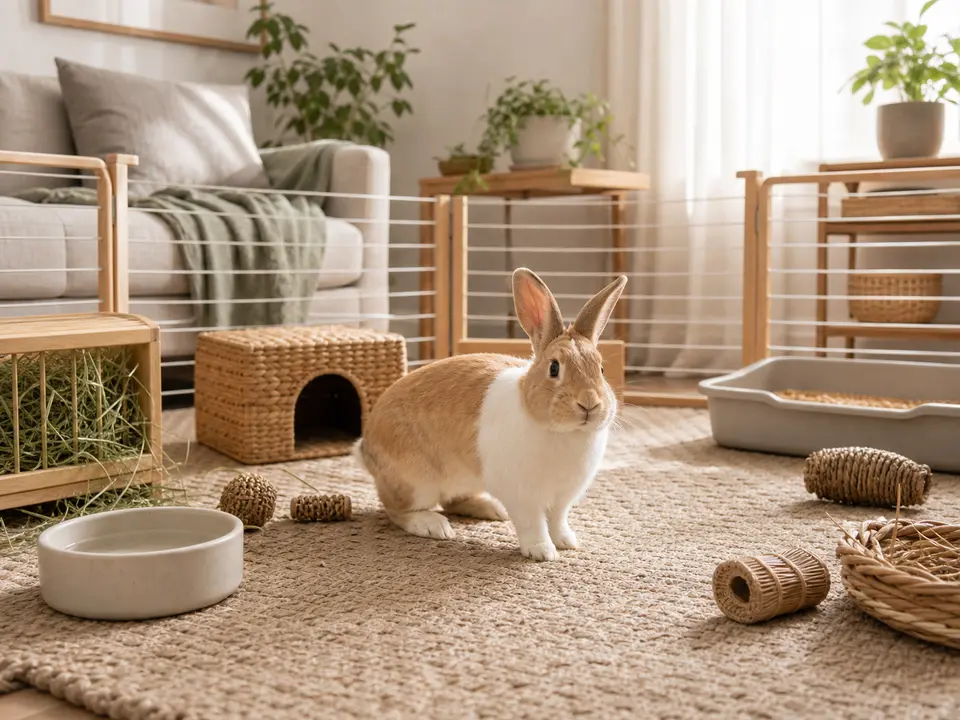
Sit on the floor, read, stretch, or talk quietly without asking your rabbit to perform. Let sniffing your sleeve, circling you, loafing nearby, or walking away all count as normal social time.
When every approach produces food, a rabbit may become pushy or lose interest as soon as the snack ends. Food-free visits teach that your body can be part of the safe room rather than a vending machine.
Let the litter box tell you whether the balance works
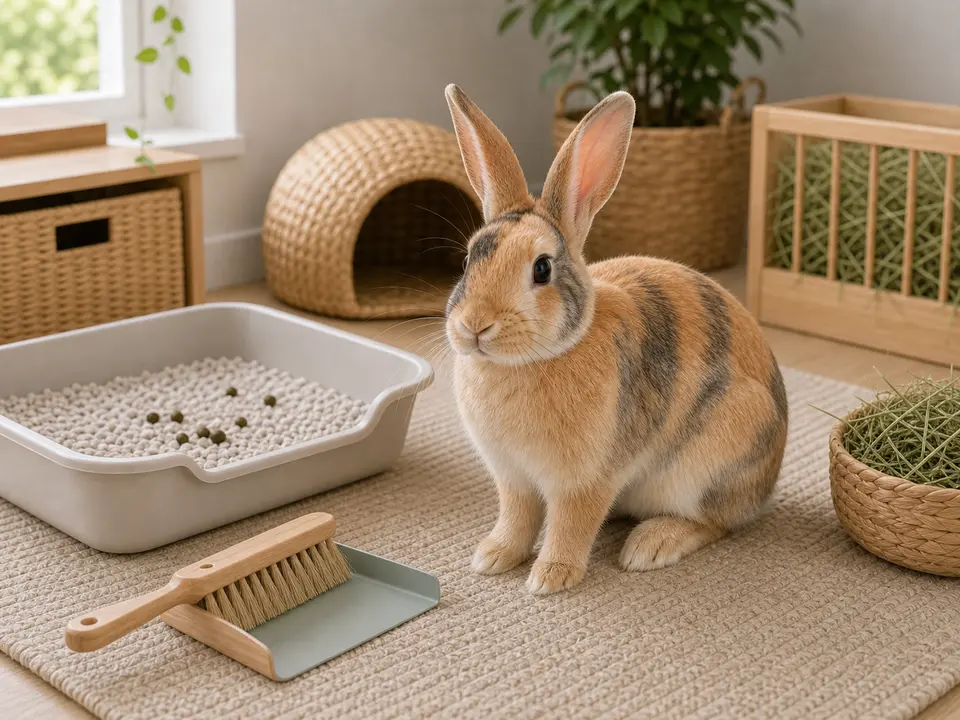
Look for a hay pile that shrinks, normal round droppings, steady energy, and a rabbit who can settle after pellet time. Frantic begging, smaller poops, weight change, or ignoring hay are reasons to reassess the routine.
Keep a short note if the pattern is changing. The scoop, hay pile, body condition, and litter box together tell a more useful story than how excited your rabbit looks at breakfast.
Review the scoop when health or age changes
Young rabbits, seniors, dental trouble, recovery, weight changes, and lower activity can all change the feeding plan. Ask a rabbit-savvy veterinarian to review the serving when appetite, weight, chewing, or droppings shift.
Do not use extra pellets to solve unexplained weight loss or poor hay eating on your own. The cause matters, and a measured history gives your veterinarian a much clearer starting point.
Before you decide
Did today's pellets come from one measured serving?
Is the fresh hay pile shrinking between pellet times?
Can your rabbit spend time near you without searching your hands for food?
Do weight, droppings, and post-meal behavior still look ordinary for this rabbit?
Next best moves
Measure the serving before the scoop or bowl becomes a cue.
Reserve a few pieces from that serving for voluntary carrier or mat practice.
Make some floor visits completely food-free.
Ask a rabbit-savvy veterinarian to review unexplained weight, appetite, or dropping changes.
Simple tools for a calmer pellet routine
Choose only what makes the serving visible, keeps hay inviting, or turns a few pellets into gentle work.
Affiliate links: Furball Cove may earn from qualifying purchases at no extra cost to you.
A steady measured serving does not remove the bond. Pair it with quiet floor time, hay refreshes, play, and interactions your rabbit can leave freely.
Can I train with pellets?
Yes. Take a few from the daily serving for simple voluntary behaviors so training does not add a hidden second meal.
What if my rabbit ignores hay and waits for pellets?
Check hay freshness and placement, keep the pellet portion measured, and call your veterinarian if the hay refusal is sudden or droppings become smaller or fewer.