

Updated
Supplement check
Does My Reptile Need Calcium With D3?
Use only to an exact plan
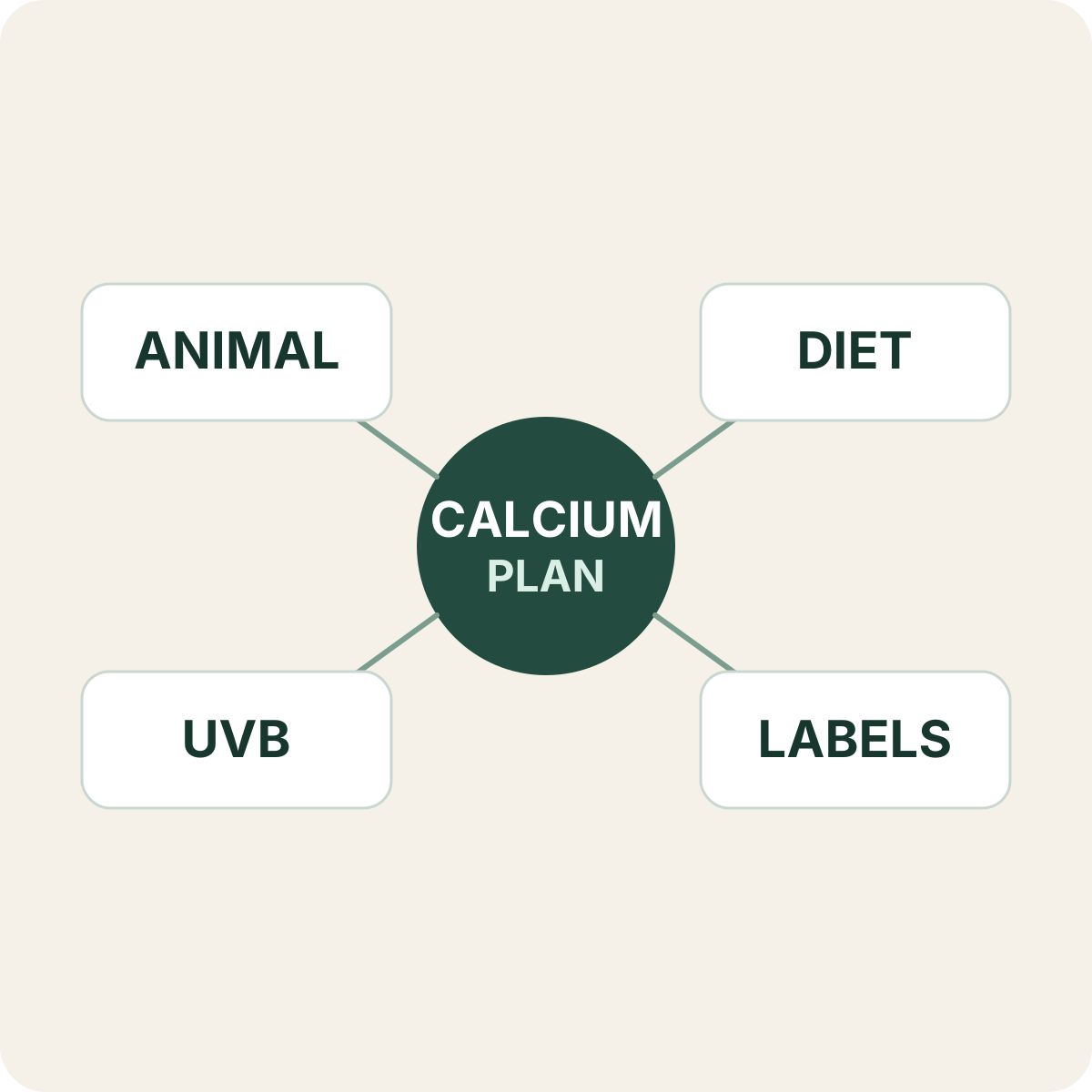
Some reptiles need a calcium supplement containing D3, while others should receive little or no added D3 when effective UVB and the complete diet already meet the plan. Choose from the exact species, life stage, diet, UVB exposure, other supplements, product label, and reptile-veterinary guidance—not a generic dusting schedule.
 Calcium with D3
Bearded dragons
UVB changes the plan
RSPCA guidance says high dietary D3 is unnecessary when the dragon has sufficient UVB. Its age-based supplement plan still depends on the product and complete routine.
Other insect-, plant-, or mixed-diet reptiles
Exact plan required
Do not copy a bearded-dragon schedule. Species, life stage, diet, UVB access, and product contents can change whether D3 belongs.
Whole-prey eaters
Do not copy a lizard routine
Whole prey changes the nutrient picture. Add no routine powder unless the exact species guidance or reptile veterinarian calls for it.
Read the complete system
MSD guidance treats calcium, phosphorus, vitamin D3, diet, and UVB as connected. Check every prepared food and supplement so D3 is not stacked without noticing.
A powder cannot repair husbandry
A supplement does not correct unsuitable temperatures, poor UVB placement, an unbalanced diet, or the wrong feeder routine. Fix the underlying plan rather than increasing powder.
Build the plan
- Confirm the species and life stage.
- List the ordinary diet, effective UVB provision, and every source of calcium and D3.
- Read the exact label and use only the supported schedule.
Do not improvise
- Do not use another species' schedule.
- Do not combine products without checking duplicate D3 and vitamins.
- Do not increase the amount to treat illness or a weak setup.
Schedule
There is no universal D3 schedule. Use the exact species plan and get reptile-veterinary help when UVB, growth, illness, or multiple products make the total unclear.